Robbie Thain
Founder, CEO

Discover why 78% of consumers prefer in-person brand experiences. Learn how to convert physical interactions into measurable retail sales and proven ROI.

You are standing in the middle of a massive expo hall. Bright screens flash endless loops of product videos above every booth. Attendees walk past with their heads down, actively ignoring the perfectly optimized digital displays. Then, a sharp scent of roasted coffee or a cold beverage sample stops someone in their tracks, creating an immediate conversation.
Recent data shows consumers are rejecting digital isolation in favor of tactile brand experiences that build immediate trust. By moving budgets into measurable live activations, marketing leaders can capture attention and drive proven retail sell-through.
Consumers are completely exhausted by endless digital scrolling and screen fatigue. The digital ecosystem is overwhelmingly crowded, making it incredibly difficult for consumer packaged goods companies to capture meaningful attention online. A recent study highlighted by the Radio Advertising Bureau reveals a massive shift in shopper behavior. According to the Quad research, 78 percent of consumers prefer in-person interaction with brands.
In that same study, 76 percent of respondents feel more connected to companies in physical environments. This data proves that people want real-world validation before making a high-consideration purchase. Digital touchpoints can reach millions of people at scale, but they struggle to generate deep emotional trust. A beautiful digital ad cannot replicate the exact taste, texture, or smell of a new snack product. Shoppers want to hold a physical product in their hands, try a live sample, and ask real questions.
We have been connecting brands with people through live experiences, retail programs, and national activations since 1995. Over three decades, we have built a track record of creating meaningful brand moments across the country. Through this extensive work, we see firsthand that physical sampling creates a lasting memory that screens simply cannot match. Consumers now treat live brand encounters as premium experiences, allocating more of their personal spending to these tactile moments.
Consumer spending on physical experiences surged 65 percent between 2019 and 2023. Analysts project the global experience economy to reach 2.1 trillion dollars by 2032. People are actively seeking out real-world engagement, and leading marketing operators are taking notice. A recent industry report shows that 88 percent of marketing leaders identify events as key revenue drivers. Recognizing this shift, top companies are reallocating a quarter of their marketing budgets directly into live activations.
You cannot rely on a purely offline strategy or a purely digital campaign. The most effective strategy fuses tactile reality with rigorous digital measurement. In-person experiences tend to outperform digital-only campaigns when the goal involves trust, memory formation, product trial, and immediate conversion. You need a centralized framework that connects physical engagements directly to your bottom line.
Marketing leaders must treat live events as primary sales engines rather than optional brand theater. The physical activation serves as the powerful initial spark. It captures immediate attention, proves product quality, and removes shopper hesitation on the spot. Without a digital extension, up to 80 percent of consumer engagement can evaporate after the event ends. You must capture that momentum immediately to protect your investment.
When you blend hands-on trials with smart digital capture, you create a measurable sales funnel. Shoppers receive a free sample or a memorable interaction, creating an immediate sense of goodwill. You then offer a clear digital incentive, like a high-value discount code accessed via a quick smartphone scan. This exact strategy transforms a fleeting interaction into permanent first-party data.
This blended approach is highly effective for food, beverage, health, and wellness companies. Products in these categories require consumers to taste, feel, and believe in the value before switching from a competitor. Health supplement brands need to prove their product dissolves easily and tastes great. By layering digital data capture over an offline trial, brands build predictable systems for gathering consumer insights and driving foot traffic to retail partners.
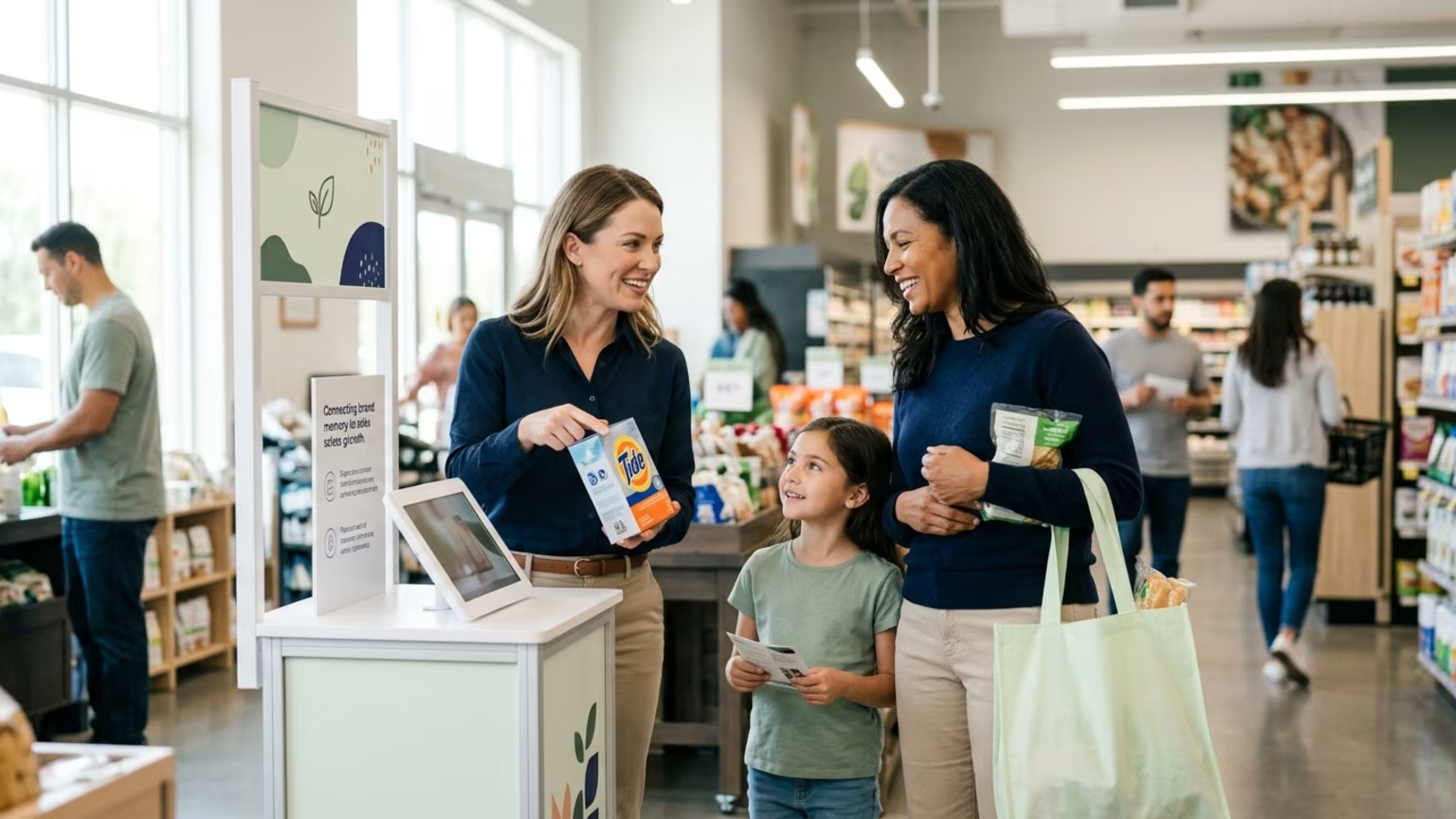
Shopper marketing is no longer just about static endcaps. Brands are increasingly combining in-store demonstrations with geo-targeted digital follow-up to create a unified ecosystem. The store is no longer just a passive distribution point. It is an active conversion environment where trained field staff act as a retail execution multiplier.
Running a successful field program requires strict operational discipline from start to finish. You cannot just hand out free products, smile at attendees, and hope for the best. Poor execution, like long lines or uneducated staff, will actively damage your brand perception. Here is a proven playbook to implement this strategy on the floor.
When you execute these steps flawlessly, you generate tangible momentum in the market. Live activations deliver 3.5 times higher engagement than standard digital ads when structured properly. The key is maintaining total control over the entire sequence, from the first hello to the final retail scan.
Proving your Return on Investment is the absolute most critical part of any experiential program. Event marketing needs to produce concrete evidence instead of just an illusion of activity. Vanity metrics like total booth traffic or overall event attendance will not protect your budget in a serious board meeting. You must track specific leading and lagging indicators to demonstrate undeniable financial impact.
Leading metrics tell you if the activation is actually working in real time. You should track the exact number of product samples distributed per hour to gauge flow. Monitor your QR code scan rate to measure initial digital interest from the passing crowd. Watch the average dwell time to see if people are truly engaging with your field operators.
Lagging metrics prove the long-term financial success of the campaign. The single most important indicator is retail sell-through. Industry data shows that well-executed field activations can boost retail sell-through by 15 to 20 percent. You should rigorously measure coupon redemption rates, total new loyalty program signups, and retailer reorder volume.
Measurement can be difficult when isolating event impact from seasonal promotions. Common challenges include attributing sales lift to a specific activation or tracking multi-touch conversions. This is why the strongest programs use holdout markets, redemption tracking, and point-of-sale comparisons. Tracking these numbers provides total clarity for senior leadership.
When you can attribute a local sales spike directly to your sampling team, your budget requests become indisputable. This is why many brands now demand rigorous reporting dashboards to justify their event spending across different markets.
Applying this methodology transforms a standard product launch into a highly measurable revenue engine. Imagine a growing consumer packaged goods company trying to break into a heavily saturated retail market. Digital ads might generate some passive awareness, but they rarely convince a skeptical shopper to abandon their daily beverage routine. The brand needs people to actually taste the difference.
Instead of buying more online banner ads, the company deploys a targeted physical sampling campaign. They set up dynamic stations near key retail partners and high-traffic grocery entrances. Brand ambassadors offer cold, ready-to-drink samples directly to target shoppers. They pair the physical trial with a digital coupon code right at the exact point of consideration. This strategic setup is precisely why in-person club promotions continue to outperform static shelf placement year after year.
This immediate value exchange removes purchase hesitation completely. The shopper tries the drink, likes the taste, scans the code, and walks directly into the store to buy a full pack. The results become highly trackable across the entire sales cycle. The brand captures new leads on the spot and sees double-digit repeat purchase lift in the following weeks.
The physical activation acts as the undeniable spark, and the digital layer secures the final conversion. Consumers get the genuine human interaction they crave, and the brand gets the hard data it needs to grow. When you are ready to stop guessing and start measuring your live events, Book a strategy call with our team.
We do not guess what works on the trade show floor. We build systems that make people stop, try, and buy.

30 Years Experiential & Retail Activation Partner for CPG & Beverage Brands | Multi-Market Demos, Roadshows & Costco/Club Programs That Actually Sell