Robbie Thain
Founder, CEO

See how travel brands are designing connected experiential marketing ecosystems. Learn how CPG marketers can shift from isolated events to tangible pipeline.
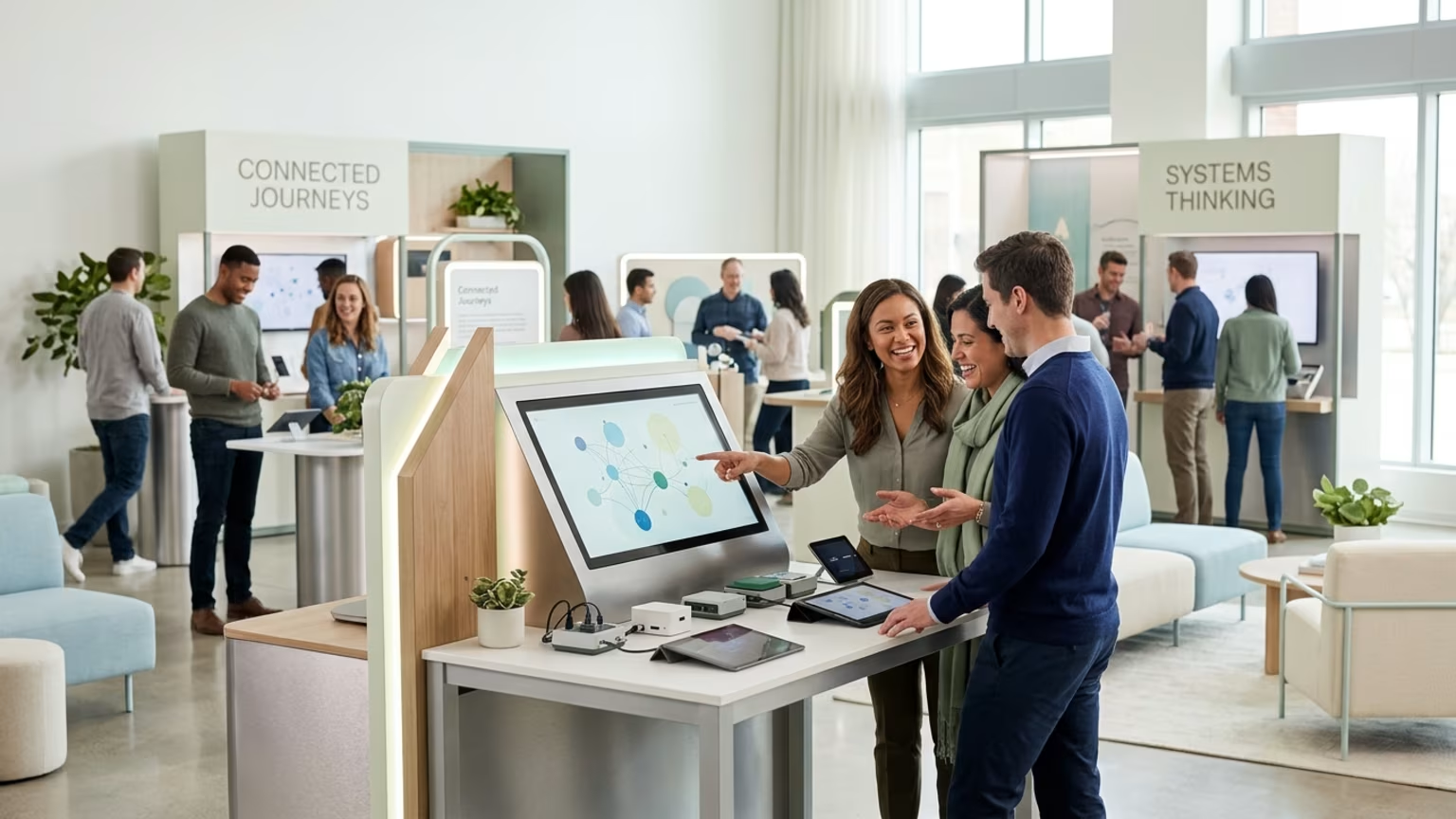
Accenture reports that 71 percent of travelers expect AI to influence at least half of their hotel or airline spending over the next year. This data point reveals a massive shift in how consumers make choices. People no longer buy a single product or destination in isolation. They buy into a connected ecosystem of planning, experiencing, and remembering.
Staging a massive standalone booth at an expo is bleeding your marketing budget dry. If your activation exists in a vacuum, you are actively failing your brand. Experiential marketing must function as a complete and unified ecosystem. Travel marketers are currently proving this point by abandoning isolated product pitches.
According to an August 2026 Adweek “Adspeak” episode, travel brands are moving far beyond simple destination advertising. They are designing personalized, culturally relevant experiences across the entire traveler journey. The travel sector is moving toward ecosystem thinking. Destination brands, airlines, rail operators, and hotels increasingly intersect across the same customer path.
Chief marketing officers are tired of spending heavily on a weekend activation that generates zero qualified pipeline. Marketing teams often obsess over the visual appeal of a physical footprint. They completely ignore how the consumer found the event or what happens after they leave. The activation becomes a beautiful failure that produces fog instead of solid evidence.
The travel sector shows us why this disconnected approach is dangerous. A 2026 systematic review analyzed 211 peer-reviewed studies published between 2000 and 2025. The review organizes the tourist experience across pre-visit, during-visit, and post-visit phases. It proves that emotional connection and behavioral outcomes evolve at every single stage.
The review found that destination-related influences are prominent before and during travel. Social interaction plays an important role in post-visit loyalty and advocacy. When a brand fails to connect these phases, it creates a jarring mismatch between digital promises and real-world execution. The academic review identifies both potential benefits and risks of AI-driven targeting.
These risks include privacy concerns, algorithmic opacity, and mismatches between digital expectations and actual physical experiences. You cannot rely on technology to fix a broken operational model. A poorly planned physical footprint will actively damage your brand equity. A unified approach is the only way to secure a return on investment.
Our worldview at Makai relies on pairing warm human interactions with brutal operational discipline. You cannot fake a credible brand experience in the field. We run experiential and engagement programs coast to coast with local crews. Smart logistics and permit expertise let us launch fast and maintain quality consistency in every region.
This applies from major metros to smaller markets. Our nationwide infrastructure allows us to activate brands wherever their audiences are located. This operational rigor is exactly what Amtrak is currently building. Amtrak chief commercial officer Eliot Hamlisch described efforts to move the brand from a transportation utility toward a hospitality experience.
This repositioning illustrates how the entire service environment becomes part of the core brand promise. Every physical touchpoint must reflect an intentional hospitality strategy. For consumer packaged goods, this means your staffing model is not a secondary detail. The product education, the queue management, and the handoff to purchase dictate the entire narrative.
A friendly smile means nothing if the logistics behind the sample are completely broken. You need genuine aloha spirit at the front and a ruthless operational machine at the back. Maintaining this balance requires an obsession with scalable event operations. Flawless execution separates a successful campaign from an expensive mistake.
Brands must stop measuring success by the volume of superficial badge scans. The new goal is tracking tangible outcomes like samples distributed to target buyers and retail meetings booked. You have to measure the entire connected system. Marketers need to prove that an interaction leads to a measurable trial or a solid Return on Investment.
This requires using data to improve relevance rather than just increasing message volume. Marriott executive Brad Hiranaga recently linked experience design and loyalty data to initiatives across the company’s 10,000-plus-property network. When you understand the customer journey, you can personalize the physical touchpoints effectively. This is why adopting data-led experiential marketing is absolutely critical for modern field operators.
The travel examples point toward using first-party data and loyalty ecosystems to make interactions more relevant. For a retail activation, that could mean recognizing whether a shopper is a first-time trier or a repeat buyer. The data should improve relevance through the right product recommendation or targeted follow-up offer. It should not simply increase blind message volume.
However, digital planning tools must align with authentic physical engagement. Adweek highlights the Atlanta Convention & Visitors Bureau and their use of AI-enabled advertising alongside authentic content. Their “World’s Largest Postcard” campaign successfully reaches travelers at key decision moments while preserving a human element. The technology handles the initial targeting, while the physical activation delivers the actual cultural relevance.
Atlanta’s work shows how authentic content and experiential marketing can sit alongside AI-driven targeting. Brands should begin with a real consumer passion or cultural context. They must then ensure that the physical execution reflects that context accurately. Cultural misrepresentation or a mismatch between promise and reality can severely reduce customer satisfaction.
Integrating these systems is becoming more complex as new planning interfaces emerge. Radisson and Accenture recently launched the @RadissonHotels app in ChatGPT. This tool manages conversational search across more than 100 countries and more than 1,000 hotels. Accenture’s Consumer Pulse Research reports that 87 percent of travelers are open to working with an AI-powered travel agent.
But if the physical hotel fails to deliver on that digital promise, the entire ecosystem collapses. A useful measurement framework should connect qualified reach directly to retailer sales lift. Field operators must track coupon redemption, conversion after interaction, and repeat purchase behavior. Accurately measuring experiential marketing ROI requires tracking the full journey.
The era of the standalone brand activation is over. If you want to turn fleeting interactions into qualified pipeline, you must demand operational continuity across every single touchpoint. A connected ecosystem requires flawless execution from the first digital impression to the final physical sample. You must link pre-purchase inspiration with in-store engagement and post-use advocacy.
This framework demands a fundamental shift in how marketing leaders approach their field strategies. You cannot build a durable brand by purchasing fragmented moments of consumer attention. The journey itself is the actual destination for your target buyer. That massive expo footprint is only valuable if it acts as a reliable, fully measured bridge to your next sale.
Treating a physical activation as an isolated event often results in inefficient post-event follow-up and CRM routing. Makai solves this disconnect by managing end-to-end campaigns that link every real-world interaction back to measurable sales impact. Through our Mobile Sampling Tours, we deliver your brand directly to audiences through on-the-go experiences that drive trial and awareness. We ensure every fleeting interaction converts into tracked pipeline.

30 Years Experiential & Retail Activation Partner for CPG & Beverage Brands | Multi-Market Demos, Roadshows & Costco/Club Programs That Actually Sell