Robbie Thain
Founder, CEO

Compare trade shows with a practical CPG scorecard covering audience fit, buying influence, timing, cost and measurable sales priorities.

Trade show selection is the process of choosing events where audience relevance and execution capacity create a credible path to qualified sales pipeline. For a CPG brand, that means evaluating the product experiences and commercial conversations a show can support rather than treating attendance as the outcome.
The right choice starts with a business job. That might be introducing a product to retail buyers or generating qualified distributor conversations. Product trial can also be the priority, provided the team defines what should happen after someone tastes or handles the product.
A useful selection process connects that objective to audience evidence, timing and the resources needed to deliver the experience.
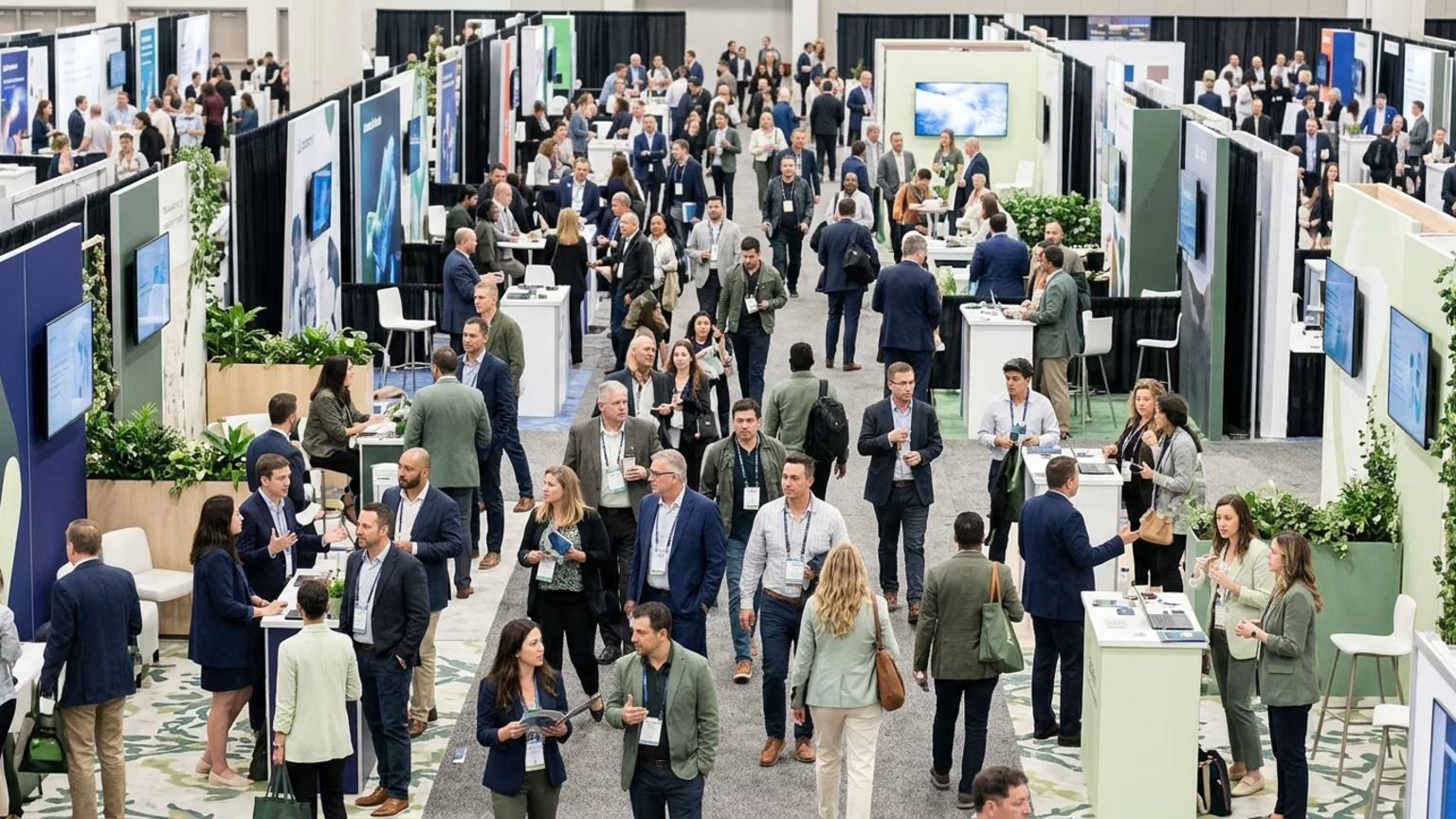
A crowded aisle tells you that people showed up. It does not answer whether those people belong in your sales plan.
Freeman’s Pre-Event Edition research drew on a September 2026 survey of more than 3,400 attendees and exhibitors. Freeman reported that 56% of exhibitors wanted more information about the types of organizations attending. That is a practical reason to ask for audience composition before comparing attendance estimates.
The event’s purpose matters just as much. Trade Show Executive’s coverage of Freeman’s research reported brand awareness at 70% and lead and prospect acquisition at 64% among exhibitors’ reasons for considering in-person events. Those objectives call for different conversations and different measures of success.
For a CPG team, actionable evaluation means asking whether the setting supports the intended interaction. Can a retail buyer assess the product and discuss distribution? Can a shopper try the product and locate a purchase opportunity? Can the team record a meaningful next step rather than an undifferentiated contact?
Makai’s work spans trade show activations and mobile sampling tours. We believe the format should serve the commercial job, not become the reason for the campaign. A show should earn its place against that job rather than win by default because it has the largest floor.
The Freeman findings describe broad event behavior and exhibitor intentions, not proof of CPG sales outcomes. The scorecard below is a proposed planning tool, not a research-validated model or a source of universal decision cutoffs.
Organize the decision around three components:
Rate each factor below from 1 for weak to 5 for strong. Use the proposed weights to compare events against the same business objective.
Two factors belong here:
Separate relevance from authority. An attendee can be interested in the category without controlling a listing or purchase decision. The question is whether that person can advance the specific outcome the brand needs.
Record the evidence behind each rating. An organizer’s audience breakdown is more useful than an unsupported statement that “all the right people attend.” Our broader guidance on comparing events against brand priorities provides additional planning context.
The next two factors test whether the opportunity is workable:
Timing includes the attendee’s decision calendar. Freeman reported that 84% of surveyed attendees decided to attend at least a month before registering. Its survey also found that 54% began planning onsite activity at least three weeks in advance.
Use those findings to ask when prospective attendees can receive useful information about the brand’s presence. Also ask when the organizer makes audience information available. These questions belong in event selection rather than waiting until the booth is booked.
Execution scope deserves equal attention. We designed and managed a 40 by 20 foot trade show environment for Glanbia at Natural Products Expo West 2025. Our scope covered concept and operations as well as staffing and breakdown. More than 14,000 recorded product samples were distributed across the activation stations.
For selection purposes, that experience illustrates the physical work behind a product interaction at scale. The footprint is only part of the commitment. Makai’s capabilities also include storing sampling products and event gear, then coordinating shipment and delivery nationwide.
A proposed event should be evaluated against that complete operating picture. The same applies to planning field-team coverage across formats, especially when a show sits inside a wider campaign.
The final factor anchors the comparison:
Write the primary job in one sentence before assigning this rating. “Generate qualified retail conversations for the launch” gives the team a clearer basis for evaluation than “have a strong presence.”
Then define the next step that would make the interaction commercially useful. For a buyer conversation, that might be an agreed follow-up discussion. For product trial, it might be a trackable purchase response.
To calculate the score, multiply each rating by its percentage weight. Add the results and divide by 100 to produce a weighted score out of 5.
Keep the supporting notes beside the score. An unexplained rating hides uncertainty instead of resolving it. A high total should not cancel a deal-breaker such as an irrelevant audience or an event outside the launch window.
Use these decision labels:
The scorecard evaluates the opportunity. Measurement evaluates what the brand actually received.
Freeman’s survey found that 16% of exhibitors said events were very or extremely effective at explaining the Return on Investment (ROI) of exhibiting or sponsoring. That finding supports making the expected evidence part of the selection discussion rather than leaving reporting until after the event.
Use a measurement plan with three layers.
Start with activity measures such as product interactions and completed conversations. These describe delivery and help explain how the activation operated.
Keep their meaning precise. The recorded sample count from our Glanbia engagement describes sampling volume. It is not a substitute for a sales or pipeline result.
For a trial-focused activation, distinguish samples distributed from identifiable responses. The reporting should make clear which activities were counted and which actions were actually tracked.
Match the next measure to the event’s primary job:
These measures answer different questions. A brand should not label every product interaction a lead or treat every lead as pipeline.
Bring results back to the selection notes. Did the actual audience match the organizer’s description? Did the event produce the kind of interaction the brand expected? Was the operating commitment reasonable for what the team received?
For a test decision, revisit the uncertainty that justified the pilot. Report what the activation established about audience relevance or execution feasibility. A useful test should leave the next decision clearer.
Makai’s stated scope extends from permitting to CRM reporting. We believe that operational continuity matters because event selection and post-event evaluation should answer the same commercial question. This is also the foundation of connecting event reporting to business value.
Bottom Line: The right trade show connects a relevant audience to a current business priority through an executable experience with a measurable next step.
Trade show choices built around crowd size leave the quality of product engagement unanswered. Makai takes product experiences on the road through mobile sampling tours focused on trial and awareness, while its experiential campaigns and trade show activations address low-quality event contacts through a focus on qualified leads for premium CPG brands.

30 Years Experiential & Retail Activation Partner for CPG & Beverage Brands | Multi-Market Demos, Roadshows & Costco/Club Programs That Actually Sell