Robbie Thain
Founder, CEO

Build a unified field team that pivots from trade shows to retail roadshows. Learn how to maximize your Return on Investment across every physical event.
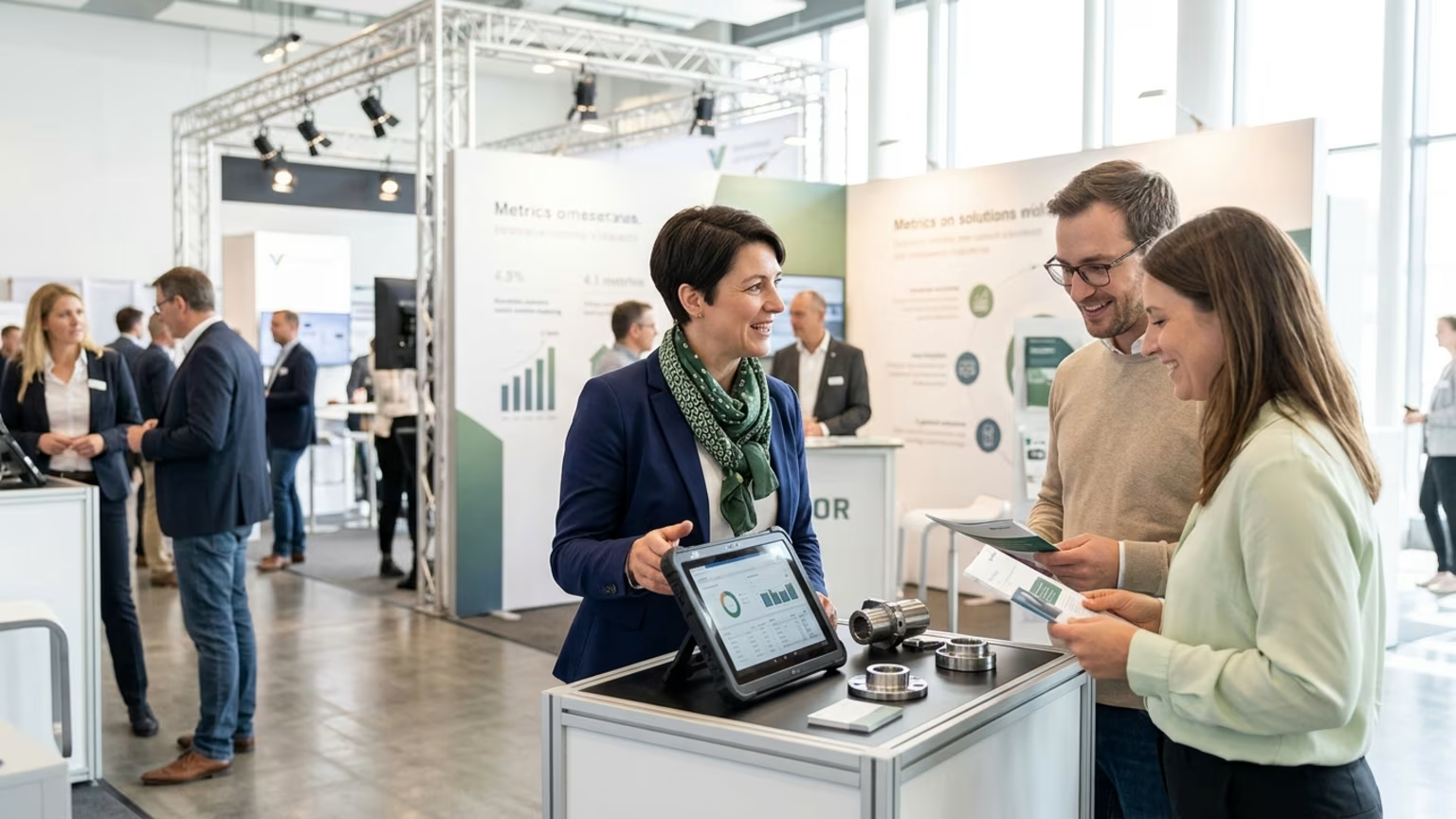
Sarah watched the expo doors open at 9 AM. Her new beverage line looked perfect on the lighted display shelves. Then she realized her temporary staff had zero knowledge of her actual product margins. The morning was over before a single buyer walked by.
Building a unified field team transforms event chaos into a predictable sales pipeline. This strategy turns temporary workers into capable field generals who can pivot from a massive expo floor to targeted in-store retail demos.
Managing separate crews for different event types creates an operational nightmare for marketing directors. You hire one agency for an industry expo in Chicago. You hire another group for a regional campus tour in the Midwest. Then you try to staff local roadshows with random brand ambassadors who barely know your product portfolio.
Think about the logistics of managing three separate staffing agencies. You are paying triple the management fees and spending three times the hours on introductory alignment calls. You are shipping different promotional kits to three different warehouses with varying degrees of tracking reliability. The operational friction alone will drain your marketing team.
This disjointed strategy leads to severe message dilution across your marketing channels. A buyer at an expo gets a completely different brand story than a consumer at a local popup. Your training costs skyrocket as you constantly onboard new people week after week. The lack of consistency turns what should be a focused campaign into a scattered financial drain.
We have been connecting brands with people through live experiences, retail programs, and national activations since 1995. Over three decades, we have built a track record of creating meaningful brand moments across the country. We see brands lose thousands of dollars simply from relying on untrained temps who care more about their phones than your product trial.
The actual cost of bad event staffing goes far beyond the hourly wage. You lose the opportunity to capture quality leads. You damage your relationship with retail buyers who expect professional interactions. You fail to generate the necessary Return on Investment to justify your yearly marketing budget.
The solution requires shifting your mindset from hiring temporary reps to training dedicated field generals. These individuals must possess the social intelligence to charm a college student and the business acumen to detail product specs for a retail buyer. Establishing a centralized standard for field operations stops the painful cycle of constant rehiring. A unified approach builds a stronger foundation for long-term brand growth.
We often see brands focus entirely on the physical booth design and ignore the human element. A stunning booth will attract a crowd, but only a skilled field general can convert that crowd into pipeline. You must dedicate as much budget to talent acquisition as you do to physical fabrication.
Your hiring profile should prioritize adaptability and high situational awareness over simple enthusiasm. Look for candidates who ask intelligent questions about your target audience and conversion goals. They should view themselves as an extension of your sales force rather than mere product distributors. This mindset shift creates a team that actively hunts for new business opportunities.
Training must cover both high-level brand storytelling and granular objection handling in equal measure. A true field general anticipates common customer friction points before they ever happen. This deep preparation mirrors a strong content marketing framework where answering common questions builds lasting brand trust over time. Teams must memorize your product features, supply chain details, and competitive advantages.
When you stop treating staff as disposable assets, you start building a powerful physical marketing engine. A single, well-trained team can travel to a trade show one week and run regional store activations the next. This continuity creates a much stronger brand presence in the local market. It builds a deeper institutional knowledge base within your field marketing department.
Executing this strategy requires strict operational discipline and clear daily documentation. You cannot send a team into the field with a vague directive to be friendly and outgoing. They need a concrete playbook that dictates exactly how to operate in wildly different physical environments.
Here is the step-by-step process for deploying a multi-use strike team:
Define the core messaging pillars that remain identical across every single event format. The core value proposition of your product must never change based on the venue. A consistent message creates a stronger memory structure in the mind of your consumer.
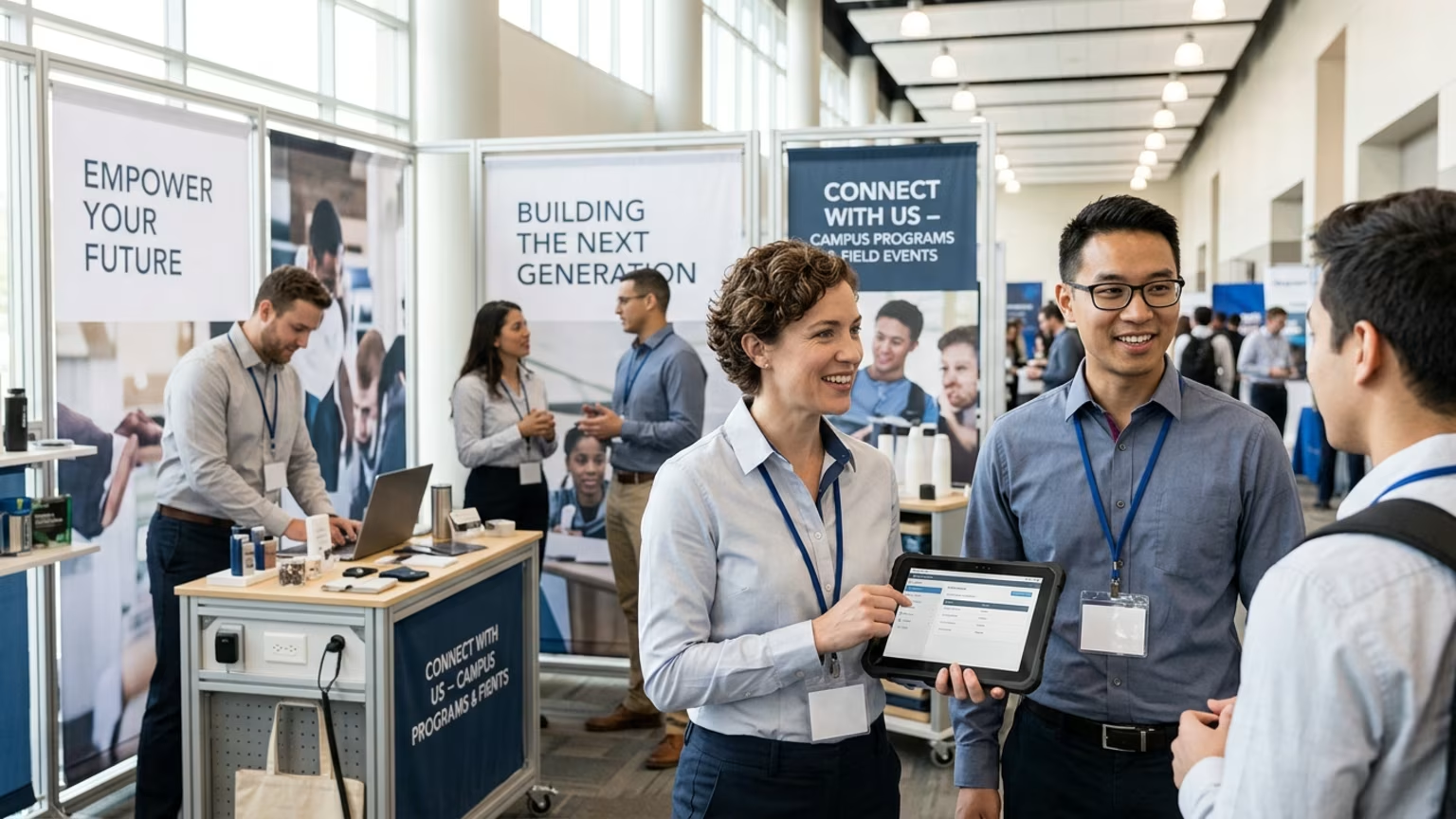
Create specific modular training blocks for expo floors, roadshows, and campus programs. The campus training might focus heavily on sampling speed and social media engagement. The expo module will focus entirely on lead qualification and scheduling follow-up buyer meetings. A retail demo module focuses on intercepting shoppers without disrupting their natural grocery routine.
Establish clear incentive structures that reward actual lead capture rather than just attendance. Pay your field generals a base rate combined with a performance bonus for every qualified lead they generate. This compensation model aligns their financial interests directly with your revenue goals.
Appoint a clear team captain to manage on-the-ground logistics and daily reporting metrics. This leader handles break schedules, uniform compliance, and the nightly data upload to your CRM software. They act as the single point of contact between the field team and your corporate office.
Equip the team with physical brand assets and event merchandise that reinforce your messaging. Strategic promotional items extend your brand footprint far beyond the actual event venue. Providing high-quality merchandise gives your field generals an easy conversation starter with hesitant attendees.
Schedule rapid debriefings after every single shift to correct mistakes immediately. The team captain should gather everyone for ten minutes to discuss what worked and what failed. This immediate feedback loop prevents small errors from becoming entrenched bad habits.
Mastering these steps simplifies the process of sourcing and managing the right field talent across multiple geographic regions. Repurposing your team across different event formats works exactly like repurposing strong marketing content to maximize reach. Your initial investment in training pays off multiple times across various marketing campaigns.
Marketing leaders face constant pressure to prove the financial value of their physical events. You must track specific numbers to justify the budget for your elite field team. Relying on vague estimates of foot traffic will no longer satisfy your finance department. We need to measure the actual Return on Investment with hard, undeniable data.
Lead metrics tell you if your strategy is working in real time on the floor. Track the number of qualified conversations your team initiates per hour. Monitor the percentage of active product trials compared to passive booth visitors. Record the immediate capture rate of accurate contact information at your activation footprint.
Lag metrics reveal the long-term impact of your field generals on your bottom line. Measure the final sales conversion rate of leads generated from specific event locations. Analyze the retail sell-through numbers in regions where your roadshows took place. Track the long-term retention rate of the field staff themselves to gauge your operational efficiency.
Do not forget to measure the quality of the data entered into your system. A thousand scanned badges mean nothing if the contact information is outdated or completely irrelevant to your target persona. Your field generals must physically verify the contact details during the initial conversation.
If your data looks weak, you must adjust your strategy before the next scheduled event. Building repeatable structures for roadshows requires a constant feedback loop between the field team and your core marketing department. Your ultimate goal is a reporting dashboard that clearly connects physical interactions to measurable revenue growth.
A national sparkling water brand faced terrible conversion rates across their regional event marketing schedule. They used different temporary staff for their industry trade shows, college campus tours, and weekend retail demos. The messaging was entirely inconsistent across all three event types. Their lead capture numbers were practically nonexistent.
They shifted to a centralized strike team model for a major product launch in the Pacific Northwest. Ten highly trained field generals learned every detail about the new flavor profile, supply chain sourcing, and retail pricing. This same tight group worked a major food expo in Seattle and then immediately launched a three-week campus sampling tour.
The results proved the raw effectiveness of the unified team model. The team secured twelve new regional distribution deals directly from conversations at the expo. They drove a massive spike in direct product sales at the targeted campus locations a week later. The brand finally achieved a unified narrative across all physical touchpoints.
You have the power to stop wasting marketing budget on ineffective temporary event staff. The transition starts by changing how you view the people representing your brand in the real world. Book a strategy call with our team to start building your unified field program. Review your current roster and identify two people capable of leading your first dedicated strike team tomorrow.

30 Years Experiential & Retail Activation Partner for CPG & Beverage Brands | Multi-Market Demos, Roadshows & Costco/Club Programs That Actually Sell