Robbie Thain
Founder, CEO

Automattic's new Director of Experiential Marketing role ties B2B events to pipeline. Learn how to professionalize event operations and drive clear ROI.
When a fully remote software company hires a Director of Experiential Marketing to drive pipeline, it signals a massive shift in how physical activations are measured. Brands must professionalize their event operations to turn live experiences into evidence generating machines that win budget and market share.
You stand at the edge of your activation footprint as the expo doors open. The promotional staff looks confused about the new lead capture application. Premium samples are rapidly disappearing without a single badge scan or qualified conversation. Your sales team treats the expensive booth like a break lounge instead of a conversion engine.
This is the fragmented execution that keeps marketing leaders awake at night. The creative concept looked brilliant in the initial pitch deck. In practice, poor staffing quality and weak reporting turn an expensive investment into an unmeasurable fog. Every interaction feels like a custom one off that cannot be replicated across different markets.
Field marketers often find themselves managing fragmented teams across multiple time zones. The local agency provides promotional staff who have never tasted the product before their shift. The logistics company drops off the event kit late or damages the booth properties during transit. Every single misstep chips away at the overall Return on Investment.
Marketing teams are left with anecdotal reports of busy booths instead of quantified pipeline. The lack of standard procedures leads to inconsistent brand presence and wasted spend. You cannot benchmark success or find the root cause of low engagement. The disconnect between strategy and ground level reality damages trust with senior leadership.
CFOs are pushing hard for clear Return on Investment from these in person marketing efforts. They want to see better measurement and tech enabled operations across the board. If you cannot prove your financial impact, your budget will slowly disappear. The sheer volume of manual work required to pull off a multi city tour drains internal resources.
Spreadsheets break down when fifty different brand ambassadors input data in fifty different formats. Getting a clean look at inventory depletion or sample distribution becomes mathematically impossible. By the time the final event report is compiled, the sales window for the territory has already closed.
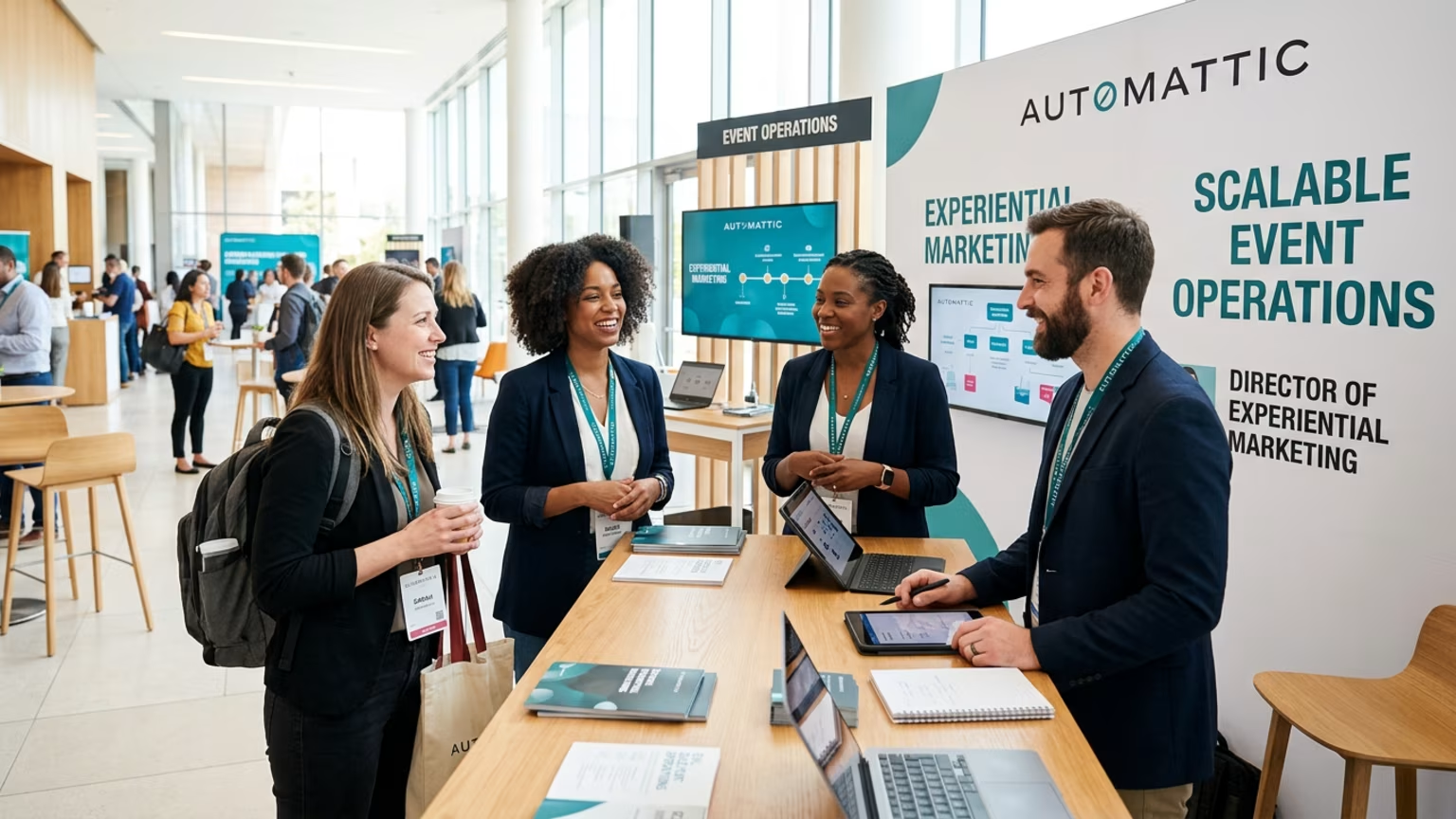
To fix this lack of control, organizations must treat event operations as a highly disciplined product. This requires pairing experiential initiatives with integrated marketing frameworks. Automattic recently posted a remote North America role for a Director of Experiential Marketing. The salary band for this position is listed between $90,000 and $150,000 per year according to job board data.
This experiential role is structurally embedded next to integrated marketing functions. The core mandate is to run programs that move pipeline across priority industries. For physical brands, this approach provides a clear and actionable blueprint for success. You need standardized playbooks that define strict rules for staffing, training, and data capture.
You must demand operational dashboards that track interactions and sales impact at a glance. Treating operations as a revenue engine builds much stronger retailer confidence. It gives you the necessary internal air cover for future budget requests. Your brand activations read like performance marketing campaigns rather than abstract art projects.
We know that teams investing in clean data for reporting see much higher internal credibility. The most mature teams centralize their event operations and vendor management. They unlock true measurement and repeatability across their entire portfolio. This centralized approach still allows for local creative nuance on top of a solid logistical foundation.
Automattic clearly signals that human interactions are now a core component of the modern revenue stack. They split their strategic work by program rather than geographic territory. This exact structure hints at global ready event formats that can be replicated efficiently. Modular event designs allow brands to scale their footprint up or down based on the retail environment.
You build the core experience once and deploy it across hundreds of locations with minor localized tweaks. The integrated marketing postings from Automattic call for strong commercial instinct. The person leading live activations must understand enterprise sales cycles and retail buyer behavior. They are not simply booking caterers and designing pretty backdrops for a trade show booth.
They are architecting a buyer path that happens to take place in the physical world. This requires deep alignment with the sales team to map live interactions to existing accounts. Experiential spend in consumer categories continues to grow at a rapid pace. Brands are desperately trying to cut through digital fatigue and reach real humans.
Many reports estimate double digit annual growth in experiential budgets right now. The trend points toward fewer, better measured activations rather than pure volume plays. You must build a system that values the cost per qualified interaction. Operations must be in service of a strong narrative and a sharp commercial strategy.
Transforming your strategy into a live event reality requires a structured approach. You need a highly detailed guide to run smoother activations with precise logistics. This framework will turn chaotic trade shows into reliable conversion machines.
Pre agree on success metrics and reporting cadence before spending a single dollar. Establish clear rules for how results will justify the next phase of your marketing spend. Map out the exact trigger events like new product launches or major retail expansions. Design measurable moments tied directly to exact retailers and promotional weeks.
Set up targeted trade show meetings with key wholesale accounts well in advance. Create sponsorship activations with unique offer paths to track regional engagement. A well built playbook removes the guesswork from field marketing campaigns. It allows your internal team to focus on storytelling rather than tracking down missing inventory.
When a regional manager needs to activate a local sponsorship, they simply pull the established module off the shelf. They know exactly what signage to order and what lead capture process to deploy. This level of operational maturity transforms a chaotic event schedule into a predictable revenue channel. Mastering event logistics is what separates successful field programs from the rest.
Measuring Return on Investment begins with defining the right key performance indicators. CFOs demand clear attribution from in person brand activations. You need a dual measurement framework that tracks both operational compliance and commercial impact. Over instrumenting an activation can reduce enjoyment and trial rates in consumer settings.
The fast, frictionless sample might drive more incremental sales than deep data capture. You must measure what matters without turning the consumer experience into a spreadsheet. Lag metrics tell you the final score of your activation efforts. In the B2B sector, these include influenced pipeline and expansion revenue touched.
For consumer goods, you should look at incremental sales lift versus control stores. You should track the cost per sample and the conversion rate to purchase. These numbers prove the direct financial value of your live experiences to leadership. Lead metrics show you if the ground execution is actually on track.
Monitor events executed on plan and track your overall staffing fulfillment rates. Track retailer compliance for displays and point of sale materials aggressively. A high volume of qualified interactions per dollar spent is another excellent leading indicator. Using tools that integrate with your sales data helps generate accurate performance reports.
This level of tracking forces accountability onto every vendor and field staff member. Different industries require completely different measurement models for live activations. A technology brand cares deeply about opportunities created and sales cycle acceleration. They want to know if a physical meeting moved a stalled enterprise deal across the finish line.
A food and beverage brand needs to see velocity increases at the exact grocery chains surrounding the event. Both scenarios require clean data collection at the actual point of interaction. Brand tracking and qualitative evidence still hold immense value in your final report. Net Promoter Score surveys provide an immediate read on customer satisfaction after a product trial.
Capturing user generated content and tracking social amplification adds another layer of performance data. You marry these soft metrics with hard sales data to tell a complete commercial story. The finance department gets the numbers they crave alongside the emotional proof of brand love.
We see this operational rigor pay off constantly in the real world. A Director of Brand Strategy in the CPG snack division shared: 'The Makai team turned our product launch into a sensory event that shoppers still talk about. From creative storytelling to flawless in-store execution, they made snack time unforgettable. We couldn't have asked for a stronger partner.'
Our team created an in-store experience that left a lasting impression on consumers and became a memorable brand moment. This exact combination of emotional connection and flawless logistics drives repeatable results. It proves that human experiences belong at the center of the revenue stack. Integrating your field team operations with sales alignment creates a massive competitive advantage.
This hybrid approach of rigorous operations and emotional storytelling fundamentally changes brand perception. Consumers want to feel a genuine connection to the products they bring into their homes. Retail buyers want to see hard proof that your field marketing will move inventory off their shelves. A well oiled experiential machine satisfies both of these demanding audiences simultaneously.
You stop apologizing for messy executions and start presenting undeniable business results. The shift toward accountable event operations is only going to accelerate. Companies that refuse to adapt will see their experiential budgets slashed in favor of digital channels. You have the opportunity to lead this transformation within your own organization right now.
You can build a system that delivers joy to consumers and pipeline to the sales team. The tools and frameworks exist to make this vision a reality today. When you are ready to stop guessing about your field performance, you can take direct action. Book a strategy call with our team to start building a measurable experiential program.

30 Years Experiential & Retail Activation Partner for CPG & Beverage Brands | Multi-Market Demos, Roadshows & Costco/Club Programs That Actually Sell