Robbie Thain
Founder, CEO

Learn how to turn live brand activations into measurable retail sell-through. Discover execution strategies that drive units per store and basket growth.
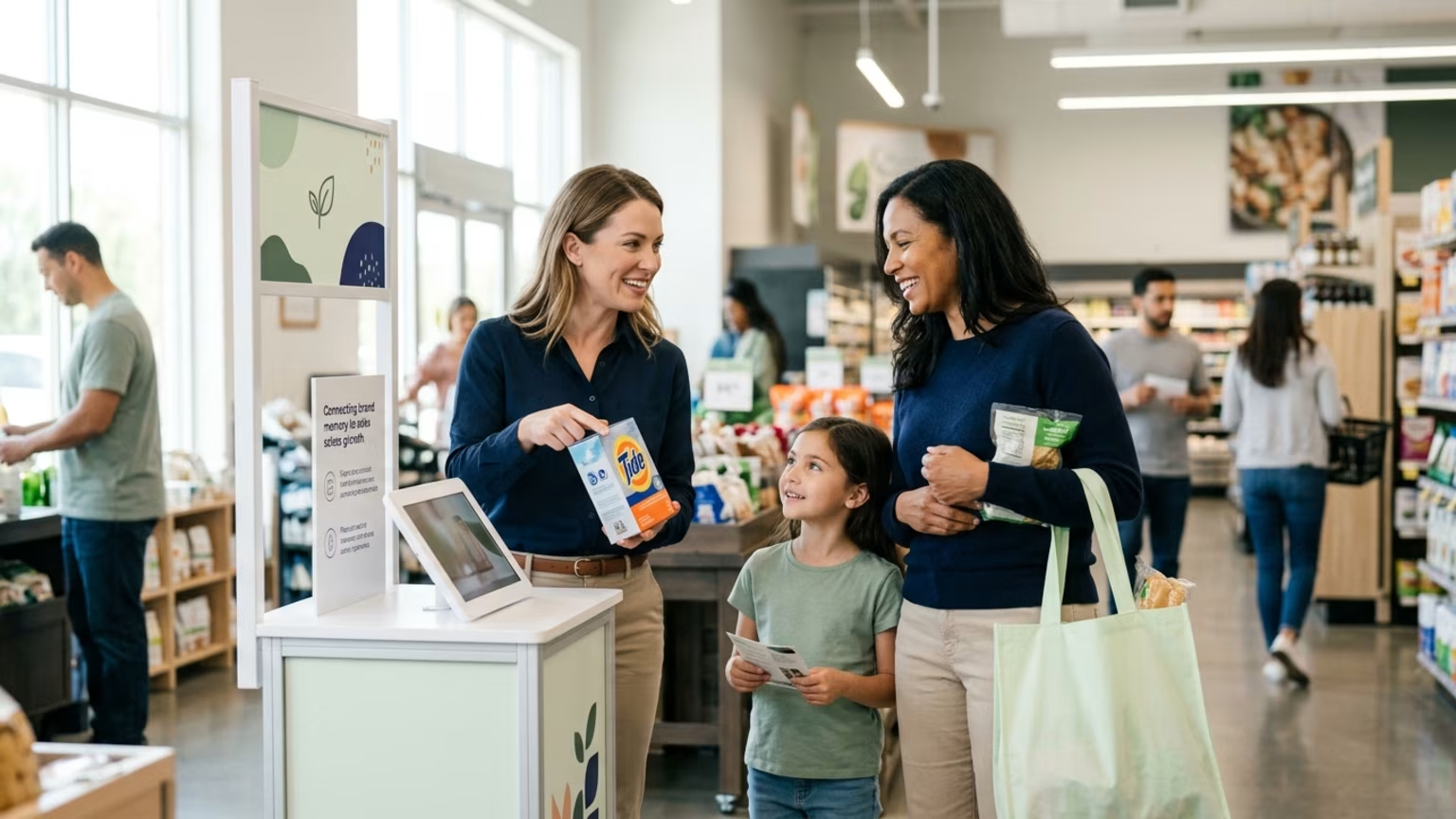
U.S. grocery unit sales declined nearly 2% year over year in most months from February through June 2026, including a 1.8% decline in June, according to analysis by Bain using NielsenIQ data. Retailers are facing intense commercial pressure to move volume and protect their profit margins. Brand activations must now prove they can generate actual store traffic and measurable sell-through rather than simply driving top of funnel awareness. Field marketing operators must rethink their entire approach to live events to secure and maintain retail buyer support.
Here are four harsh truths of executing this correctly:
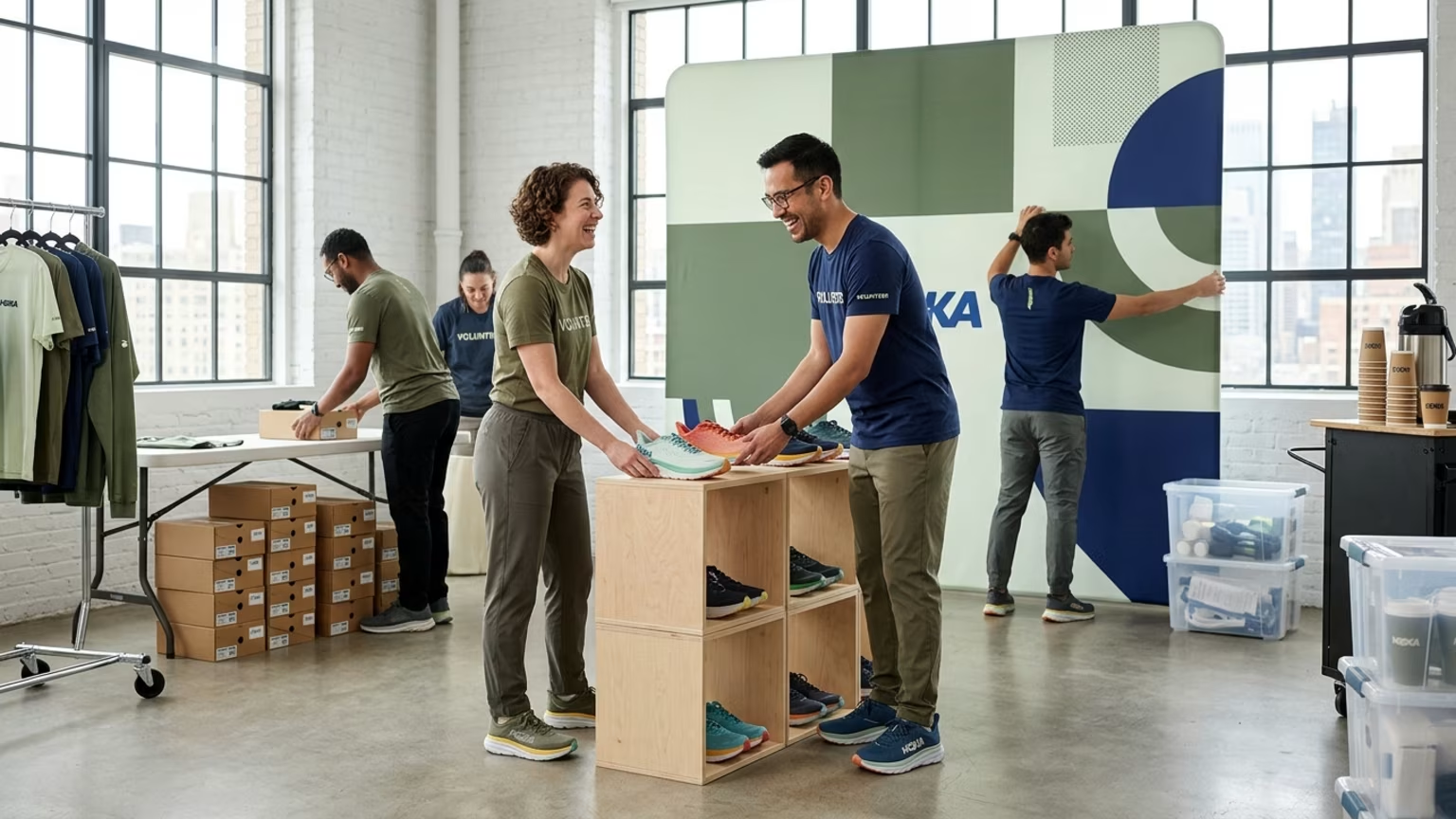
Generating retail sales from live activations requires rigorous pre-event planning before a single customer arrives. The unglamorous prep work dictates the commercial success of the entire promotional campaign. Securing proper permitting ensures your event footprint can operate legally near priority retail locations without interruption. Establishing solid CRM routing setups guarantees that consumer data flows directly into actionable follow up sequences.
Our team coordinates vehicle staging and inventory mapping weeks before the first product sample is poured. A physical brand experience cannot produce retail sell-through if the product is unavailable or poorly merchandised. We verify which exact stores carry the product and confirm that shelf inventory can meet the expected spike in demand. This operator-grade discipline prevents out of stock scenarios from ruining an otherwise successful field promotion.
NielsenIQ research reported by FoodNavigator found that consumers were about half as likely to make an impulse snack purchase online as in a brick-and-mortar store. The same report said U.S. online CPG sales grew 14.8% in 2025, compared with 3.7% growth for total CPG sales, meaning online accounted for approximately 74.2% of total CPG dollar growth. These figures suggest that physical retail remains critical for immediate discovery and sensory trial. Brands must prepare the physical environment meticulously to capture this spontaneous shopper behavior.
Translating a highly creative concept into a concrete commercial outcome requires a methodical approach on the floor. Seasoned field managers should follow specific execution steps to maximize their retail sales impact. First, you must begin with a clear retailer objective such as increasing units per store per week or supporting a new region rollout. A brand that proposes to improve weekly store units gives the retail buyer a solid reason to participate.
Next, you must map the exact retail path by confirming product availability and identifying nearby stores for participating shoppers. Build basket growth directly into the brand experience by demonstrating your product alongside complementary items or established daily routines. A beverage company can demonstrate a serve occasion alongside mixers to inspire a larger purchase. A protein product can be paired strategically with breakfast items to make the broader category more shoppable.
Finally, design a specific retailer handoff like a digital coupon or a direct link to the store product page. Our team blends physical and digital elements by integrating QR codes and mobile technology into a cohesive layer. We apply this connected approach across retail and event tours to drive highly measurable results. The objective is to make the transition from the event footprint to the retail checkout completely seamless.
NielsenIQ’s 2026 “From Basket to Moment” report said 71% of shoppers start with a brand in mind, while omnichannel adoption increased from 19% to 28% in one year. The live experience should be designed carefully for both existing intent and immediate in the moment conversion. A strong commercial plan makes it extremely easy for the shopper to buy immediately. This methodical approach is essential for connecting live events to retail sell-through and justifying future budgets.
Many brands fail to convert live interactions into sales because they severely underestimate crowd flow and data tracking requirements. Treating a physical activation as an isolated event often results in highly inefficient post event follow up. Valuable leads vanish on bad clipboards or get trapped permanently in disconnected manual systems. Without a proper routing framework, a massive enthusiastic crowd generates zero measurable Return on Investment for the brand.
Another common execution mistake is completely ignoring the broader economic context of the target shopper. Bain also found that 80% of U.S. consumers were trying to spend less, while 56% of those cutting grocery spending were moving to lower-priced options and 49% were buying less altogether. NIQ reported that 53% of global respondents were increasingly buying more private-label products, while 68% viewed private label as a good alternative to national brands and 69% viewed it as good value. However, NIQ also found that 54% of global consumers were likely to treat themselves by upgrading to a premium brand.
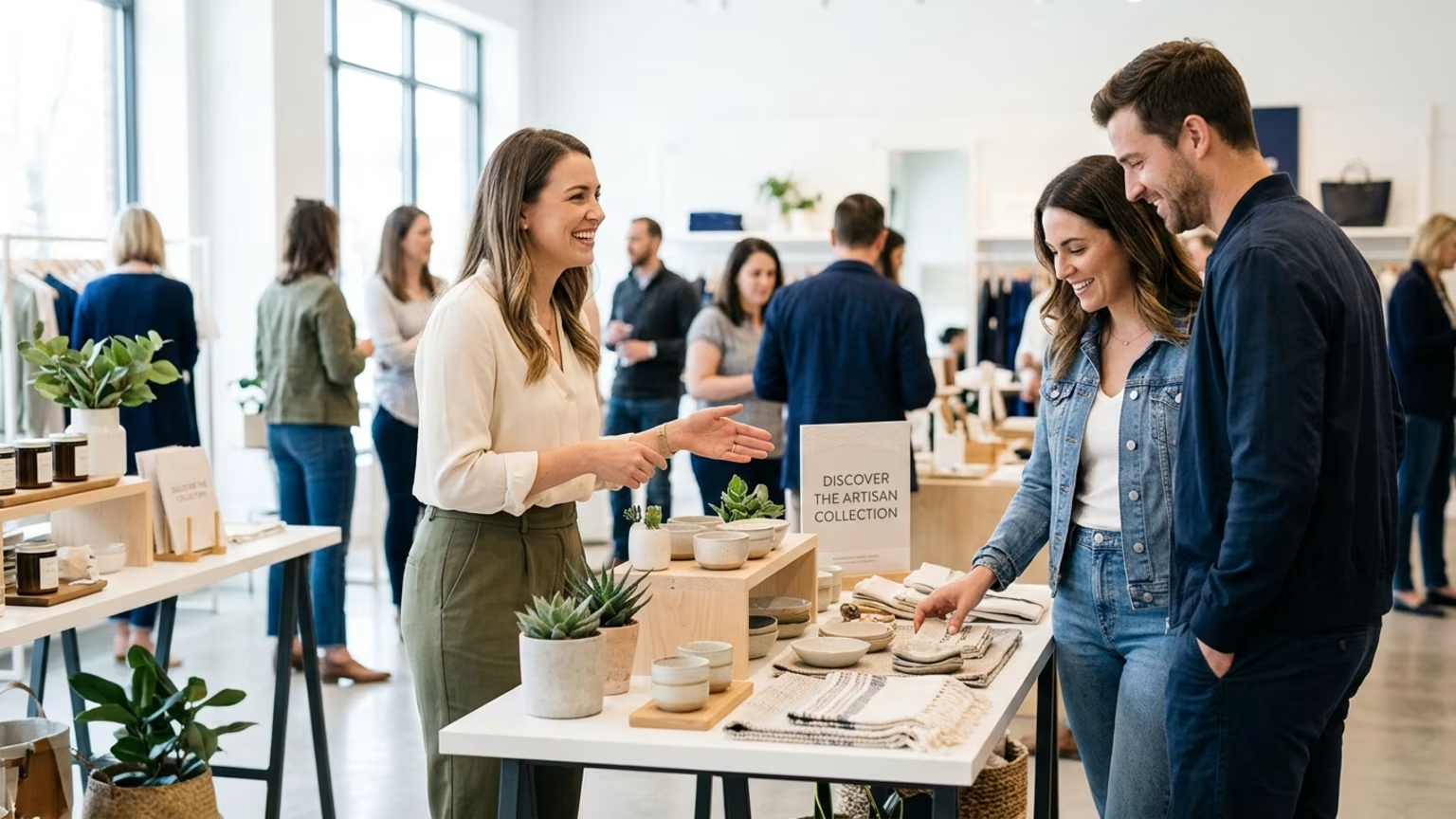
Brands must provide a highly credible reason for value conscious shoppers to spend their money right now. Amateurs hand out expensive free samples without placing the actual retail product within immediate physical reach. This costly error creates product trial but completely leaves the final purchase decision to chance. Field marketing professionals know that proper brand activation services must strategically bridge the physical gap between the sampling station and the retail register.
Furthermore, inexperienced teams often confuse psychological brand lift with actual retail sell-through. High purchase intent and favorable sentiment surveys indicate that the creative experience worked emotionally. However, these psychological measures do not prove that consumers actually bought the product at the store. Relying on generalized return on ad spend metrics can show correlation but fails to prove true causation.
The commercial work does not magically end when the activation footprint is finally packed up and shipped away. Retail buyers need concrete evidence that the brand can execute reliably and handle logistical issues professionally. You must rigorously report on execution failures like missed ambassador shifts, out of stock rates, and display compliance. Honest operational reporting builds immense trust and helps the retailer determine if the program is worth expanding globally.
National Experiential, citing PQ Media’s 11th Biennial Global Experiential Marketing Forecast, reported global experiential marketing spend of $138.94 billion in 2025 and projected 10.3% growth in 2026. As industry budgets increase, the standard for proving actual commercial value will only get much stricter. Marketers must build a robust KPI hierarchy covering execution, engagement, conversion, basket size, and overall loyalty.
Watch your retail sales velocity very closely in the critical weeks immediately following the live event. Compare the incremental units per store carefully against your predefined control groups to verify the true commercial impact. You should pair transaction data with proof of play reporting to eliminate confusing variables like weather or regional seasonality.
U.S. grocery unit sales may be facing broad volume challenges, but a precision execution strategy can still capture measurable growth. The goal is moving beyond simply counting badge scans or distributing loose product samples. Turning live brand experiences into proven retail pipeline is the ultimate test of operator excellence.
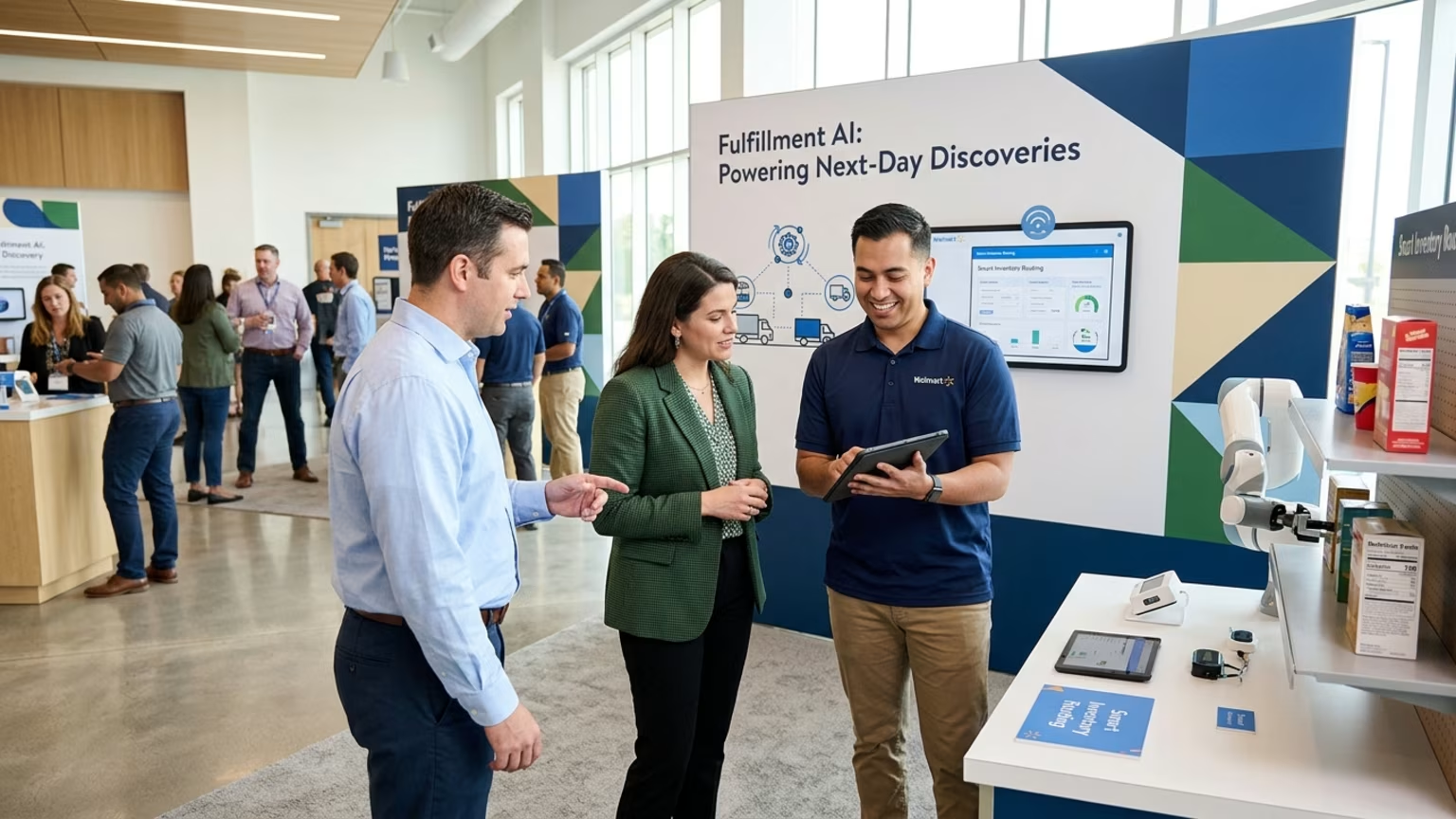
After proving retail sell-through in a controlled pilot, scaling the footprint to national expo floors demands rigorous logistical coordination. Makai eliminates inefficient post event follow up and CRM routing by planning and managing trade show spaces that attract attention, start conversations, and convert visitors into customers.

30 Years Experiential & Retail Activation Partner for CPG & Beverage Brands | Multi-Market Demos, Roadshows & Costco/Club Programs That Actually Sell