Robbie Thain
Founder, CEO

Learn how top B2B brands turn trade shows into a measurable growth channel in 2026. Align sales and marketing for proven pipeline and retail success.
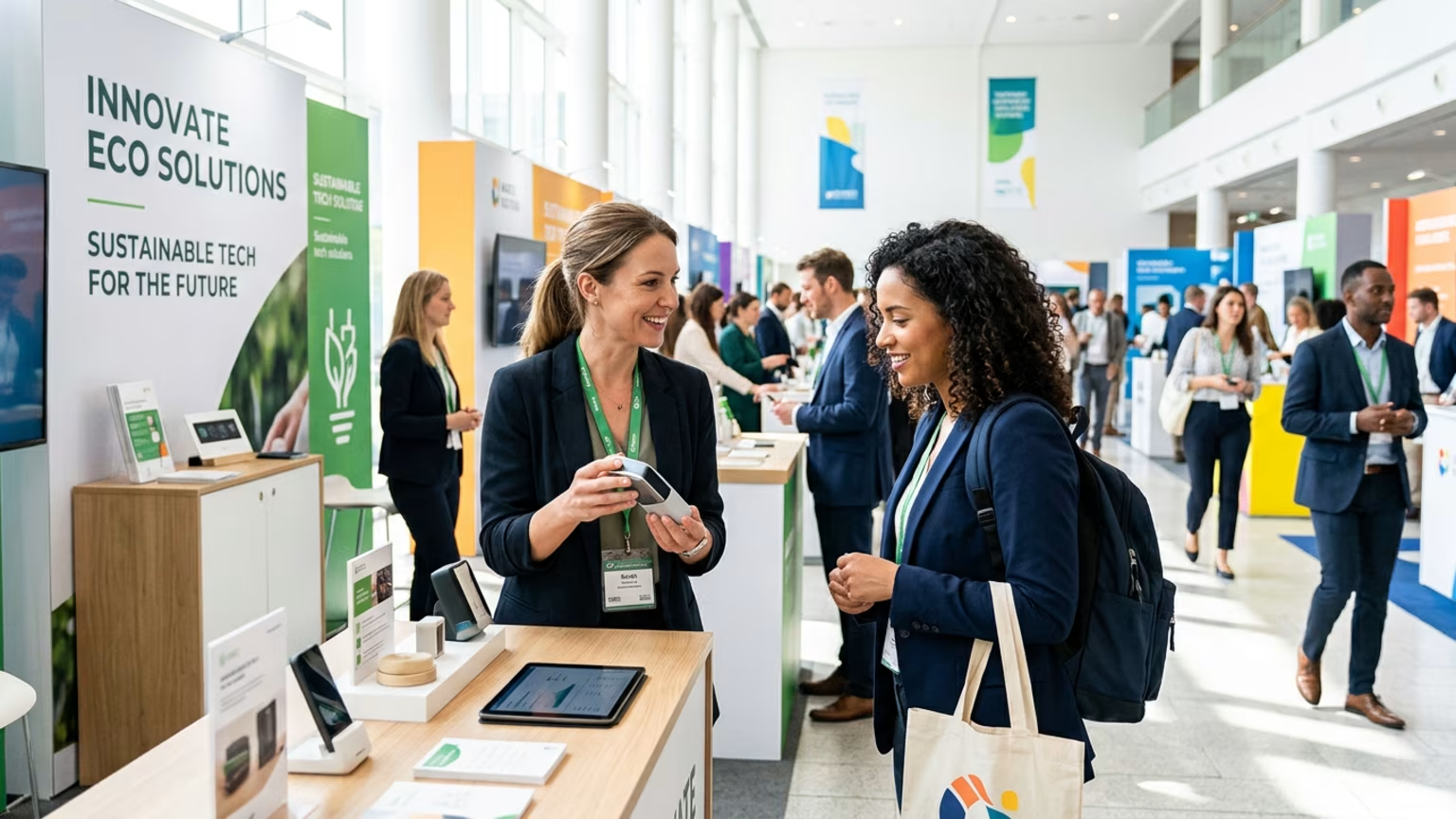
Sarah stood at the edge of her expensive booth footprint looking at a sea of attendees. She had a mountain of scanned badges and a completely depleted sample inventory. She knew her sales director would look at the list next week and ask where the actual buyers were.
Trade shows remain the absolute largest marketing investment for B2B brands today. Yielding measurable revenue requires a massive shift from chasing traffic to engineering qualified meetings. Aligning sales and marketing around a performance-focused playbook transforms live events into a predictable pipeline engine.
Every year brings the familiar routine of spending six figures on space and staffing for national expos. The doors open and a massive flood of attendees approaches the booth to grab free samples. The team feels a rush of adrenaline seeing the space completely packed all day long. It looks like a massive success on the surface.
Then reality hits on the flight home to headquarters. The customer relationship management system is stuffed with curious onlookers and direct competitors instead of retail buyers. Sales representatives spend weeks calling people who have zero purchasing authority. The event budget is completely exhausted.
The Return on Investment remains a mystery wrapped in a spreadsheet of entirely unqualified names. We have executed over 1000 campaigns across all 50 states, bringing brands to life in every major U.S. market. In our experience, this exact post-show hangover forces smart marketers to reevaluate their entire strategy. Brands demand clearer business impact and much more strategic engagement than past years.
They need hard evidence that physical activations create real sales pipeline. Without explicit qualification criteria and clear meeting outcomes, your sales team simply drowns in noise. The high volume of badge scans depresses conversion rates and burdens the entire organization. A busy booth produces fog instead of revenue if the underlying field strategy is weak.
According to the Center for Exhibition Industry Research, exhibitions command nearly 41 percent of B2B marketing budgets. They remain the single largest line item for many operating companies. Brands must stop viewing shows as isolated branding exercises to justify that massive cost. They must make these events the strict centerpiece of an integrated revenue strategy.
The modern approach treats the exhibition floor as a physical extension of targeted account campaigns. You design the exact pipeline you want weeks before you arrive at the venue. Strict alignment between marketing and sales defines exactly who counts as a highly qualified lead. Marketing drives pre-show awareness and books firm meetings with target accounts.
Sales executes those meetings on the floor with absolute precision. Top organizations measure pipeline velocity and brand-assisted deal size to gauge true performance. They use the physical environment to build deep trust and accelerate deals simultaneously. Trade shows combine the emotional impact of a live brand experience with the hard metrics of direct response.
This convergence of brand and demand requires a fully documented operational framework. A smart strategy recognizes that B2B audiences move freely between digital channels and in-person experiences. You connect digital touchpoints to physical meetings using reliable first-party data. This data-driven targeting separates high-performing event operators from those who just hope for foot traffic.
Running a high-yield activation requires rigorous operational discipline from day one. This step by step guide details the exact process to build a trade show machine that generates pipeline.
Agencies notice brands increasingly need help turning events into trackable sales. When companies choose between retail demos, roadshows, and tours, this operational rigor dictates success. Train your field teams to politely disqualify tire-kickers right away. Time spent talking to the wrong person steals attention from a real buyer.
You cannot improve an operation you do not measure accurately. Prove the true value of your event spend by abandoning superficial metrics like foot traffic. Track the lead and lag indicators that directly correlate with actual business growth.
Lead metrics tell you if your strategy works when the event is actively happening. Track the number of pre-booked meetings with tier-one accounts before the doors even open. Monitor the ratio of qualified conversations to total booth visitors each passing day. Count the number of exact next steps scheduled right on the busy floor.
These early indicators give your team the chance to adjust their approach immediately. Lag metrics prove the financial return weeks after the event concludes. Measure the total dollar amount of pipeline created and influenced by the show. Track the velocity of deals that included an in-person touchpoint compared to those that did not.
Consumer packaged goods brands should measure the exact number of new retail doors opened. You should track post-show sales lift in the exact regions engaged at the event. Agencies report increased demand for tracking experiential Return on Investment at trade shows. These hard numbers secure future marketing budgets and validate the overall strategy.
Consider a regional snack brand trying to secure national distribution at a major industry expo. They treated the event as a targeted account operation instead of sampling blindly to everyone. The marketing team identified fifty priority buyers and secured twenty firm meetings before the show began.
Their brand ambassadors learned to ask two simple qualifying questions before offering the full product presentation. This filtered out casual snackers and allowed the sales team to focus entirely on category managers. They captured exact data on current store counts and complex distribution challenges.
Every qualified buyer received a custom follow-up package within 48 hours. The package detailed exactly how the brand could drive category growth in their exact stores. This disciplined execution led to placements in three new major retail chains within a month.
By integrating live event strategies with a clear path to retail sales, they found incredible success. They proved that a coordinated event prep timeline linking trade shows to roadshows creates lasting momentum. A coordinated approach always beats fragmented execution.
Stop accepting vague results from your most expensive marketing channel. Implement a strict qualification framework for your next event and watch your pipeline grow predictably. Book a strategy call with our team to map out your upcoming physical activations.

30 Years Experiential & Retail Activation Partner for CPG & Beverage Brands | Multi-Market Demos, Roadshows & Costco/Club Programs That Actually Sell