Robbie Thain
Founder, CEO

New benchmarks reveal how open trade show booth designs and visible demo zones predictably turn foot traffic into qualified sales pipeline and retail orders.

Research shows that 81 percent of trade show attendees possess direct buying authority. This massive concentration of purchasing power means your physical footprint must function as a high speed qualification tool. New data reveals that open floor plans and clearly visible demonstration zones predictably turn that foot traffic into a qualified sales pipeline.
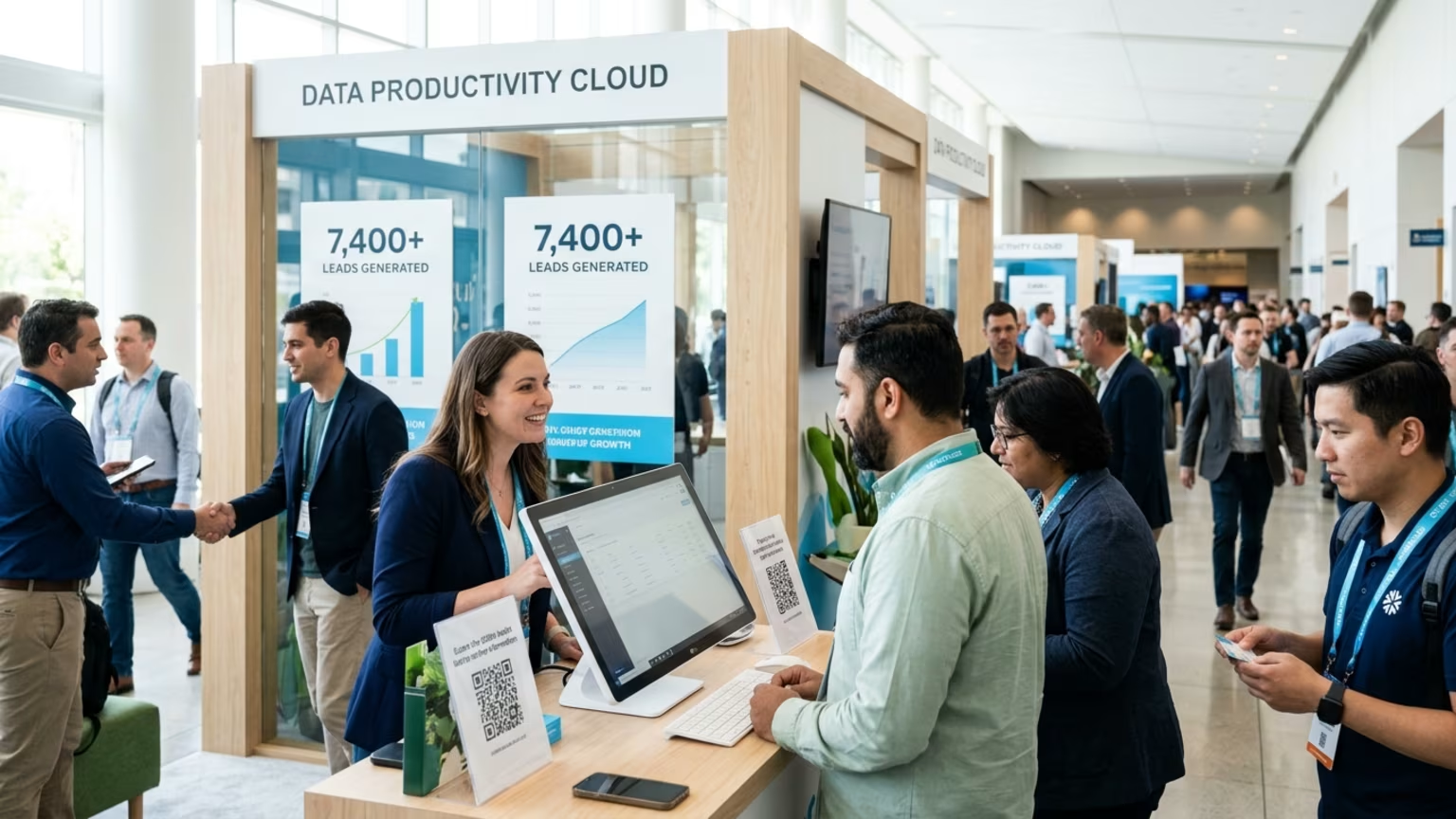
Walk onto a crowded convention center floor on the second morning of a major industry expo. You see massive structures blocking sightlines, cluttered graphics fighting for attention, and overwhelmed staff scanning badges with zero context. Buyers wander past these chaotic spaces without understanding what the brand actually sells. This creates a pile of unqualified contact scans that sales teams will ignore by next week.
Many brands treat floor space as a branding exercise rather than a tactical sales environment. They rent massive island footprints but fill them with passive displays and hidden meeting rooms. This approach assumes that bigger spaces automatically generate better Return on Investment (ROI). The data clearly proves this assumption wrong.
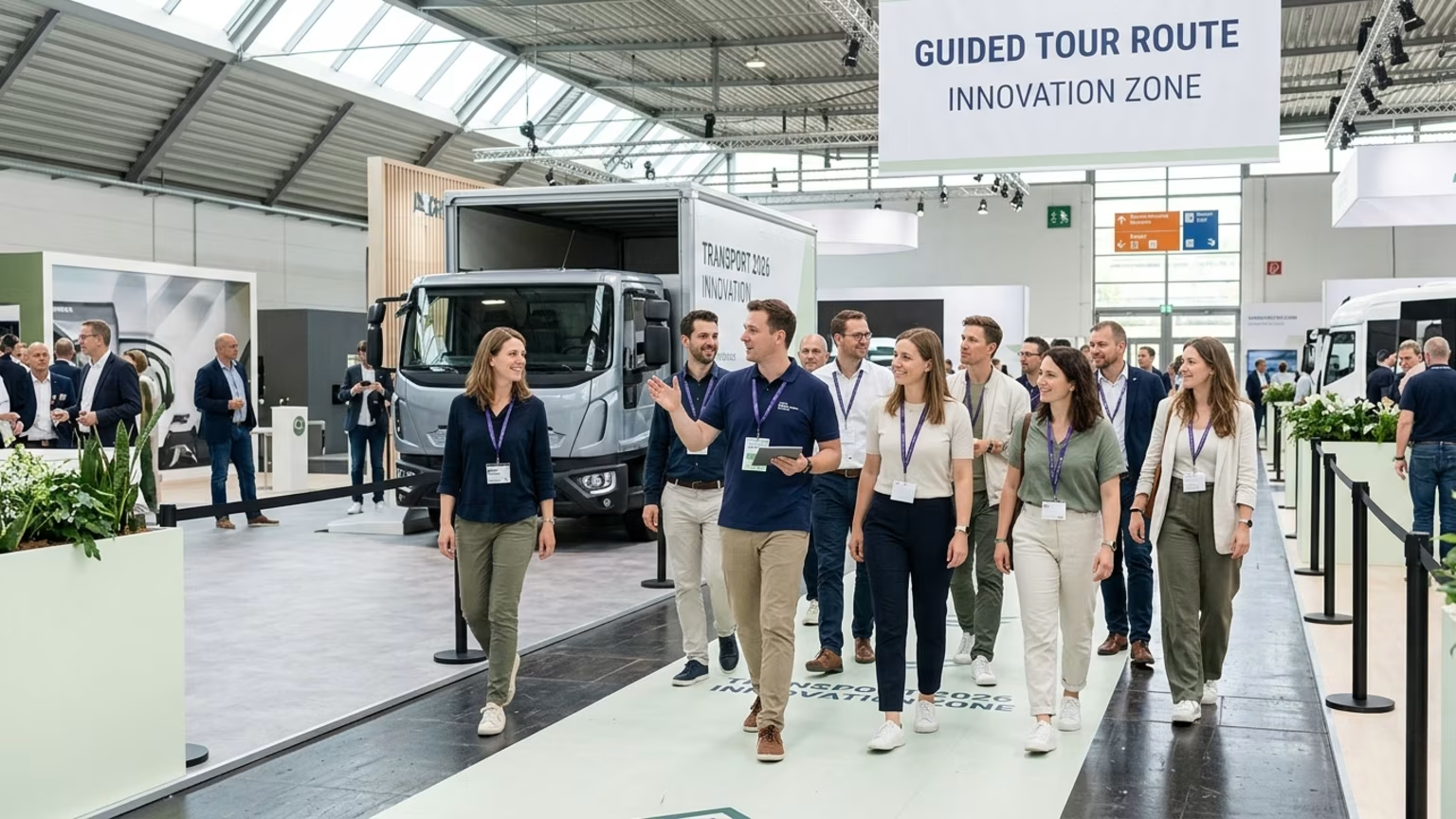
Marketing operators face immense pressure to prove that physical activations drive actual retail sell through and pipeline value. A sprawling footprint with poor traffic flow often becomes an expensive logistical nightmare. When physical properties lack a clear pedestrian route, attendees crowd the aisles and block potential buyers from entering the space.
Beyond this, a staggering 92 percent of trade show attendees say they are actively looking for new products. When they encounter closed off walls or confusing messaging, they simply keep walking. They need immediate visual evidence that your product solves their specific problem.
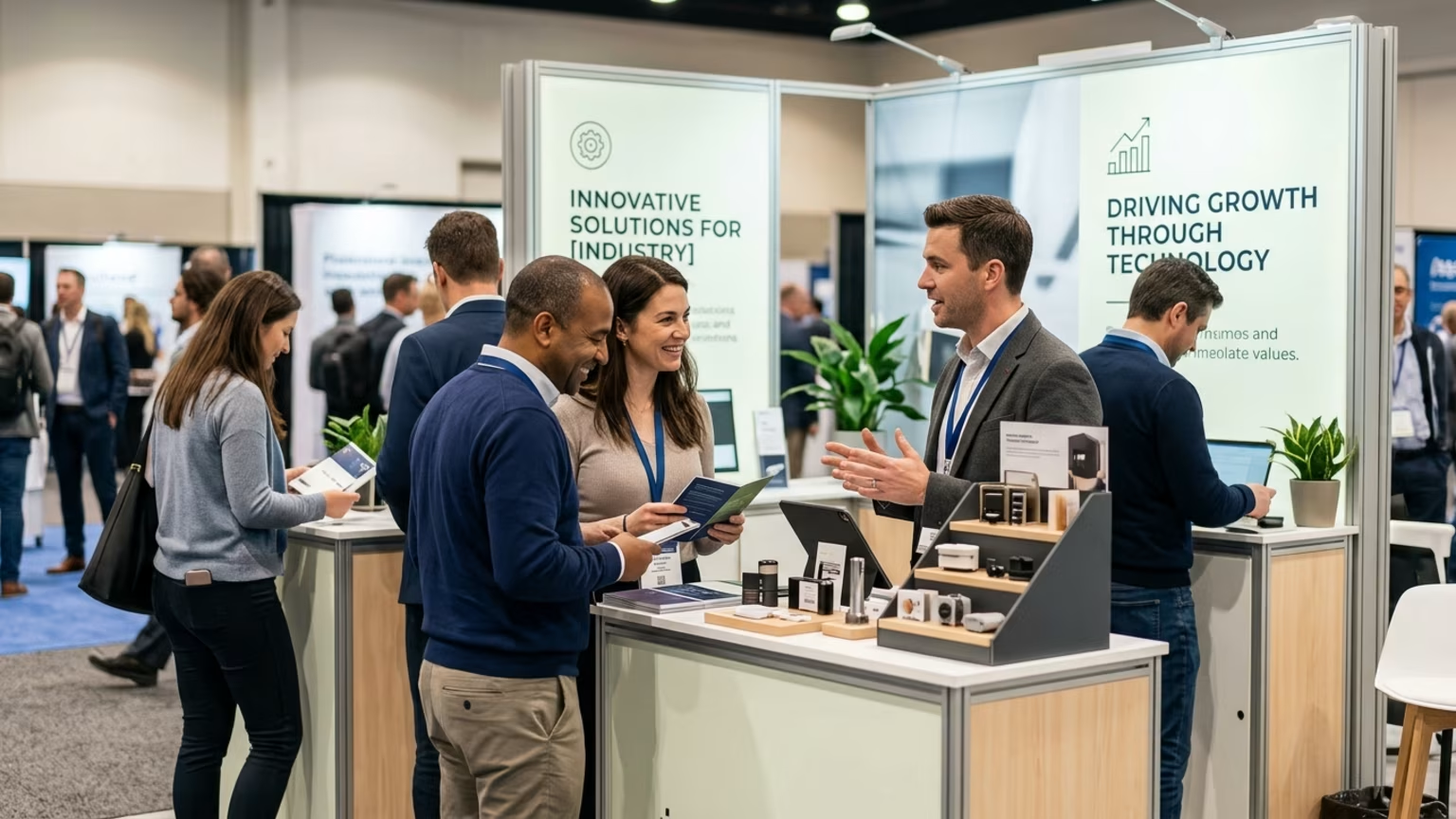
A recent synthesis of North American show data reveals a direct link between physical layout and lead quality. Open booths with multiple entry points consistently generate higher qualified lead counts. Buyers feel more comfortable stepping into spaces where they can see the main attraction from the aisle. According to industry analysis, attention must be carefully guided rather than aggressively captured.
Smaller spaces executed with precision regularly outperform larger footprints that lack focus. Research from Skyline notes that a high quality 10x20 inline exhibit can yield far better results than a poorly executed 20x30 island. This right sizing strategy allows brands to invest in premium staffing and high impact visuals. The physical structure simply serves as a funnel to qualify the right buyers.
The goal is physical and conversational engagement. Absolute Exhibits highlights that tactile interaction increases perceived ownership and decision confidence. When attendees touch a product or sample a beverage, their recall improves drastically. We design mobile activations and roadshows that accelerate consumer trial, build trust, and boost retail velocity during 90-day product launch windows. Our structured approach transforms initial product trial into sustained consumer confidence and retail performance.
Brands must view their physical structures as integrated systems rather than isolated creative projects. Every design choice must support field operations, lead capture routing, and post event follow up sequences. Disconnecting these elements creates friction and drastically weakens overall performance on the show floor.
Many companies fall into the trap of over complicating their physical footprint. They add massive digital screens, chaotic lighting rigs, and dense text walls that overwhelm the senses. Research explicitly shows that visitors make a judgment about a brand within three to five seconds. If they cannot identify your product category and primary benefit in that window, they simply walk away.
Clarity always outperforms maximalism in a high stress environment. When you align your architecture with human behavior, you create a natural flow of traffic. Attendees naturally gravitate toward well lit spaces that offer immediate tactile interaction without forced sales pitches. Your structural design should function exactly like a digital landing page.
Every sightline should lead the visitor directly to your primary physical call to action. This strategic alignment reduces visual friction and accelerates the qualification process.
Translating these benchmarks into a functional show strategy requires strict operational discipline. You must coordinate execution across your design, production, logistics and field teams. The following steps will turn your next physical space into a measurable conversion engine.
Many marketing directors rely on vanity metrics to justify their massive convention budgets. They present total scan counts to their executive team without detailing the actual sales potential of those contacts. This outdated reporting style quickly destroys marketing credibility when those leads fail to convert. You must replace vanity metrics with actionable field data.
Capturing raw scan volume is a flawed metric that masks poor field performance. To justify your event spend, you must track the specific actions that correlate with closed revenue. This requires a strict division between leading indicators and lagging outcomes. Field teams need clear targets before the doors even open.
Your leading indicators happen on the floor in real time. Track the number of scheduled micro presentation attendees. Measure the volume of samples distributed at your edge facing stations. Monitor the ratio of total badge scans to actual qualified buyers with immediate purchasing power. These numbers tell you if your physical layout is actually working.
Lagging indicators prove the financial value of the activation weeks later. Measure the number of formal retail buyer meetings booked on site. Track the regional retail sell through lift in the markets surrounding the event. For consumer packaged goods companies, bridging trade shows with high conversion roadshows helps maintain this momentum long after the convention ends.
You must establish your definition of a qualified lead long before the structure is built. A strong qualification framework separates casual samplers from serious retail buyers with immediate intent. Equip your brand ambassadors with digital tools to tag leads based on timeline, budget, and specific product interest.
Connect your field capture tools directly to your primary customer relationship management platform. This immediate data transfer allows your sales team to initiate follow up sequences during the actual event. Speed to lead often determines the final success rate of your physical marketing efforts.
A national snack brand recently struggled with a massive enclosed booth that intimidated casual buyers. They frequently captured thousands of scans but generated very few actual retail orders. Their massive walls blocked aisle visibility and confused wandering grocery buyers. They needed a radical shift in their physical strategy.
The brand transitioned to an open 20x20 footprint focused entirely on product trial. They removed the tall perimeter walls and installed four edge facing tasting stations. Staff members guided interested buyers from the sampling edge to a central micro presentation area. This lead capture playbook shifted their focus from passive scanning to active qualification.
The results validated the new benchmark data immediately. Total badge scans dropped, but the volume of qualified retail buyer meetings tripled. By stripping away the visual noise, the brand forced attendees to focus entirely on the taste and margin profile of their product.
This open layout approach proved highly adaptable for their future field marketing initiatives. The brand reused the modular tension fabric displays for regional Costco product rollouts later that quarter. Their physical assets became a repeatable revenue engine rather than a single use expense.
Those 81 percent of attendees with buying authority are still walking that chaotic convention floor right now. Instead of getting lost behind massive walls and cluttered graphics, they are gravitating toward clear, open and interactive brand experiences. By optimizing your physical layout for visibility and engagement, you can capture their attention before they wander away. Book a strategy call to turn your next event presence into a measurable revenue driver.

30 Years Experiential & Retail Activation Partner for CPG & Beverage Brands | Multi-Market Demos, Roadshows & Costco/Club Programs That Actually Sell