Robbie Thain
Founder, CEO

IMEX America 2026 introduces a Return on Experience framework. Learn how to design your trade show booth for measurable outcomes, trials, and pipeline growth.
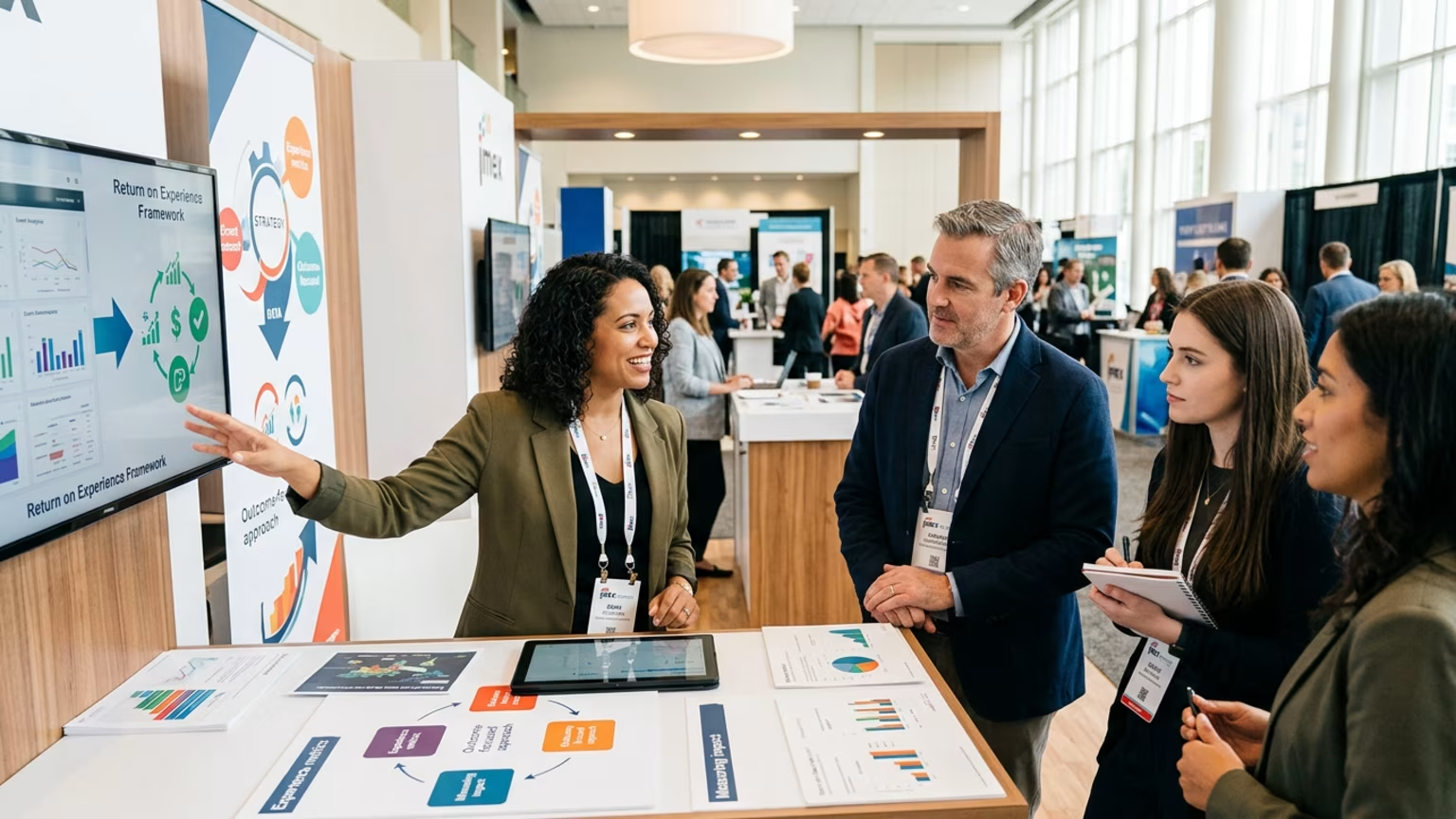
IMEX America 2026 recently introduced a formal Return on Experience framework to help exhibitors design booths around specific behavioral outcomes. This shift gives brands clear visibility into how experiential design and staffing translate into measurable pipeline and retail partnerships.
The scanner beeps non-stop as attendees grab free tote bags and walk away. Your booth staff is exhausted from repeating the same pitch to unqualified passersby. A month later, the sales team looks at a spreadsheet of bad data and asks where the pipeline went. This common scenario happens when brands treat live events as simple branding exercises instead of conversion engines.
Trade show floors are often noisy environments where attention is scarce. Marketing operators feel intense pressure to prove that these expensive activations lead to sales lift and retailer confidence. Event tech platforms have shown that structured matchmaking increases scheduled meetings by up to thirty percent. The new IMEX directive forces a hard pivot away from foot traffic and toward intentional business outcomes.
Experiential marketing teams often struggle to connect physical interactions with financial returns. Field marketing directors spend massive budgets on premium booths but forget to map the actual consumer journey. Without a clear plan, your activation becomes a chaotic display of products with zero strategic follow-up. Planners must recognize that hoping for good interactions is not a viable strategy.
A lack of operational rigor turns expensive trade show real estate into a liability. High-impact brands understand that live events must generate qualified leads to justify the high costs of entry. Recent reports from Northstar Meetings Group outline how organizations like the Professional Convention Management Association are pushing for standardized global reporting. This harsh reality sets the stage for a much needed industry correction.
The modern trade show environment leaves absolutely zero room for guesswork. Field marketers spend months planning logistics and shipping thousands of product samples across the country. Yet many teams still arrive onsite without a clear strategy for converting foot traffic into tangible business value. This disconnect creates a massive blind spot for executives trying to measure the true impact of their marketing spend.
The Return on Experience framework pushes exhibitors to build activations around precise actions. Instead of designing a booth that simply looks premium, brands must engineer the space to drive booked meetings, product trials, and verified opt-ins. This approach aligns perfectly with organizations that treat experiential marketing as a strict performance channel. It requires a fundamental shift in how marketing leaders brief their agencies and internal teams.
For consumer packaged goods and beverage brands, this means moving beyond passive displays. You have to separate high-value consultation areas from fast-paced trial zones. Planners must rank their desired outcomes and assign a concrete economic value to each interaction type. When you design for structured behaviors, you stop guessing and start tracking actual Return on Investment.
Modern B2B event platforms that use algorithmic matchmaking report a noticeable increase in meaningful connections. According to recent event technology roundups from BizBash, planners are increasingly relying on AI-powered platforms to simulate attendee behavior and lock in priority meetings. Every square foot of your activation should serve a specific business purpose. This intentional design philosophy prevents wasted space and maximizes your engagement potential.
New standards from the Professional Convention Management Association show a global push toward rigorous event reporting. Organizers are demanding more accountability from exhibitors to justify the massive carbon footprint and financial cost of trade shows. Aligning your strategy with these industry shifts protects your brand from falling behind competitors. This proactive mindset keeps your marketing operations lean, effective, and highly profitable.
Understanding how global brands master U.S. trade show execution in 2026 provides a solid foundation for implementing these behavioral designs. You must align your field staff, digital tools, and physical assets to support your primary business goals. Treating your booth space like a performance channel changes the entire trajectory of your trade show program. This alignment turns fleeting consumer interactions into qualified leads.
Executing this strategy on a crowded trade show floor requires intense focus. You need a step-by-step plan to turn transient attention into verifiable data. The following steps outline how to deploy this framework effectively.
Measuring the impact of a live event requires a clear distinction between early indicators and final outcomes. Lead metrics tell you if your onsite execution is working in real time. These include the total number of tier-one meetings booked, the volume of qualified trials completed, and the exact count of content opt-ins. Tracking these numbers daily allows your team to pivot their approach before the show ends.
A strong set of lead metrics gives your field marketing manager immediate feedback. You can quickly see if a particular product demo is resonating with the target audience. If meeting conversions drop, you can adjust your messaging or reposition your most experienced staff members. This agile approach prevents you from wasting an entire event on a failing strategy.
Lag metrics prove the financial validity of your experiential program months after the doors close. You must track closed-won revenue tied directly to trade show contacts. Other critical lag indicators include sustained retail sales lift in target regions and new distribution commitments from buyers. Connecting these data points helps you build a solid financial case for future event budgets.
Presenting these lag metrics to senior leadership transforms how they view experiential marketing. They stop seeing events as an unavoidable expense and start treating them as strategic investments. Analyzing marketing ROI benchmarks by industry updated for 2026 gives you the necessary context to defend your budget requests. A data-driven approach secures your position as a revenue-generating operator.
Your financial team needs concrete evidence that experiential budgets drive actual company growth. Relying on vague sentiment analysis or unverified traffic counts will immediately disqualify your budget requests. You must present clear data showing how physical activations lower customer acquisition costs and accelerate sales cycles. This level of financial accountability separates top-tier marketing operators from the rest of the pack.
Consider a premium beverage brand launching a new sparkling water line at a major industry expo. Instead of a standard sampling table, they deploy a structured activation designed to generate both trial data and buyer meetings. The brand uses algorithmic meeting scheduling to lock in thirty conversations with regional distributors before arriving onsite. They build a private tasting lounge strictly for these high-value discussions.
On the public side of the booth, trained ambassadors run a timed product trial. Visitors receive a full-sized sample only after scanning a code and answering two brief qualifying questions. This setup yields hundreds of qualified consumer profiles alongside the pre-booked distributor meetings. By the end of the quarter, the brand ties those initial meetings to three new regional retail authorizations.
The consumer data acts as a powerful selling tool to convince skeptical buyers about market demand. Presenting verified trial metrics proves that real people actively want the product on store shelves. The brand completely removes the guesswork from their post-event reporting. This precise execution perfectly illustrates the power of the Return on Experience model in action.
Another example involves a healthy snack company testing a new flavor profile at a crowded food expo. Industry analysts from Exhibit City News report that major global venues are seeing high demand for spaces that support these multi-layered activations. The brand tracks every single sample distributed and follows up with a targeted email campaign two days later. This focused strategy turns a simple taste test into a measurable revenue event.
Experiential marketing is no longer a place for soft metrics and hoping for the best. Brands that master this new operational standard will dominate their respective categories. The trade show floor is a high-stakes environment that rewards precision and penalizes disorganization. Take control of your next activation by demanding absolute clarity on your behavioral targets.
The Return on Experience framework proves that live activations can generate predictable and measurable growth. You no longer have to settle for vague engagement stats and unverified badge scans. Focus on structured behaviors, capture clean data, and hold your events to the highest operational standards. Book a strategy call with our team to start planning your high-impact activation today.

30 Years Experiential & Retail Activation Partner for CPG & Beverage Brands | Multi-Market Demos, Roadshows & Costco/Club Programs That Actually Sell