Robbie Thain
Founder, CEO

Learn why 62% of B2B marketers are shifting trade show budgets toward fewer, higher-impact booths to drive measurable ROI and pipeline growth.

The field marketing director stares at her phone on the third day of the national expo. Her team scanned four hundred badges over the past forty-eight hours. Most of those scans belong to swag hunters with zero buying power. She knows the Chief Financial Officer will demand revenue numbers by next Tuesday.
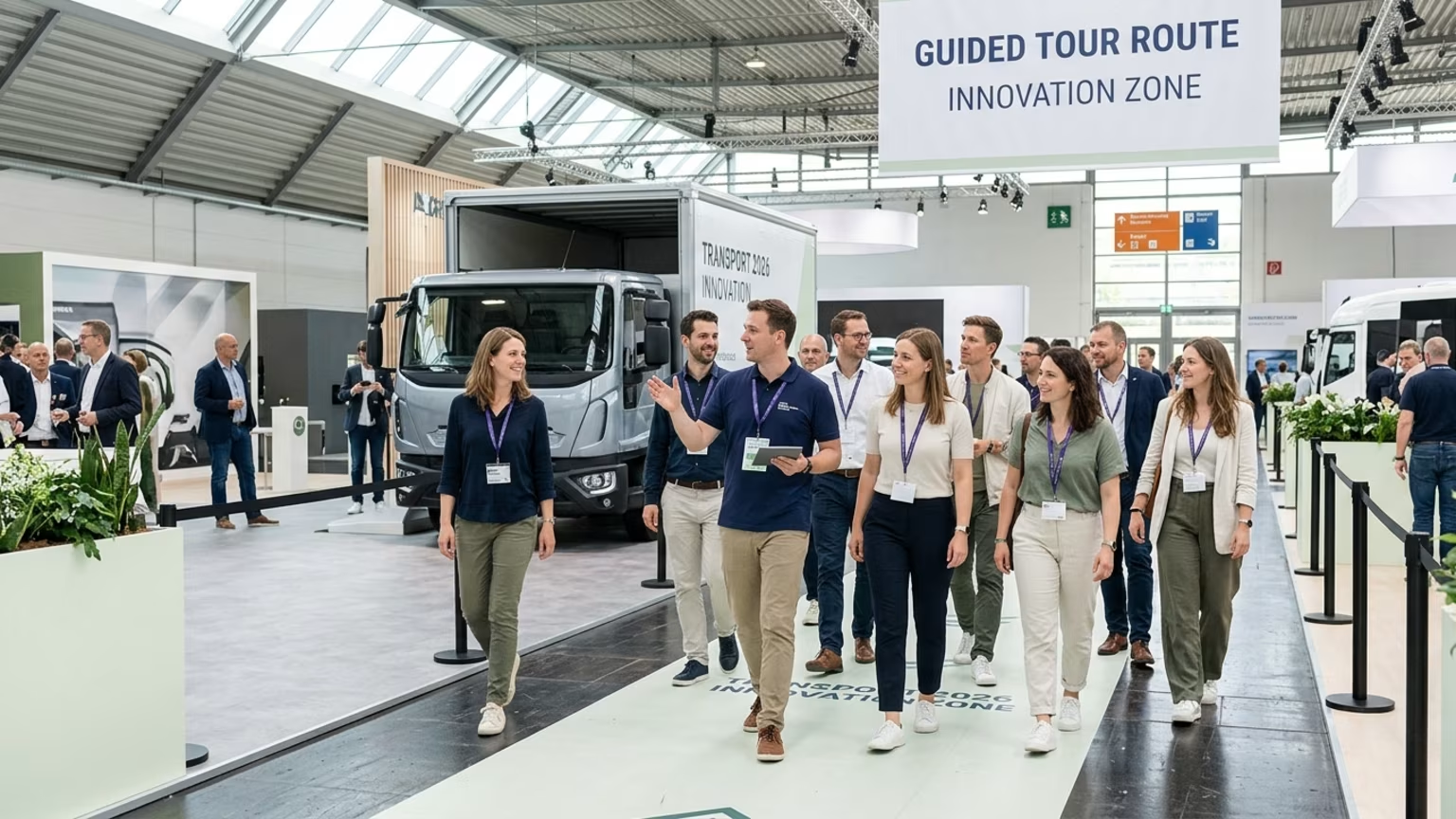
A recent industry survey reveals that 62 percent of B2B exhibitors are reducing their total event count to fund higher impact booths. This operational shift forces brand leaders to abandon blind reach and prioritize measurable commercial outcomes.
Marketing teams often fall into the trap of repeating their annual event calendar. They book the same corner spots and hand out the same branded pens. This approach creates a beautiful dumpster fire of fragmented execution. The floor gets crowded with competitors shouting over each other for attention. Attendees walk away with bags of cheap merchandise but zero memory of the core product offering.
A new survey from trade show platform Feathr confirms this growing frustration. The data shows that 62 percent of B2B marketers are shifting budgets toward fewer events. They are prioritizing targeted pre-show outreach, better on-site lead capture, and premium booth design over broad coverage. Brands are feeling immense pressure to prove pipeline impact and better qualify traffic.
This selective consolidation aligns with broader budget trends across the sector. Research from the Center for Exhibition Industry Research shows exhibitions still account for 40.8 percent of B2B marketing spending. Overall budgets remain flat heading into 2026. Money is selectively flowing toward strategic in-person sponsorships rather than broad expansion.
The old playbook of showing up everywhere is actively failing. You cannot win retail buyers by throwing branded stress balls at them. The expectations for real physical engagement have changed drastically. Marketing leaders must adapt to an environment that rewards precision over raw scale.
The pressure to prove financial outcomes is intensifying across the industry. Event marketing accounts for an average of 14 percent of total marketing budgets. Brands are scrutinized heavily when those dollars fail to produce verifiable sales opportunities. High-level executives want proof that their physical footprint creates measurable traction.
The era of spraying resources across every regional convention is ending. Smart operators are pruning their portfolios to fund massive wins at flagship locations. They drop marginal shows where their ideal buyers lack strong presence. The remaining budget goes directly into creating hands-on experiences that command attention.
This strategy requires a rigid focus on education and interactive moments. Trade Show News Network reports that B2B buyers now value education-led experiences over traditional sales pitches. Younger buyers expect personalized interactions. They have little patience for outdated approaches.
Exhibitors are optimizing their square footage instead of expanding it blindly. Industry data notes that 83 percent of event marketers expect to maintain their current booth size. They are redirecting funds into product sampling, interactive displays, and robust qualification software. This internal investment transforms a static booth into a high-converting asset.
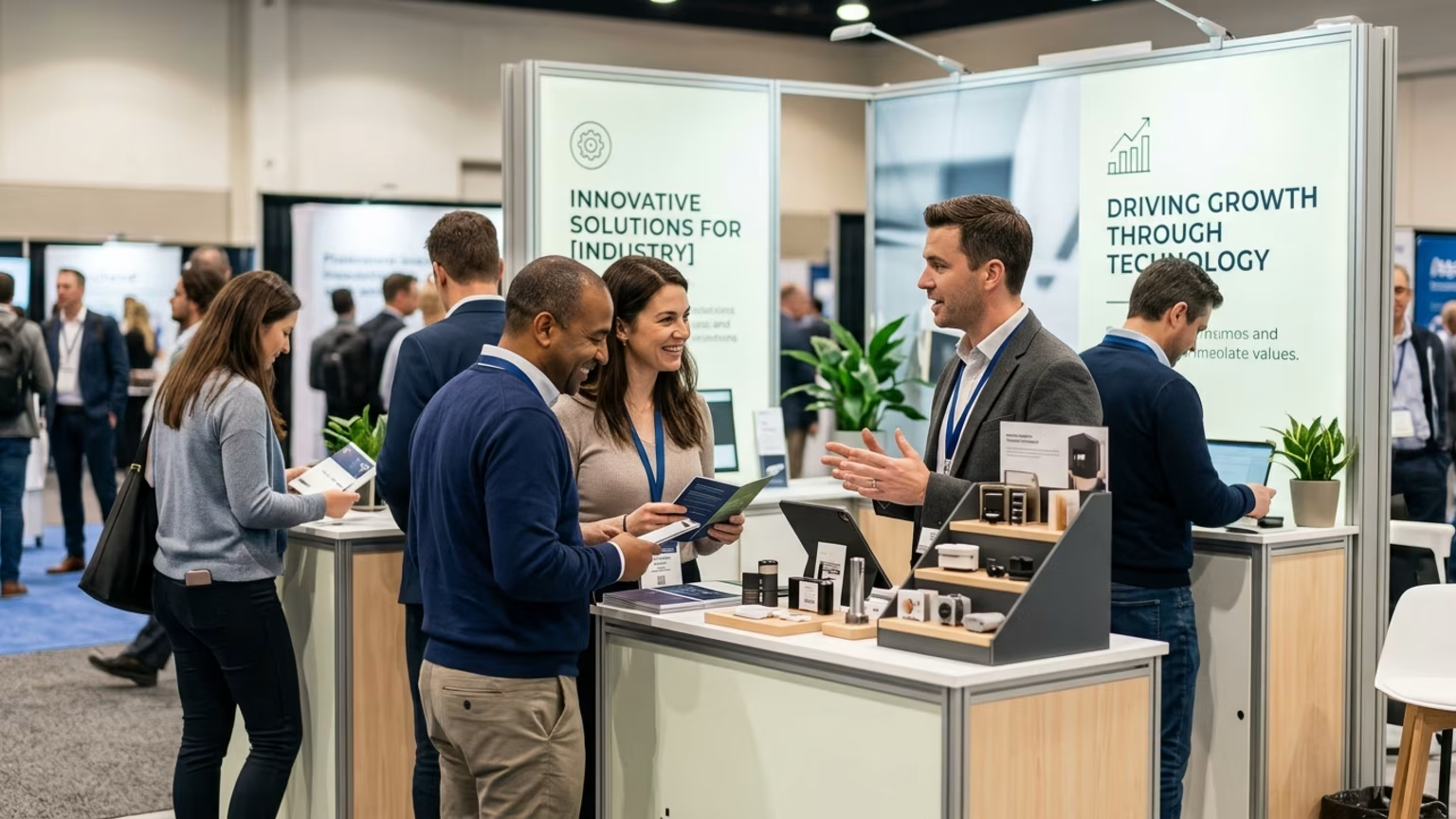
Many brands are moving away from massive LED walls and expensive gimmicks. Flashy technology fails when it lacks a clear story or a strong call to action. Attendees want practical solutions that solve their immediate business problems. Your booth must act as a physical consultation room.
Event budgets are growing at 10.9 percent for the upcoming planning cycle. These funds are protecting physical interactions as broader marketing allocations shrink. Brand leaders recognize that live events build a competitive moat that digital channels cannot replicate. You must protect this investment by planning event prep timelines for seamless transitions that keep field operations flawless.
We specialize in creating retail demos, product sampling programs, and roadshows that bring brands face to face with their audiences. Each program is designed to drive trial, build consumer relationships, and accelerate retail velocity across multiple locations. We see firsthand how focused execution outperforms scattered attendance.
Upgrading your experiential strategy requires strict discipline before the doors even open. A systematic playbook removes guesswork and holds your field team accountable. You must execute a structured plan to secure real buyers.
Review your past twenty-four months of event data to identify your most profitable activations. Grade each show based on qualified opportunities and actual retail interest. Eliminate events that consistently deliver weak buyer density or low pipeline metrics. Reallocate those exact dollars to overfund your top three priority events.
Build your layout with clear zones for product testing, interactive demonstrations, and consultative conversations. Remove massive physical barriers that block natural traffic flow. Visitors should immediately understand the core value of your product upon entry. Guide them seamlessly from casual browsing to focused product education.
Run highly targeted campaigns to your most valuable retail partners four weeks before the event. Offer them dedicated meeting times and exclusive product previews. Digital channels work best when they warm up the right buyers before showtime. You want your calendar completely booked before your team boards their flights.
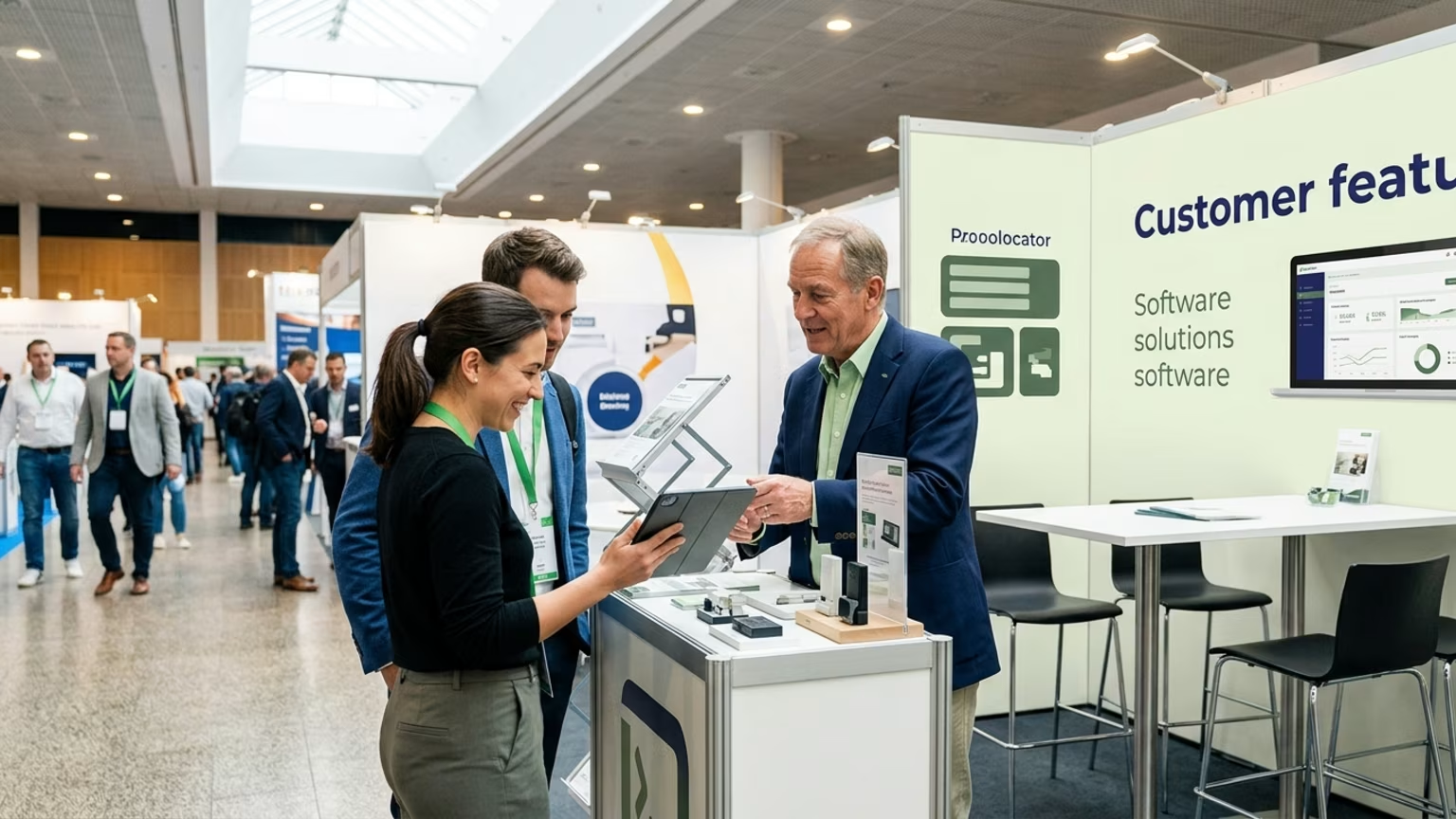
Give your staff precise questions to ask every single visitor. Log every interaction directly into your customer relationship management software using mobile scanners. Stop rewarding your staff for collecting hundreds of useless business cards. Tie their incentives directly to the generation of qualified pipeline.
Your brand ambassadors must act as trusted guides rather than aggressive salespeople. Prioritize hiring individuals who can explain your product category with deep expertise. Mix senior field managers with highly trained promotional staff for optimal floor coverage. Provide them with a structured script to handle frequent objections.
Follow up with high-value leads within forty-eight hours of the event closing. Send personalized materials based on the exact product the buyer tested on the floor. This disciplined approach solves the common problem of lost momentum. Sales representatives must receive all lead data in a clean format immediately.
Vanity metrics no longer satisfy executive boards. Counting raw badge scans provides zero insight into your actual Return on Investment. You must track lead quality and commercial pipeline to defend your marketing spend.
Event teams are now working directly with revenue operations to measure real financial impact. The first metric to track is your cost per qualified lead. This number tells you exactly how much you paid for a genuine conversation with a real buyer. You should track the conversion rate from a booth interaction to a booked meeting.
Lagging metrics provide the ultimate proof of success for consumer goods and food brands. Measure your retail authorization wins over the six months following a major expo. Track the short-term sales lift in the specific regions targeted by your event. Proving financial returns secures your budget for the following year.
Some operators take their strategy further to maximize their regional impact. They begin planning post-trade show roadshows that convert leads into immediate retail velocity. Linking a major expo to a regional street campaign extends the lifespan of your initial investment.
Track the progression of every contact through your sales funnel. A lead generated on the show floor should be tagged automatically in your tracking systems. This allows marketing directors to attribute future revenue back to a specific physical activation. Clear attribution models protect your field budget during corporate reviews.
It takes rigorous discipline to implement these tracking systems across a busy convention floor. You must train your staff to prioritize data entry over casual chatting. When field teams understand the financial goals, they perform at a much higher level. Tracking metrics that prove mobile roadshows drive sales lift requires similar data collection principles that work across all live formats.
A premium sparkling water company recently faced a major budget crunch. They historically attended twelve different regional food expos every single year. The team realized their regional show strategy was draining resources and producing terrible leads. They decided to cut eight of those smaller shows entirely.
They redirected that massive budget into two massive national events and one large retail push. The team built an interactive tasting bar staffed by senior brand managers. They implemented strict lead scoring protocols to capture specific buyer intent. This allowed them to ditch the swag and deliver actual product education.
The marketing team overhauled their entire logistics process for these remaining events. They hired professional brand ambassadors to handle immediate product sampling. This freed the senior managers to conduct deep operational meetings in private consultation areas. The seamless integration of sampling and selling created a highly efficient environment.
The brand tracked their sales velocity at key regional stores for three months post-event. The data showed a thirty percent increase in product movement at locations near the national show. This physical evidence gave their sales team an advantage during major retail category reviews. They never returned to their scattered strategy of attending twelve different minor shows.
The results validated their aggressive strategy shift. The brand saw a massive spike in qualified meetings with national distributors. They proved their case to leadership and secured better retail placements. This surgical approach turned a struggling event program into a massive revenue engine.
You can completely reverse a poor event strategy with the right execution partner. If your team needs to replicate this level of operational excellence, book a strategy call with our experts today. We can help you build an activation that wins retail buyers and proves true pipeline impact.
Review your event calendar tomorrow morning and cancel your lowest performing show to fund a better experience at your best one.

30 Years Experiential & Retail Activation Partner for CPG & Beverage Brands | Multi-Market Demos, Roadshows & Costco/Club Programs That Actually Sell