Robbie Thain
Founder, CEO

Learn how the top fitness and wellness brands of 2026 turn live events into recurring revenue. Apply this experiential playbook to your next CPG activation.

The global health and wellness market is projected to reach roughly nine trillion dollars by 2030. Consumers are actively shifting their discretionary spending away from physical goods and toward memorable wellness events. For marketers trying to drive real trial and retail lift, this spending shift proves that physical activations are now primary revenue engines. It is no longer enough to just hand out flyers.
This article breaks down the operational frameworks used by the top fitness and wellness brands of 2026 to turn casual foot traffic into recurring revenue. You will learn how to apply their community driven engagement models to your own consumer packaged goods and retail activations.
Let us look at a typical event footprint. You have secured a premium space at a major fitness festival or lifestyle expo. Brand ambassadors are handing out thousands of sample bars to attendees who grab the product, smile, and immediately disappear into the crowd. The booth looks incredibly busy to anyone walking past.
You collect a few scattered email addresses on an iPad, but the operational disconnect is glaring. When Monday morning arrives, your field marketing team cannot connect those interactions to measurable sales lift or sustained retailer confidence. You just paid for expensive brand theater instead of building a predictable sales pipeline. This scenario plays out every single weekend across the country.
Event organizers often promise massive attendance numbers to justify expensive booth spaces. Your team spends months coordinating logistics, shipping heavy equipment, and managing complicated staffing schedules. The doors finally open, the music pumps through the venue, and a sea of people floods the aisles. It feels like a massive win until you review the post event CRM reports.
Those reports usually reveal a massive gap between perceived engagement and actual lead capture. People loved the free snacks, took a few photos, and then completely ghosted your sales team. This happens when a brand relies entirely on visual spectacle rather than structured engagement mechanics. You cannot deposit good vibes into a bank account.
The core issue is a complete lack of structural retention. Consumers have been conditioned to treat trade show aisles as grab and go zones. They take your promotional materials, toss them in a tote bag, and forget your brand name entirely. There is no emotional hook or compelling reason for them to stay.
The most innovative fitness and wellness companies of 2026 solve this disconnect by blending digital platforms with immersive physical environments. According to Athletech News, these market leaders are no longer building standard storefronts or simple pop up tents. They are designing highly interactive spaces that function as always on experiential hubs for their communities. This creates a powerful operational foundation.
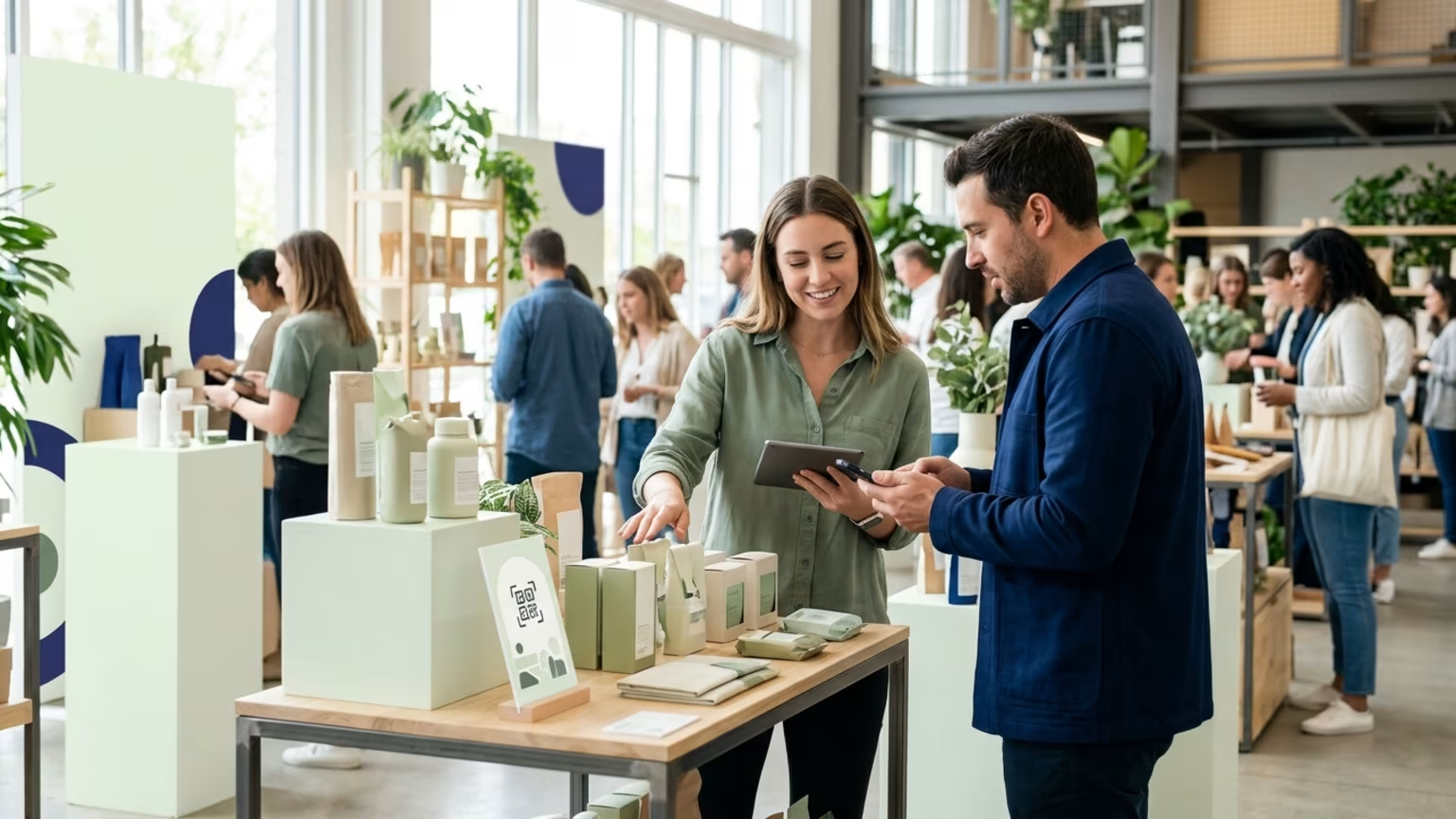
The core strategy is treating the physical environment as a “third place” rather than a mere point of sale. Consumers want a social hub where they can meet peers, attend live events, and participate in shared rituals. When brands fix experiential revenue leaks, they realize that community connection is the primary retention lever. A structured environment encourages visitors to linger naturally.
Extended dwell time directly correlates with higher retail spending and stronger brand affinity. These forward thinking operators integrate grab and go fridges, supplement bars, and branded apparel right where the consumer interaction happens. The physical space becomes a seamless funnel that guides a visitor from curiosity to verified purchase. It is an intentional design that strips away all friction.
This approach requires a complete mindset shift for consumer packaged goods marketers. You must stop designing linear sampling lines that push people away the second they grab a product. Instead, you need to create environments that pull them in and make them comfortable. A multi sensory design utilizing specific lighting, curated soundscapes, and clear lounge zones is highly effective.
The best operators know that forcing a hard sell ruins the community atmosphere. They focus on building an ecosystem where the product naturally solves a problem within the space. If someone just finished an intense workout class, offering a chilled recovery drink feels like a massive relief rather than a sales pitch. This natural integration drives massive conversion rates without feeling aggressive.
To emulate these wellness innovators, your experiential team must execute a precise sequence of actions. This hybrid approach connects the initial awareness phase directly to repeat purchase behaviors. Building this funnel requires discipline, trained personnel, and strict adherence to a timeline. Here is exactly how to deploy this strategy in a live environment.
Do not underestimate the power of digital framing before the physical event even begins. Your team should run targeted social campaigns to drive registration through an app or dedicated landing page. This initial data capture allows you to establish a waitlist and build anticipation among your core audience. Once they arrive on site, their check in process seamlessly links their physical presence to their digital profile.
Following these steps helps brands capture attention offline. This is powerful since offline first activations win attention back from crowded digital channels. Consumers are tired of screen only interactions and crave actual human contact. Giving them a physical touchpoint solidifies trust and drives massive engagement.
Wellness innovators are raising the bar for data tracking and Return on Investment expectations. They rely on software platforms to monitor class fills, retail purchases, and membership conversions in real time. Your team must adopt this exact operational rigor to prove the value of your field programs. Stop guessing about foot traffic and start measuring actual behaviors.
The leading indicators you must track include total event check ins, average dwell time inside the footprint, and specific QR code scan rates. These early metrics tell you if the spatial design and brand ambassadors are successfully holding consumer attention. If your dwell time is under two minutes, your activation is failing to engage the audience. You can correct this by introducing mini challenges or interactive product trials.
Lagging indicators reveal the actual business impact of your physical presence. You must measure subscription sign ups, measurable retail sell through in the weeks following the activation, and the rate of repeat purchases. Relying on first party data from live demos gives you concrete proof of pipeline growth. This data is what secures your marketing budget for the next quarter.
Tracking ancillary revenue streams is another major piece of the measurement puzzle. Many wellness spaces integrate grab and go fridges directly into the traffic flow of their primary activation space. If you are tracking the specific sales velocity of those units, you can instantly calculate the financial viability of the footprint. This gives you exact numbers to present during your executive review meetings.
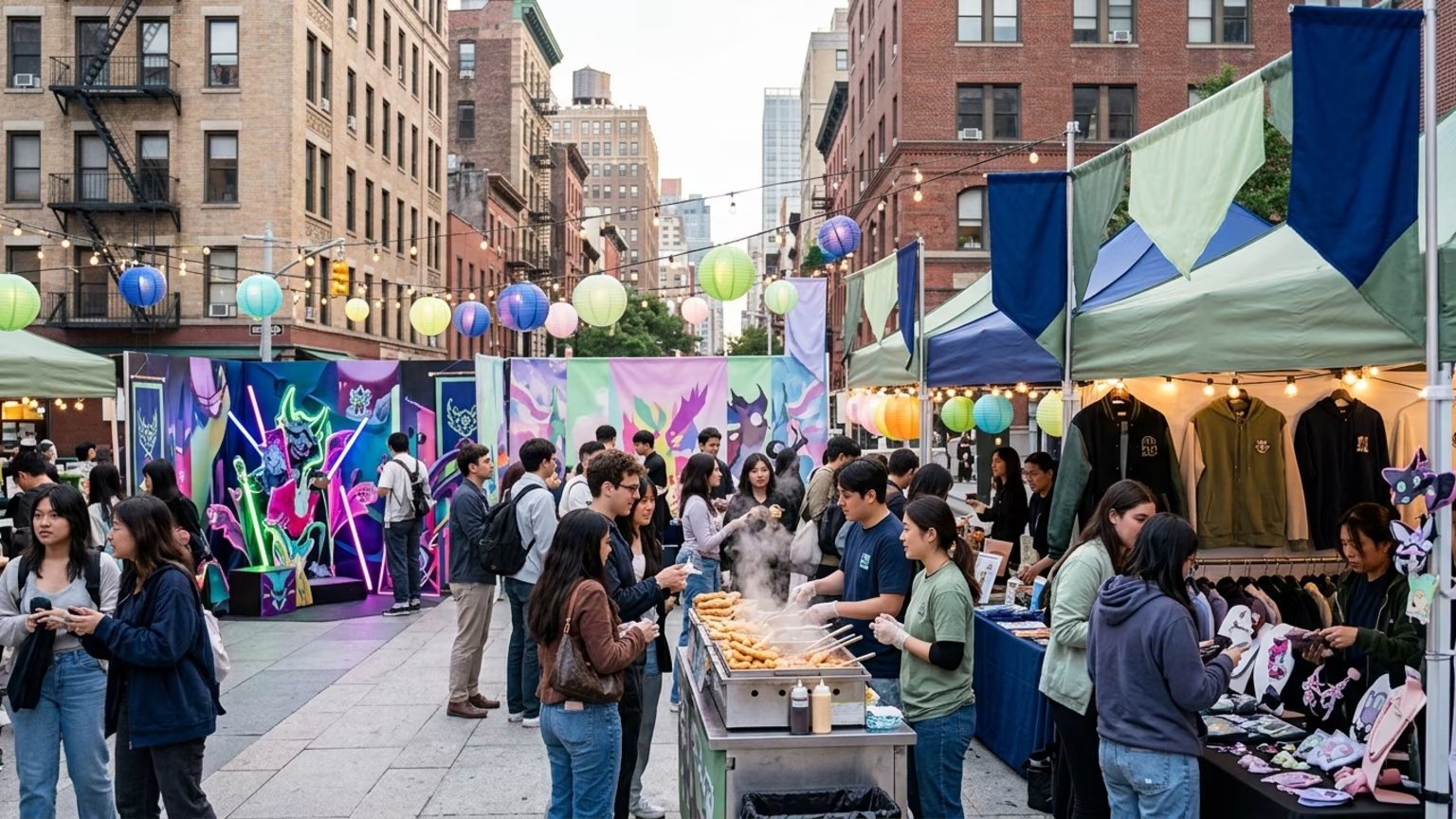
Consider the approach of creator led wellness brands that translate massive digital followings into real world retail power. Instead of hosting a massive, disjointed product launch, they integrate their consumer packaged goods into recurring local fitness events. Platforms tracking wellness events in major cities demonstrate how yoga in parks or waterfront workouts operate as ongoing series. These are not isolated stunts but highly predictable community gatherings.
A smart food or beverage brand inserts itself as the official post workout fuel for these existing communities. By aligning with local rhythms and offering integrated sampling at the moment of peak emotional engagement, the brand drives measurable trial. This proves exactly why live sampling wins the shelf by building habits instead of fleeting impressions. The attendees already trust the event host, so that trust transfers directly to the sponsored product.
Innovative brands are present at these recurring touchpoints with targeted on site purchase offers and QR driven funnels. They train their staff to act as community hosts, replacing the outdated model of passive brand representatives. When a consumer finishes a group run, they are handed a premium recovery beverage and a simple scan to buy prompt. This creates a frictionless path from initial taste to recurring subscription.
We see this exact dynamic playing out with modern influencer native brands. Creators with massive digital followings do not just rely on online video views to drive product sales. They organize massive in person meetups that function as highly structured sales funnels for their proprietary goods. The fans show up for the community aspect, but they leave with bags full of newly purchased retail items.
The nine trillion dollar wellness market is not just a passing consumer trend. It is a clear signal that people are actively searching for physical spaces where they can connect, recover, and find new products. If you stop treating activations as temporary displays and start building intentional community hubs, you will turn that massive spending shift into measurable pipeline. Stop settling for unmeasured foot traffic and book a strategy call to build an activation that actually converts.

30 Years Experiential & Retail Activation Partner for CPG & Beverage Brands | Multi-Market Demos, Roadshows & Costco/Club Programs That Actually Sell