Robbie Thain
Founder, CEO

Digital fatigue is hurting CPG and beverage engagement. Learn how offline first activations can drive trial, recall, content, and retail lift in 2026.
In 2026, most brands do not have a content problem. They have an attention problem.
Feeds are crowded. Creative is faster to make. More teams are using AI to produce ads, emails, videos, landing pages, and product copy at scale. That speed helps, but it also creates sameness. When everything looks polished and optimized, a lot of it starts to feel easy to ignore.
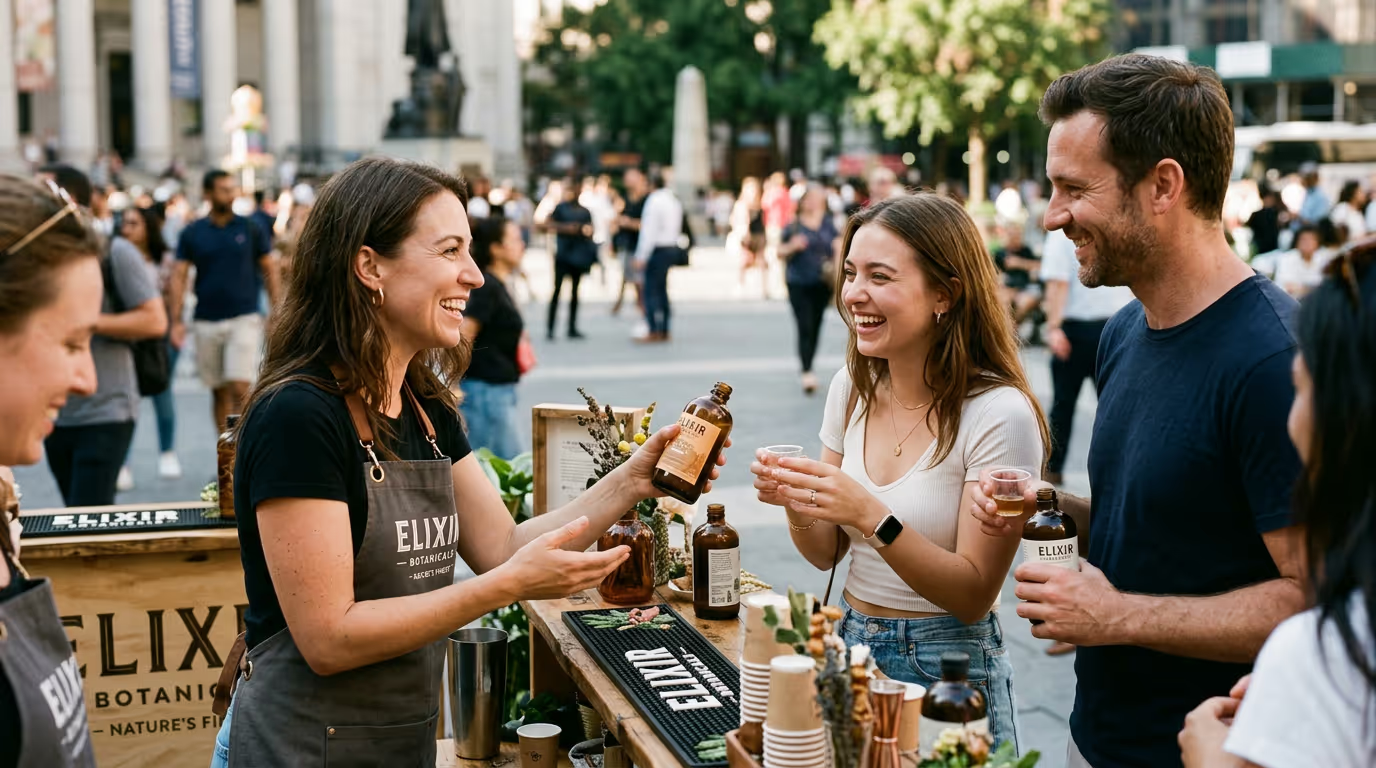
That is where offline first experiential programs stand out. A real sample, a real smile, a real reaction, and a real conversation can still do what digital often cannot. They can stop people, make them feel something, and give them a reason to remember the brand later.
For food, beverage, and snack brands, this matters even more. Trial changes outcomes. Taste changes outcomes. Context changes outcomes. A shopper who tries the product in the right setting is often much closer to action than a shopper who scrolls past the tenth polished ad of the day.
This post explains how to respond to digital fatigue with offline first programs that are built for modern growth. Not just fun events. Not just pretty content. Real field programs that create trial, trust, content, and measurable next steps.
This is where Makai’s work already fits, across experiential marketing, retail demonstrations, mobile sampling tours, and promotional campaigns.
Digital fatigue is what happens when people see too many messages, too often, in formats that start to blur together. They tune out, skip, mute, unsubscribe, or simply stop caring.
Because brands are publishing more content than ever, and much of it follows the same patterns. Fast content creation helps volume, but it also raises the risk of sameness.
Offline first does not mean anti digital. It means building around a real world experience first, then using digital to extend, report, and scale what worked.
Because trial still matters. Taste, texture, energy, refreshment, convenience, and ritual are easier to prove in person than in a feed.
Programs that make people participate, not just watch. Mobile tasting tours, sampling pop ups, interactive retail moments, and social friendly street activations all work when the product is easy to understand and easy to try.
Yes. The best offline programs produce content, opt ins, shopper language, and offer data that improve digital follow up after the event.
When performance slips, many teams react the same way. They make more assets, launch more variants, and push more messages into the same crowded channels.
That can help for a while. Then the market adjusts. Costs rise, attention drops, and creative starts to look interchangeable.
For product brands, this creates a real risk. You can spend more and still feel less visible. Your media might be active, your creative might be clean, and your calendar might be full, but the audience still may not feel much.
Offline first activations solve a different part of the problem. They create a break in the pattern. They let people touch, taste, hear, and react. They make the brand feel present instead of just placed.
This is not about replacing digital. It is about giving digital something better to work with.
People remember what they do, not just what they see. A live product moment creates memory in a different way than a passive impression. It is physical, emotional, and easier to talk about later.
That is why a strong activation can do several jobs at once.
In other words, the live moment is not just the campaign. It is the testing ground for the next wave of content, offers, and targeting.
Makai’s category mix makes this practical, especially in food, beverage, snacks, and organic, where sensory proof and real world trust can move faster than a long awareness funnel.
Mobile tasting tours work because they bring the product into a real context. Farmers markets, campuses, fitness events, summer festivals, office districts, and neighborhood retail hubs all create different emotional settings for the same brand.
The big win is not just reach. It is flexibility. A tour lets you test message, location, timing, and offer in a way a static campaign cannot. One stop may prove a flavor story. Another may prove a wellness story. Another may show that a simple bundle works better than a discount.
These tours are especially strong for beverage, better for you snacks, hydration, functional products, and seasonal launches. They also create a steady stream of useful footage, real reactions, and local proof points that can support later media.
If the brand wants national scale, that is where Makai’s strength in mobile sampling tours and logistics becomes important. The creative idea matters, but the routing, staffing, permits, storage, and restocking decide whether a tour feels easy or falls apart.
Some products need a stronger feeling to break through. Energy drinks, snacks, indulgent treats, and bold flavor launches often win when the activation creates a small emotional payoff.
A simple example is a victory moment. A high five wall. A challenge station. A quick game. A “you made it” beat that creates a smile and a photo at the same time.
This works because emotion helps memory. People share moments that feel fun, surprising, or slightly ridiculous in a good way. They rarely share a static branded table unless the product moment itself feels worth showing.
The key is to keep the interaction short and natural. The product must still be the hero. The experience should help people feel the brand, not bury the brand.
One of the most interesting responses to digital fatigue is the opposite of more screens. It is less screen dependence in the moment.
An unplugged sampling zone is simple. Live music, a street performer, a product station, maybe a host, and a space that rewards being present. No complicated app flow. No long data form. No need to stare at a phone to participate.
This does not mean zero data. It means the brand earns attention first, then asks for the next step later, at the right moment.
These zones are strong for summer campaigns, campus activations, wellness products, and beverage launches where the job is to reset mood, not just distribute samples.
The mistake many teams make is running a good activation and measuring it like a party. They count people, save photos, and move on.
That misses most of the value.
A better measurement model starts with five layers.
That last layer is often the most underused. Your best headline might come from what people ask in person. Your best offer might come from what actually moved product on the street. Your best content might be the honest reaction clip your field team almost forgot to save.
If you want a stronger reporting structure behind that, pair this with experiential marketing reporting.
If you want to prove the value of offline first thinking, do not start with a giant national rollout. Start with a pilot that is big enough to produce signal and small enough to adjust fast.
Choose one city with strong commuter traffic, one with fitness or wellness relevance, one college market, one neighborhood retail cluster, and one event driven market. The point is not just geography. The point is context.
Keep the product and main setup consistent. Then allow one local variable, such as timing, offer, supporting partner, or event type. This helps you learn what matters without turning the pilot into five unrelated campaigns.
Track dwell time, sample volume, scan rate, opt in rate, content outputs, conversion path, and any observed retail impact. Then compare those results against your usual digital benchmarks, not just against each other.
Take the strongest line, strongest city context, strongest host behavior, and strongest offer and use them in the next tour wave, retail demo wave, or digital follow up campaign.
They are not random. They look spontaneous to the audience, but they are tightly built behind the scenes.
This is why roadshow discipline still matters. A cool concept without field discipline burns budget. A simple concept with tight execution scales.
If you are a CMO, brand lead, field lead, or sales lead, ask these questions before approving the next program.
If those answers are clear, the activation becomes more than a moment. It becomes a working growth tool.
If your brand is feeling the effects of digital fatigue and you want a smarter offline first pilot for 2026, Makai can help design, staff, run, and measure it. That can mean a tasting tour, a retail demo wave, a roadshow, or a hybrid field program built to create both live results and stronger follow up. Start with Request a proposal, or review services and where we work to map the right launch plan.

30 Years Experiential & Retail Activation Partner for CPG & Beverage Brands | Multi-Market Demos, Roadshows & Costco/Club Programs That Actually Sell