Robbie Thain
Founder, CEO

Learn how to turn trade show booths into high-converting revenue engines using structural design, clear staffing playbooks, and strategic attendee pathways.
84 percent of leadership-level marketers state that in-person events stand as a critical channel for their company pipeline. This overwhelming consensus proves that physical activations demand structured engagements to turn fleeting expo traffic into measurable sales outcomes.
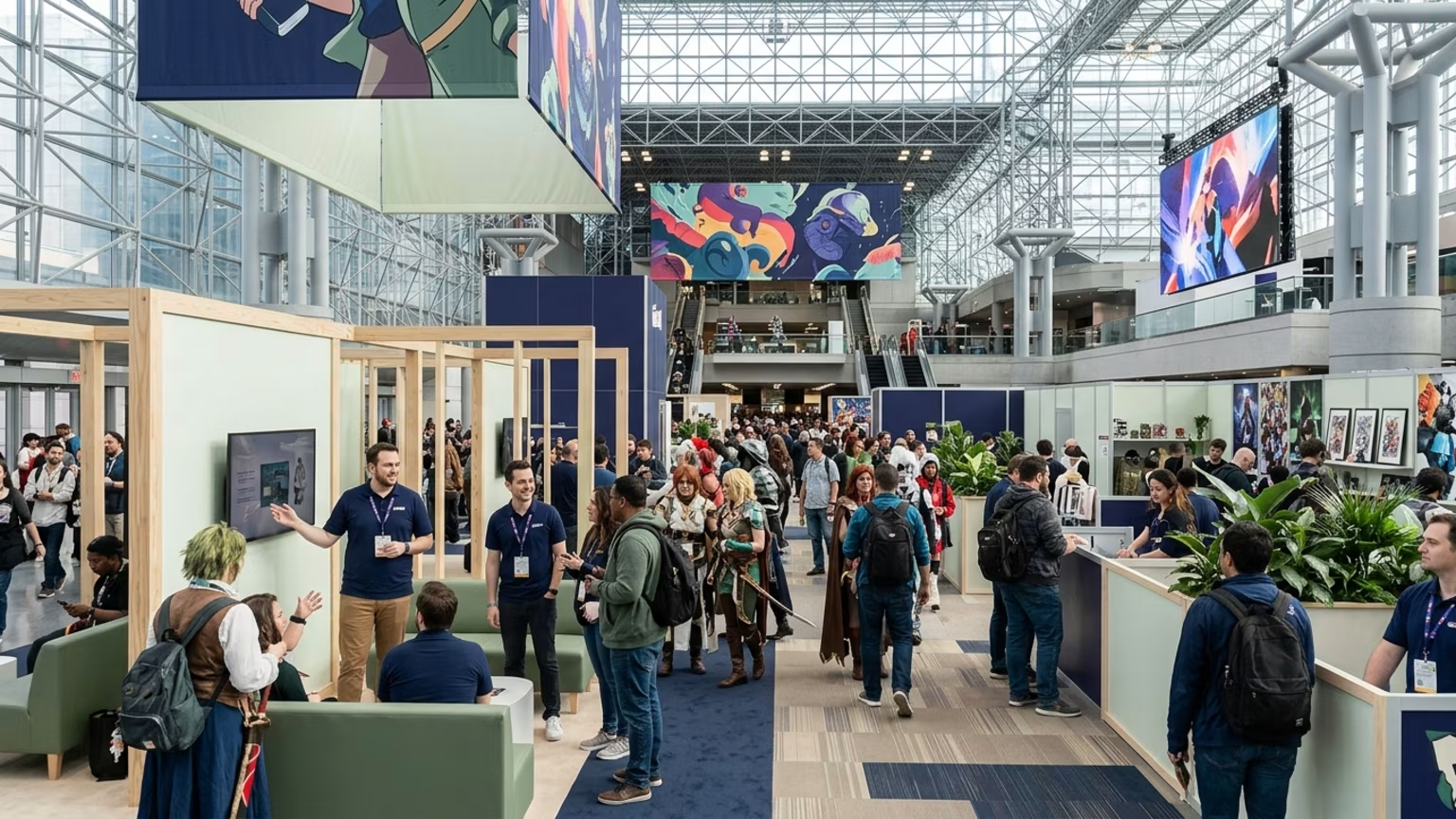
Walk onto any major trade show floor, and the chaotic scene is instantly recognizable. Overpriced megabooths are packed with casual browsers, unengaged staff, and bowls of branded mints. Marketers spend months optimizing booth design for product trials, only to watch untrained sales reps scan bad leads randomly. This scattered approach generates plenty of noise but fails to produce clear commercial outcomes.
Countless brands treat their live spaces like an open house rather than a targeted conversion engine. Under-staffed booths lose up to 25 percent of potential engagements when representatives get stuck talking to unqualified visitors. Over-staffed footprints create intimidating social clusters that repel actual buyers from approaching the product. According to trade show history reports from Exhibit City News, the traditional open-floor strategy has steadily declined in effectiveness, burning through marketing budgets without providing any clear Return on Investment.
Booth managers often face immense pressure to capture hundreds of badge scans to justify the event cost. Teams default to measuring success by the sheer volume of bodies passing through the space. This volume-obsessed mindset clogs the floor with irrelevant traffic and blocks serious retail buyers from receiving proper attention. The floor reality is a beautiful dumpster fire of missed opportunities and wasted interactions.
Many CMOs watch their budgets drain away on complex fabrications that look stunning but function poorly. Elaborate structures often block natural sightlines and confuse attendees about where to enter the space. When visitors cannot immediately understand the product offering, they walk past the booth without breaking their stride. The industry is littered with beautiful booths that failed to generate a single qualified sales opportunity.
The latest guidance from Freeman's event research team signals a massive shift away from open traffic models. Industry analysts report that roughly two-thirds of attendees now conduct significant pre-event research before they arrive. They expect curated experiences, personalized agendas, and scheduled meetings instead of aimless wandering. To capture this intent, brands must design deliberate micro-pathways that guide visitors from initial attraction straight to commercial conversion.
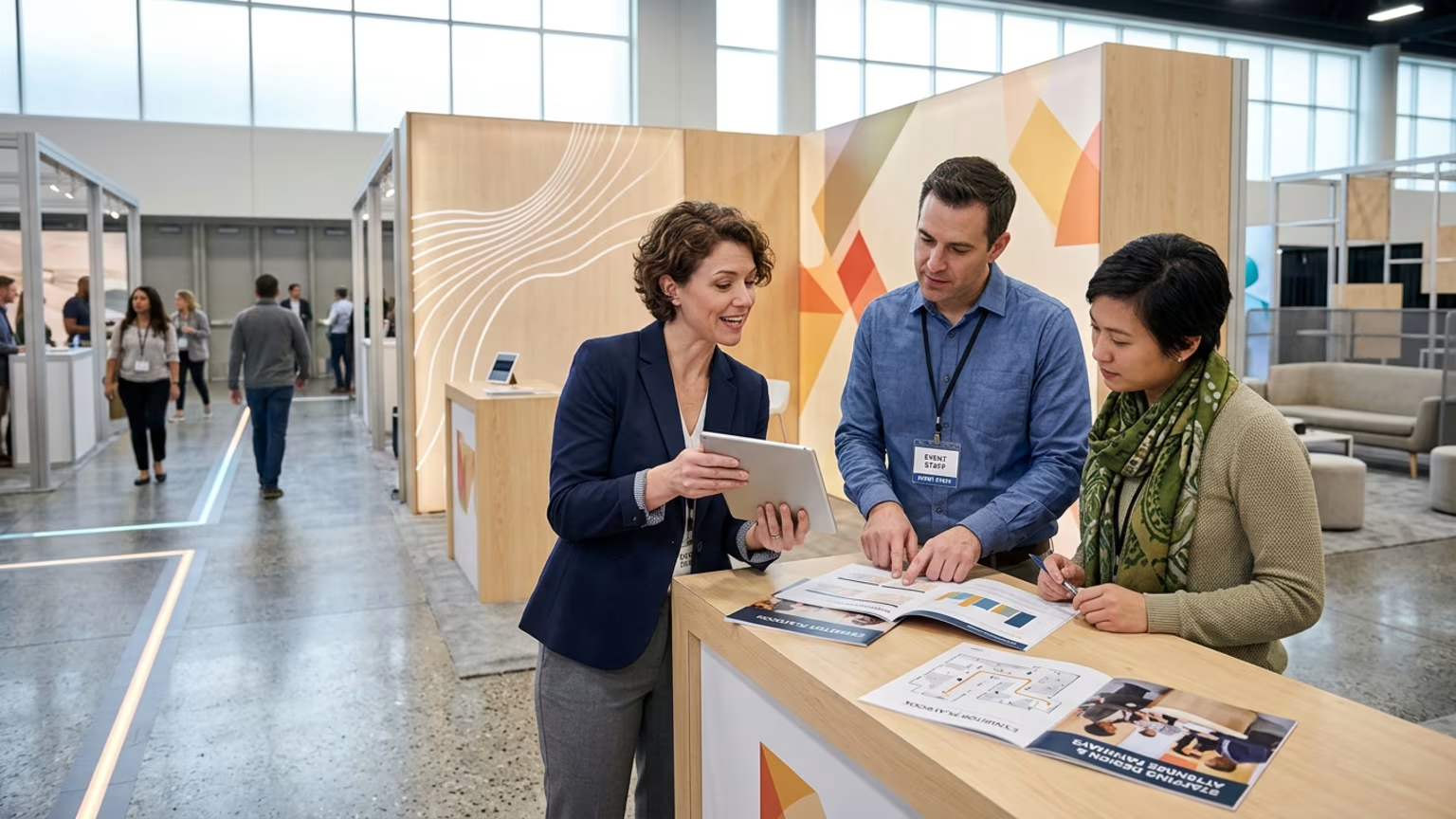
Center for Exhibition Industry Research data confirms that staff behavior drives 80 percent of booth results. This proves that human connection consistently outweighs physical structures. Brands must move past the concept of random foot traffic to build highly structured event staffing and execution playbooks. Teams that set explicit staffing ratios see significantly higher engagement rates than those who improvise.
The strategic shift requires treating the show floor like a physical performance channel. Live spaces must function with the same precision as a targeted digital funnel. Visitors should experience a seamless progression from the outer aisle to a deep technical consultation. This systematic approach guarantees that every square foot of the activation directly supports revenue generation.
Event tech integration plays a massive role in this new strategic environment. Forward-thinking brands connect their pre-event email campaigns directly to on-site badge scanners. This allows staff to recognize high-tier targets the moment they step onto the carpet. By bridging the digital and physical divide, marketers create a cohesive narrative that respects the buyer's time.
Brands that master this approach treat their footprint like an exclusive retail environment. They utilize velvet ropes, dedicated appointment desks, and VIP tasting lounges to increase the perceived value of the interaction. Scarcity and structure drive desire much faster than an open bowl of free promotional items.
Turning a standard footprint into a disciplined conversion engine requires a rigid operational framework. Our team uses an exact formula to manage these live interactions. Follow these exact steps to build your own repeatable system.
Proving the financial value of an activation requires moving from post-event vanity tracking to rigorous pipeline analysis. You need exact lead and lag indicators to understand what actually moves the needle. A disciplined focus on the right numbers separates professional operators from amateur exhibitors.
Leading indicators tell you if your live execution is working right now. Track daily demo completion rates, total qualified scans by target account tier, and the volume of pre-booked meetings fulfilled. If these numbers dip, your floor captain can adjust staffing ratios instantly to correct the course. Implementing rigorous onsite lead-scoring frameworks helps filter out noise and prioritize serious buyers immediately.
Lag metrics prove the long-term financial impact of the physical activation. Measure total pipeline generated, win rates for event-sourced opportunities, and baseline retail sell-through for promoted products. Connecting event data directly to your customer relationship management system can boost attributed pipeline by 20 to 30 percent. This hard data gives marketing leaders the evidence needed to justify bigger footprints at future shows.
Event teams often drown in useless data points that do nothing to inform business strategy. Collecting thousands of raw scans means nothing if the sales team rejects the entire list on Monday morning. Precision requires filtering out students, competitors, and unqualified vendors before they ever reach the final report.
Consider the cost of acquisition for every qualified meeting booked on the floor. Divide your total event expenditure by the number of confirmed follow-up appointments to find your true efficiency rate. This stark calculation forces teams to prioritize high-value interactions over mindless badge scanning.
Applying this level of discipline creates remarkable outcomes for consumer packaged goods companies. A Brand Manager in the CPG space shared: "Makai transformed our test-drive activation into an emotional brand journey. They connected technology, lifestyle, and experience seamlessly, and turned casual visitors into loyal fans." We successfully integrated multiple experience layers to convert casual participants into committed brand advocates.
By defining distinct zones for product sampling and deeper consultations, the brand eliminated hallway congestion. Visitors progressed naturally from an initial taste test into a structured commercial conversation with a senior representative. This controlled pacing maximized dwell time without overwhelming the field staff.
The brand captured hundreds of highly qualified leads and secured immediate retail distribution meetings. Their systematic approach proved that meticulous planning and execution consistently beat flashy gimmicks. This represents the exact playbook for real-world conversion that premium brands need today.
If you are tired of running unmeasurable events, it is time to build a repeatable system. Book a strategy call with our operations team to engineer your next live activation.
That 84 percent of marketers who view events as critical understand a fundamental truth. The chaotic expo floor is not a barrier to sales, but a canvas for precision engineering. When you stop hoping for random traffic and start building mapped pathways, those brief physical interactions become your most reliable source of revenue.

30 Years Experiential & Retail Activation Partner for CPG & Beverage Brands | Multi-Market Demos, Roadshows & Costco/Club Programs That Actually Sell