Robbie Thain
Founder, CEO

Price-led growth is failing CPG brands. Learn how to pivot toward value, innovation, and differentiated shopper experiences to drive real-world conversion.
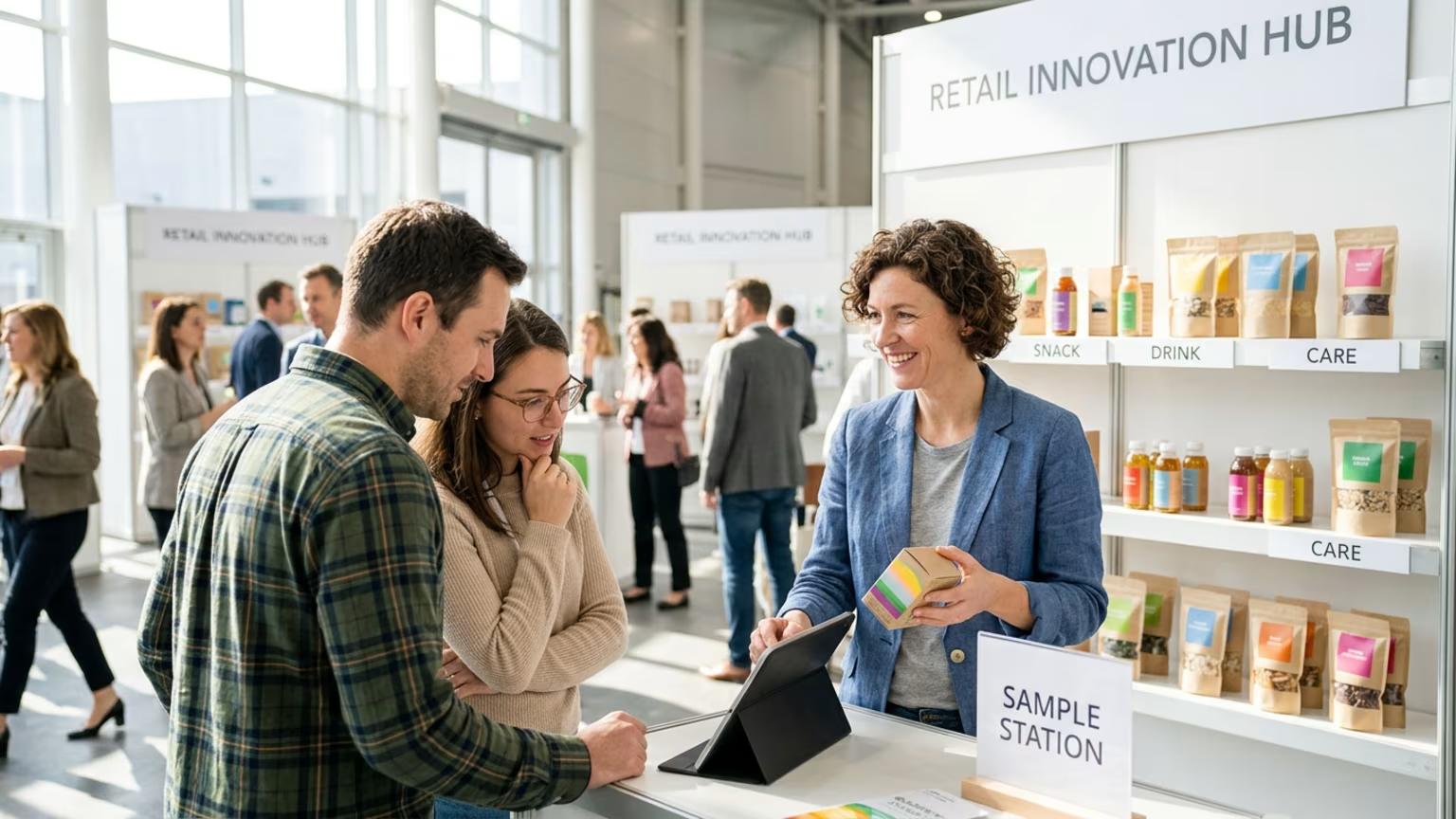
The Saturday afternoon rush at a regional grocery chain is brutal. Shoppers weave carts past four separate endcaps without glancing up from their phones. A field marketing representative stands near the dairy aisle with lukewarm samples and a folding table. Half the product is gone, but retail sales data will later show exactly zero units moved during the three hour window.
Food and beverage brands can no longer rely on pandemic era price hikes to mask flat volume growth. The new playbook requires shifting from passive displays to measurable shopper experiences that justify premium pricing and drive immediate trial.
Taking another price increase to cover margins is a dead strategy. According to Food Business News, consumer packaged goods companies must pivot toward value, innovation, and differentiated experiences to sustain growth. McKinsey research notes that over 70 percent of grocery revenue growth in 2023 came from pricing rather than volume. Volumes were actually flat to negative across many center store categories.
Shoppers are actively trading down to save money at the register. A 2024 Deloitte consumer survey shows 72 percent of shoppers are looking for ways to cut grocery costs. Private label brands captured massive market share in 2023 as a direct consequence. Consumers now expect premium brands to prove their worth before they commit to a purchase.
Retailers are feeling the squeeze and pushing back against repeated price hikes. They now demand that brands prove their value at the physical shelf with serious promotional support. Many major grocers require 10 to 15 percent higher sales performance just to maintain premium shelf placement. Brands that fail to move product face the very real threat of losing their retail distribution entirely.
Consumer fatigue with constant price increases has altered basic shopping behavior. Shoppers are taking fewer trips, stocking up during promotions, and switching to store brands. Consumer packaged goods companies are responding by highlighting functional benefits like gut health or sustained energy. These complex functional claims are incredibly difficult to communicate on a tiny package label.
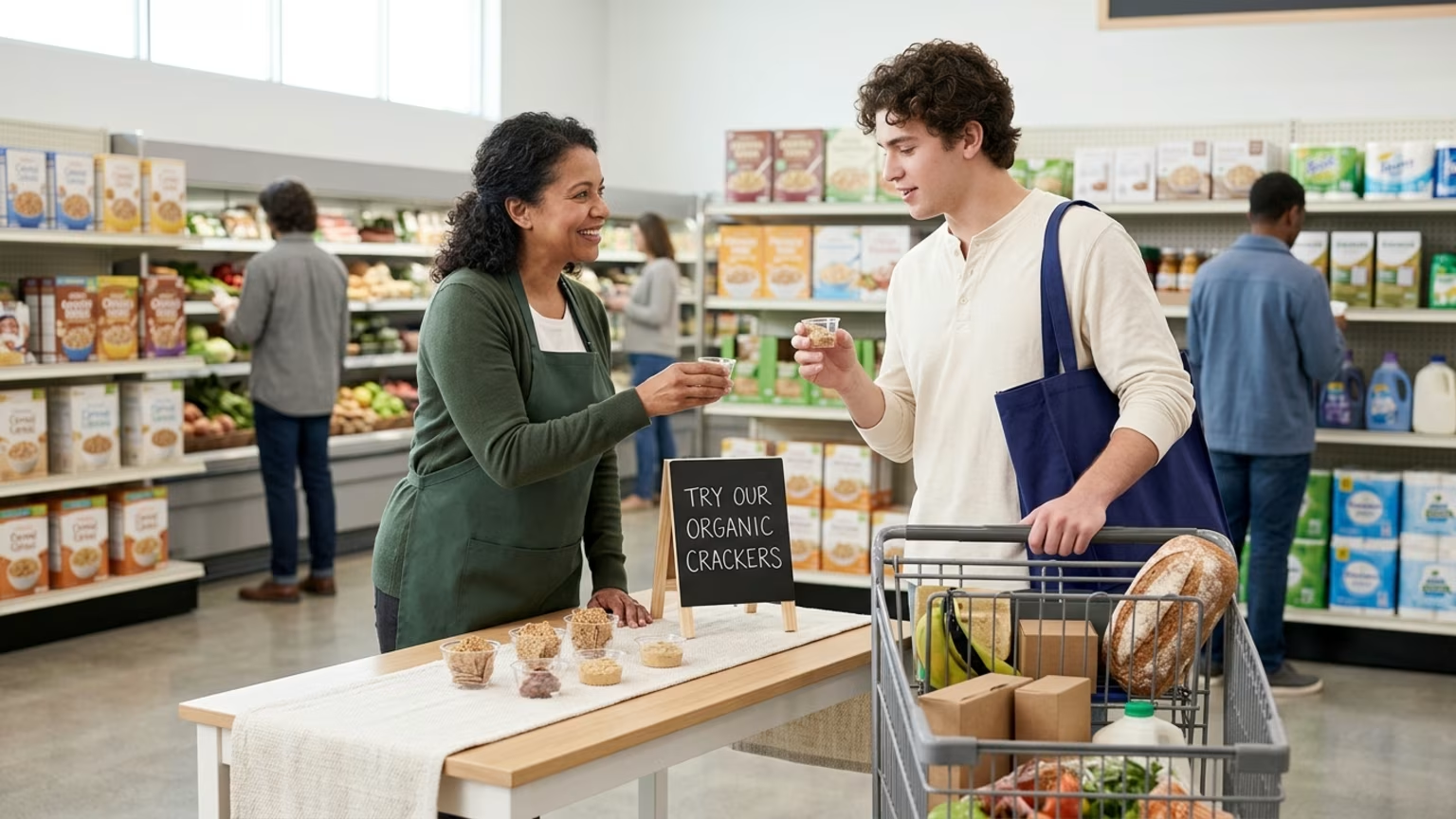
Live demonstrations can bring those functional benefits to life in a way that packaging simply cannot. When a shopper can taste a healthy product and feel an energy boost, the premium price suddenly makes sense.
The old model of buying an endcap display and hoping for the best is broken. Brands need a strategic framework that turns a fleeting glance into a physical product trial. You cannot outspend giant competitors on digital ads alone to win market share. You have to win the battle at the shelf where purchase decisions happen.
Research from the Shop Association reports that up to 70 percent of grocery purchase decisions happen in the store. Your strategic approach must treat the retailer as a collaborative partner to capture this audience. MK Woltz of Danone recently explained that retailers are now media publishers and measurement providers. The most successful brand relationships connect retail media networks with physical shopper marketing.
Blending digital awareness with trained brand ambassadors gives shoppers a clear reason to choose your product over cheaper alternatives. This physical strategy heavily supports modern digital search visibility. Answer Engine Optimization is becoming a major factor for food and beverage categories. Zozimus recommends building verifiable claims that artificial intelligence can trust and cite.
When shoppers ask an AI assistant for a healthy snack recommendation, your brand needs strong digital citations. That initial awareness creates a baseline of trust before the shopper enters the store. When those shoppers arrive at the physical location, an in person experience validates that AI recommendation through taste and interaction. Brands that master scalable street team execution turn digital recommendations into immediate physical sales.
U.S. retail media ad spend reached nearly 60 billion dollars in 2024 according to eMarketer projections. The new playbook is not about choosing between trade spending and digital advertising. It is about creating an integrated system that connects retail media with in store execution. Retailers are increasingly selling integrated media packages that bundle digital advertisements with physical merchandising.
Brands that can execute flawlessly in store become far more attractive partners for these integrated retail media buys. Your experiential activations must support your digital investments. When an advertisement drives a shopper to a specific aisle, a trained ambassador should be waiting there to close the sale.
Running a field program without a system creates an expensive mess. A disciplined execution playbook turns chaotic pop ups into reliable conversion engines. You must define every step of the process before a single sample is poured. Here is the exact methodology to implement in a live retail setting.
Design experiences for conversion rather than empty spectacle. Make sure each activation clearly answers why the shopper needs this product right now. Equip brand ambassadors with simple scripts backed by proof points like clinical study summaries or organic certifications. Consumers respond to verifiable facts when they are delivered by a knowledgeable human being.
Integrate your digital campaigns with your physical footprint. Run sponsored product advertisements that point directly to near term sampling events in the local area. Use audiences of people who clicked the media as a baseline for measuring lift in targeted demonstration stores. This connection between screens and shelves is what modern operators call connected commerce.
Field teams often fail when they track vanity metrics instead of actual business outcomes. Counting passive impressions or total samples distributed is nowhere near enough. You must quantify Return on Investment by measuring both immediate indicators and long term impact. Proper reporting builds trust with retail buyers and internal finance teams.
Start with the lead metrics that your team can track directly on the retail floor. These include the total number of quality engagements, trial conversion rates, and email opt ins. A highly trained ambassador should generate a trial conversion rate of 25 to 35 percent based on benchmark data from EventTrack. Collecting immediate feedback allows you to adjust your strategy mid campaign.
Next, you must track the lag metrics that prove true financial impact. The core lag metrics are incremental unit sales, dollar velocity versus control stores, and repeat purchase rates. Brands should monitor retailer confidence metrics like new distribution gains or improved shelf placement. This robust data gives you the negotiating power to secure co funded media budgets with your retail partners. Tracking this exact return on investment measurement playbook separates amateur events from professional campaigns.
Closing the loop with sales data requires comparing geo matched test markets against control markets. Build an internal benchmark library to determine what a winning sales lift looks like for your specific category. Over time, this historical data informs better budgeting decisions for future campaigns. This exact historical data proves to retail buyers that your field marketing efforts actually grow the entire category.
Imagine a premium wellness beverage launching in a massive club retail environment. The brand cannot rely on packaging alone to justify a much higher price point. Instead, the marketing team runs a targeted retail media campaign to build local awareness before the launch. They pair this digital push with a disciplined operational playbook for retail expansions to run concurrent sampling roadshows.
The brand ambassadors offer cold samples and educate shoppers on specific functional benefits like improved digestion and energy. With thorough training, the staff handles objections about price by clearly highlighting the premium organic ingredients. The experiential team uses mobile tools to track exact sampling numbers and store foot traffic.
Following the weekend roadshow, the brand matches sales data from the activation days against baseline control stores. The final result is a massive short term sales lift and sustained velocity over the following month. The retailer is thrilled with the category growth and offers the brand a permanent endcap display. This is exactly how smart operators turn passive foot traffic into measurable pipeline.
The physical retail environment is deeply unforgiving to brands that simply hope for the best. Taking another price hike will not save a business struggling with flat volume. You need a disciplined execution strategy to win back shoppers and satisfy demanding retailers. It is time to replace chaotic events with precise and profitable field marketing.
Stop treating live activations as an unmeasurable afterthought. Book a strategy call with our team today to build a measurement driven field marketing plan. Real world results require operator grade discipline.

30 Years Experiential & Retail Activation Partner for CPG & Beverage Brands | Multi-Market Demos, Roadshows & Costco/Club Programs That Actually Sell