Robbie Thain
Founder, CEO

Learn how data-driven field marketing and strict operational playbooks turn chaotic live events into measurable revenue engines for physical brands.

Leading software companies are transforming event marketing from a creative expense into a measurable revenue engine. This shift proves that physical activations require strict data discipline and field operations to turn live attention into hard sales.
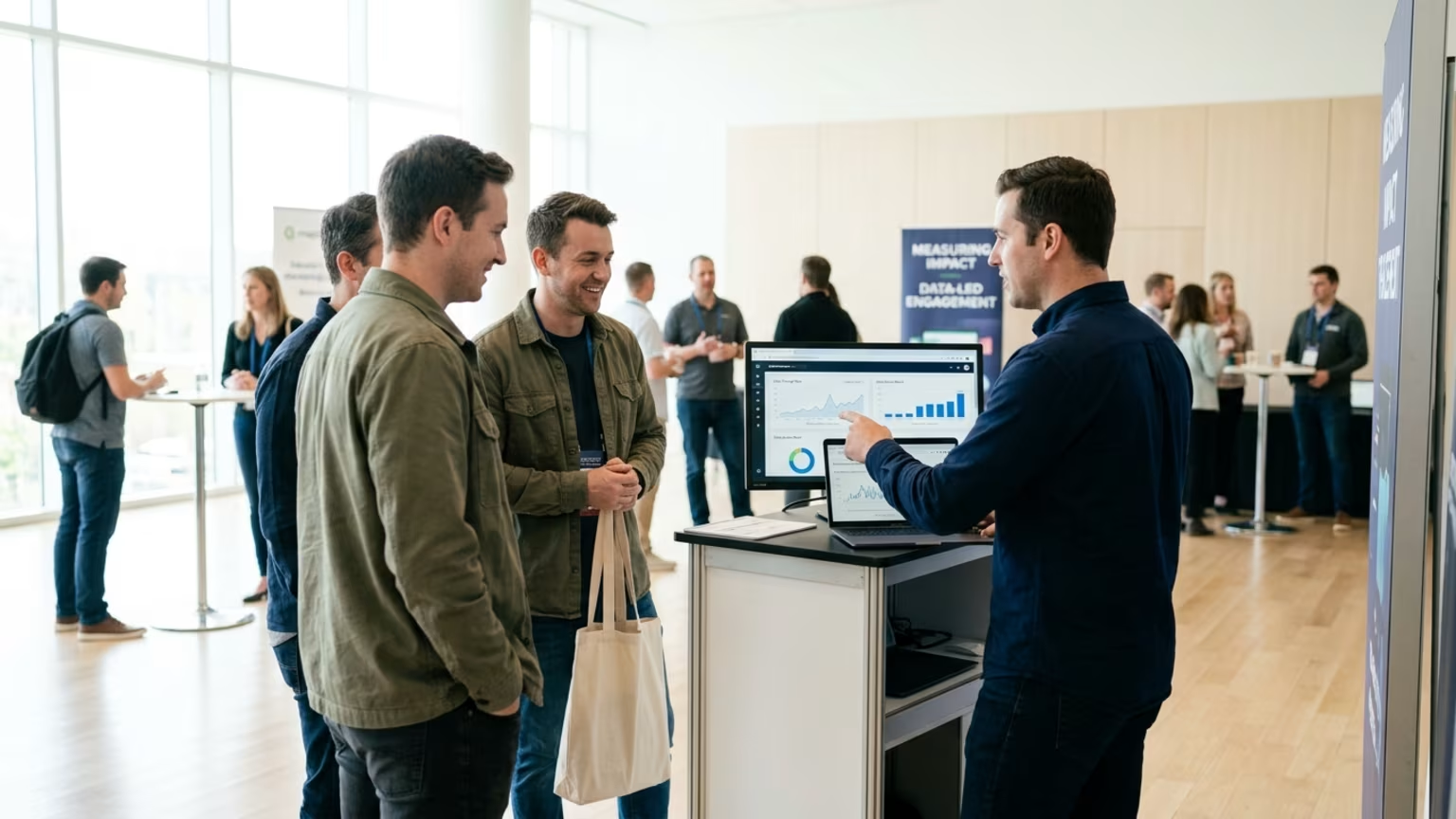
The trade show booth looks packed at eleven in the morning. Brand ambassadors hand out premium samples to a massive crowd of attendees. By Friday afternoon, the marketing team realizes they collected hundreds of random emails but zero qualified buyers. The post event follow up quickly turns into a beautiful dumpster fire of unusable leads.
This chaotic scenario plays out constantly across national expos and retail roadshows. Marketing managers spend massive budgets on booth construction, travel, and promotional giveaways. They focus entirely on creating a visually appealing experience for the crowd. They forget to build a system that captures actual demand.
Your field marketing efforts fall flat without a rigorous operational foundation. Temporary staff members get overwhelmed by the crowd and fail to ask the right qualifying questions. Sales teams receive a spreadsheet of generic names and quickly abandon the outreach process. The entire investment becomes a massive sunk cost with no clear business return.
Leading technology platforms like 6sense are actively hiring senior experiential event managers to lead data driven field programs. These specialized roles focus on priority accounts, strict budget discipline, and post event reporting. They integrate sales, revenue marketing, and regional teams to guarantee that physical events support pipeline growth. The industry is shifting away from simple brand theater.
The senior experiential event manager role at 6sense perfectly illustrates this industry shift. This position requires deep familiarity with account based marketing priorities and regional sales objectives. The ideal candidate must oversee complex venue relationships while maintaining strict budget constraints. Marketing professionals in these roles own the complete post event reporting process to prove their Return on Investment.
Brands now recognize that live experiences require the same accountability as digital performance channels. Companies are offering base salaries between $204,000 and $281,500 for global event leadership roles. These organizations expect their event leaders to build comprehensive technology stacks and standardize data frameworks. They want complete transparency into how live interactions influence actual revenue.
Consumer goods and food brands must adopt this exact same operational rigor. You need a centralized center of excellence to govern your sampling protocols, staffing guidelines, and reporting metrics. A unified strategy prevents the fragmented execution that plagues so many national roadshows. Teams that master the logistics behind large experiential operations achieve better consistency across all national campaigns.
We blend physical and digital experiences by integrating QR codes, mobile technology, and real-world activations into a cohesive layer across retail, event, and tour experiences. This connected approach is not a standalone service but an upgrade we apply to many types of experiential work to drive connected results. It brings digital tracking precision directly to the physical trade show floor. A strong strategy bridges the gap between a memorable in person interaction and a measurable retail sale.
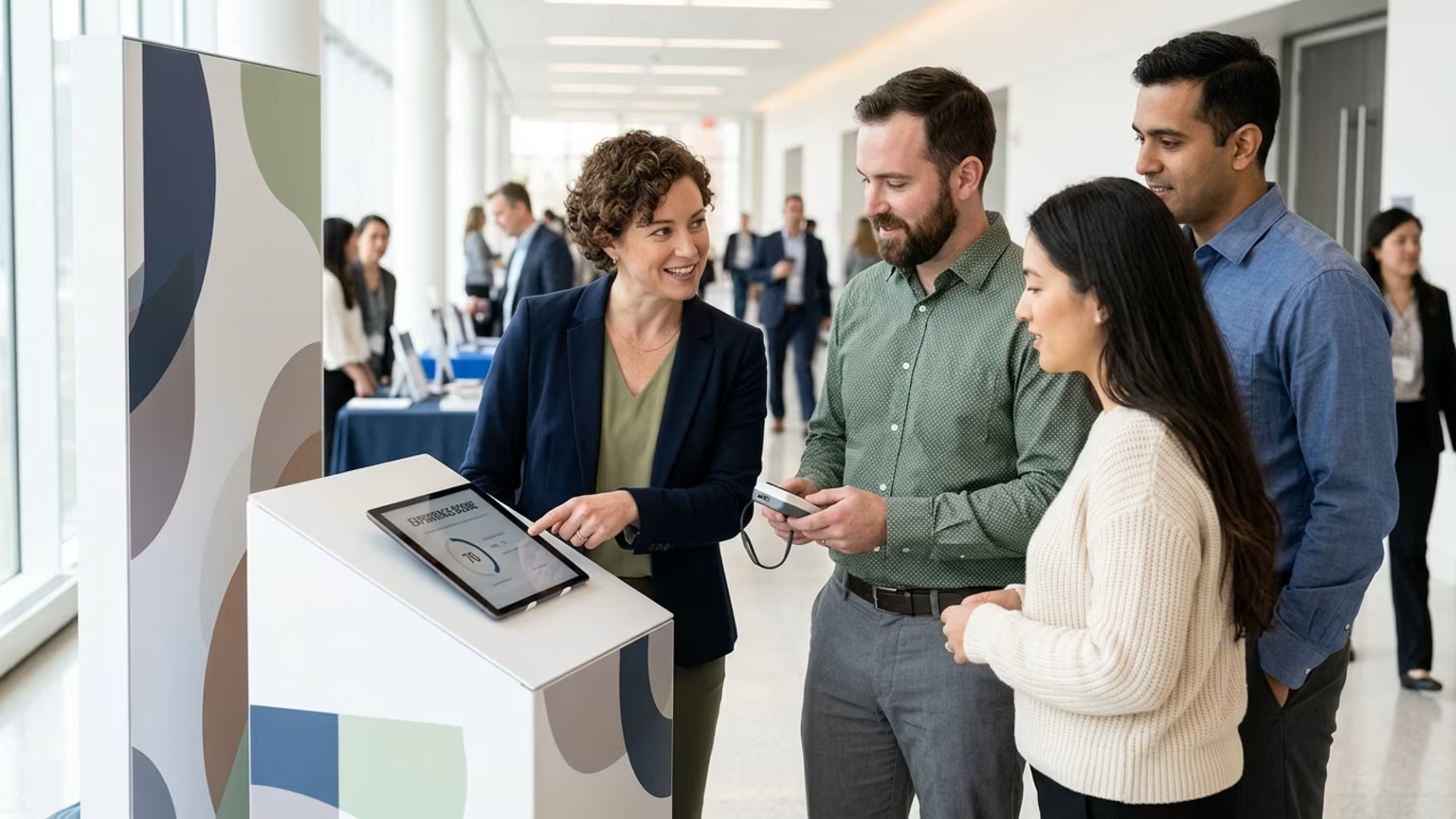
A stunning booth design means absolutely nothing without a systematic plan for capturing demand. Your field team needs precise tactical instructions to turn fleeting conversations into trackable pipeline revenue. This requires a highly standardized approach to event logistics, field staffing, and technology integration. You must treat your field staff like trained revenue operators.
These mandatory steps transform your activation from a basic visual display into a measurable acquisition channel. Your marketing department will stop wasting money on poorly managed field experiments. A documented playbook creates a predictable and highly repeatable revenue engine.
Tracking Return on Investment requires a clear division between immediate indicators and long term outcomes. You cannot manage what your team fails to measure on the floor. Proper measurement prevents brands from relying on vanity metrics like total booth visitors. Brands are adopting new tools like universal lead capture software to consolidate data across all physical channels.
Lead metrics tell you if your activation is working in real time. They measure immediate engagement and on site staff performance. Tracking these numbers allows you to adjust your strategy mid event. A sudden drop in daily capture volume signals a problem with your booth flow or staff energy.
Lag metrics reveal the actual business impact weeks or months after the event ends. These numbers justify your marketing budget to the executive team. You can find actionable ways to measure Return on Investment for B2B trade shows to avoid common tracking failures. Accurate lag metrics protect your field marketing program from unexpected budget cuts.
Marketing executives are rapidly increasing their investments in physical event channels to drive real business outcomes. These leaders understand that live experiences must integrate seamlessly with customer relationship management systems. The days of treating trade shows as isolated marketing experiments are over. Marketing teams must treat every consumer touchpoint as a chance to capture valuable intent data.
Major enterprise organizations establish dedicated event centers of excellence to maintain operational discipline. A technology company like Palo Alto Networks relies on global playbooks to standardize their event technology stack. This structured approach creates a rigorous framework to measure pipeline impact accurately. A centralized model dictates exact staffing ratios, brand guidelines, and lead capture protocols.
Consumer packaged goods brands can replicate this success by creating their own internal playbooks. You can build a framework that governs how agencies execute your regional sampling tours. This operational control eliminates the inconsistencies that often ruin national retail roadshows. Clear standards protect your budget and improve the overall consumer experience.
This operational rigor is not just for software companies targeting massive enterprise accounts. Consumer packaged goods brands see incredible gains when they apply standardized tracking to their retail roadshows. Recent studies show that in store demonstrations can increase daily sales by massive margins. Consumers are far more likely to purchase a physical product after a direct brand experience.
Coordinated campaigns that combine retail activations with digital media deliver up to three times higher sales lift than isolated efforts. Top consumer brands now require strict sales lift analysis and photographic proof of execution for every event. You can measure the true value of your field programs when you treat them like a digital performance channel. Product sampling can produce incredible trial rates among newly exposed shoppers.
A dedicated operations focus completely eliminates the guesswork from your experiential marketing budget. Your field marketing team quickly becomes a trusted partner to the entire sales department. Stop guessing if your expensive field events actually work in the real world. Book a strategy call with our team to turn your next live activation into a measurable revenue engine.

30 Years Experiential & Retail Activation Partner for CPG & Beverage Brands | Multi-Market Demos, Roadshows & Costco/Club Programs That Actually Sell