Robbie Thain
Founder, CEO

Plan your April 2026 trade shows with our complete execution playbook. Learn how to convert booth traffic into measurable pipeline and retail placement.

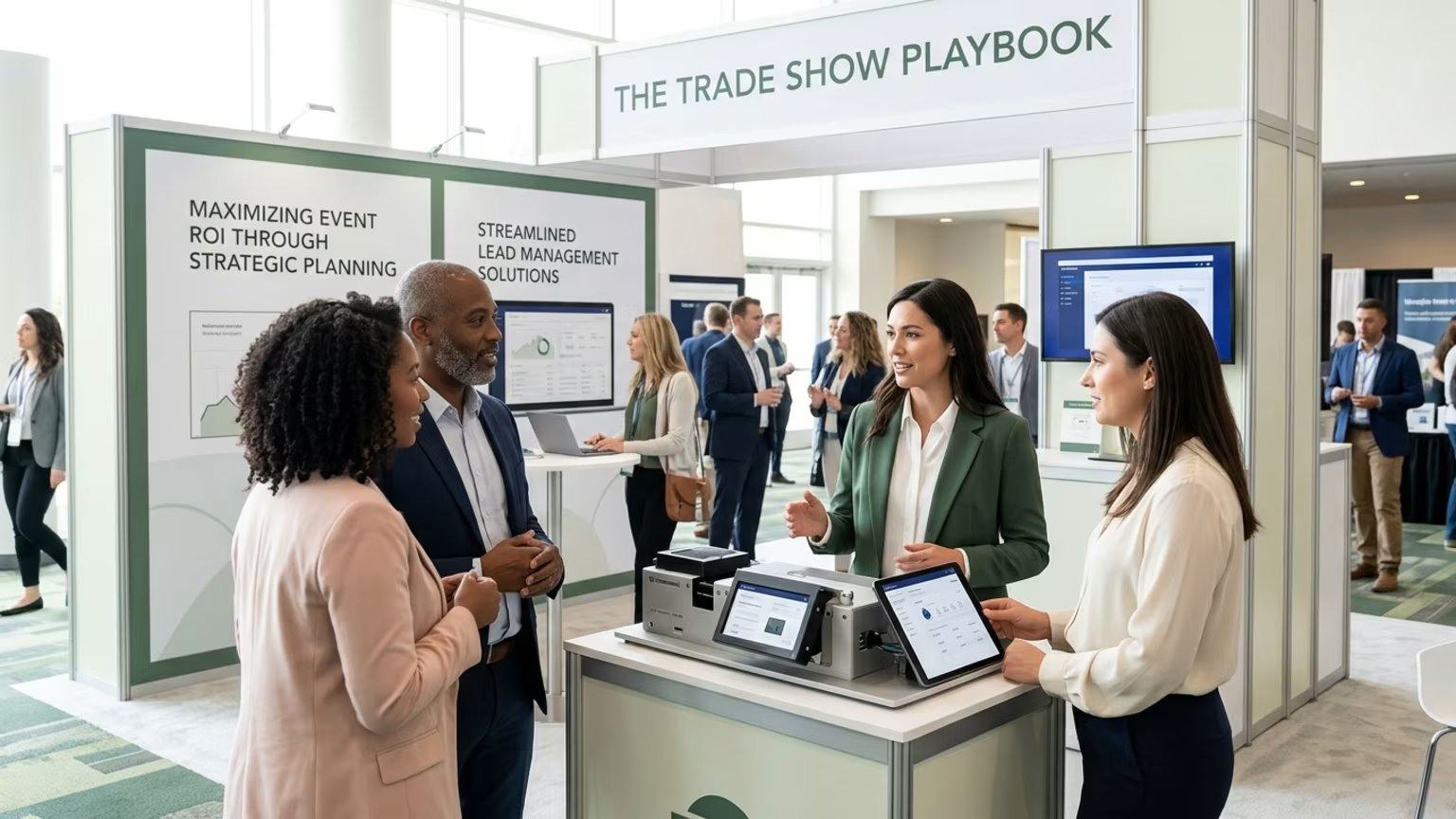
The convention center lights buzz loudly overhead. Pallets of sample boxes sit unopened behind a hastily constructed backdrop. Your booth staff scrolls on their phones next to a lukewarm display. The doors open in twenty minutes.
This guide outlines the operational framework required to turn your April 2026 trade show appearances into measurable retail pipeline. You will learn the exact steps to pre-qualify attendees, train your field team, and execute follow ups that drive sales.
April is the peak season for major industry events. Brands pour millions into booth design and travel logistics for spring expos. Consumer packaged goods marketers are noticing a massive shift. People are tired of endless digital ads and social media noise.
Brands are pulling budgets away from online channels to invest in live product trials. Buyers prioritize real world proof of quality in physical environments. Many experiential marketing leaders walk onto the floor with high hopes. They expect a flood of retail buyers and distributors.
The reality is often a fragmented and frustrating mess. A mid size consumer brand usually works with multiple separate agencies for one event. This creates broken communication and terrible execution. According to research from the Experiential Marketers Association, seventy three percent of marketers report difficulty recruiting booth staff with actual product knowledge.
You end up with corporate trained staff clashing with gig economy workers. They hand out samples without collecting any meaningful data. The few contacts you do collect often sit untouched for days. Research from Markletic shows that up to sixty percent of trade show leads never see a follow up within forty eight hours.
Your expensive booth becomes a beautiful but useless display. You collect business cards in a glass bowl and hope for the best. This approach produces vanity metrics instead of a solid Return on Investment. Your leadership team needs proof of retail velocity and real pipeline growth.
Trade shows rank as the second most effective tactic for lead generation. Data from the Center for Exhibition Industry Research shows that eighty one percent of attendees hold buying power. A massive opportunity exists if you build a sound strategy. You need a system that focuses on trial conversion rather than just lead volume.
Your strategy begins with proper booth sizing and layout. Do not choose a massive footprint just to feed your ego. A standard ten by ten space works perfectly for high traffic volume trial events. You should scale to a twenty by twenty booth only for flagship launches or strategic retail partnership meetings.
Cost analysis must drive your spatial decisions. Breaking even on a single event requires a high volume of qualified leads. You must account for booth design, travel, and staffing costs. Do not overspend on the booth frame at the expense of your field personnel.
Pre-qualifying your prospects is the next major phase. You must secure the attendee list at least two weeks prior to the event. Cross reference this list with your current retail locations and target category spending. You want to identify the exact decision makers who can put your product on shelves.
Once you identify these priority targets, start your outreach immediately. Send warm emails to these buyers before they even pack their bags. Schedule dedicated meeting times at your booth. Planning a focused trade show lead capture system guarantees you spend time with the right people.
Regional trade shows often provide more value than massive national events. A targeted April expo allows you to penetrate exact local markets. You must ask yourself which local retailers and distributors will attend this exact show. Arm your field staff with local market data to make their pitches hyper relevant.
You must view these shows as prime environments for testing new messaging. A controlled expo floor lets you pitch a rebrand directly to your ideal customer profile. You get immediate live feedback on your new packaging or flavor profiles. Just remember that sloppy execution will ruin any new brand narrative.
Your final strategic pillar involves aligning your physical presence with retail goals. Trade shows now function as major buy-in events for big retailers like Target and Costco. Your entire presentation must give these buyers absolute confidence in your product. You are selling reliable retail velocity alongside a great tasting item.
A brilliant strategy falls apart without rigorous operational execution. You need a disciplined approach to manage the chaos of a live expo floor. Your field marketing managers must take absolute ownership of this playbook. Follow this step by step playbook to turn your next event into a high converting sales engine.
This execution model solves the biggest failure points in experiential marketing. It gives your team a clear and measurable operational rhythm. If you need help building this exact framework, it is time to Book a strategy call with our operations team. We can help you prepare for complex events like a massive Costco roadshow push smoothly.
Chief Marketing Officers are under intense pressure to tie activations to measurable sales lift. Forrester research reveals that only thirty eight percent of experiential programs feature closed loop tracking. You cannot improve what you refuse to measure. You must track both lead and lag metrics to prove true value.
Lead metrics tell you if your live execution is actually working. Track the number of scheduled meetings completed versus walk up conversations. Monitor the exact volume of samples distributed per hour. You should measure the immediate data capture rate from those targeted samples.
You must watch the speed of your follow up activities closely. Measure how many emails go out within the first twenty four hours. Track the open rates and click through metrics of those initial messages. High engagement here proves your floor staff made a strong initial connection.
You must evaluate staff performance using these same data points. Identify which brand ambassadors collect the most qualified email addresses. Reward the team members who consistently move casual samplers into the third tier of engagement. This data driven approach to staffing guarantees you only hire the best people for your next event.
Lag metrics reveal the actual financial impact of your event over time. The Exhibitor Media study notes that B2B trade shows generate leads at a seventy five to one hundred fifty dollar cost per lead. You need to calculate your exact cost per converted customer. Watch your retail velocity in the regions of your target buyers over the next ninety days.
Do not fall into the trap of celebrating massive booth traffic. Traffic is a vanity metric that looks good but pays nothing. Focus purely on conversion tracking and post show attribution. Tie your trade show interactions directly to point of sale data to show a true financial return.
Let us look at a premium snack brand preparing for a major April food expo. They recently launched a new spicy flavor line. They want to secure regional distribution in the Pacific Northwest. They secure a ten by twenty booth to balance consumer sampling with private buyer discussions.
The marketing team pulls the attendee list three weeks early. They identify twenty key regional distributors and send them personalized tasting invitations. They hire seasoned field staff and run a mandatory two day training session. The staff learns the exact three tier engagement model.
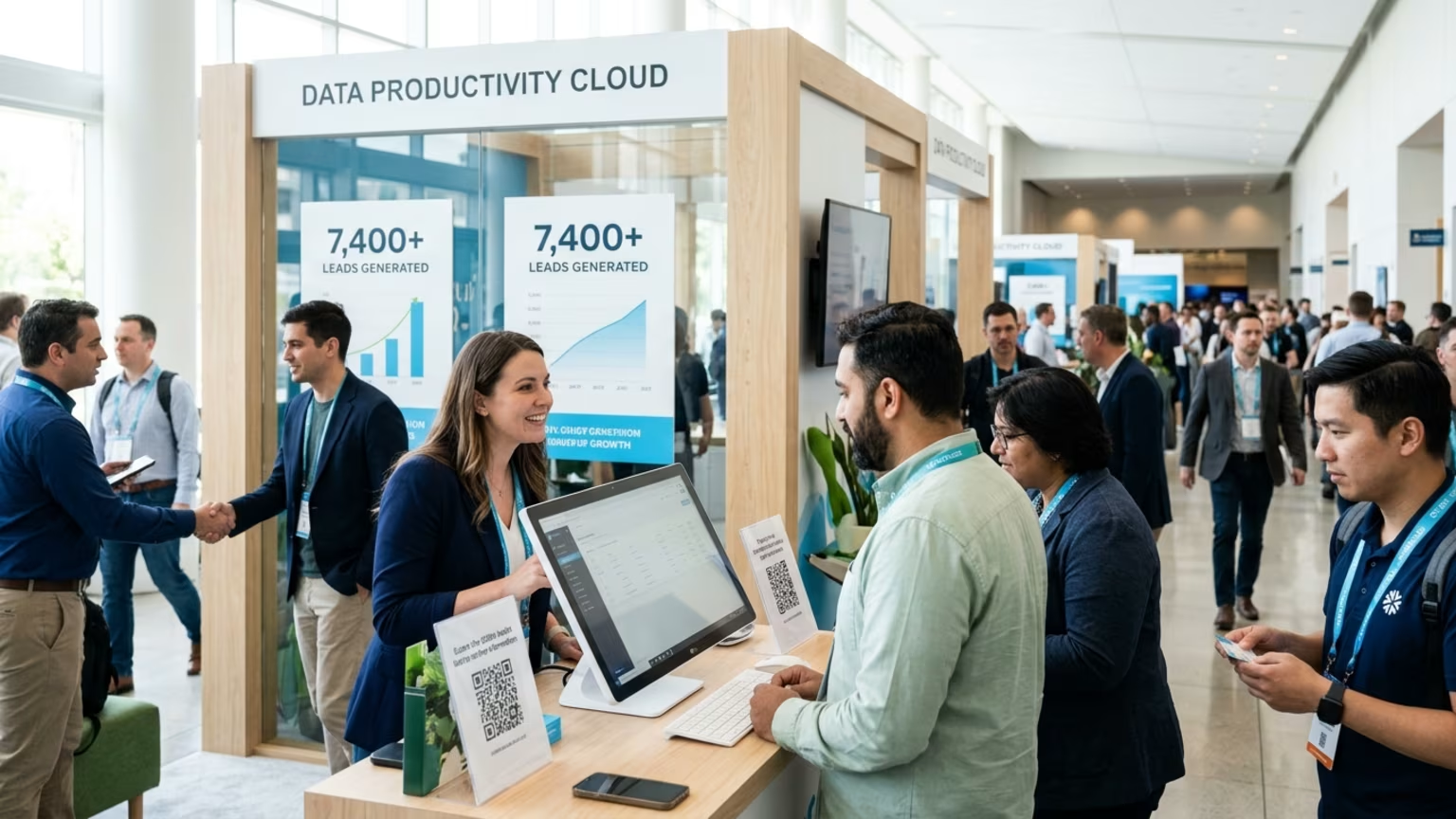
During the event, the team samples the new product relentlessly. Every interested buyer scans a digital badge that routes straight into the central database. The team sends a follow up email the very next morning. This disciplined approach results in three new retail partnerships within thirty days.
They do not just stop at the initial retail meeting. The marketing operations team uses a connected customer relationship management platform. They send out customized discount codes to the stores of those new regional buyers. This extra step guarantees that the new product moves off the shelves immediately.
The brand successfully proves their pipeline contribution to the executive board. They avoid the trap of digital fatigue by giving buyers a real world proof of quality. Brands that master this live experiential marketing model consistently win massive market share. The combination of great tasting food and flawless execution always wins.
You have the playbook. Now execute with precision and turn that chaotic floor into a controlled pipeline. See you in the field.

30 Years Experiential & Retail Activation Partner for CPG & Beverage Brands | Multi-Market Demos, Roadshows & Costco/Club Programs That Actually Sell