Robbie Thain
Founder, CEO

Learn how to turn local events and trade shows into reliable revenue engines using motion-forward booth content, a one-page prep plan, and strict lead capture.
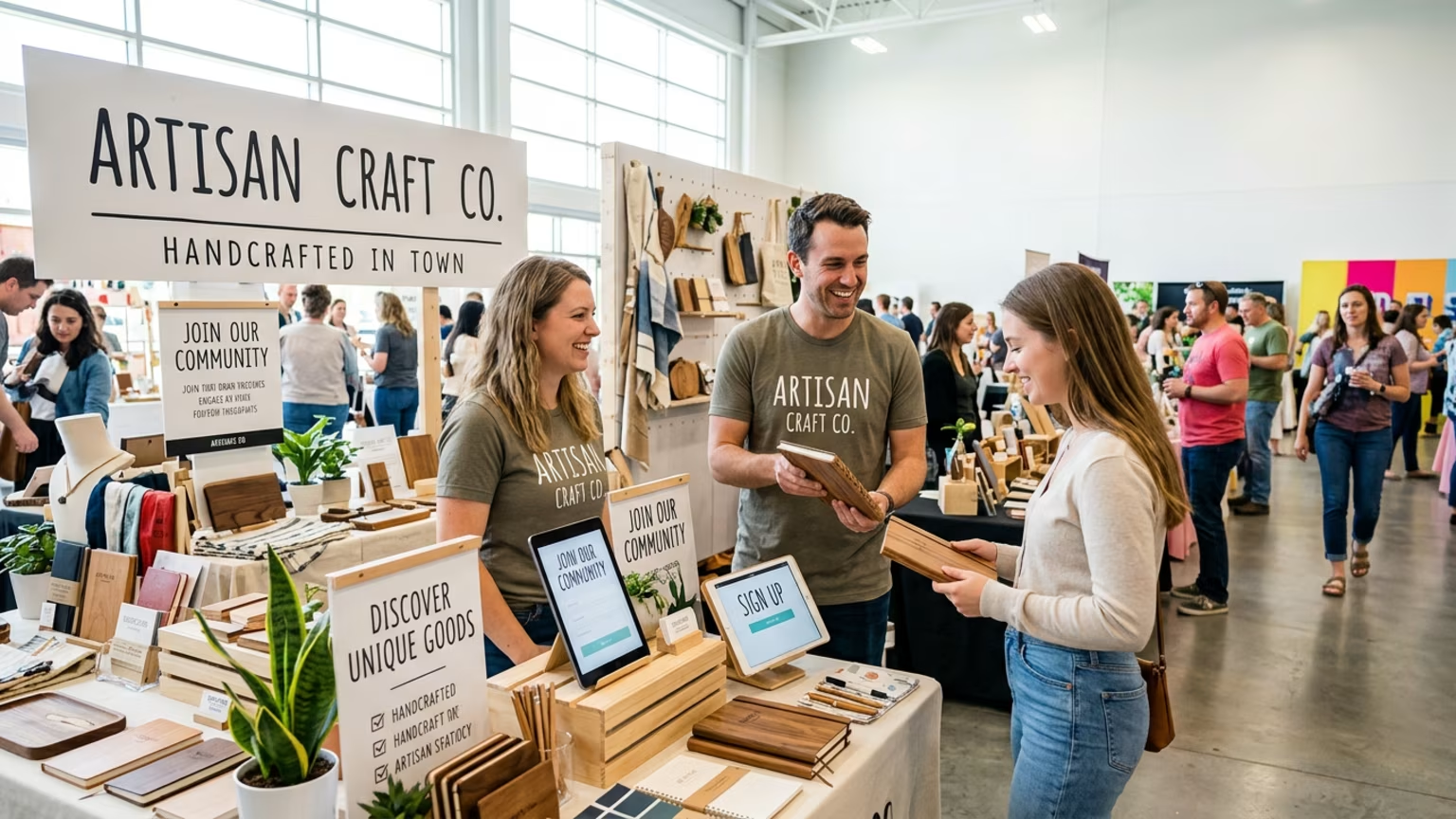
Local event marketing demands precise booth content planning and rigid lead capture discipline to convert fleeting foot traffic into measurable sales. By adopting a streamlined prep document and systematizing follow-up workflows, brands can transform chaotic physical activations into reliable revenue engines.
The convention hall doors open at nine in the morning. Your field marketing team scrambles to align static pop-up banners and arrange product samples on a folding table. Attendees walk past your space without stopping or engaging. A few visitors drop business cards into a fishbowl before wandering away.
Your staff falls into a repetitive pattern of handing out free product without starting meaningful conversations. Days pass before anyone from the sales department looks at the collected cards. The initial interest fades by the time a generic email finally goes out. Your post-event report shows a high number of samples distributed but zero clear next steps for the business.
You are left guessing if the money spent actually moved the needle. This scenario is the daily reality for brands that treat local activations like simple brand theater instead of precision operations. Marketing directors face immense pressure to prove that physical event spend drives actual retail lift or new accounts. Relying on passive foot traffic creates a massive blind spot for leadership.
Without a structured system for tracking interactions, you are merely funding an expensive sampling hobby.
To stop wasting budget on random acts of brand awareness, you must orchestrate your booth like a high-converting digital landing page. Human beings process images up to 60,000 times faster than text. Adding simple motion to your displays can increase attendee attention by up to 50 percent compared to static graphics. You do not need massive custom builds to stop traffic in a crowded venue.
A tablet running a simple explainer video can effectively communicate your core value proposition in seconds. A unified framework starts long before the doors open at the venue. Research proves that teams with written marketing plans drastically outperform those relying on undocumented ideas. Creating a simple one-page event prep document forces your entire team to align on exact target objectives.
This document must clearly state who you are trying to reach and what specific action you want them to take. It acts as the single source of truth for your staffing plan, core messaging, and logistical timelines. The final pillar of this systematic approach is uncompromising lead capture discipline. You must connect trade show attention to sales pipeline by eliminating the dangerous gap between the venue and your CRM.
Unstructured conversations must be replaced by simple digital forms with pre-defined qualifying questions. This approach shifts your focus from hoping for a random sale to actively managing a predictable and repeatable conversion process.
A successful local activation begins long before your team arrives at the venue. Your event prep document must include a targeted strategy for driving your ideal buyers directly to your space. Relying solely on the event organizer to provide foot traffic is a common mistake that leads to low engagement. You must take control of your own attendance figures by activating your existing database.
Send a personalized email campaign to your current subscribers in the geographic area surrounding the event. Offer them a specific incentive to visit your space, such as an exclusive product sample or a high-value discount code. This strategy guarantees a baseline level of activity at your booth early in the day. A busy footprint naturally attracts more curious onlookers, creating a powerful social proof loop.
Your sales team should use the pre-show window to lock in dedicated meetings with high-value prospects. Direct outreach to regional buyers, local distributors, and existing wholesale accounts helps you maximize face-to-face time. Provide your sales reps with a simple calendar link to book fifteen-minute slots at your booth. This shifts your physical presence from a generic display into a highly active meeting hub.
Flawless implementation requires rigorous operational control and a constant focus on minimizing friction for the attendee. The following steps will help you organize your next activation for maximum output.
Proving the true Return on Investment of an activation requires tracking two distinct categories of performance data. Lead metrics tell you if your on-site execution is working in real time. You should closely monitor total samples distributed, QR code scan rates, and the number of conversations logged per hour. Tracking these data points allows your field manager to adjust staffing levels or signage positioning on the fly.
If your scan-to-redeem rate drops suddenly, you can immediately test a new verbal hook to win back attention. Lag metrics confirm whether the event actually contributed to the bottom line over a longer time horizon. You need to measure the cost per qualified prospect and track the progression of those names through your entire sales funnel. For consumer goods brands, you should measure regional retail sales lift in the specific weeks following the activation.
Look for clear spikes in retailer reorders or digital coupon redemptions tied to the exact venue location. When you present these hard numbers to leadership, experiential marketing transforms from a cost center into a proven revenue engine.
A dedicated CRM dashboard simplifies this entire reporting process for your team. You can automatically pull these metrics into a clean visual format for your weekly executive meetings. This transparency builds trust with your finance department and justifies future budget requests. It removes the emotion from event planning and replaces it with hard data.
A strategic approach to planning and execution completely changes the trajectory of a major product launch. Our team recently partnered with a rapidly expanding consumer beverage brand to manage their nationwide event schedule. They previously struggled to stand out in crowded convention halls and failed to capture usable data from their visitors. We implemented a unified one-page prep system and trained their ambassadors on active prospect qualification.
The results extended far beyond a busy footprint and produced massive pipeline growth. A VP of Marketing in the CPG beverage category told us: 'Robbie, your leadership and vision turned our campaign into something truly special. The Makai team brought our new drink to life with energy, creativity, and flawless execution. Thanks to you, our brand isn't just tasted, it's remembered.'
Our team's approach transformed their product launch into a memorable brand experience. Real business outcomes replace the stress of managing a chaotic floor. Stop relying on hope as a strategy for your next live activation. Book a strategy call with our team to build a high-conversion plan for your upcoming event calendar.

30 Years Experiential & Retail Activation Partner for CPG & Beverage Brands | Multi-Market Demos, Roadshows & Costco/Club Programs That Actually Sell