Robbie Thain
Founder, CEO

Learn how the SEMA Summit in Las Vegas helps automotive brands transform chaotic trade show booths into measurable sales pipelines and high converting events.

The upcoming SEMA exhibitor summit in Las Vegas provides automotive marketers with the tactical blueprints needed to transform expensive booth spaces into high performing sales engines. By focusing on traffic generation and strict lead capture protocols, brands can finally achieve a measurable Return on Investment from their largest annual event.
The doors open at the Las Vegas Convention Center at 9:00 AM sharp. Within ten minutes, thousands of attendees flood the aisles, creating a wall of noise and distraction. Booth staff quickly become overwhelmed by casual browsers who have no real buying authority. Stacks of printed collateral disappear into tote bags, never to be seen again.
Most automotive and CPG brands spend massive portions of their annual budget on these massive expos. The structural problem is not a lack of foot traffic. The real issue is a complete breakdown in operational discipline at the booth. Staff members hand out expensive samples to anyone who walks by without asking a single question.
Brand ambassadors often resort to defensive posturing by day two of the convention. They stand behind tables with their arms crossed. They wait for attendees to approach them instead of actively engaging the aisle. This passive stance destroys any chance of meaningful return on the massive booth investment.
Sales teams often receive raw data dumps weeks after the event concludes. A spreadsheet full of generic contact information provides zero context for a sales representative. They do not know what the prospect looked like or what product features caught their eye. This friction causes sales teams to abandon event leads entirely.
According to recent guidance from the Specialty Equipment Market Association, exhibitors must rethink their entire approach to these massive gatherings. Brands that fail to prepare their teams before arriving in Las Vegas will burn capital without generating pipeline. The SEMA Summit exists strictly to address this execution gap. Marketers need real operational control, not just a flashy booth design.
The foundational shift requires moving away from passive exhibiting toward active pipeline generation. You cannot wait for the right buyers to magically stumble into your footprint. The strategic approach focuses on controlling the environment and forcing qualification early in the interaction. This means separating casual fans from serious wholesale buyers or retail decision-makers within seconds of contact.
A strong operational strategy also dictates the physical layout of the booth itself. Many brands design their footprint for maximum visual appeal without considering human traffic flow. The strategic approach treats the booth like a physical funnel. The outer edges serve as a quick engagement zone for casual observers. Qualified buyers get directed to private meeting areas in the inner core for deep product demonstrations.
The first pillar of this strategy involves preshow targeting and traffic generation. Brands must secure meetings with key accounts weeks before the convention doors open. The SEMA Summit stresses that your most valuable interactions should already be scheduled. The booth simply serves as the physical venue for closing those deals.
Effective traffic generation starts months before you ship your booth materials to the convention center. Your marketing team must identify target accounts and reach out with specific incentives to visit your footprint. Do not offer cheap giveaways in these emails. Offer exclusive product previews or closed-door consultations with your senior leadership team.
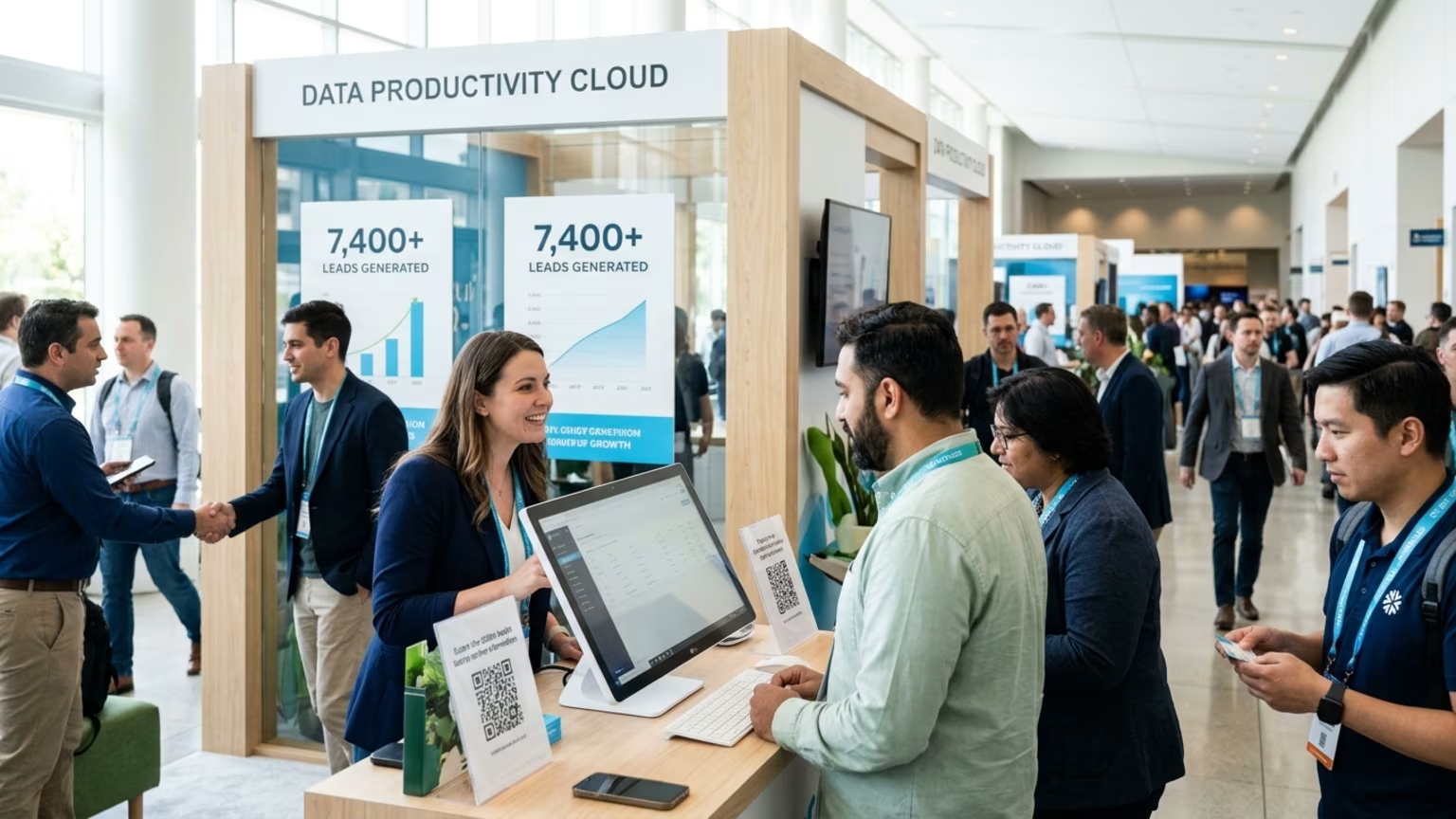
The second pillar centers on strict data capture protocols. Scanning a badge is useless if your team does not log buying intent, timeline, and specific product interest. You need to focus on upgrading your lead capture systems to feed directly into sales pipelines before the show starts. Every staff member must know exactly what questions to ask.
The strategy requires immediate and contextual follow up mechanisms. A generic blast email sent out three weeks later will not close deals. The follow up sequence must be drafted, approved, and loaded into your CRM before the event begins. Many brands are already consolidating spending into fewer high impact activations to fund this level of operational rigor.
Translating this strategy into a live event environment demands extreme discipline. You must drill your booth staff on these protocols until they become second nature. The SEMA Summit outlines several practical steps for exhibitors to maximize their time in Las Vegas. Here is the operational playbook for your next major expo.
Following this sequence eliminates the guesswork from your live activation. Your team will stop reacting to the crowd and start controlling the interactions.
You cannot improve a process that you refuse to measure. Counting the total number of badge scans provides a false sense of security. To prove the true value of your trade show investment, you must separate your data into lead metrics and lag metrics. Lead metrics tell you if the event is going well in real time.
Your primary lead metrics should include the number of pre-scheduled meetings held at the booth. You also need to track the percentage of total scans that your staff marked as highly qualified. Another critical lead metric is the average duration of conversations with retail buyers. If these numbers are low on day one, your floor manager must adjust the strategy immediately.
Quantitative data only tells half the story of your trade show performance. You must gather qualitative feedback from your booth staff regarding attendee sentiment. Did buyers complain about a specific product feature? Did competitors launch a new initiative that dominated floor conversations? Documenting this field intelligence provides immense value to your product development team.
Lag metrics show the actual financial impact of the activation months later. The most important lag metric is the cost per qualified opportunity. You calculate this by dividing your total event spend by the number of legitimate sales pipeline entries generated. You also must track the overall win rate of trade show leads compared to your digital marketing leads.
Another critical lag metric involves measuring pipeline velocity for event generated leads. You need to know if trade show prospects move through your sales funnel faster than inbound website leads. High quality event leads should have a significantly shorter sales cycle. A shorter cycle proves that the live interaction successfully built early trust and bypassed traditional sales friction.
The final lag metric is total revenue attributed to the event footprint. Achieving this level of clarity requires a seamless handover between your field marketing team and your sales department. When you track these specific numbers, you can confidently defend your event budget to the executive team.
Theoretical advice only matters if it survives contact with a massive crowd. We have executed over 1000 campaigns across all 50 states, bringing brands to life in every major U.S. market. From retail demos in Seattle to roadshows in Miami and events in Honolulu, our teams activate brands wherever our clients' audiences are located. This national footprint has shown us exactly what happens when brands fail to plan.
Consider a recent national beverage brand that wanted to expand its retail distribution. They bought a massive footprint at a major industry expo but had no clear lead capture strategy. Their internal staff spent three days handing out free product to thousands of random attendees. They collected zero actionable data and generated no new wholesale accounts.
The following year, they implemented a rigid operational framework. They swapped their internal staff for trained brand ambassadors who aggressively qualified every visitor. The ambassadors used tablets to ask three exact qualifying questions before handing out a premium sample. The brand collected fewer total leads, but the quality of those leads was exponentially higher.
The regional distribution deals required precise coordination between the field marketing team and regional sales directors. The ambassadors categorized leads by geographic territory during the initial badge scan. This immediate routing allowed regional directors to send custom emails before the prospect even boarded their flight home. Speed to lead became their ultimate competitive advantage.
Within ninety days of the event, the brand closed six new regional distribution deals directly tied to those booth conversations. They turned a chaotic sampling exercise into a highly predictable sales engine. If you want to stop wasting money on bad event execution, you need a partner who understands operational discipline. Book a strategy call with our team to start planning your next high performance activation.

30 Years Experiential & Retail Activation Partner for CPG & Beverage Brands | Multi-Market Demos, Roadshows & Costco/Club Programs That Actually Sell