Robbie Thain
Founder, CEO

TechCrunch opened exhibitor space for Disrupt 2026 in San Francisco. Discover how marketing leaders can turn a $12,500 6-foot table into measurable ROI.

The trade show floor at Moscone West is a highly unforgiving environment for unprepared marketing teams. Exhibitors either deploy a rigorous system to convert passing foot traffic into measurable pipeline, or they simply end up owning an expensive table for three days. On August 6, 2026, TechCrunch announced that its Exhibit Program for TechCrunch Disrupt 2026 remains open to startups seeking a physical presence on the Expo Hall floor. The event is scheduled for October 13 through 15, 2026, in San Francisco.
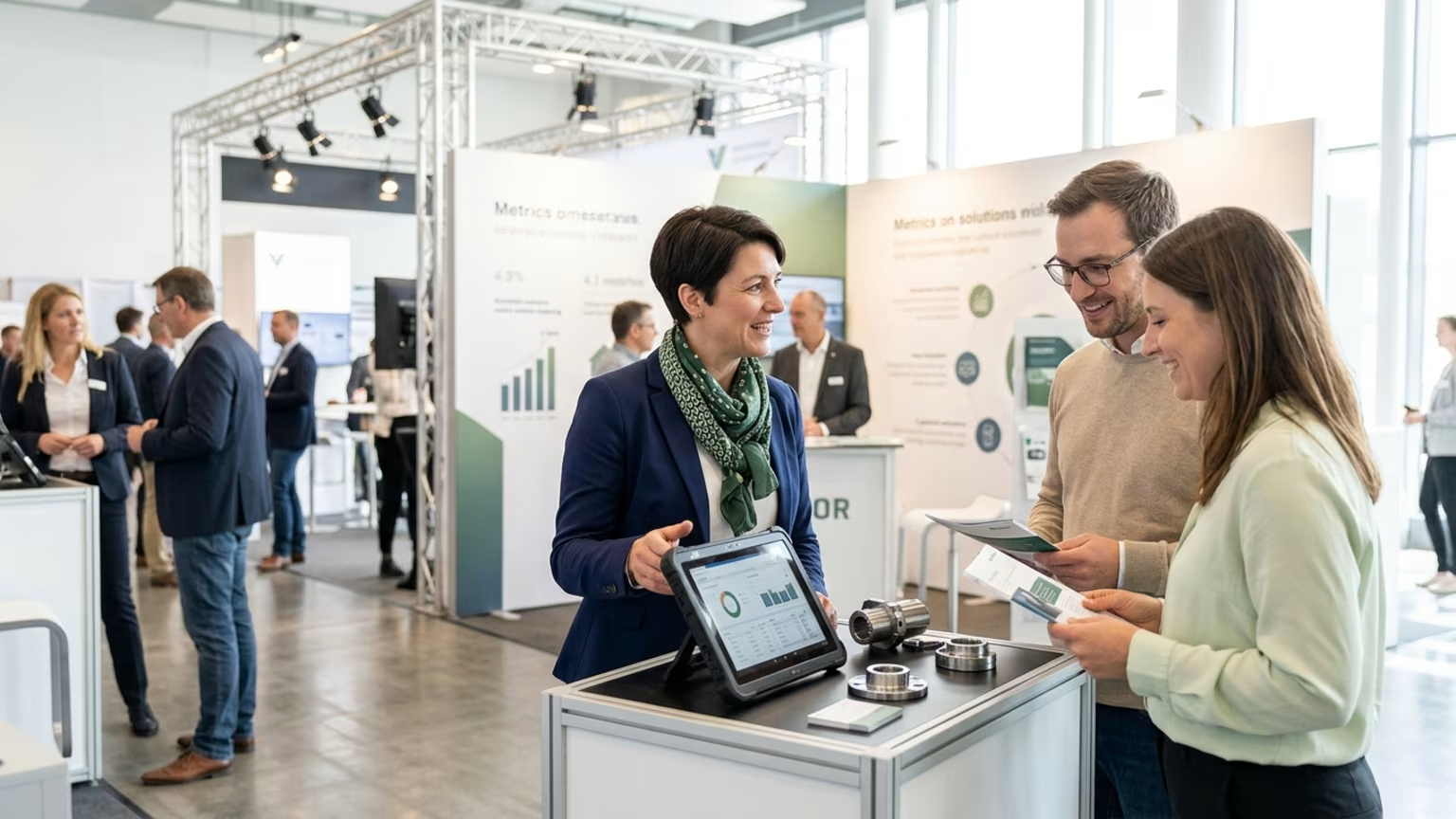
The offering strips away complex custom booth builds in favor of a standardized, turnkey package. For a flat fee of $12,500, companies receive a basic 6-foot-by-30-inch table in the Expo Hall. The package includes the table, linen, chairs and branded signage. This streamlined approach reduces the exhibitor’s responsibility for basic booth logistics and allows teams to focus entirely on their actual product demonstration.
TechCrunch describes the Expo Hall as the highest-trafficked part of Disrupt. The organization says that more than 10,000 founders, venture capitalists and technology leaders attend looking for partnerships, investment opportunities and professional networking. To help staff this physical footprint, exhibitors receive a total of 10 Disrupt passes. These include five all-access Exhibitor-Partner passes and five Expo+ passes.
According to TechCrunch, the included passes represent nearly $4,000 of the total exhibition price. The official announcement does not provide a separate pricing breakdown or explain exactly how that figure was calculated. Beyond the physical table, the package includes digital lead generation through the Disrupt 2026 mobile app. Exhibitors also gain access to the event’s press list and receive Silver Tier sponsor branding across the event website, app and signage.
For teams planning their quarter, the timeline is rigid. The stated deadline to secure an exhibitor space is September 25, 2026 at 11:59 p.m. Pacific Time. However, this deadline only applies unless all available tables sell out earlier. Marketing departments must make their investment decisions quickly while factoring in the necessary preparation time for travel and logistics.
At makai, we view packaged trade show offerings through a lens of strict operational efficiency and measurable return. A physical footprint only generates revenue when it serves as a highly tuned conversion engine. TechCrunch positions exhibiting as a way to meet investors, customers and partners directly. But mere physical presence on a crowded exhibition floor does not automatically translate into a signed partnership or a closed deal.
The $12,500 price tag represents only the baseline cost of entry for an exhibiting brand. Travel and accommodation expenses will add materially to the total investment. Shipping costs and demonstration equipment present additional financial requirements. Furthermore, staffing wages and post-event sales follow-up demand significant dedicated budget.
Brands must evaluate this event as a complete conversion system rather than merely as rented space. The most critical questions revolve around how the physical demonstration will actually function to stop foot traffic. This announcement provides a highly useful example of how physical event marketing is increasingly paired with digital infrastructure. The in-person interaction creates the initial emotional connection and product experience.
The mobile app is then intended to preserve the lead securely after the event concludes. Marketers must prioritize centralized lead capture to ensure these digital handoffs actually result in structured, reliable follow-up. Consumer packaged goods companies must evaluate this specific audience profile carefully. The announcement describes an attendee base of founders, venture capitalists, technology leaders and operators.
This makes the environment highly relevant for targeted business-to-business partnerships or software tools. It is not an ideal setting for food or beverage brands requiring mass-market consumer trial or direct retail sell-through. A brand targeting technology companies or startup employees might still find immense value here through strategic corporate partnerships. But the activation must be evaluated strictly as a professional-audience engagement.
It cannot be run like a conventional high-volume sampling roadshow. The bundled digital tools reflect a broader shift in how organizers sell floor space by packaging physical visibility with digital networking. TechCrunch explicitly connects the exhibit format with showcasing a startup and converting live conversations into digital follow-up through its mobile app. This proves that an isolated physical table is no longer enough to justify a marketing budget.
Teams are shifting their trade show strategy toward measurable ROI by demanding these integrated data tools. Ultimately, a small footprint works only if the interaction is designed around one clear, singular job.
This specific package format triggers several immediate operational challenges for field marketing teams and activation managers. A table measuring exactly 6 feet by 30 inches forces extreme discipline regarding physical footprint flow. Companies requiring a substantial demo environment, large vehicle display or multi-sensory experience will find this space highly restrictive. Every physical item placed on that table must directly support the active sales conversation.
Brands must shift their focus strictly toward demo-centric experiences that fit neatly within tight physical constraints. The exhibit should let visitors understand the product quickly and experience its value rather than simply read generic background signage. Marketing leaders must brutally edit their printed collateral and promotional items. Physical clutter will only confuse passing prospects and disrupt the natural flow of a qualification conversation.
Staffing dynamics also require careful calibration prior to the event dates. Ten passes make it possible to cover the exhibition floor efficiently across multiple days. However, more bodies on the floor do not automatically produce better business outcomes. Staff need assigned roles, clear rotation shifts and strict prospect handoff rules to prevent awkward congestion around a small table.
The digital lead generation component creates its own set of rigid operational requirements for the sales team. Generating a lead through the mobile app simply indicates a basic collection mechanism. It does not guarantee a specific number of qualified opportunities or closed sales. Brands must still define their own strict qualification rules, customer relationship management workflow and response-time standards.
A field marketing manager must establish a clear, documented qualification framework before the event begins. Staff should record the prospect's exact role and company size. They must also document the specific use case and timeline. Finally, they should note any relevant budget or partnership interest.
Simply collecting names or scanning badges without any context is a massive waste of expensive resources. The real operational work begins the exact moment the badge scan registers securely in the system. A manual approach to lead tracking will quickly overwhelm your sales representatives. Teams must build a structured routing system that automatically assigns priority to different prospect tiers.
If an operator is evaluating new software tools, their data must trigger a completely different follow-up sequence than a founder seeking partnerships. Granular segmentation prevents high-value leads from falling through the cracks. Post-event execution is consistently where most trade show investments fail to produce verifiable returns. Leads should receive a highly relevant next step immediately after the initial conversation concludes on the floor.
This follow-up might include an invitation for a formal meeting, a product trial, a technical review or a deep partnership discussion. Measurement is the final barrier between a successful activation and a wasted budget. Tracking only foot traffic or badge scans will obscure the true value of your investment. Field teams must focus heavily on tracking the number of qualified conversations and the volume of meetings booked.
The ultimate indicators of success are pipeline value creation and the percentage of closed revenue influenced by the physical event. Teams need a strict measurement dashboard to track these meaningful indicators thirty, ninety and three hundred sixty-five days later.
If you are considering a physical footprint at a major industry conference this quarter, ask yourself one critical question. Do you have a disciplined system in place to turn a brief conversation at a 6-foot table into a verifiable pipeline opportunity, or are you just paying for the privilege of standing in a crowded room?
At makai, we believe precision execution is the only metric that matters.

30 Years Experiential & Retail Activation Partner for CPG & Beverage Brands | Multi-Market Demos, Roadshows & Costco/Club Programs That Actually Sell