Robbie Thain
Founder, CEO

A new CEIR report reveals how top exhibitors are shifting trade show budgets away from passive booths and toward measurable pipeline generation and ROI tracking.
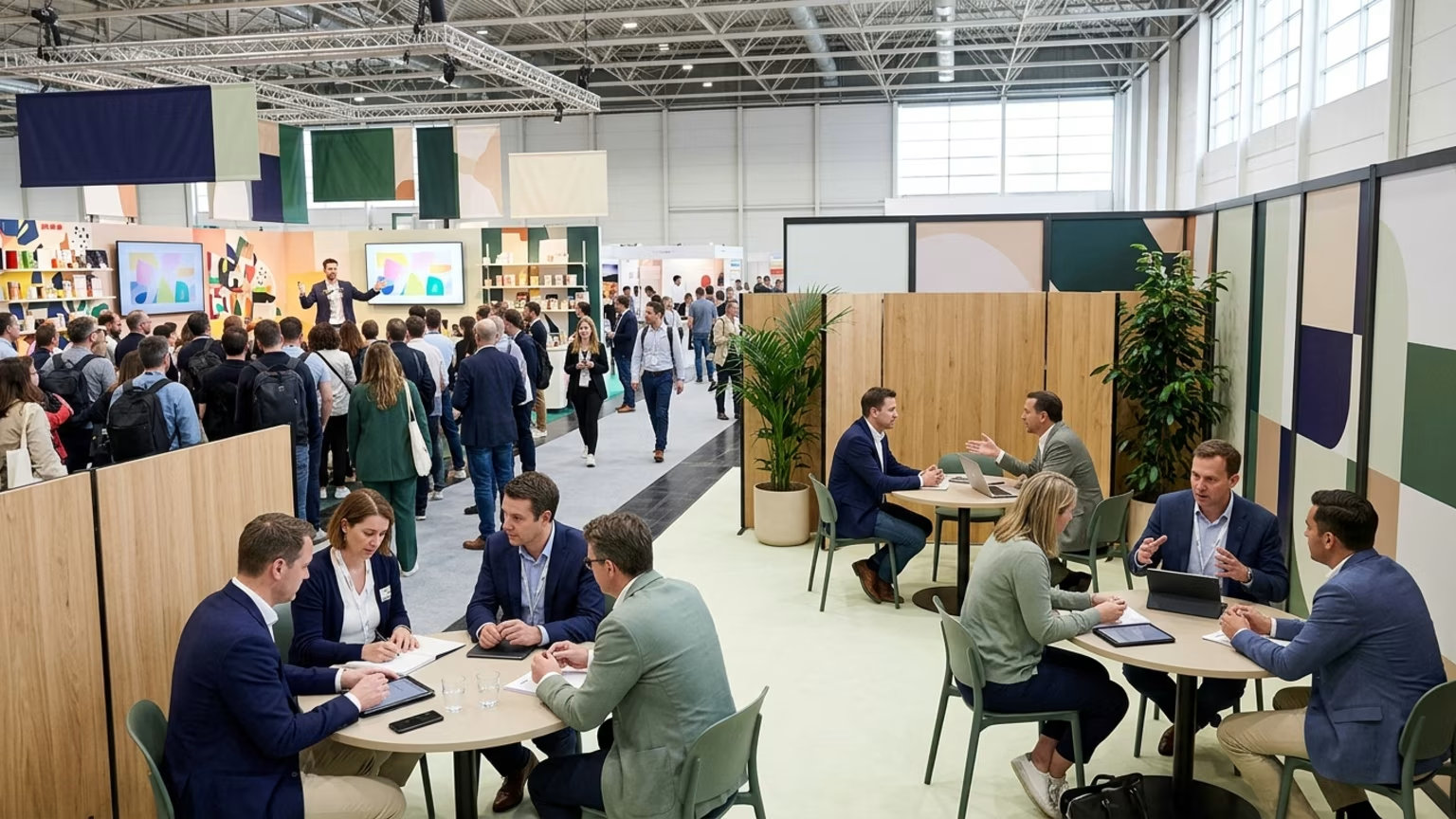
Roughly 40.5 percent of a total trade show budget disappears before a single customer walks onto the floor. The Center for Exhibition Industry Research recently reported this stark reality. Exhibit space alone remains the dominant cost center for physical activations. If your team treats that expensive footprint as a passive showroom, your marketing capital is actively bleeding out.
The days of judging success by foot traffic and branded swag are over. Operators face intense pressure to prove Return on Investment (ROI) from every physical activation. The mismatch between what a booth looks like and what it actually produces is forcing a major strategic correction. Brands must shift from hoping people stop by to building a precise engine for pipeline generation.
Many companies still view their event budget as an unavoidable industry tax. They buy the space, set up a table, and hope the right buyers happen to walk down their specific aisle. This outdated approach ignores the massive financial stakes of modern field marketing. Smart leaders now treat their exhibition presence as a highly engineered sales channel.
Consumer packaged goods companies often struggle the most with this transition. Their products rely heavily on physical sampling and sensory experiences. When a beverage brand sets up a tasting station, they frequently track the number of cups poured instead of the number of retail buyers secured. This fundamental mismatch between activity and revenue is exactly why budgets are being pulled from inefficient shows.
The numbers from the July 2026 CEIR report paint a clear picture of the modern trade show environment. Exhibit design adds an average of 11 percent to the total bill. Combined with the 40.5 percent spent on raw space, over half of a typical budget is locked into the physical footprint before operational costs are even considered. That leaves a massive burden on the remaining budget to actually drive business.
The research also reveals where the real opportunities exist for sharp operators. According to CEIR data, about 67 percent of trade show attendees represent entirely new prospects. These are buyers who have not been reached through other marketing channels. Reaching them requires coordinated work long before the doors open to the public.
Pre-show marketing outreach drives 46 percent more booth visits compared to relying on walk-up traffic alone. Despite these clear advantages, a surprising gap remains in how companies track success. Only 37 percent to 49 percent of exhibitors formally measure their outcomes after an event. However, CEIR findings indicate that teams who set measurable goals before arriving report 25 percent to 30 percent better outcomes than those who do not.
These benchmarks should serve as an immediate wake-up call for marketing directors. The gap between top-performing event programs and average ones is entirely driven by data tracking. If half of the industry is not measuring their results, the companies that do will capture the market share. Discipline is becoming the ultimate competitive advantage on the floor.
A VP of Marketing looking at these figures must immediately rethink their resource allocation. Budgets are under heavy scrutiny across the entire consumer goods sector. Customers and executive boards demand concrete evidence of business outcomes instead of vague brand awareness metrics. You cannot afford to pour six figures into a massive build if your team cannot track the resulting sales lift.
When you look at a fragmented trade marketing budget, every dollar spent on logistics is a dollar taken away from consumer engagement. Executives must demand efficiency in how their footprint is constructed. Modular setups and streamlined freight strategies are no longer optional cost-saving measures. They are absolute necessities to free up capital for the digital integration and pre-show outreach that actually drive revenue.
Over-designing a booth is a common mistake that actually works against your goals. Industry experts cited in recent CEIR session materials suggest keeping at least 40 percent of the floor space completely open. A cluttered footprint signals a hard sell to visitors. This visual tension often drives potential buyers straight toward your competitors.
To counter rising costs, your team must treat the exhibition floor as a pre-booked sales environment. It is time to recognize the end of presence-only trade shows and demand measurable interactions. Every dollar spent on the physical build must support a structured challenge, a live benchmarking tool, or a product configurator. These tactics turn a casual walk-by into a highly focused working session.
Knowing the macro trends is only half the battle for a field marketing director. The real test is translating this data into a highly functioning activation. Staffing strategy is the first immediate adjustment you must make. Brands need to move away from passive booth sitting and train their ambassadors for active demand creation.
The people on the floor directly impact lead qualification and total pipeline. A professionally designed stand makes a massive difference here. According to CEIR findings reported by ExhibitElevate, investing in professional stand design can boost qualified lead volume by up to 38 percent over basic shell scheme setups. Better design invites better conversations and filters out unqualified traffic.
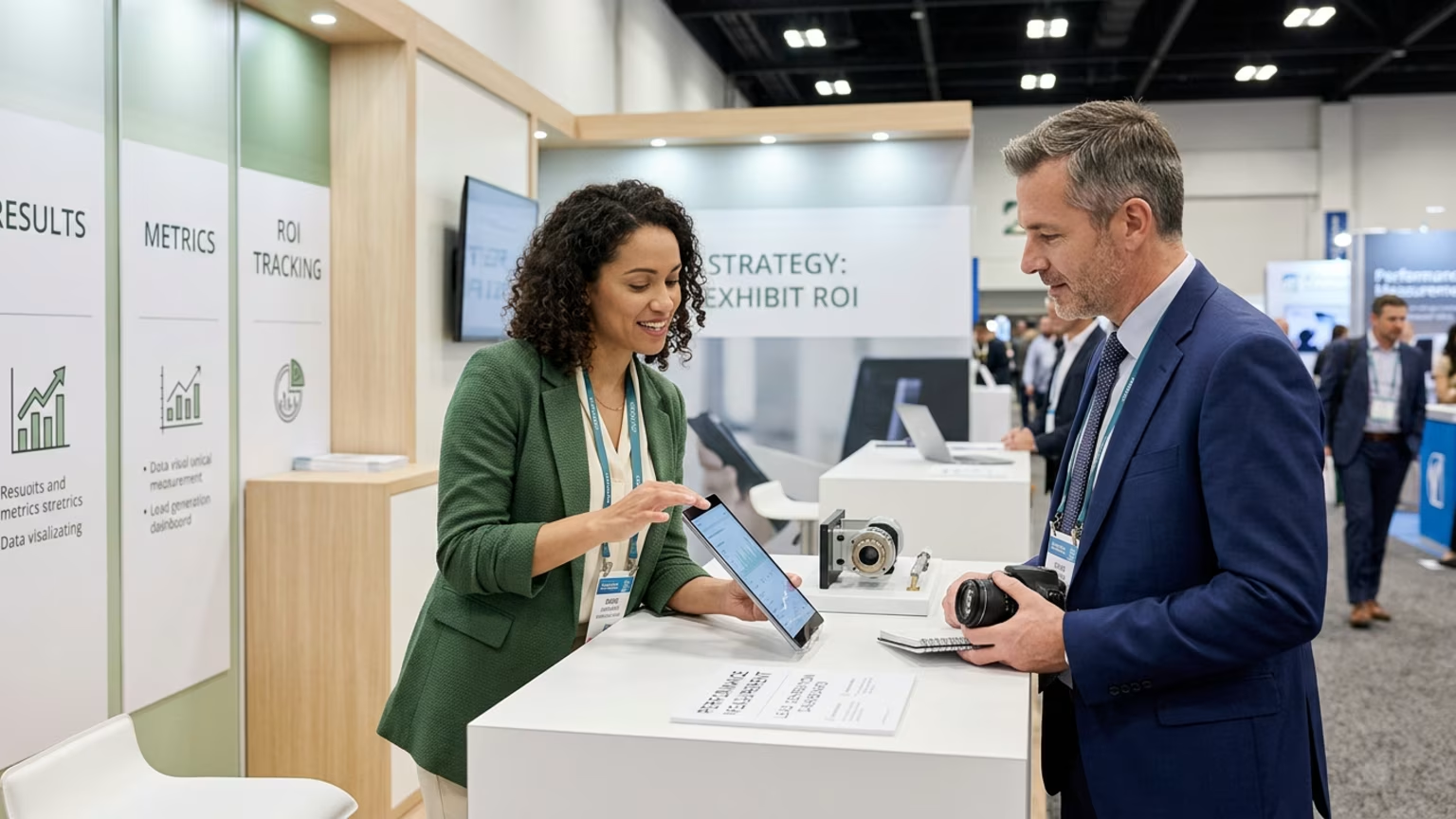
Technology must then step in to capture that momentum immediately. Teams should deploy interactive tech like QR codes on signage that link straight to booking pages. You must also instruct your staff to score leads directly in the booth. Labeling conversations as hot, warm, or cold based on context prioritizes the sales handoff.
Speed is the final variable in translating floor activity to revenue. Top performers now upload leads to their CRM within 24 hours. They also send performance summaries to stakeholders within 48 hours to capitalize on fresh memory. This is how smart exhibitors tie trade show activations to pipeline with precision.
At makai, we create experiential marketing programs built to connect emotion with action. Our process blends creativity, strategy, and data to guarantee every brand interaction drives measurable results. We craft experiences that engage all five senses. This approach helps people feel our brands, turning moments into meaningful business outcomes.
When operations are dialed in, the financial returns become highly predictable. ROI benchmarks show that well-run exhibition programs achieve an expected pipeline of 4x to 6x their total program spend. A well-run program means tight coordination from the initial design phase all the way through to dismantling. Consistency across every logistical step is what protects your profit margin and justifies your annual spend.
The era of paying for empty square footage and hoping for a return is finished. The latest CEIR data proves that the physical footprint is only a stage for rigorous execution. The real value is generated by what your team does before the doors open and immediately after they close. Pre-show outreach, open floor plans, and rapid lead follow-up are the new baseline requirements.
Operators must adjust their KPI dashboards this quarter to reflect these realities. Track your pre-scheduled meetings just as aggressively as you track your booth build budget. Turn your expensive space into modular micro stages that invite working sessions instead of casual glances. You need a system that processes interactions like a dedicated sales team.
Remember that 40.5 percent of your budget is gone the moment you secure your space. If you want to see a 4x to 6x pipeline return, you have to engineer the other half of your budget for conversion. Treat your next physical activation not as a branding exercise, but as the most highly targeted sales floor your company will operate all year. Stop guessing at your impact and start measuring your outcomes.

30 Years Experiential & Retail Activation Partner for CPG & Beverage Brands | Multi-Market Demos, Roadshows & Costco/Club Programs That Actually Sell