Robbie Thain
Founder, CEO

Design trade show traffic flow around product trials, qualified conversations, and clear next steps instead of judging success by crowd size.
Your crowded trade show booth is not a conversion strategy. It may be a beautifully staged obstacle between the right buyer and a useful conversation. A crowd looks impressive in the recap deck, but it does not explain what happened after someone stopped.
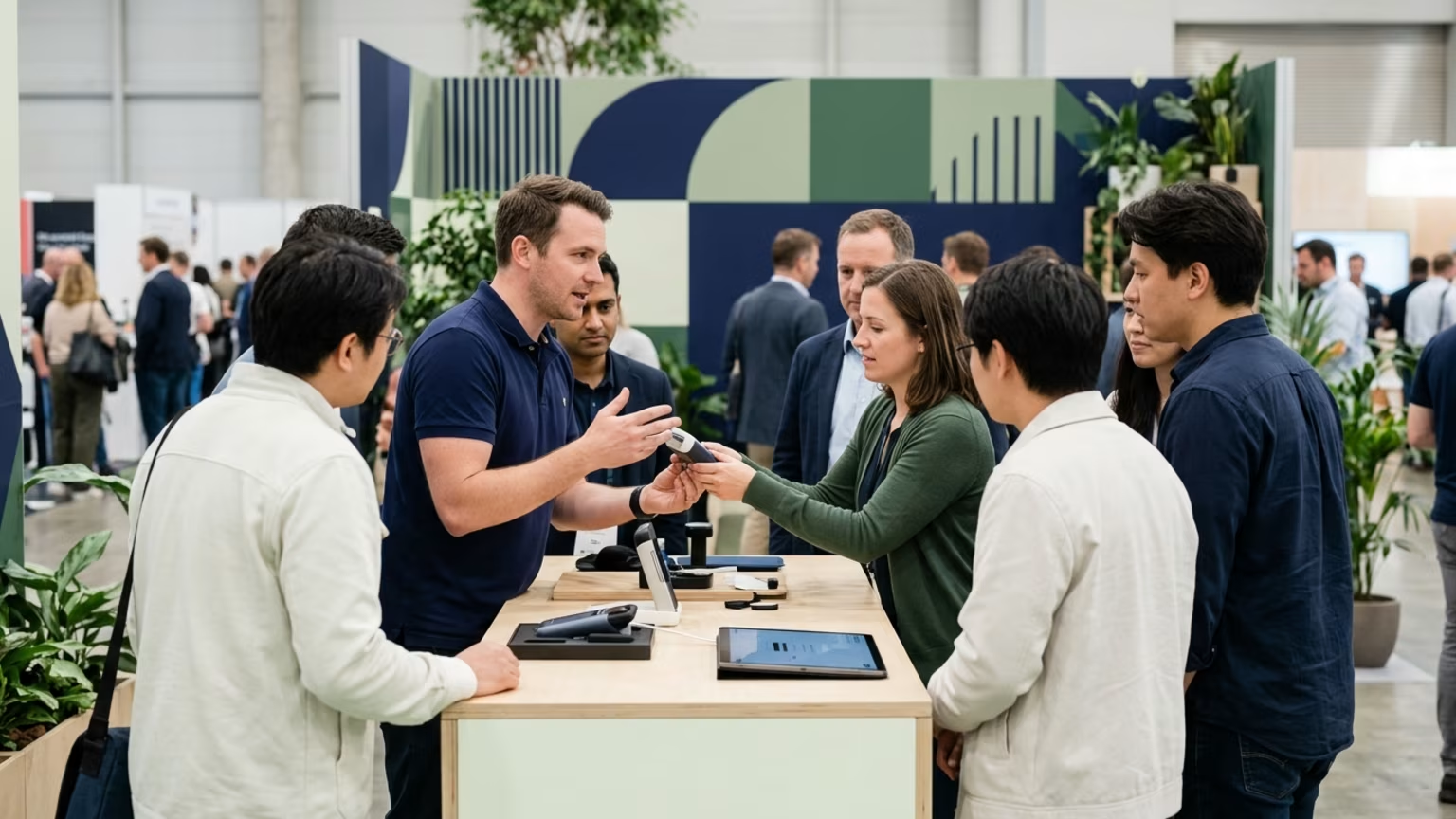
A booth should earn its footprint by making the right interaction easier. That means designing from the conversation backward: who needs to try the product, what they need to understand, and where that interaction should lead. The attraction is an invitation to that process, not the process itself.
For a CMO considering a six-figure activation, the frightening outcome is not an empty aisle. It is a packed space followed by no qualified pipeline and a report full of attendance counts. Design should reduce that uncertainty rather than disguise it.
The mainstream mistake is treating attention as the completed assignment. The centerpiece gets approved before the team decides what a retail buyer should experience or where a serious discussion can happen. Staff then inherit a space designed to attract people without an equally clear plan for serving them.
Exhibit-design practitioners recommend open entry points and clear paths. Their guidance also calls for sightlines to brand messages and demonstrations positioned so crowds do not block access. Scheduled meetings sit apart from high-traffic activities in that model.
Those recommendations expose the operational questions that a rendering cannot answer by itself:
These layout recommendations are practitioner guidance, not controlled conversion tests. They do not quantify sales gains from entrances or zones or establish a sales-attribution model. Use them as a working design brief rather than a promised Return on Investment (ROI).
The point is not to strip the booth of personality. It is to stop asking personality to compensate for a blocked entrance or an inaccessible conversation space. A striking environment still needs to leave room for visitors to move.
For the marketing leader, that is the real budget question. What does each design choice help a relevant visitor do? If the answer ends at noticing the brand, the commercial brief is unfinished.
At Makai, our view is that aloha-style approachability and operational discipline belong together. Warmth means treating a visitor as a person rather than a badge scan. Discipline means building an experience designed to carry that human interaction toward a measurable business outcome.
Authenticity does not require an unstructured encounter. A useful product conversation can feel natural while still having a purpose. The visitor should have room to ask questions, experience the product, and decide whether continuing the discussion makes sense.
Our Retail Demonstrations use trained brand ambassadors to drive in-store sales through real conversations and product trials. That service reflects the same principle we bring to this discussion: the product and the person deserve more attention than the attraction alone. We believe a conversion-minded experience should make their interaction easier rather than compete with it.
At Natural Products Expo West 2025, we designed and managed a 40 by 20 foot trade show environment for Glanbia. The coordinated space brought together think!, Isopure, Optimum Nutrition and Amazing Grass. Our team handled concept and operations along with staffing and breakdown.
More than 14,000 recorded product samples were distributed across the activation stations. That is a documented trial output, not a count of qualified buyers or a claim about attributed sales.
The lesson we take from that engagement is about accountability across a complex environment. Several brands can share one coordinated space, but the creative ambition still needs an operational counterpart. The sample count makes one part of the work tangible instead of leaving the entire evaluation to photographs.
For us, the better design question is not whether the booth feels large enough to impress. It is whether the experience gives product trial and human conversation a clear job. Operational discipline should protect the interaction that the creative work invited.
Jack Morton recommends treating the booth as part of a broader attendee journey. Its guidance connects pre-event communications with onsite touchpoints and post-event follow-up. It also notes that engagement preferences can differ: some audiences favor an immersive digital experience while others prefer a hands-on demonstration or a conversation with an expert.
Our reading is straightforward: do not force every visitor through the same performance. Design around the interactions the business needs while allowing people to engage in different ways.
An exhibit-design practitioner describes a three-zone approach: attraction at the aisle, interaction through demonstrations or product trials, and conversion through meetings or next steps. That is a useful planning vocabulary because it separates getting noticed from doing business.
For a CPG booth, the aisle-facing message should make the product benefit and available interaction understandable. The visitor should not have to decode a campaign slogan before learning that a sample or demonstration is available.
Keep the invitation specific to the experience inside. A message promising product trial should lead to an accessible product interaction, not simply to another promotional display.
The practitioner guidance on open paths and visible demonstrations offers a practical starting point. Position the interaction so visitors can recognize it without letting the resulting crowd block entry. Keep the brand message visible from the approach rather than relying on someone inside the booth to explain everything.
The operational question is simple: can interest progress into participation?
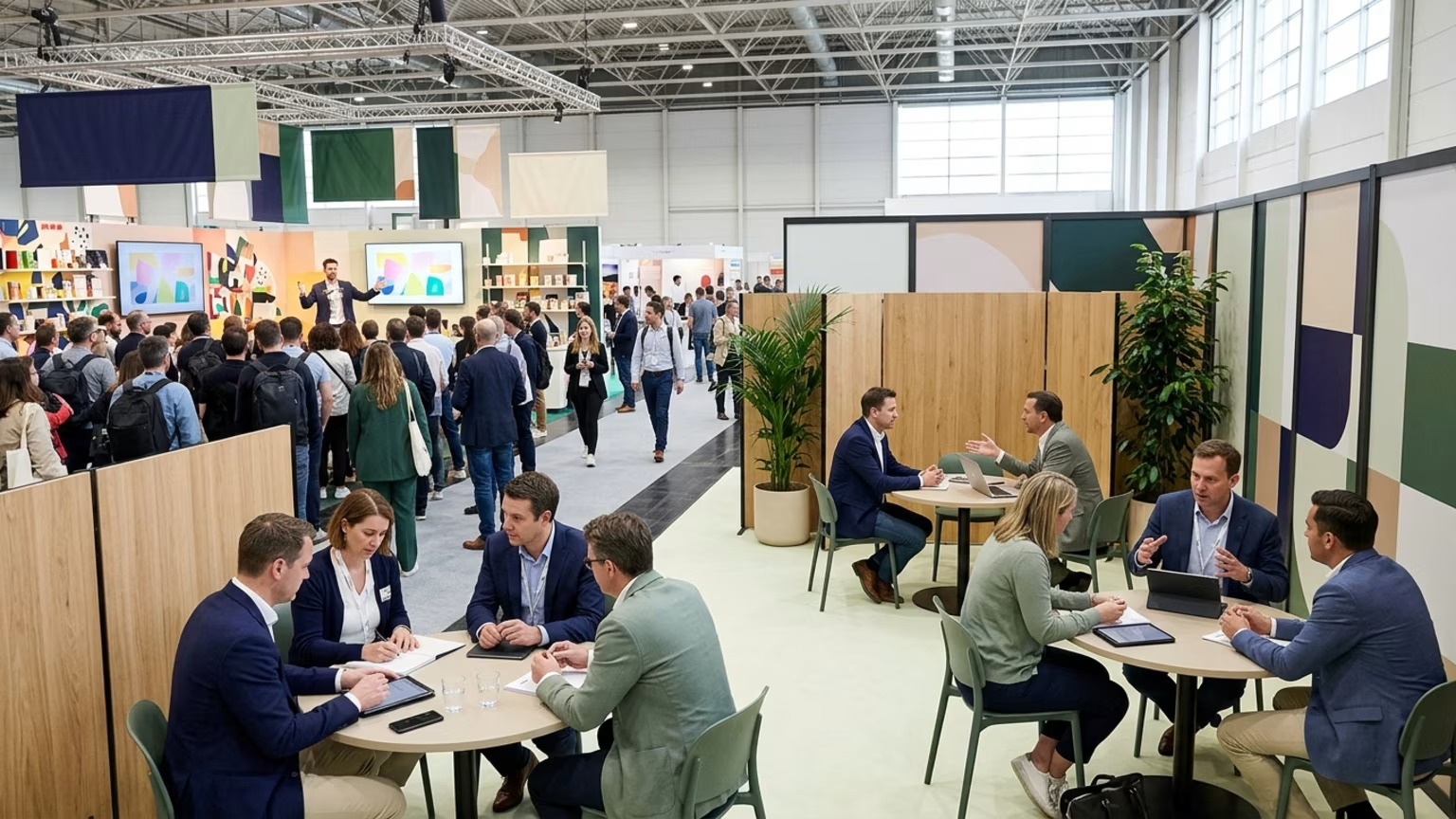
A tasting station and a retail discussion serve different purposes. Planning should separate product trial from buyer-meeting needs without making either feel disconnected from the brand. This is not an argument for more furniture or a larger footprint. It is an argument for giving the intended interaction priority over decorative elements.
A retail buyer may need a longer discussion than a product-curious attendee. The layout guidance recommends separating scheduled meetings from high-traffic activities. That gives the design brief a clear distinction between participation and focused conversation.
The staff role should follow that distinction. A greeting can establish interest, a product interaction can support understanding, and a conversation can identify the relevant next step. This is a proposed operating sequence drawn from the journey guidance, not a claim that one script suits every audience.
The booth is also not the only place where useful conversations happen. Jack Morton, citing CEIR, reports that 97% of organizers offer networking opportunities in common areas and 55% of exhibitors have sponsored them. That context is a reminder to plan for the wider event rather than treating the booth boundary as the boundary of the relationship.
Impressions and foot traffic describe exposure. The commercial question is what relevant people did after that exposure. For a conversation-first activation, the reporting brief should distinguish activity from progression.
Useful proposed outcomes include:
These measures answer different questions and should remain distinct. A sample is a trial output. A booked retail meeting is a commercial next step. Combining them into one engagement total would erase the distinction the booth was designed to create.
Jack Morton recommends using attendee insights to make follow-up more relevant. The handoff therefore belongs in the experience brief, not in an afterthought once the show closes. Planning should connect the live interaction to a usable next step while the purpose of the conversation is still clear.
That changes the design review. Instead of asking only how many people the attraction might draw, ask which interaction each part of the space supports. Then make the report reflect those same intentions.
Core takeaway: A beautiful booth earns its place when the execution supports product trial and meaningful conversation. Attention starts the process, but the business needs evidence of what followed. Demand a clear invitation and an accessible interaction alongside space for qualified discussions and relevant next steps. The stronger standard is not whether the activation looked busy. It is whether the experience made the intended business conversation easier to have and easier to account for.
After a conversation-first booth plan is approved, Makai handles the trade show space that puts attention and discussion at the center of the experience. Its trade show service addresses scattered attention and poor booth flow, while its Retail Demonstrations use trained brand ambassadors to drive in-store sales through real conversations and product trials.

30 Years Experiential & Retail Activation Partner for CPG & Beverage Brands | Multi-Market Demos, Roadshows & Costco/Club Programs That Actually Sell