Robbie Thain
Founder, CEO

NYCC 2026 split its massive footprint into professional meeting spaces and consumer activations, requiring brands to rethink their trade show logistics.
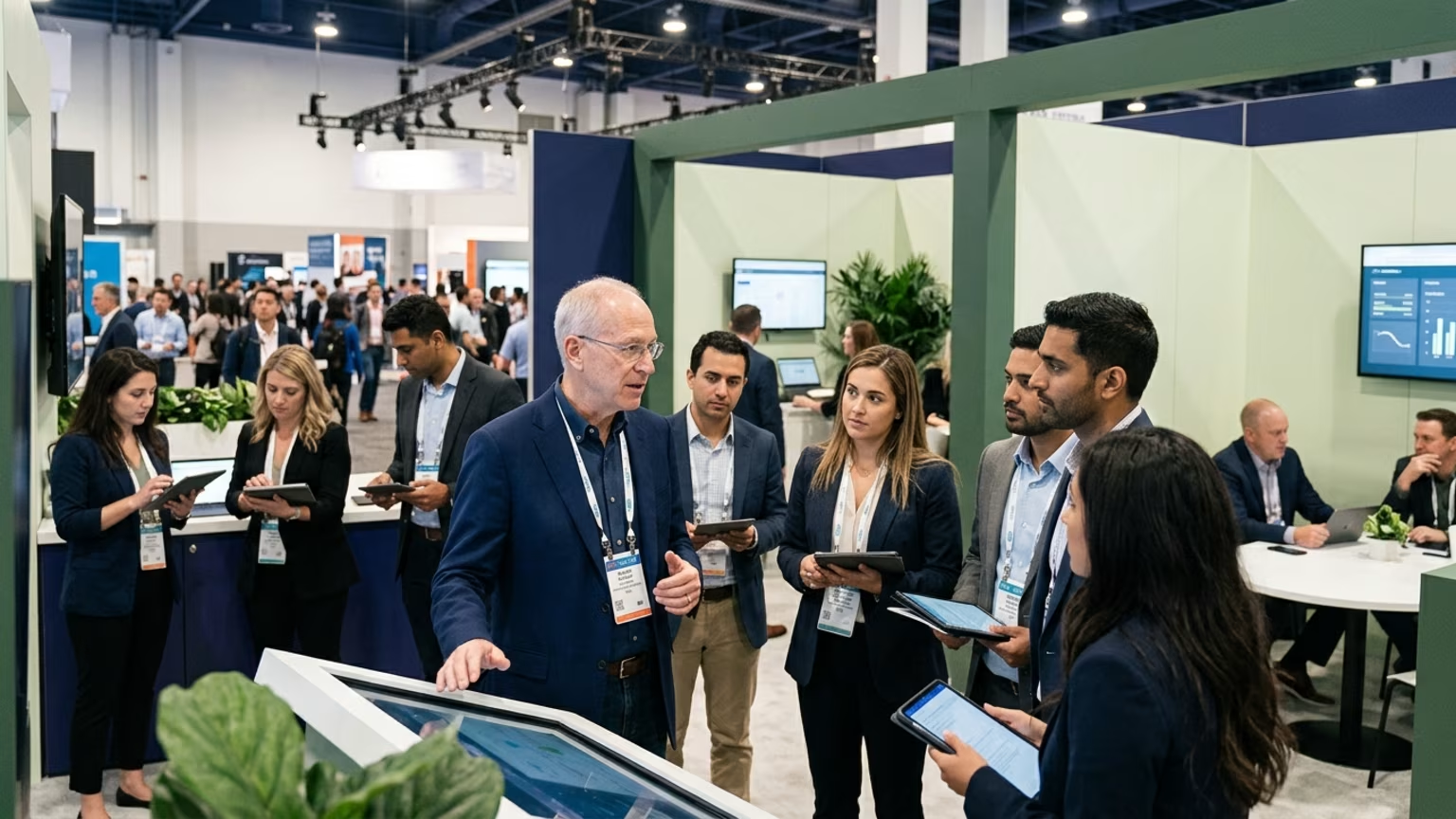
On October 7, 2026, New York Comic Con (NYCC) launched its third annual Retailer Day before the public show floor even opened. The event took place at the Javits Center and specifically targeted industry professionals with a focused business agenda. The Toy Book reports that this early schedule included publisher presentations, retailer conversations, and dedicated creator signings. Attendees also had access to networking events and keynotes from Stephanie Phillips and Todd McFarlane.
By carving out an exclusive professional window, the organizer established a clear timeline for buyer engagement. Variety noted that the 2026 event was expected to host 250,000 people over its four-day run. The publication also reported that the convention would feature more than 500 creators and 650 exhibitors. Establishing a dedicated day for retailers allows those 650 exhibitors to hold serious distribution discussions before managing massive consumer crowds.
The operational structure of the event fundamentally shifted how exhibitors interact with different attendee segments. The Toy Book reports that Dark Horse and eBay were represented in the professional programming alongside Ignition, Universal, and the Women in Comics Collective. ReedPop expanded its professional schedule directly into the River Pavilion. This specific space hosted legal sessions, panels, and detailed discussions on licensing and entertainment.
Friday’s programming further separated strategic conversations from the general exhibition floor. The Toy Book says The Syndicate hosted a session focused on visual identity and brand building. Experience12’s Popcultr Marketing Summit was scheduled to address the trading-card boom, changing fandom behavior, and live experiences. These targeted summits provided marketers with a closed environment to discuss strategies and competition for consumer attention.
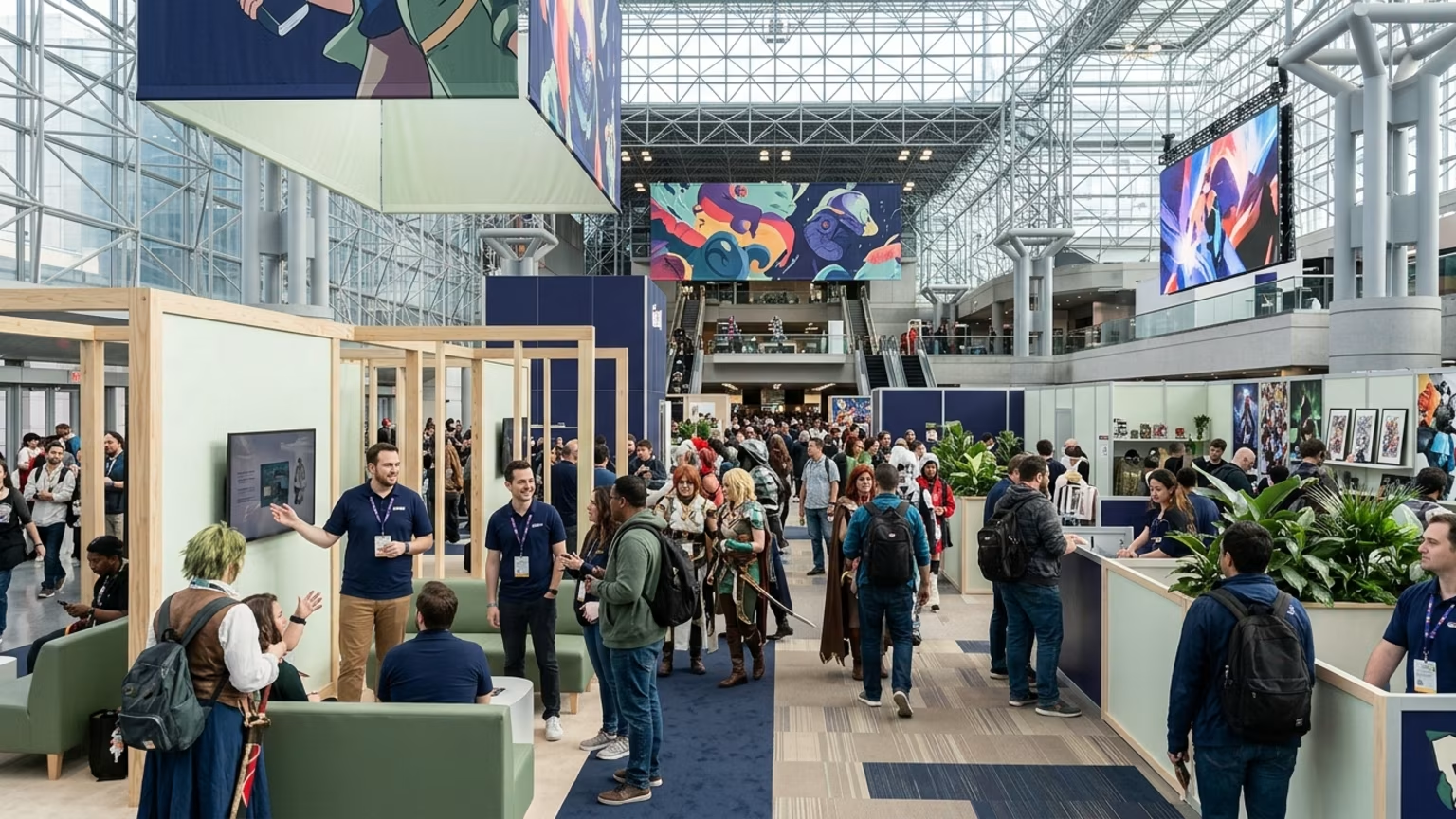
Simultaneously, the main show floor was designed for massive consumer interactions and bold brand visibility. The Toy Book described consumer-facing activations like Kayou’s “Walls of Fandom” walk-through and Nickelodeon’s interactive “Fun-ergy Factory.” Whatnot operated a collector-focused “Liveplex” that reportedly covered more than 5,000 square feet. Jazwares and Disney Consumer Products even planned a Spider-Man costume gathering and a record attempt, looking to beat an existing mark of 685 participants.
We have been connecting brands with people through live experiences, retail programs, and national activations since 1995. Over three decades, we have built a track record of creating meaningful brand moments across the country. In our experience, trying to treat a trade show floor as a single monolithic audience always leads to wasted budget. When an event scales to this massive size, brands must physically separate retail buyers from casual fans.
NYCC illustrates how event organizers are actively facilitating this necessary separation for successful execution. They are pairing private networking spaces with highly public consumer demonstrations to serve two completely different goals. For consumer packaged goods and beverage companies, this dual format is exactly how physical marketing drives real pipeline. You build broad consumer affinity in the main hall and close hard distribution deals in private meeting rooms.
When field marketing teams understand this dynamic, they stop trying to do everything at a single counter. Consumer events require high energy activations that turn awareness into measurable participation. Retail buyer meetings require quiet spaces, clear data reporting, and deep discussions about supply chains. Separating these two functions is the only practical way to ensure that both audiences get the experience they need.
We design mobile activations and roadshows that accelerate consumer trial, build trust, and boost retail velocity during 90-day product launch windows. Our structured approach transforms initial product trial into sustained consumer confidence and retail performance. Brands that understand how to bridge the gap between initial trial and sustained retail performance always prioritize structured environments. This structured mindset is exactly why a bifurcated trade show design produces better business outcomes.
This bifurcated event structure forces marketing operators to completely rethink how they staff and design their physical footprints. A standard booth layout cannot effectively serve a major retail buyer and a distracted fan at the same time. Field teams must divide their resources and deploy specialized staff for each distinct environment. Brands that want to meet buyers and leave with next steps must plan their physical spaces meticulously.
On the main floor, trained brand ambassadors must actively manage product trials, line queues, and public engagement. These teams are entirely focused on consumer throughput, minimizing wait times, and capturing initial data points. Managing a massive consumer space requires strict permitting, precise crowd control, and clear operational protocols. If a brand attempts a large public gathering, local fire marshals and security teams must be involved months in advance.
Across our history, we have delivered more than 1,000 campaigns in all 50 states for more than 200 brands. That range has given us experience across different products, diverse audiences, various retail settings, and changing market conditions. Managing simultaneous business and consumer executions requires serious logistics, including secure storage, timely shipping, and careful asset tracking. Without a rigorous logistical plan, promotional materials inevitably end up in the wrong pavilion.
Concurrently, senior sales staff and regional managers must operate exclusively in the dedicated professional meeting zones. Their operational focus shifts from volume to highly qualified lead capture and secure customer data routing. They rely on the consumer buzz generated on the main floor to prove market demand during these private meetings. This strategy is critical when brands are trying to make experiential marketing work harder for actual retail sell-through.
Measuring the success of these two separate environments requires entirely different data collection models. Consumer activations are judged by total engagements, sampling volume, and immediate social media response. Professional meetings are measured by qualified pipeline, scheduled meetings, and eventual Return on Investment. Understanding these distinct environments requires clear performance tracking frameworks. Attempting to track both datasets through a single reporting form creates massive administrative headaches.
Managing a crowd of this magnitude while attempting to conduct real business requires highly intentional environmental design. ReedPop senior vice president Marie Browne told Variety that preserving community at NYCC’s scale does not happen by accident. She noted that the organizer uses dedicated spaces, stages, panels, and meetups as part of its effort to preserve community. Growth must be managed carefully so the core audience does not feel alienated by the sheer volume of attendees.
Browne also told Variety that any potential event expansion would be tested with fans first before being implemented. She described building deeper experiences as a preferred method for growth rather than simply increasing the physical footprint. To maintain a connection with fans who cannot attend in person, Variety reports that NYCC livestreams main-stage panels on YouTube. This layered approach ensures high-value conversations happen on-site without completely shutting out the broader digital audience.
As major conventions like NYCC continue to blend massive consumer events with targeted professional networking, the standard pop-up booth is no longer enough. The days of hoping the right retail buyer accidentally walks past your busy sampling station are officially over. Organizers are providing the dedicated professional spaces necessary to separate targeted sales strategy from public spectacle. When you review your field strategy for the upcoming fiscal year, how will you ensure your trade show footprint actively qualifies visitor traffic instead of just drawing a chaotic crowd?
Structuring a massive event footprint to serve both retail buyers and public fans requires precise logistical coordination that Makai handles from start to finish. Our team eliminates low quality leads from crowded trade shows by managing end to end Costco roadshows that bring brands to shoppers through live demos, real conversations, and measurable sales impact. Request a proposal

30 Years Experiential & Retail Activation Partner for CPG & Beverage Brands | Multi-Market Demos, Roadshows & Costco/Club Programs That Actually Sell