Robbie Thain
Founder, CEO

Discover how IMTS 2026's record crowds highlight the need for intentional trade show design, expert handoffs and structured lead capture for CPG brands.

On September 14, 2026, IMTS 2026 opened its doors at McCormick Place in Chicago. The massive manufacturing technology event ran through September 19 and drew more than 90,000 registrants. The official event recap reported attendees from all 50 states and 113 countries. This attendance figure included an estimated 15,000 students who visited the show floor.
The official recap also reported 1,788 exhibiting companies in attendance, including 400 new exhibitors. As the event progressed, the floor-density ratio rose to 1.65 visitors per exhibitor staff member during the week. The recap called this ratio an all-time record for the event. This high density created an intense environment that tested the limits of booth traffic management.
A record floor-density ratio measures visitor concentration relative to exhibitor personnel. It does not automatically equal qualified leads or commercial success for the brands on the floor. Skyline reviewed the event and identified a distinct shift toward highly intentional buyer engagement. They outlined six core exhibit strategies that companies used to manage the massive crowds effectively.
The first strategy involves leading with business outcomes rather than just listing product features. The second focuses on using intelligent lighting to create a clear visual hierarchy across the booth. The third strategy leverages digital installations to support complex product storytelling. Together, these tactics help brands immediately signal their value to passing attendees.
Skyline also highlights the importance of designing structured staffing models and clear expert handoffs. Their fifth strategy requires planning specifically for intent-driven buyers who arrive with distinct purchase timelines. Finally, the sixth strategy simply involves making the physical product itself the main attraction. Exhibitors are realizing that basic lead volume is a flawed metric for measuring true event success.
Instead, Skyline recommends tracking target-account engagement and the volume of qualified technical conversations. Exhibitors should measure expert handoffs, new opportunities created and total pipeline influenced. Brands that refine their trade show strategies to drive sales outcomes see a better Return on Investment. Shifting away from basic foot traffic requires building spaces that actively filter and qualify visitors.
Industrial technology showcases often seem far removed from the world of consumer goods activations. However, the operational requirement to capture attention and direct traffic remains identical across all industries. Consumer brands that adapt to how trade show attendee behavior shifts toward active engagement see better pipeline returns. When an activation lacks clear operational goals, high foot traffic simply creates unmanageable floor congestion.
The Okuma exhibit at IMTS utilized a massive 100-by-170-foot footprint to guide visitors deliberately. Similarly, FANUC utilized synchronized robot arms and a Corvette activation to draw visual focus. Experiential marketing for food and beverage brands requires this exact same level of deliberate structural design. Without it, retail buyers and critical target accounts easily get lost in the noise.
We constantly see beverage and snack brands default to passing out untracked samples to anyone walking by. This approach might generate impressive distribution numbers, but it completely fails to build a measurable sales pipeline. Brands need to connect the physical product experience to a specific retail application or consumer challenge. Demonstrations only matter when they make the resulting operational or lifestyle benefits completely understandable.
A disciplined experiential approach requires treating the sampling station like a technical product demonstration. Staff members must engage visitors with a clear path to brand education or retail conversion. Merely setting up a table and hoping for organic engagement is an outdated strategy. Marketing leaders must mandate precise execution to justify their physical event investments.
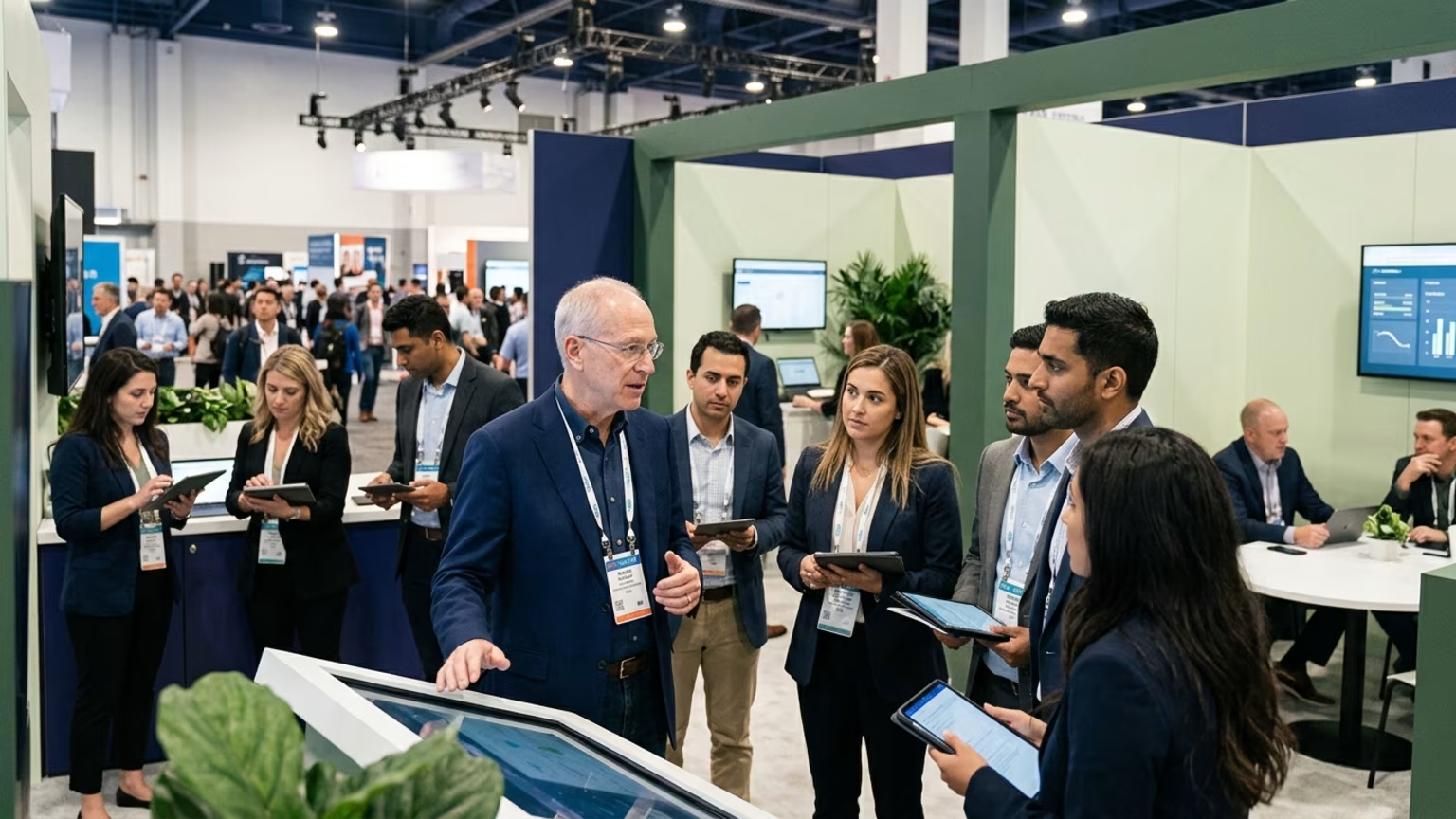
This focus on qualified interactions changes exactly how brands must staff their event spaces. Skyline recommends that staffing plans include a distinct welcome point to greet incoming traffic. Teams need a standardized way to identify visitor interests before passing them to specialized experts. Lead capture systems must remain frictionless to avoid interrupting valuable face-to-face conversations.
Physical booth elements must also work much harder to qualify passing visitors before staff interact. Skyline reports that CEIR research found 75 percent of attendees valued interactive product displays. This compares sharply with only 46 percent who valued basic static displays. Additionally, 60 percent of attendees valued interactive screens over traditional static versions.
Brands must integrate these interactive touchpoints to handle preliminary education and engage visitors waiting for staff. These elements also present a massive missed opportunity for the majority of exhibitors. Skyline notes that 67 percent of attendees used games that educated them about specific products. Despite this high consumer usage rate, only 8 percent of exhibitors actually offered that activity.
Field marketers must prioritize these engaging mechanics to pre-qualify leads effectively on the floor. Proper training on qualification, handoffs and diligent follow-up must become mandatory for all brand ambassadors. If the staff does not understand the pipeline goals, the interactive displays cannot save the activation. Teams that design trade show booths for product trials and buyer meetings can seamlessly route traffic toward measurable outcomes.
The immediate buzz of a packed show floor frequently creates a false sense of brand success. AMT president Douglas K. Woods stated the real measure of IMTS 2026 would be what followed the event. He noted that lasting investments, technologies put to work and new relationships are the true indicators of event impact. This perspective aligns closely with our own focus on measuring long-term commercial outcomes over vanity metrics.
We apply this exact discipline when managing large-scale trade show environments for premium CPG brands. For example, we designed and managed a 40 by 20 foot trade show environment for Glanbia at Natural Products Expo West 2025. We handled the complete concept, daily operations, staffing and final breakdown of the activation. The space successfully united think!, Isopure, Optimum Nutrition and Amazing Grass into one highly coordinated footprint.
Our team coordinated more than 14,000 recorded product samples across the various activation stations. Despite this massive volume, the environment remained structured to support clear visitor flow and strict lead qualification. We provide clear reporting on reach, trials, leads and sales to guide next steps in campaign optimization. Our measurement approach tracks awareness, engagement and conversion, turning brand moments into actionable data that demonstrates business impact.
Proper reporting ensures that the marketing team can prove the return on their event expenditure. Without clear measurement, those 14,000 samples would simply represent an operational cost rather than a pipeline driver. This is why connecting physical brand interactions directly to your sales pipeline is absolutely critical.
The broader economic context surrounding major trade shows often influences how brands plan their exhibit investments. The IMTS recap reported $4 billion in metalworking machinery orders through July 2026. That specific figure represents a 37 percent increase over the first seven months of 2025. While your industry metrics might differ, the demand for structured, outcome-driven live experiences is completely universal.
Brands can no longer afford to treat live events as simple brand awareness exercises. The floor density and the sheer volume of competing messages demand a much tighter operational focus. Marketing leaders must demand accountability from their field teams and their agency partners. How will your marketing organization measure target-account engagement rather than relying on total booth traffic alone?
Designing a trade show footprint to deliberately qualify visitor traffic is an operational challenge that Makai completely manages for you. We eliminate scattered attention and poor booth flow by executing Promotional Campaigns that connect digital and real world touchpoints to boost visibility and spark brand conversations.

30 Years Experiential & Retail Activation Partner for CPG & Beverage Brands | Multi-Market Demos, Roadshows & Costco/Club Programs That Actually Sell