Robbie Thain
Founder, CEO

Choose booth concepts around visitor progress, not visual novelty. Makai’s take on product trial, human conversations, and measurable next steps.

The flashiest feature in your booth may be the first thing worth cutting. A spectacle that earns a glance but leaves the product unclear has not finished its job. The sacred cow worth challenging is the belief that a memorable installation automatically makes a useful brand experience.
Our view at Makai is simpler: choose the visitor’s next step before choosing the attraction. A booth should help someone notice the offer, understand its value, experience something relevant, and take a defined action. Visual storytelling can support that path. It should not become a substitute for it.
That distinction matters when a marketing leader is defending a major event budget. A packed footprint might look reassuring in the recap while leaving the commercial question unanswered: what did the right people actually do? The creative brief needs an answer before fabrication starts.
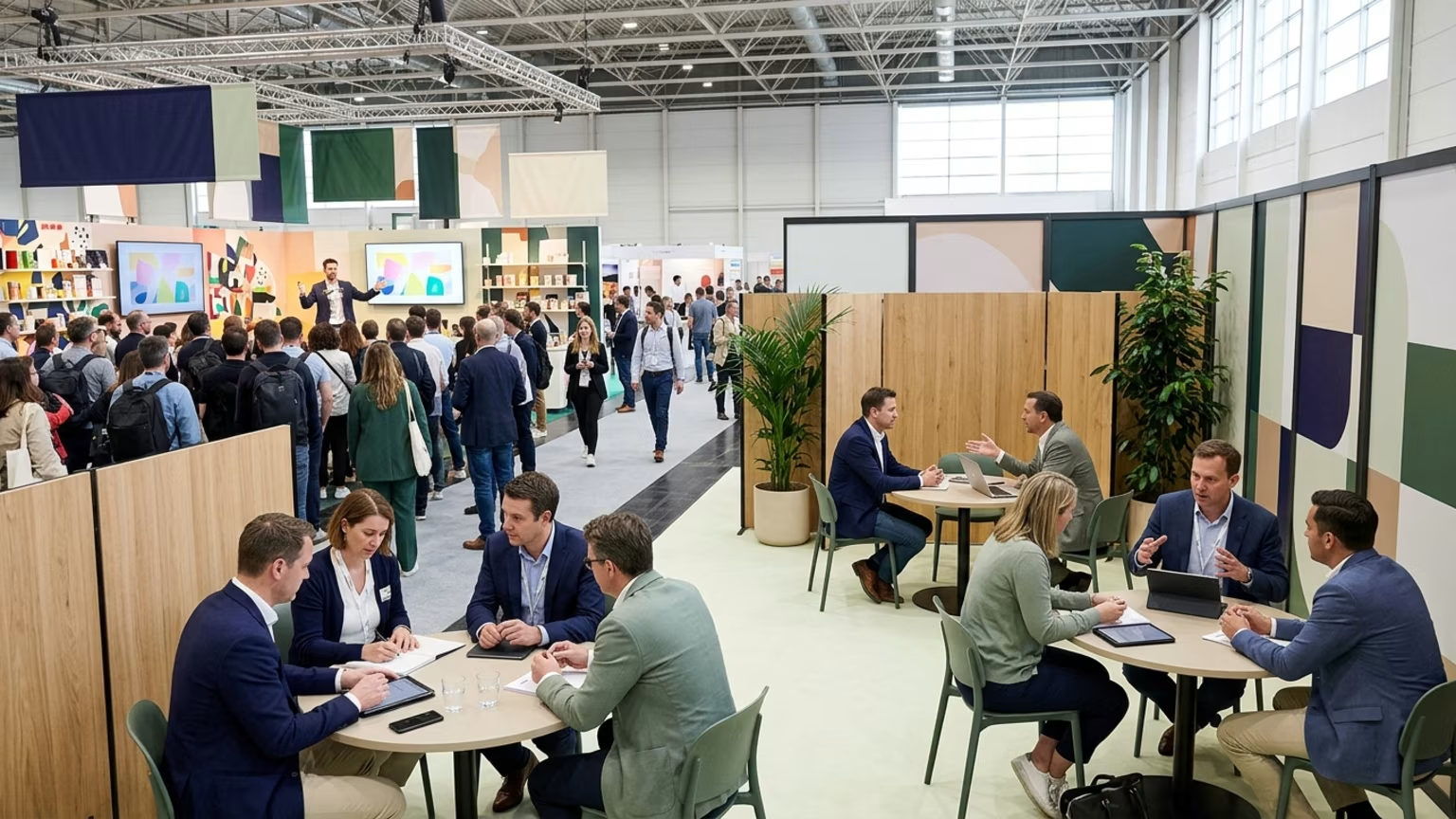
A beautiful booth becomes a beautiful dumpster fire when its parts compete instead of connect. The screen asks for attention. The sampling counter asks for a stop. The conversation area asks for time without making clear why the visitor should give it.
None of those elements is wrong on its own. The failure is assuming that putting them beside one another creates a journey. If visitors cannot connect the attraction to the product benefit, the booth has given them a reason to look without a reason to act.
For the CMO, the anxiety is not simply an expensive build. It is an expensive build followed by zero qualified pipeline and a recap full of crowd photos. Badge scans and samples may document activity. They do not answer every question about buyer fit or commercial intent.
The same problem applies to physical flow. A concept needs a legible route through the space, not just a strong view from the aisle. If participation blocks the place where a useful conversation should happen, the attraction is working against another part of the brief.
This is why we would challenge a concept presentation that stops at renderings. What does the feature help a visitor understand? What happens after participation? Where does the intended business action fit?
For us, aloha-style warmth belongs beside operational discipline. A welcome should feel human rather than scripted for a lead scanner. But friendliness without a purposeful interaction can still leave the visitor uncertain about the product and the brand team uncertain about the outcome.
Makai specializes in retail demos, product sampling programs, and roadshows that bring brands face to face with their audiences. These programs are designed to drive trial and build consumer relationships while supporting retail velocity across locations. That positioning puts the product and the human exchange at the center of the experience.
Our view is that the same principle belongs in a booth. A sample should have a reason to be there beyond filling a counter. A demonstration should help answer a product question. A knowledgeable conversation should make the next decision easier rather than merely extend the visitor’s stay.
At Natural Products Expo West 2025, our team designed and managed a 40 by 20 foot trade show environment for Glanbia. We brought think!, Isopure, Optimum Nutrition, and Amazing Grass into one coordinated space. Our scope covered concept, operations, staffing, and breakdown, with more than 14,000 recorded product samples distributed across the activation stations.
The useful lesson here is coordination across the concept and its delivery. A multi-brand environment has to function as an experience rather than remain a collection of attractive parts. The recorded sample count documents distribution; it should not be relabeled as qualified buyers or sales conversion.
Our preference is not less creativity. It is creativity with operational responsibility attached. The same argument applies to connecting product trial with a useful shopper conversation: the physical interaction should serve the product decision.
Start with the action the experience is meant to produce. A consumer trial is different from a retail buyer meeting. A product demonstration is different from an agreed follow-up. Choosing the action first gives the team a basis for judging the concept instead of debating which feature looks most impressive.
The visitor journey offers a practical way to organize that judgment.
Attention is the entry point, not the finish line. Visual storytelling belongs here when it helps the intended audience recognize a relevant offer. An installation that communicates the product’s value has a different job from one that simply creates a photo opportunity.
The planning question is straightforward: what should the right visitor recognize from the aisle? Judge the attraction against that answer rather than novelty alone.
Once someone stops, the experience needs to explain why the product deserves more attention. That explanation might come through a concise visual message or a conversation with a knowledgeable person. It should not require the visitor to decode the entire brand story before understanding the offer.
Our editorial test is whether the concept makes the intended benefit easier to grasp. Extra layers should earn their place by helping that understanding, not by making the presentation feel more elaborate.
Sampling makes sense when trying the product is relevant to the decision. A demonstration may fit when use explains something that a display cannot communicate as directly. A conversation may fit when the visitor needs information before deciding whether to continue.
Those are reasons to choose an interaction, not a requirement to include every format. For a trial-led objective, completed product trials are a useful activity measure. If audience fit matters, the reporting question should also address who participated rather than treating every distribution as equally valuable.
A next step should be specific enough to recognize when it happens. For a retail buyer, that might be a booked meeting. For another visitor, it might be an agreed follow-up after a useful product conversation. Neither should disappear inside a single undifferentiated engagement total.
This is where defining a qualified conversation matters. A team needs to distinguish someone who participated from someone whose needs match the intended commercial opportunity. Otherwise, a large contact file can conceal a weak handoff.
Useful measures follow the intended action:
Keep those categories separate. Impressions describe potential exposure. Distribution describes product handed out. Meetings describe a different kind of progress. A Return on Investment argument needs the appropriate business evidence rather than a new label on an activity count.
The booth also deserves a place in the wider campaign. Jack Morton’s September 2026 trade-show commentary argues for connecting onsite experiences with pre- and post-event activity. Jack Morton says its research with Infegy found 103% higher engagement and 123% stronger sentiment for content originating from live experiences than for brand baselines.
Those agency-reported findings lack enough methodological detail in the available account to serve as universal benchmarks. They do not establish which booth format produces qualified pipeline.
The practical implication is to consider what happens around the onsite interaction. Targeted outreach can give the intended audience a reason to visit. Post-event activity can continue an agreed conversation. Neither should be treated as a substitute for a clear onsite experience or a defined next step.
A booth does not earn its budget merely by looking expensive or keeping people occupied. It needs an understandable path from attention to a relevant experience and then to an observable action. That is the standard we believe creative ambition should meet.
Core takeaway: Demand execution over aesthetics when the two compete. Keep the feature that helps the intended visitor make progress. Question the one that interrupts that progress, even if it is the most photogenic part of the proposal. Human warmth and operational discipline belong in the same brief.
Choosing who will carry the product conversation is an operational decision; Makai takes on that work in retail demonstrations with trained brand ambassadors. CPG marketers dealing with scattered attention and poor booth flow can also use Makai’s trade show planning and management to connect visitor attention with conversations and potential customers.

30 Years Experiential & Retail Activation Partner for CPG & Beverage Brands | Multi-Market Demos, Roadshows & Costco/Club Programs That Actually Sell