Robbie Thain
Founder, CEO

Learn how event marketers turn passive trade show booths into high converting modular micro stages to drive foot traffic, capture leads, and prove revenue.
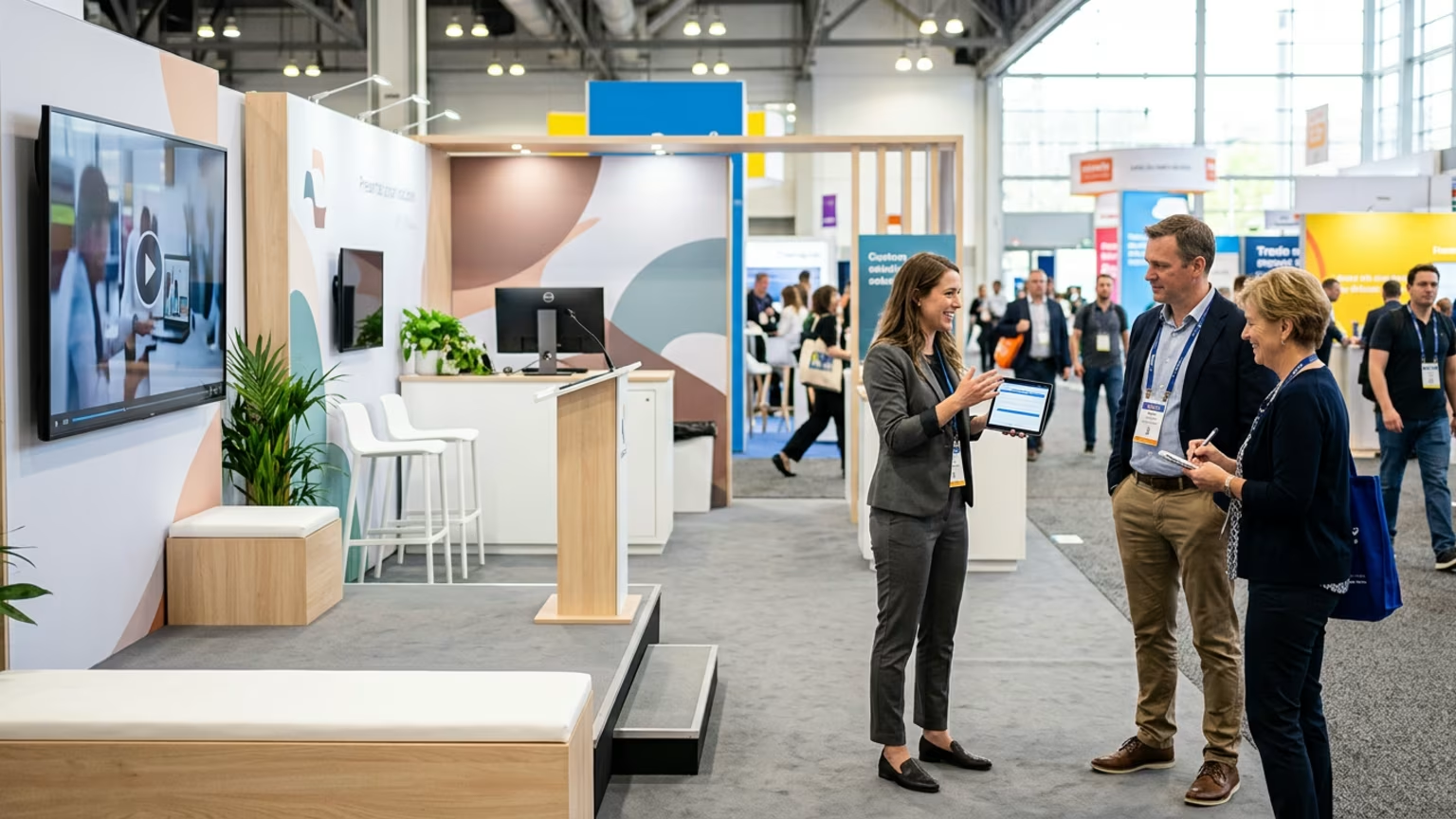
Industry data indicates that passive trade show footprints fail to hold buyer attention long enough to generate meaningful sales pipeline. By transforming standard spaces into modular micro stages with scheduled programming, brand marketers can dictate foot traffic and convert passing glances into trackable revenue.
Recent event marketing data indicates that 80 percent of trade show attendees possess direct buying authority. This high concentration of decision makers means every passing minute is a high stakes revenue opportunity.
A massive expo hall is an environment engineered for maximum distraction. Competitors blast heavy bass tracks. Bright LED screens flash aggressive messaging in every direction. Overwhelmed attendees wander the aisles with no clear sense of direction or purpose. Your team stands behind a static folding table. Ideal buyers simply walk past your premium product.
The traditional industry approach relies heavily on hoping someone stops to ask a random question. Hope is an abysmal operating model for modern field marketing. When companies invest significant corporate budget into a physical footprint, a passive setup practically guarantees an embarrassing failure. The typical scenario involves exhausted sales representatives handing out cheap promotional items to people who just want a free pen.
These resulting interactions are remarkably shallow, highly unmemorable, and totally impossible to track back to actual pipeline. Managers eventually return to the office with a scanner full of junk leads. They then face uncomfortable meetings with their executives about the lack of measurable Return on Investment. The entire event cycle becomes an exercise in wasted capital rather than strategic growth.
Instead of building a static and forgettable display, operators must design physical spaces that command attention through structured movement. Event production analysts now recommend the micro stage strategy to actively combat floor fatigue. This specific framework turns a flat booth into a dynamic theater with constantly rotating programming. It treats your expensive real estate like a live broadcast network instead of a quiet billboard.
We create experiential marketing programs built to connect emotion with action. Our team understands that passive setups rarely generate excitement. Our process blends focused creativity, strict strategy, and hard data to make certain every brand interaction drives measurable results. We craft specific live experiences that engage all five human senses. This approach helps people not just see brands but truly feel them. We turn fleeting moments into meaningful business outcomes.
A modular micro stage operates on a strict schedule of predictable content blocks. You might run live product demonstrations at the top of the hour. Then you can host structured buyer interviews at the halfway mark. This rotating agenda forces foot traffic to cycle naturally and gives attendees a compelling reason to return later.
It simultaneously allows your on site staff to prepare mentally for high density moments. They can conserve their energy rather than burning out on empty aisles. Brands that build higher impact booths with focused footprints regularly capture significantly better quality interactions. Smart modularity allows a surprisingly small footprint to feel large. It simultaneously makes a massive footprint feel intimate.
Beyond the immediate floor impact, this highly disciplined approach creates exceptional content for your digital channels. You can film these scheduled micro stage sessions to build a library of high quality product demonstrations. Brands routinely turn live events into always on assets that feed their social media calendars for months. The physical booth becomes a dual purpose content studio and lead generation engine.
The entire operational focus shifts dramatically from passive observation to active audience participation. Buyers no longer just grab a sample and walk away into the crowd. They stay to watch a process, ask detailed questions, and learn the story behind the product. This controlled environment builds trust rapidly and sets the stage for a proper sales conversation.
Implementing this structural shift requires strict operational discipline from your entire field team. Here is the precise method for executing this system at your next major expo.
Proper field execution requires your entire marketing team to connect physical interactions to sales pipeline seamlessly and efficiently. When the scheduled programming concludes, the space must instantly convert into a high speed qualification zone.
You cannot improve a physical process that you do not actively measure. A modular micro stage provides very clear transition points that make tracking significantly easier for your team. Event marketers must monitor specific lead and lag indicators to prove true Return on Investment. Without these hard numbers, your post event executive report is just a collection of nice photos.
Field marketing leaders desperately need solid data to prove return on physical events consistently to their leadership. You must build your data collection strategy before you even pack your shipping crates.
Track these primary lead indicators on the floor:
Track these critical lag indicators after the event concludes:
Reviewing these metrics weekly keeps your field team focused entirely on business outcomes. If the post session scan velocity drops, you know immediately that the stage presentation needs a stronger call to action. If the opportunity conversion rate plummets, your scanning staff might be capturing bad data. Numbers provide the absolute truth in an industry heavily clouded by subjective feelings.
A national premium beverage brand recently applied this exact methodology at a major natural foods expo. Their previous physical setup was a massive static bar that produced incredibly long lines but very few meaningful buyer conversations. People simply drank the free sample and walked away without learning anything about the company. By tearing down the continuous bar, they built a rotating tasting stage with scheduled flavor profiles.
At the top of every single hour, their head mixologist demonstrated a brand new retail mocktail recipe. The energetic presentation lasted exactly ten minutes and ended with a curated tasting flight for the assembled audience. The dedicated scanning team waited patiently at the specific exit points. They intercepted interested buyers quickly to qualify their needs and book formal meetings.
This highly structured approach completely eliminated the chaotic free for all of continuous open sampling. The brand reduced their total physical product waste by forty percent. They simultaneously increased their qualified buyer meetings by double digits. By turning their footprint into a structured live broadcast, they achieved record breaking sales pipeline generation. The event transformed from a massive cost center into a highly predictable revenue engine.
To reach this level of operational clarity, you need an experienced partner who understands both creative design and rigid execution. Book a strategy call with our team to start planning your next major activation.
Remember the crowded and chaotic expo hall from the beginning of this detailed breakdown. It is still loud, wildly distracted, and completely overwhelming for the average busy attendee. Now, your physical space is no longer just another static table waiting around for random luck. It is a scheduled, high functioning theater that aggressively commands attention and consistently converts traffic into measurable revenue.

30 Years Experiential & Retail Activation Partner for CPG & Beverage Brands | Multi-Market Demos, Roadshows & Costco/Club Programs That Actually Sell