Robbie Thain
Founder, CEO

Kraft Heinz CMO Todd Kaplan explains why joy-driven experiences power modern marketing. Learn how CPG brands turn physical attention into measurable pipeline.
Myth: Prioritizing joy in your event strategy is an excuse for unmeasurable brand theater.
Truth: When executed with operational discipline, physical joy is a precise mechanism for securing shopper attention.
At the Adweek Cannes Lions 2026 Marketing Vanguard conversation, Todd Kaplan presented this exact argument. Kaplan is the chief marketing officer for North America at The Kraft Heinz Company. He oversees a reported $25 billion food and beverage portfolio spanning more than 70 brands and 50 categories. He argues that joy and creative looseness can help teams make better marketing.
For field marketing leaders, this is not a license to abandon metrics. It is a mandate to make the product the undisputed center of the fun.
It is easy to see why seasoned marketing operators view words like joy with deep suspicion. When you are responsible for driving real trial, abstract emotional goals usually signal a lack of operational focus. Experiential marketing teams have been burned by agencies that promise massive social media impressions but fail to capture a single qualified lead. A field director under pressure to justify a massive budget cannot take a mood board to the finance department.
Paid media might be easier for consumers to ignore today, but it offers a highly predictable dashboard. Therefore, defaulting to rigid sampling environments feels like the safest way to protect Return on Investment (ROI). The logic dictates that serious brand experiences require a strictly serious approach to execution. Operators worry about fragmented execution, inconsistent staffing, and poor in store presentation.
They know that events looking busy can often produce fog instead of hard evidence. When brand directors hear about creative looseness, they often imagine a beautiful disaster. They picture expensive installations that win design awards but fail to lift retail sales. This fear is entirely rational in a landscape where every single dollar is heavily scrutinized.
Planners naturally gravitate toward predictable routines to ensure their product samples are distributed efficiently. Unfortunately, this rigid approach often results in a highly forgettable consumer experience. A traditional demo program gets judged on cups poured rather than on incremental pipeline. This mismatch creates a false choice between driving engagement and driving volume.
Operators assume that injecting fun into a retail activation will distract from the core selling message. They believe that a streamlined transaction is the only way to prove value to retail partners. Consequently, the experiential space becomes saturated with boring booths that nobody actually wants to visit.
The reality on the event floor tells a very different story. Rigid environments do not force engagement. They usually just create friction and bore the target audience. Kaplan believes brands should create marketing that happens.
This means building work that gives people a clear reason to opt in, discuss, and share. Rigid brand interactions treat the consumer as a captive audience. Modern shoppers are completely immune to passive presentations. When you anchor a playful interaction directly to a tangible product truth, the consumer actively chooses to participate.
This active choice is the foundational step of any true conversion event. We have been connecting brands with people through live experiences and national activations since 1995. Over three decades, our team has learned that making the product physically interactive always outperforms passive sampling. At makai, we focus exclusively on the nuances of CPG, food, and beverage sectors.
Adweek cites three campaigns as prime examples of unexpected executions built around recognizable product truths. The first is Heinz "Looks Familiar," which used a French fry box resembling Heinz packaging and won a Cannes Grand Prix. The second is "The Dipper," featuring packaging designed with a built-in dipping function. The third is Jell-O's "Gelometer," a playful mold designed to measure sound through physical jiggles.
While awards do not replace hard sales metrics, the underlying mechanical strategy is perfectly sound for the field. When the product itself becomes the interaction, the fun directly validates the purchase decision. The joy is not separate from the brand experience. The joy is the actual product demonstration.
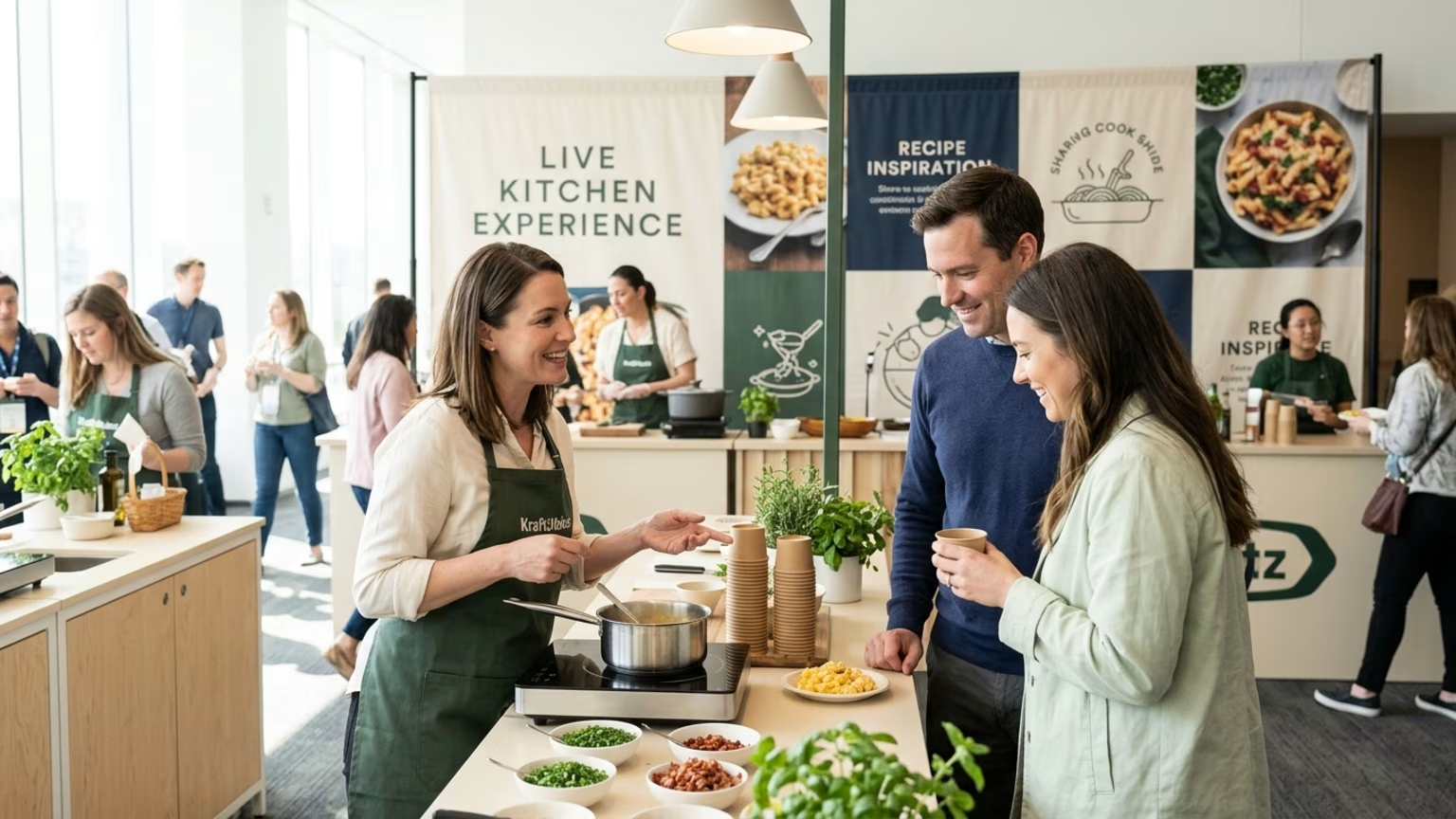
Think about the standard trade show booth or grocery store demo table. Most rely on a bored brand ambassador handing over a tiny plastic cup. This passive method fails because it demands nothing of the consumer and offers zero emotional resonance. A joy driven approach forces the consumer to touch, manipulate, or play with the item.
To harness this effectively, you must build the retail and measurement architecture before the event begins. You can engineer surprise and delight without sacrificing your lead capture process. A strong start is placing your product in environments where consumers already gather around their passions. Kraft Heinz and Disney recently announced a multiyear alliance spanning media, theme parks, cruises, and other consumer experiences.
The agreement is expected to include 10 Kraft Heinz brands, new menu items, condiment stations at Disney parks, and a Kraft Heinz presence at D23. By meeting consumers in high traffic areas they already love, the brand borrows existing emotional equity. But securing that premium real estate is only step one of a successful campaign. This scale of placement requires precise experiential marketing strategies to ensure consistency.
Your team must rigorously track product trial rates, staff to attendee ratios, and offer redemptions. If an attendee interacts with a clever product dispenser, they still need a clear path to the nearest retail shelf. You build pipeline by ensuring the joyous moment seamlessly hands the consumer off to an immediate purchase. This requires operator grade discipline and seamless inventory management across all activation sites.
You can ensure execution consistency by integrating reliable event logistics solutions to keep inventory perfectly aligned. The goal is to turn a fleeting smile into a measurable commercial outcome. Planners should define the exact commercial pathway well in advance. They must know exactly where the product can be purchased immediately after the interaction.
This means defining whether attendees receive unique offers, tracking codes, or retailer incentives. It means deciding which markets will be compared with control markets to measure true lift. Staffing, sampling, inventory, and compliance must be documented in real time. A joy driven idea will fail completely if the experience is difficult to staff or impossible to report consistently.
Post event follow up is where most field campaigns lose their momentum. Inefficient lead capture systems ruin the value of a high energy consumer interaction. When a shopper expresses interest during a live demo, their data must flow seamlessly into your database. This rapid routing allows sales teams to retarget engaged consumers with relevant retail offers.
Operators must prioritize secure data collection methods that respect consumer privacy. Building a robust loyalty pipeline requires a direct line of communication with the shopper. A joyful activation provides the perfect permission to ask for this direct relationship. This structural planning guarantees that the fun translates directly into future revenue.
Field leaders should align their physical activations with their broader retail media strategy. Engaging live moments supply excellent authentic content for digital channels. High impact live events naturally support live creator led brand experiences by giving influencers a physical stage. If a consumer shares a fun activation on social media, you have successfully extended your reach for free.
When you execute a national Costco roadshow, the volume of foot traffic requires extreme precision. A fun setup can halt shoppers in their tracks. But those shoppers still need an immediate call to action to place the item in their cart. At makai, we know that trained brand ambassadors must drive those in store sales through real conversations.
The joy catches the eye, but the operator grade execution closes the sale. Testing a product in real usage occasions is a stronger discipline than relying only on internal evaluations. The activation should always be evaluated under realistic conditions. Planners must account for queueing, loud noise, unpredictable weather, and tight staffing constraints.
Shopper missions, retailer proximity, and the total time available for interaction dictate the final design. Make operational excellence a core requirement of your creative brief. A practical activation scorecard should include both creative engagement and hard operational measures. Tracking your participation rate and product availability provides the clarity needed to scale.
For brands looking to optimize their performance, focusing on measurable activation metrics proves the financial return. Never let the creative concept overshadow the fundamental retail objectives. Joy is simply the delivery mechanism for your core value proposition.
Joy is not a distraction from measurable performance, but the very mechanism that makes a modern brand experience impossible to ignore.

30 Years Experiential & Retail Activation Partner for CPG & Beverage Brands | Multi-Market Demos, Roadshows & Costco/Club Programs That Actually Sell