Robbie Thain
Founder, CEO

Target's appointment of Mark Weinstein consolidates brand marketing and in-store experience, signaling a shift in how CPG brands must execute retail activations.
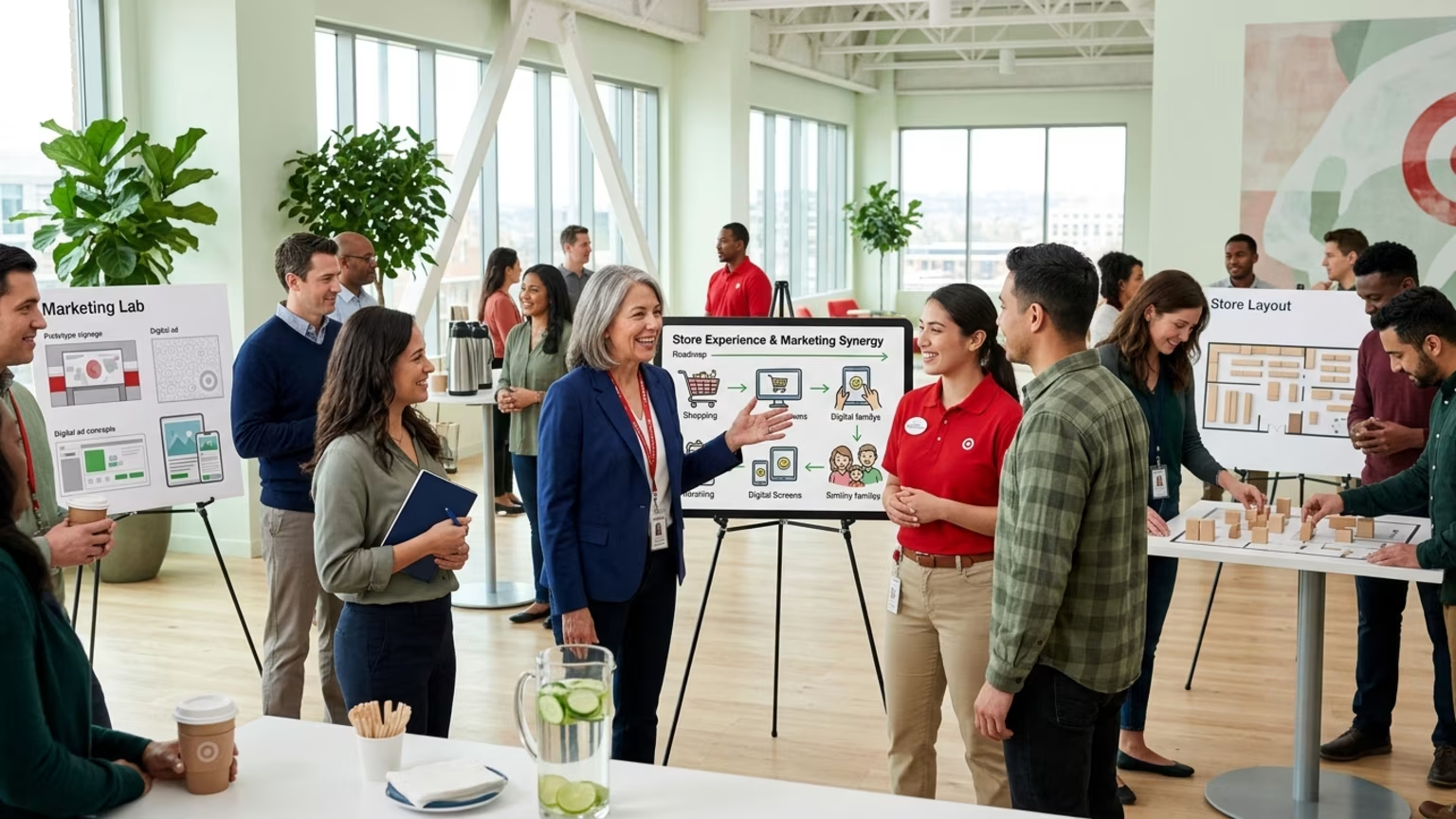
On September 15, 2026, Target appointed Mark Weinstein as chief marketing and guest experience officer. The appointment took effect immediately. Weinstein now reports directly to Target CEO Michael Fiddelke. This decision follows a period where the retailer operated without a dedicated chief marketer. Current chief operating officer Lisa Roath had previously moved from the CMO role to chief merchandising officer for food, essentials and beauty.
The new role gives one executive responsibility for functions that typically sit across separate leadership structures. Weinstein oversees brand marketing, guest experience, retail media and a digital marketplace. His remit covers how consumers connect with Target across channels, culture and community. He also oversees the retail-media network known as Roundel and the curated marketplace called Target+.
Target is making this leadership change during a period of significant physical expansion and financial growth. The retailer reported second-quarter net sales of $26.5 billion. This represents a 5.3% year-over-year increase. Comparable sales grew 3.8% and net earnings reached almost $1.9 billion. During this same quarter, comparable-store traffic rose 3.6%. The company is not restructuring from a position of declining demand. They are reorganizing to manage a growing physical and digital footprint more cohesively.
For suppliers and brands activating inside the retailer, this appointment signals a new operational standard. Having brand marketing and monetizable customer touchpoints under a common senior leader changes how retail media is deployed. Roundel and Target+ are not conventional brand-marketing functions. Both platforms are now firmly included in Weinstein's remit. This consolidation could increase pressure on brands to connect their local activation plans with shopper behavior and media exposure.
For CPG and beverage brands relying on physical marketing, this consolidation matters deeply. It frames the store as one integrated part of a connected brand system rather than a standalone sales floor. If a major retailer links brand marketing with its loyalty ecosystem and retail media network under one leader, suppliers must adapt. Fragmented execution on the store floor will no longer suffice when the retailer expects a cohesive consumer journey. Experiential activations must connect clearly to shopper behavior and commercial outcomes.
This convergence of physical retail and digital media forces a reevaluation of traditional sampling methods. Brands must view the store as a dynamic environment where shoppers encounter physical displays, trained staff, and localized merchandising. This physical space now sits adjacent to the owned loyalty ecosystem and the retail-media layer. When all three environments share the same executive oversight, your live activations must serve all three masters. You cannot run a standalone retail demonstration without considering the digital follow-up.
This structural shift also raises the bar for how brands measure their physical activations. When retail media and store operations merge, isolated metrics like booth traffic or free samples distributed lose their meaning. Attendance and simple interactions describe baseline activity, but they do not automatically demonstrate commercial impact. Brands must pair their live experience metrics with concrete business outcomes. You must track product trial, coupon redemption, basket attachment and retailer sales data to prove your campaign's worth.
Across our history, we have delivered more than 1,000 campaigns in all 50 states for more than 200 brands. This track record has given us deep experience across different retail settings and market conditions rather than a single activation format. We have seen firsthand that a unified retailer approach requires a unified supplier response. Brands can no longer plan a retail demonstration in isolation from their broader media spend. You must integrate physical sampling programs with digital engagement to generate a measurable Return on Investment. Designing human-centered in-store experiences is critical when retailers raise their own experiential standards.
This structural change at the top will dictate new requirements for field execution at the local level. Target is backing its organizational shift with massive capital allocation. The retailer planned to invest an additional $1 billion in its business during the year. This comes on top of $5 billion allocated to new stores, remodels, technological improvements and other capital expenditures. They also planned to open eight stores in October, bringing the number of new stores planned for 2026 to 32.
These physical changes will directly impact how experiential marketing campaigns operate on the floor. Target said its 2026 capital-investment plan supports more than 130 remodels. It also includes hundreds of millions of dollars in additional store payroll and training intended to improve guest service. For field marketers, this means activating in environments that prioritize high-quality guest interactions and strict operational standards. Your brand ambassadors will need tighter coordination with store operations and merchandising teams.
Target is actively strengthening local communities through giving, volunteering and employment alongside its store expansion. This community-focused expansion creates potential opportunities for localized launches and store-specific programming. However, brands should confirm local operating requirements before deploying a national campaign format. A standardized experiential setup may not transfer cleanly to every newly remodeled location. Field teams must conduct thorough site surveys and build flexible logistical plans to accommodate varied store architectures.
Brands will need to adjust their internal protocols for localized launches and community activations. You must design for the store-operational reality rather than relying solely on a creative concept. A unified retailer strategy requires suppliers to create a single activation brief. This brief must align the audience, store footprint, product availability, media support and measurement windows. When retail media and in-store sampling share the same executive oversight, your localized targeted in-store sampling must align flawlessly with the retailer's digital platform.
As the store environment becomes more sophisticated, the role of field marketing leadership will also evolve. Brands must prioritize staff training and precise logistical tracking. Managing inventory, coordinating permits and executing complex booth flows will become non-negotiable requirements for vendor compliance. Investing in strong market development roles for in-store execution will separate successful campaigns from costly failures. High-stakes event logistics require an absolute focus on operational discipline.
The leadership background of the new chief marketing officer reinforces this focus on cohesive consumer journeys. Weinstein joined Target from Hilton, where he spent more than 16 years. He had served as the hotel company's global chief marketing officer since 2020. In that role, he oversaw 28 brands, the Hilton Honors loyalty program and their luxury brands portfolio. Managing such a complex portfolio indicates a strong preference for standardized brand experiences across multiple physical locations.
Target leadership explicitly highlighted the need for personalized consumer engagement. Fiddelke stated that Weinstein has demonstrated an ability to understand what consumers value. He noted that Weinstein can turn those insights into brand connections that feel relevant and personal. This executive support suggests that generic, one-size-fits-all retail displays will struggle to secure floor space in the future. Retailers want campaigns that respect their specific community footprint and loyalty data.
Weinstein described his own priorities during the transition. He emphasized connecting marketing through a consistent brand platform. He also highlighted the need to use loyalty and personalization more fully. Finally, he stated his goal to define the company's future in-store and digital guest experience. This language clearly signals that the physical store will serve as a primary acquisition channel for digital loyalty programs.
Will your brand adapt its field marketing operations to ensure every retail activation connects seamlessly with the retailer's unified media and loyalty ecosystem?
Designing in-store activations that integrate seamlessly with a retailer's unified media network requires strict logistical oversight. When scattered attention and poor booth flow threaten your campaign pipeline, Makai implements rigorous operational standards to capture true shopper intent. Under our Guerilla Marketing capability, we launch creative, street level ideas that surprise, delight, and generate authentic word of mouth. Request a proposal

30 Years Experiential & Retail Activation Partner for CPG & Beverage Brands | Multi-Market Demos, Roadshows & Costco/Club Programs That Actually Sell