Robbie Thain
Founder, CEO

Sherwen Studios' latest research reveals UK shoppers prioritize reliable functions like consistent pricing and seamless returns over flashy AI features.
On September 11, 2026, Sherwen Studios published new research examining how UK consumers evaluate retail technology and connected shopping experiences. The study was conducted by Censuswide among a nationally representative sample of 2,000 UK consumers aged 18 and over. The findings revealed that shoppers placed practical, cross-channel functions far ahead of more advanced or novelty-oriented digital features. For CPG and retail marketers, this establishes a clear timeline of shifting consumer expectations away from gimmicks and toward reliable execution.
The core facts of the survey highlight a demand for strict logistical reliability over experimental interfaces. Consistent pricing between online and physical stores was selected by 28% of respondents. This data point makes it the most-selected practical capability in the survey. The ability to return online purchases in a physical store was selected by 27% of respondents. Meanwhile, loyalty points updating immediately across channels were selected by 26% of respondents.
Reserving a product online and buying it in store was selected by 25% of respondents. More complex or personalized features ranked lower across the board. For example, shared baskets working online, in-app, and in-store were selected by 15% of respondents. Customer-service access to full order histories also scored 15%, and personalized offers scored 12%.
The research found substantial resistance to retail AI throughout the survey pool. According to the study, 31% of respondents said they would not trust any AI tools at all. Distrust was particularly evident for AI making influential or visual decisions. Specifically, 24% would not trust AI size predictors, and 22% would not trust AI to determine which products they see first. Another 20% would not trust AI-generated product images.
Sherwen’s broader report found that only 11% of the 2,000 surveyed UK consumers viewed online and in-store shopping as one connected experience. In the same report, consumers were more than three times as likely to regard online and in-store shopping as separate experiences than as one connected journey. Sherwen’s research therefore supports a narrower conclusion than a total rejection of retail innovation. Consumers appear more receptive when technology reduces a specific transaction problem.
This data provides a stark contrast to the technology investments many brands prioritize today. Instead of demanding flashy virtual showrooms, shoppers want basic assurances about their purchases. They prioritize clarity around how much an item costs and whether it can be returned easily. Brands that ignore these fundamental operational needs risk alienating their core buyers entirely.
At Makai, we view these findings as a validation of disciplined experiential marketing. When we design mobile activations and roadshows, we boost retail velocity during 90-day product launch windows. Our structured approach transforms initial product trial into sustained consumer confidence and retail performance. If a consumer experiences a premium beverage at a pop-up but cannot find consistent pricing, the physical marketing investment goes to waste.
Across our history, we have delivered more than 1,000 campaigns in all 50 states for more than 200 brands. That range gives us deep experience across various retail settings and market conditions rather than a single activation format. We blend physical and digital experiences by integrating QR codes and mobile technology into a cohesive layer across live retail events. However, that technology must support practical functions like inventory visibility or loyalty access to succeed.
A Brand Manager in the CPG space shared: "Makai transformed our test-drive activation into an emotional brand journey." They connected technology, lifestyle, and experience seamlessly, and turned casual visitors into loyal fans. We successfully integrated multiple experience layers to convert casual participants into committed brand advocates. This proves that technology only enhances an event when it bridges the gap between lifestyle engagement and practical buying mechanics.
Brands with something to sell physically need real-world consumer engagement over more digital noise. The survey results show trust falls when technology influences discovery, representation, or choice in ways shoppers cannot easily control. Therefore, digital tools supporting a physical activation should be judged by a simple standard. They must make the experience easier to understand and complete without friction.
Experiential marketers should use these findings to frame operational priorities and measurement questions immediately. We cannot claim that this study proves a particular live-activation format will automatically outperform another. However, it does highlight the massive commercial risk of neglecting basic retail mechanics. A successful brand activation ultimately rests on a foundation of operational transparency.
These consumer preferences create immediate downstream effects on field staffing, booth flow, and trade show execution. Narrower, task-based applications received comparatively more acceptance in the survey. Exactly 23% said they would be comfortable with AI chatbots answering simple questions or handling refunds and complaints. Furthermore, 20% were comfortable with recommendations based on previous purchases, and 16% were comfortable with virtual try-on or visualization tools.
This means AI can work backstage to support event staff without demanding center stage. Field marketers can use predictive tools to manage inventory, allocate staff efficiently, or map out trade show footprint flow before the doors even open.
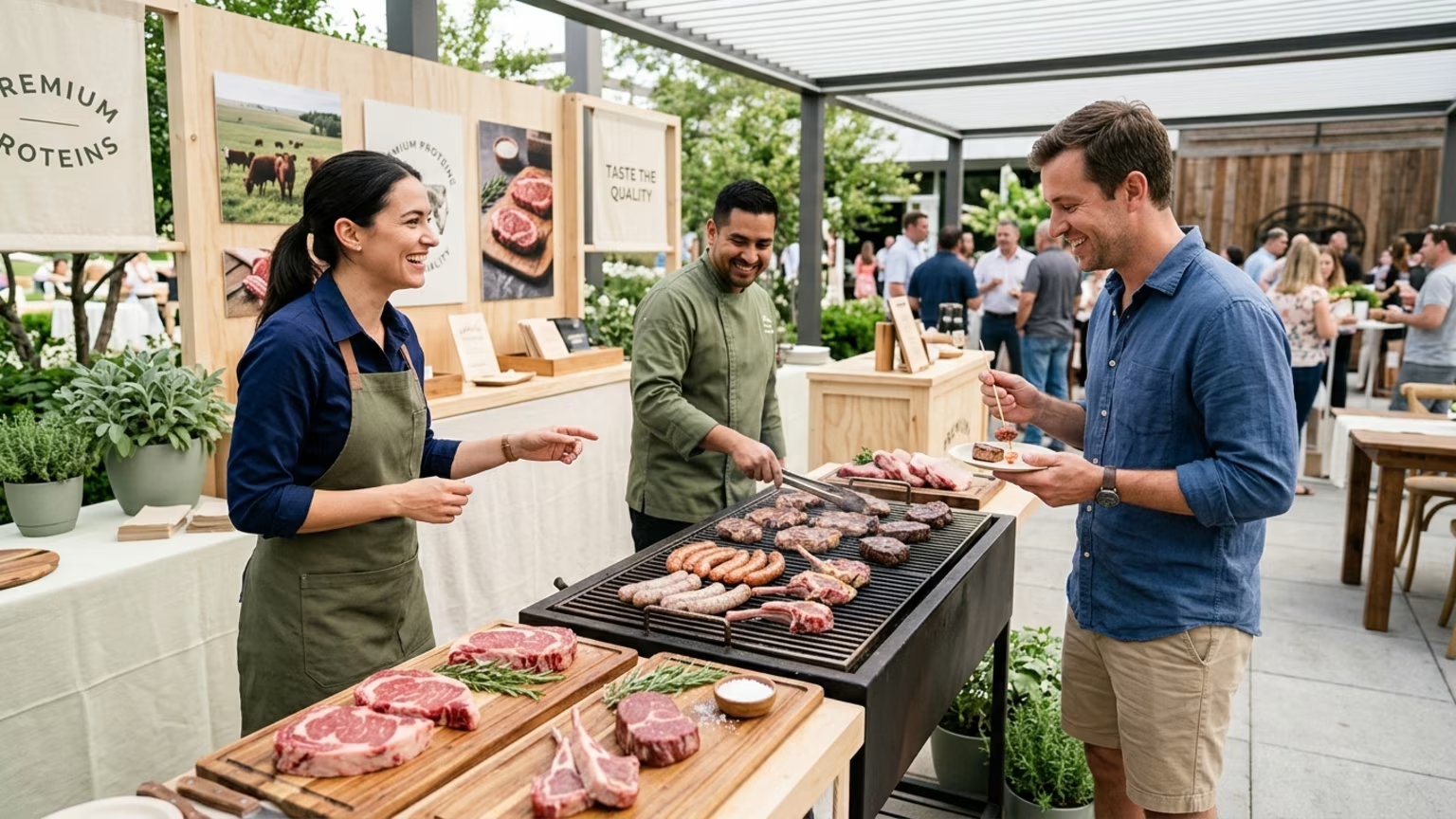
When we manage end to end Costco roadshows, we bring brands to shoppers through live demos, real conversations, and measurable sales impact. Event teams must ensure price, inventory messaging, and return language match the broader retail experience. Returns are a particularly important trust point in retail. A separate Loop study reported that 55% of shoppers had either abandoned a purchase or ended their relationship with a retailer because of its returns approach.
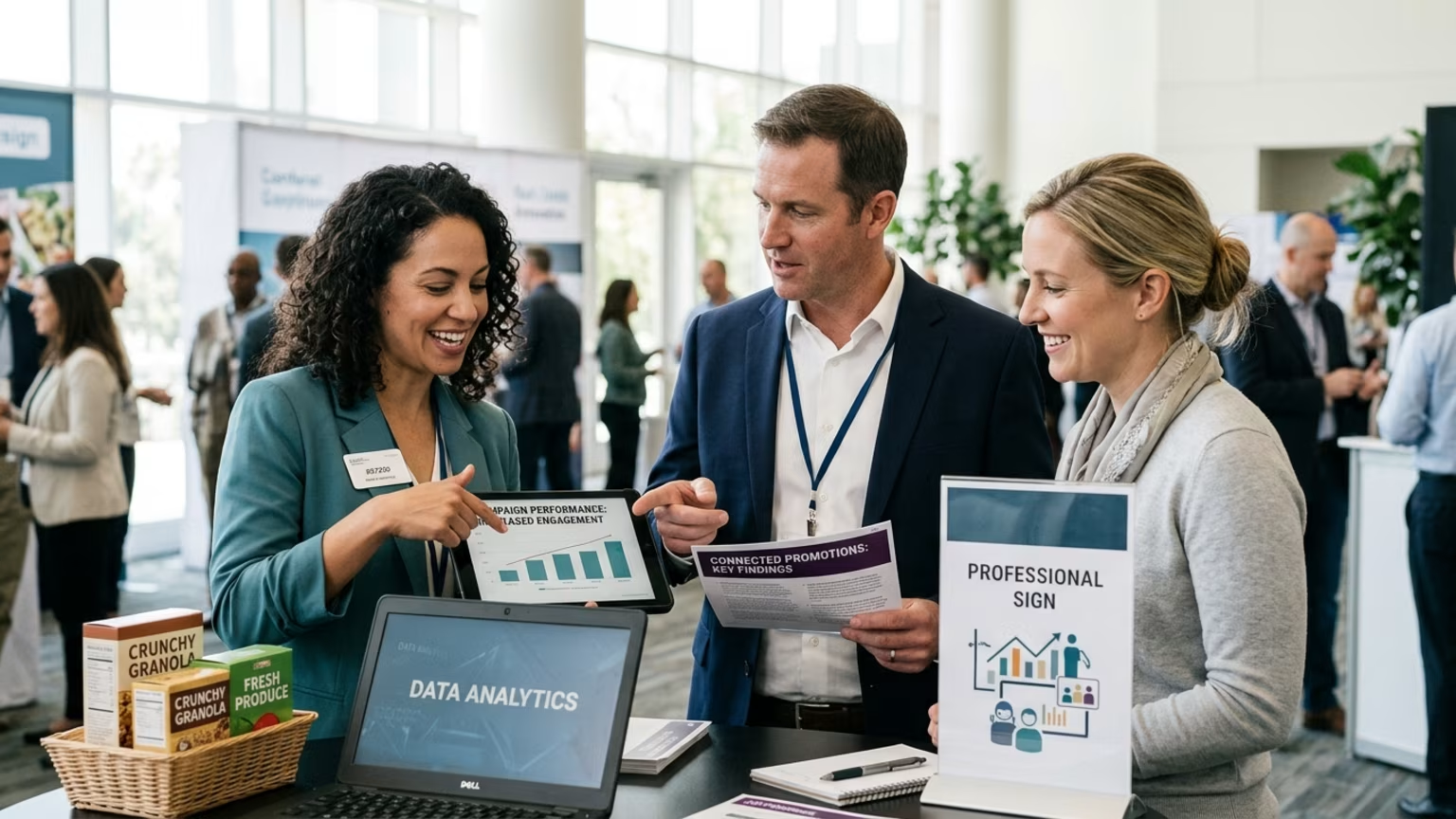
The Loop study also reported that 61% of consumers always or often check a retailer’s returns policy before buying online. In that same data set, 92% said return fees affect their broader online-shopping behavior. For marketing directors planning massive consumer events, this means booth staff must be trained to answer basic fulfillment and return questions accurately.
A beautiful booth cannot save a fragmented logistical handoff between discovery and fulfillment. This alignment also helps streamline permitting, as local authorities require clear operational plans detailing how customer service and product returns will be handled on site.
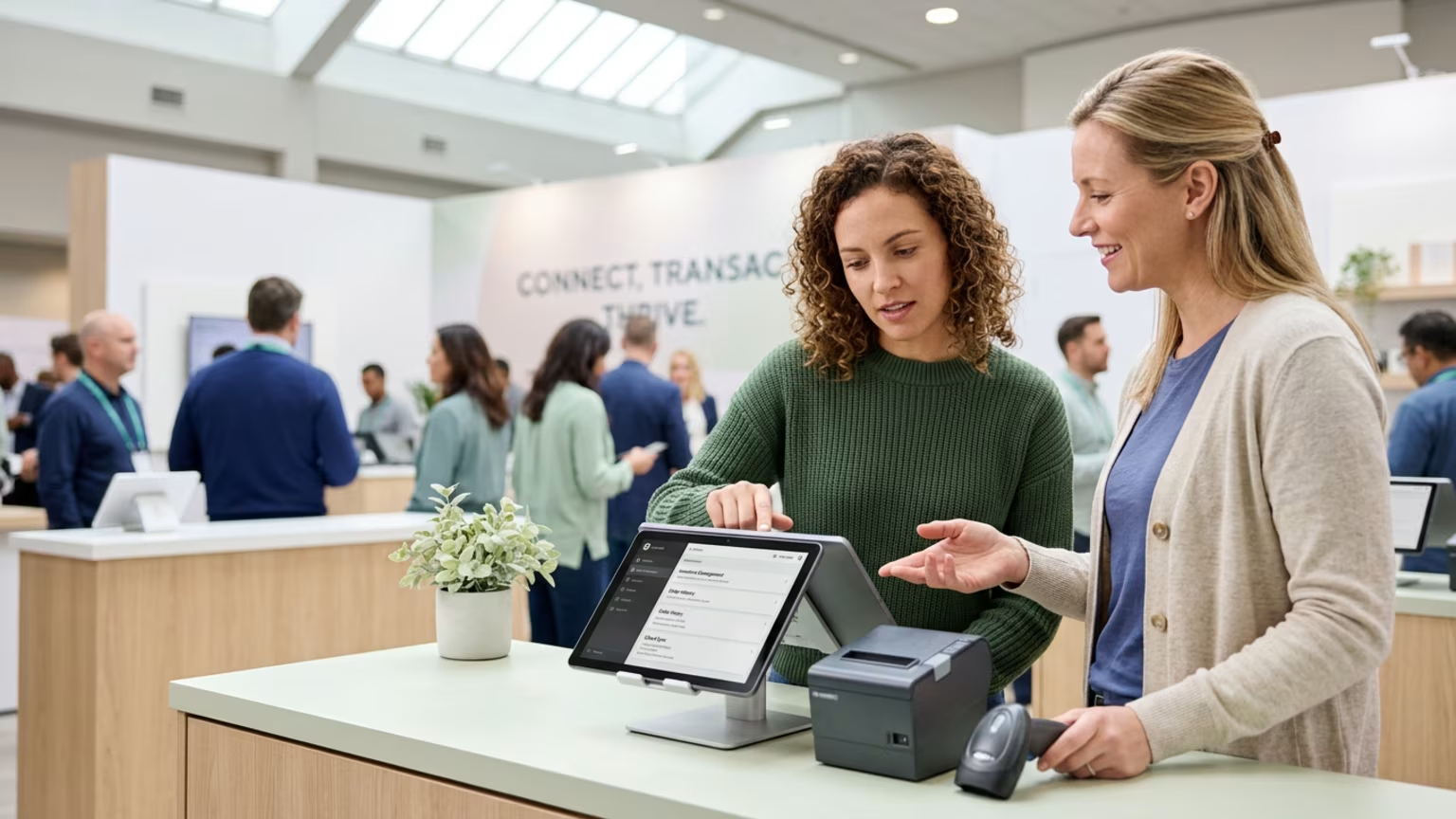
Additionally, the integration of loyalty programs requires strict physical measurement protocols to prove commercial impact. If shoppers expect immediate loyalty updates, field teams need reliable data capture systems on site. Utilizing consistent retail execution technology guarantees that brands capture verified demand signals instead of empty badge scans.
The goal is always to make the final transaction as simple and reliable as possible. Proper alignment ensures that Return on Investment is measurable and defensible across every field deployment.
Matt Sherwen, managing director of Sherwen Studios, provided a clear summary of what these data points mean for the industry. He said customers are indicating where retailers should direct technology investment. He further noted that innovation should not come at the expense of improvements to shopping fundamentals. Sherwen argued that the commercial opportunity is to use technology to remove friction throughout the journey, build confidence in the retailer, and give customers a clear reason to complete a transaction.
In the broader report, Sherwen said the challenge is no longer simply deciding what to invest in next. The real test is ensuring that customers genuinely feel the benefit of technology retailers have already built. Brands looking to maximize live retail presence must remember the operational touchpoints that dictate success. Sherwen’s report frames cross-channel quality around ordinary moments such as stock visibility and delivery clarity. Consistent pricing and seamless returns also dictate whether shoppers trust the brand.
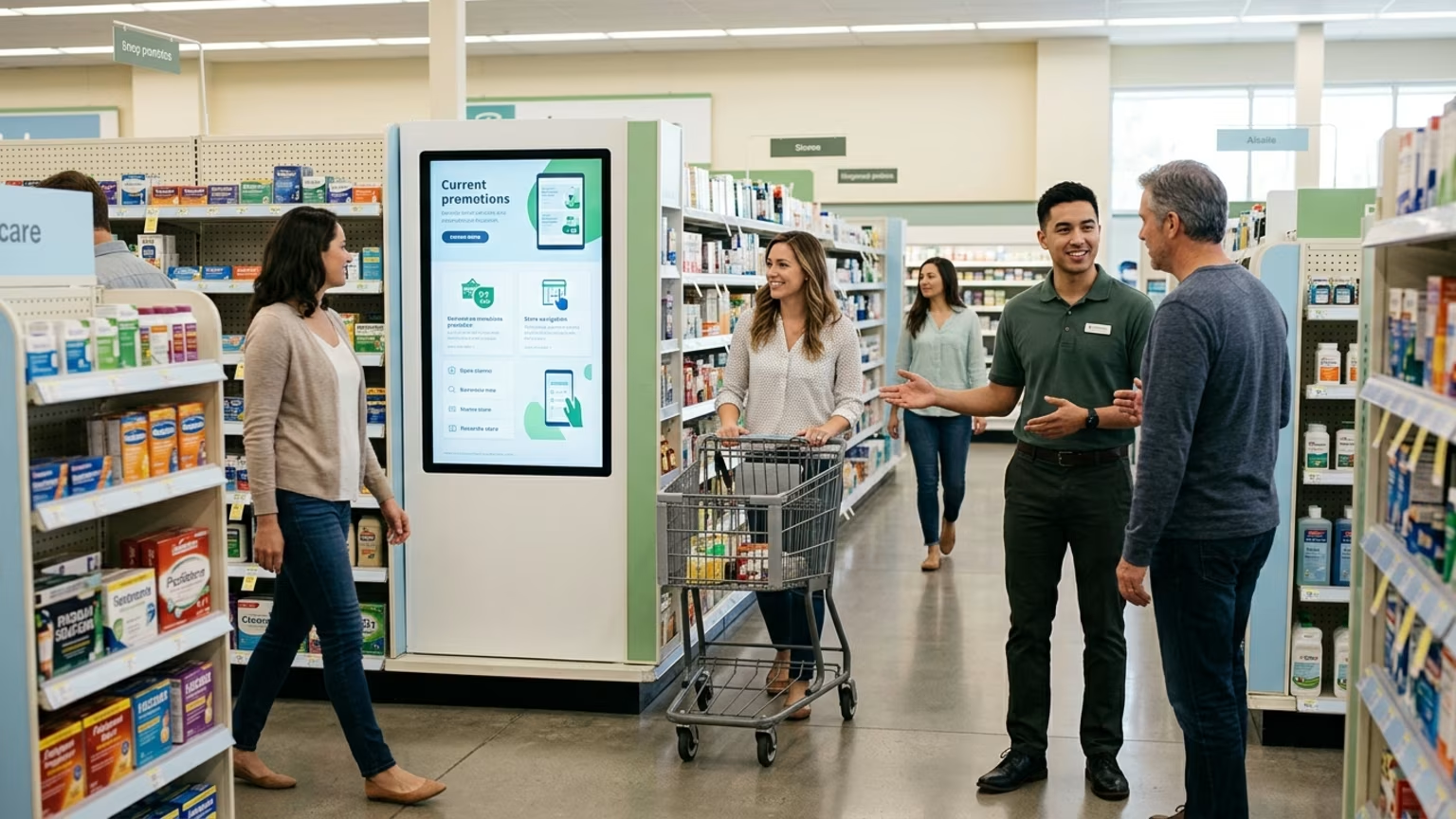
For experiential and shopper marketers, the implication is quite clear. Digital tools supporting a physical activation should be judged by whether they make the experience easier to navigate. Bridging that gap requires practical problem-solving rather than speculative technology investments. By focusing heavily on basic operational functions, CPG companies can build lasting relationships with consumers who value reliability over novelty.
While the sample is UK-based, U.S. marketers should treat these findings as a highly useful directional signal for their own physical programs. Sherwen’s findings stem from a single survey commissioned by Sherwen Studios. The digital consultancy works with major brands like Peacocks and ScS. The data strongly suggests that shoppers notice whether retail technology removes everyday friction. If technology deployed at a live activation does not actively solve a transactional hurdle, it is likely distracting your buyer.
Before launching a new campaign, brand teams must align with field execution staff, retail partners, and customer service departments. Investing in live retail engagement is only effective when the fundamental mechanics of the sale are clearly defined. Every consumer interaction must lead naturally toward a seamless transaction.
Will your next product launch roadshow rely on flashy digital features, or will it deliver the seamless operational execution that actually drives sales?
Relying on flashy digital gimmicks without fixing logistical friction creates inefficient post event follow up and CRM routing. When CPG brands struggle to convert live trial into measurable sales, Makai ensures every physical touchpoint supports a reliable transaction. Under our Guerilla Marketing capability, we launch creative, street level ideas that surprise, delight, and generate authentic word of mouth. Request a proposal

30 Years Experiential & Retail Activation Partner for CPG & Beverage Brands | Multi-Market Demos, Roadshows & Costco/Club Programs That Actually Sell