Robbie Thain
Founder, CEO

Shoppers strongly prefer seeing and trying products in person over digital apps. Learn why physical retail demos are critical conversion engines for CPG brands.

Digital shopping platforms promise modern convenience, but recent data proves consumers actively bypass these apps to physically experience products. This physical preference gives CPG brands a massive advantage if they treat in-store activations as highly disciplined conversion engines.
Marketing teams frequently dedicate massive budgets to building complex digital shopping tools. They expect consumers to walk through store aisles staring at a mobile screen. The actual reality on the trade show or retail floor is distinctly different. Customers routinely walk past interactive digital displays to talk to a real person.
A common chaotic scenario unfolds when brands force digital engagements in physical spaces. Shoppers ignore QR codes and push notifications. They want tangible proof before making a purchase. A field marketing director watches helplessly as consumers abandon an app download halfway through the process. The brand loses the sale after prioritizing a digital touchpoint over a simple product trial.
This disconnect between boardroom expectations and floor reality drains marketing budgets. Brands build elaborate funnels that look beautiful on a spreadsheet but fail in the real world. Shoppers do not want another digital chore when they are actively walking through a store. They want a frictionless physical interaction that answers their immediate questions.
The chaos peaks during a high volume product launch or seasonal push. Overwhelmed event staff try to manage buggy digital kiosks. At the same time, shoppers lose patience and walk away. The brand misses a critical opportunity to build physical memory structures with their target audience. A physical product needs a physical introduction to build lasting consumer trust.
When a product fails to move off the shelf, the retail buyer notices immediately. The buyer does not care about your impressive digital impressions or social media metrics. They only care about velocity and profit per square foot. If your digital strategy fails to move boxes, you risk losing your shelf space completely. This harsh reality forces brands to reconsider how they generate authentic consumer interest.
Recent eMarketer reporting on a February 2025 Criteo survey reveals a clear consumer preference. Shoppers strongly prefer seeing and trying products in person. Many individuals intentionally avoid artificial digital shopping paths altogether. This data reinforces the undeniable power of physical retail demos for growing CPG brands.
The strategic approach requires shifting resources away from digital distractions. Brands must focus on placing products directly into the hands of potential buyers. This means deploying highly trained brand ambassadors who can guide a real conversation. A systematic physical activation strategy builds trust much faster than any mobile application.
Success depends on treating the retail floor as a primary sales channel rather than a marketing afterthought. The strategy demands precise execution, trained staff, and clear performance targets. We focus on turning passive grocery aisles into active trial zones. The goal is to move the consumer from curiosity to an immediate purchase.
We have seen this reality play out repeatedly on the floor. A VP of Marketing reflected on our partnership: 'Robbie, it was a pleasure working with you and your team. You turned our launch into an experience that connected with shoppers and built lasting excitement for our brand. We're already looking forward to the next project together.' Our team created a launch experience that resonated with retail shoppers and generated momentum for future collaborations.
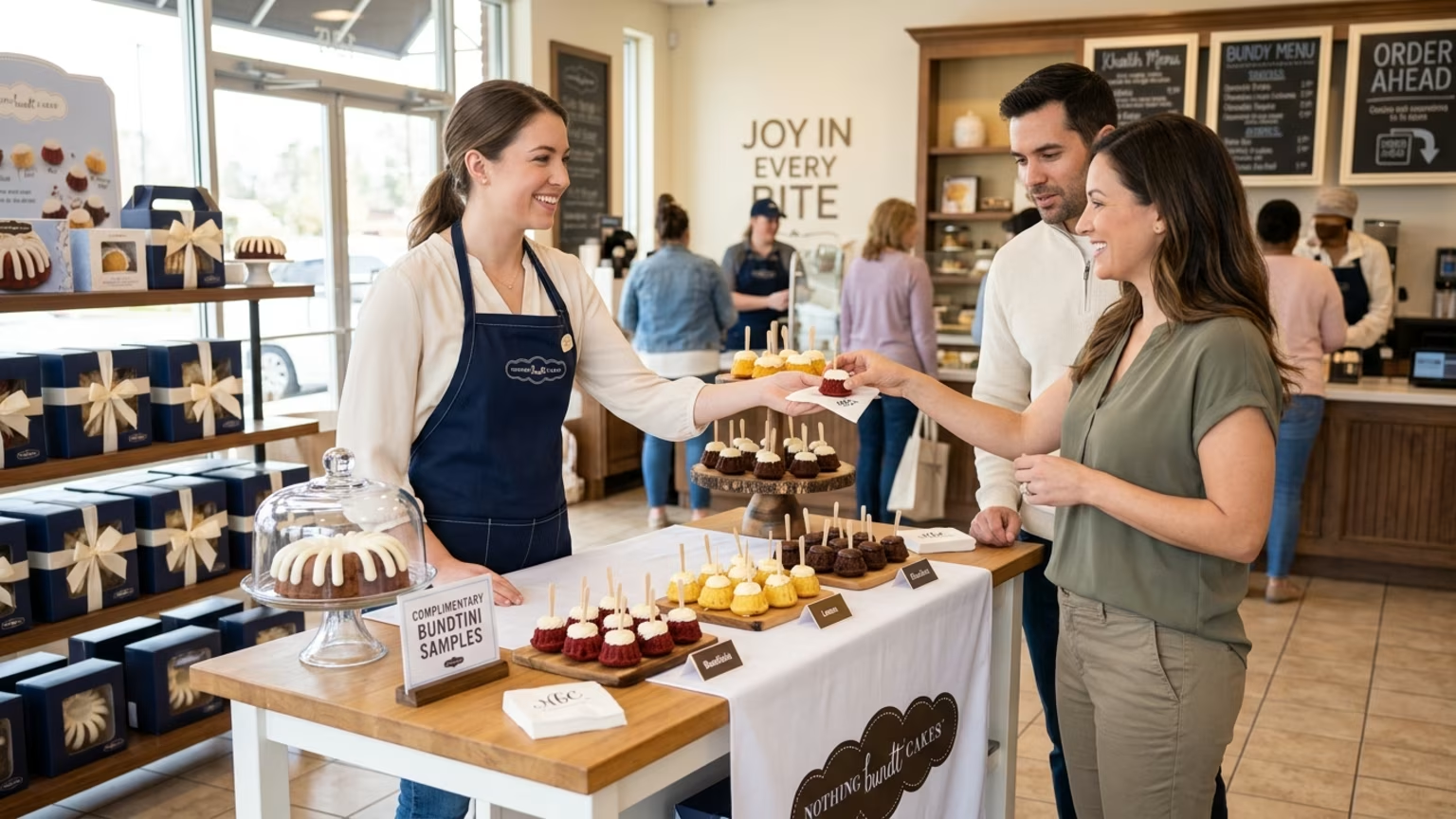
People are naturally skeptical of polished online advertisements. They have been trained to ignore banner ads and swipe past sponsored social posts. A live demonstration bypasses this digital fatigue entirely by providing immediate value. When an ambassador hands a cold beverage to a shopper, this authentic exchange creates a psychological trigger that leads to a sale.
Implementing a physical strategy in a live retail environment demands absolute operational discipline. You cannot just set up a table and hope for the best outcome. Every movement must drive toward a clear objective. You need a structured playbook to run a successful retail activation.
Physical experiences are only valuable if you can prove their financial impact. You must track specific numbers to report a clear Return on Investment to your leadership team. Leaving revenue to chance is not a viable marketing strategy for modern brands. If your organization struggles to track these numbers, book a strategy call with our team.
Lead metrics tell you how well the activation is capturing attention in real time. You should track the total number of samples distributed during each shift. You must count the exact number of direct, qualified conversations your ambassadors initiate. These immediate indicators show whether your team is actively engaging the passing crowd.
Lag metrics reveal the true business value of your live events. Track the same day sales lift at the specific retail location. Monitor the replenishment orders from the store manager the following week. When calculating the real value of these interactions, focus entirely on pipeline growth and retailer confidence.
A rigorous reporting structure separates professional field marketing from amateur event planning. You must collect data from every single activation and aggregate it into a clear performance dashboard. This discipline allows you to prove that physical experiences drive greater revenue than digital ads. The numbers will defend your budget during the next planning cycle.
Collecting the data is only the first step in proving your return. You must analyze these metrics to identify patterns across different retail locations. Perhaps your product performs exceptionally well in suburban stores but struggles in urban environments. This operational intelligence allows you to deploy future marketing budgets with surgical precision.
A growing beverage brand recently faced a stalling product launch in major grocery chains. They originally relied on an app based coupon campaign to drive trial. Consumers simply ignored the digital notifications as they walked down the busy beverage aisle. The brand decided to pivot hard toward physical retail demonstrations.
They replaced the digital campaign with live tasting stations at high volume grocers. The brand ambassadors engaged shoppers directly to capitalize on immediate buyer intent right at the shelf. Shoppers tasted the new flavor, asked questions, and immediately placed the item in their carts. The brand recorded a massive sales spike and secured permanent secondary placements in the store.
The sales impact extended far beyond the actual days of the activation. The store managers noted that the product continued to sell well weeks after the final demonstration. This residual lift proved that the physical trial created genuine brand loyalty. The buyers had integrated the new beverage into their weekly shopping routine.
The company leadership took notice of this sustained performance. They shifted a significant portion of their digital advertising budget into their field marketing department. This reallocation allowed them to scale the physical tasting program across three new geographical markets. They built a highly predictable revenue engine simply by letting people taste the product.
This outcome is not an isolated incident in the consumer goods space. Research from Michigan State University Extension notes that effective grocery sampling turns a first taste into repeat sales. The physical interaction breaks through the cognitive load of a modern shopping trip. A memorable real world trial creates a lasting brand preference.
Technology will always offer new ways to distract a consumer. A screen can present information, but it cannot replace the immediate sensory feedback of a physical product. Shoppers will continue to trust their own hands and taste buds over a digital interface. The smartest brands will quietly meet them there.

30 Years Experiential & Retail Activation Partner for CPG & Beverage Brands | Multi-Market Demos, Roadshows & Costco/Club Programs That Actually Sell