Robbie Thain
Founder, CEO

An Amazon Ads study shows 72 percent of shoppers buy CPG products within 24 hours of need identification. Learn how retail demos capture fast conversions.

Sarah stands in aisle four holding her phone. She needs a healthy snack for her children. She has sixty seconds to make a choice before moving on. The loudest package on the shelf wins her attention today.
Recent data reveals that nearly 72 percent of shoppers in key markets finalize consumer packaged goods purchases within 24 hours of identifying a need. This guide outlines how marketing operators can deploy targeted retail activations to capture these fast conversion behaviors and drive measurable pipeline.
A field marketing manager watches a crowded grocery aisle during a weekend rush. Shoppers are distracted by hundreds of bright packages. Competing digital ads flash on nearby screens. The brand invested heavily in broad awareness campaigns online.
Yet shoppers walk past the premium beverage display without a second glance. This disconnect happens when companies rely on passive placement rather than immediate relevance. According to recent research from an Amazon Ads study, nearly 72 percent of shoppers complete CPG purchases within 24 hours of identifying a need. When your product sits quietly on a shelf, you miss this critical window completely.
A digital ad might create a fleeting impulse. A physical retail environment without active engagement is just an expensive storage unit. Consumer packaged goods retail involves typical retailer margins of 30 to 50 percent. That means optimizing for quick sell through in physical channels like grocery stores, mass merchandisers, and clubs is critical.
Brands face massive pressure from retailers to prove their products move quickly. If your product does not sell fast, buyers will replace it. You are fighting for inches of shelf space. Fragmented field activations compound this stress.
Inconsistent staffing and poor reporting ruin the 24 hour opportunity. These missteps lead to events that look busy but produce fog instead of evidence. Retail playbook experts state that CPG marketers must prioritize in store execution for rapid conversions. Understanding category management and your physical retail competitors is mandatory.
Online shopping offers hyper personalized recommendations. AI personalization boosts order value by 369 percent online. This creates a massive challenge for physical retailers. Digital convenience pulls purchases away from brick and mortar locations if experiential marketing lags in measurability.
CPG marketers must combat this by bringing that same targeted relevance to the physical shelf. If 72 percent of buyers act within one day, your physical presence must be equally responsive. This fast purchase behavior varies slightly across different retail categories. High impulse items like snacks and beverages hit conversion rates of 80 to 90 percent within one day.
Durable goods might extend to a 48 hour window for comparison shopping. The core reality remains unchanged for most consumer packaged goods. You have a very short timeframe to win the sale.
The strategic approach requires moving from passive displays to active physical interventions. You must position your experiential marketing right at the point of need. Today, 89 percent of retail and CPG companies are actively deploying or assessing artificial intelligence to predict shopper behavior. This data helps pinpoint exactly when and where a customer trigger moment occurs.
You can take this digital intelligence and translate it into a physical retail demonstration. A trained brand ambassador interrupts the usual shopping pattern with a tangible product trial. This method shifts your focus from broad brand theater to precision engagement. Shoppers engaging with personalized recommendations are 4.5 times more likely to purchase.
When you replicate that personalization in the real world, you compress the sales cycle. You capture the shopper in that critical 24 hour window. The global AI in retail market reached 14.5 billion dollars recently. Projections show it hitting up to 105 billion dollars by 2030.
This growth reflects a massive shift toward data driven commerce. Data alone will not close the sale in a physical aisle. You must bridge the gap between digital prediction and physical action. AI systems can now autonomously research and predict needs via real time data.
Marketing operators must use these insights to deploy field teams at the exact right moment. This creates a hybrid experience that connects screen time to physical product trials. The strategy relies on operational excellence and a deep understanding of shopper habits. It requires treating live activations as highly targeted conversion engines rather than fluffy brand awareness exercises.
Brands must focus on real world trial needs over digital scale alone. Some executives still view new technology merely as a digital tool for online sales. Survey respondents who lead retail and CPG teams disagree completely. They report the frontier is shifting from systems that assist decisions to systems that execute them.
This evolution includes agentic commerce that mirrors shopper speed in physical environments. Your experiential campaigns must reflect this new reality. Around 11 percent of companies see no revenue gains from new data tools. This failure often stems from data silos or ignoring real world trial needs.
They chase digital scale but forget the physical customer experience. True conversion happens when you combine data insights with human interaction. A skilled brand ambassador can read subtle physical cues that an algorithm misses.
Execution requires discipline, precise timing, and clear operational standards. Follow this framework to turn foot traffic into fast conversions.
Proving Return on Investment requires tracking exact metrics before, during, and after the activation. You must move past vanity metrics like total booth traffic or smiles collected. Start by defining your lead metrics for the event. These include the number of qualified conversations, samples distributed to target buyers, and immediate digital coupon scans.
These numbers tell your field marketing manager if the execution is hitting the right audience. They provide a real time pulse on booth performance. If your lead metrics drop, you can adjust your messaging immediately on the floor. You want to see high engagement from the exact demographic that matches your product profile.
Knowing these numbers keeps your team accountable on the floor. Next, measure your lag metrics to prove revenue impact to leadership. Look at the specific sales lift at that retail location during the activation day. Compare that data to the baseline sales of the previous four weeks.
Companies deploying data driven execution see massive results. In fact, 87 percent report revenue increases. You must track retailer reorder rates in the weeks following the event. A temporary spike is nice, but long term retail confidence is better.
Some companies target up to 94 percent operational cost reductions by scaling repeatable events using these tight metrics. The ultimate goal is proving repeatability to retail buyers. If an activation does not produce a clear sales lift, it must be aggressively reevaluated. You pitch your strategy to leadership by saying you convert fast buyers via live experiences.
Then you prove it with unassailable sales data. To learn more about our approach, review our core brand activation services tailored for measurable impact.
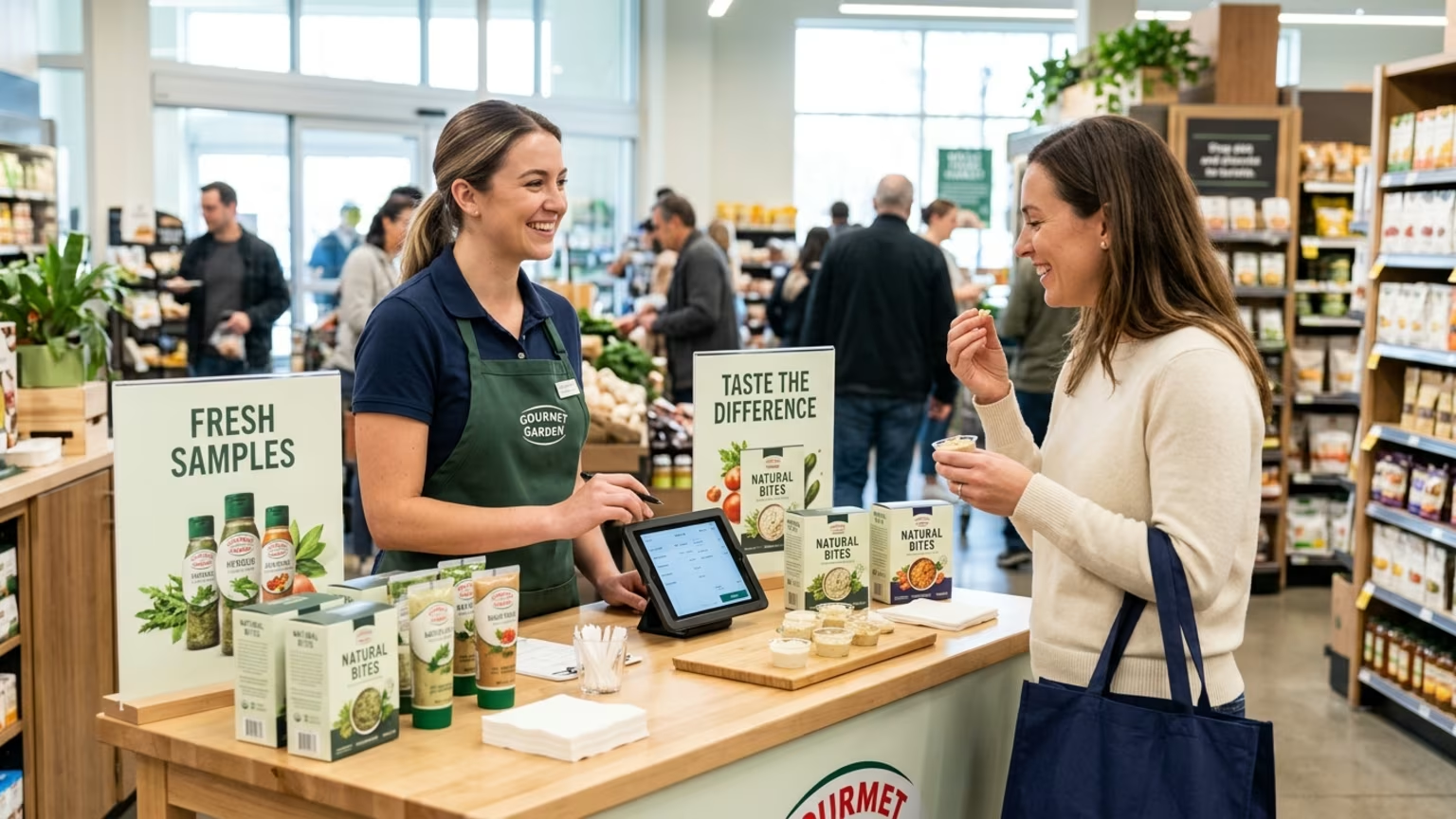
Consider a premium snack brand launching a new plant based line in a major club retailer. The company knew their target demographic made quick decisions based on immediate cravings and health goals. They skipped the standard static endcap display. Instead, they deployed trained ambassadors in high traffic stores during the weekend rush.
The ambassadors offered a taste right when shoppers were looking for afternoon snacks. They timed the activation perfectly to catch the 24 hour decision window. The ambassadors wove in messaging about clean ingredients and sustainable sourcing. Brands that embed sustainability metrics into their physical trials build immediate trust.
This method captures fast decision shoppers in eco focused categories. By intercepting the shopper at the moment of need, the brand captured the fast conversion behavior. The activation resulted in a massive same day sales lift. The regional grocery buyer noticed the rapid sell through and immediately expanded the product to 50 more stores.
The brand avoided a dumpster fire by demanding standardized reporting from the field team. Every sample given was tracked against inventory depletion at the register. The 369 percent increase in average order value seen in personalized online channels was matched in store. They proved that a physical retail intervention could mirror the speed and efficiency of digital commerce.
This strategy turned fleeting attention into a concrete pipeline. It cemented their position as a top tier vendor.
To capture fast moving shoppers, you must meet them in the physical world with precision and purpose. Stop leaving your retail conversions to chance. Review your upcoming retail calendar today and identify one location where a live activation could intercept buyers. If you need help turning foot traffic into proven sales, book a strategy call with our team.

30 Years Experiential & Retail Activation Partner for CPG & Beverage Brands | Multi-Market Demos, Roadshows & Costco/Club Programs That Actually Sell