Robbie Thain
Founder, CEO

The New York Jets and Outfront Media launched a five-year IRL media partnership. Learn how CPG brands can connect sports sponsorships to measurable sales data.
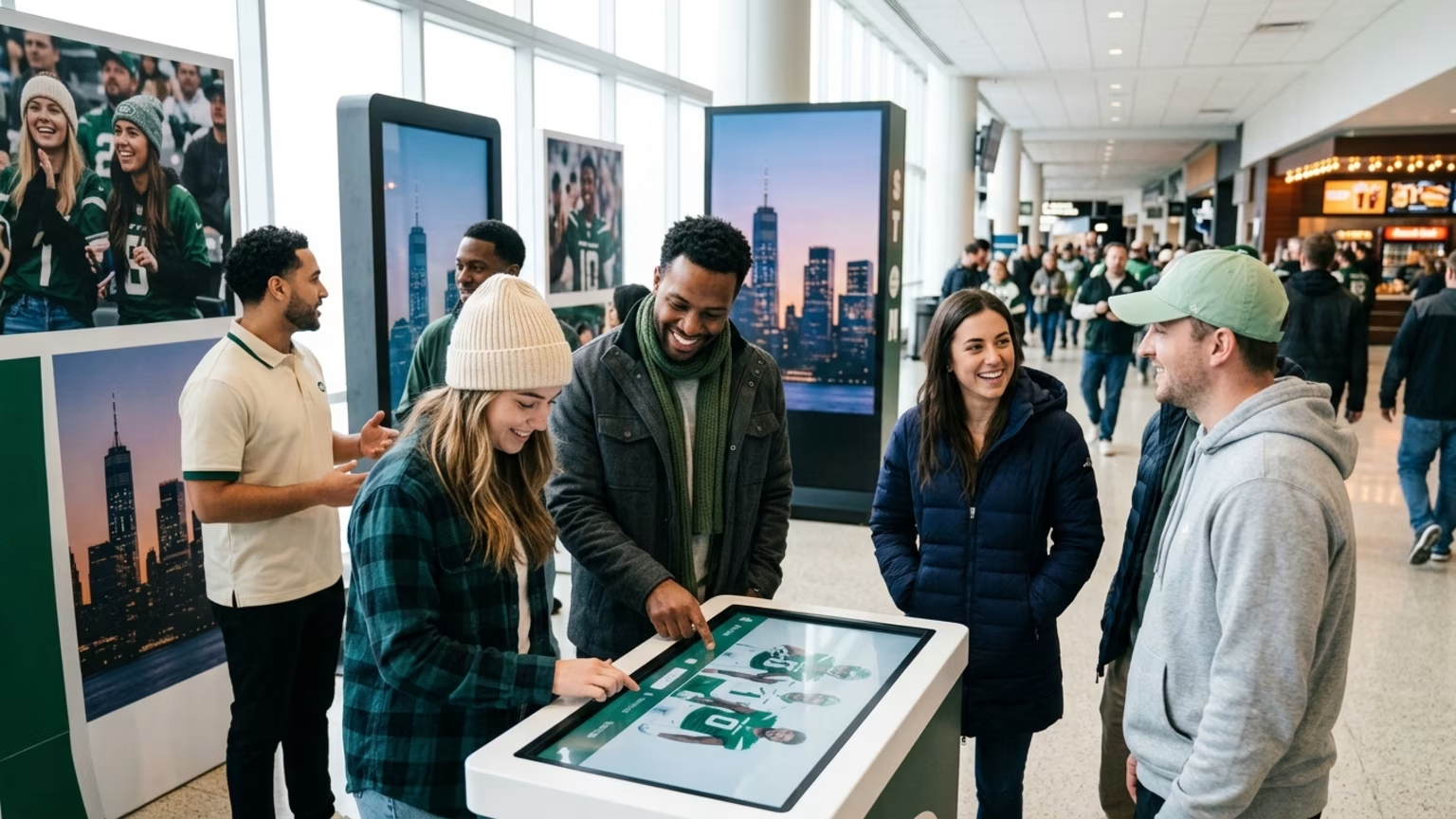
On September 14, 2026, Marketing Dive reported that the New York Jets and Outfront Media launched a five-year official media partnership. The agreement combines traditional out-of-home advertising with experiential activations during the 2026 season. Outfront calls this integrated system "IRL media." Brands can now connect stadium sponsorships directly with transit media, building wraps, and interactive brand experiences.
The core of this partnership centers on expanding the sponsorship footprint entirely outside the venue. Outfront possesses extensive New York-area inventory covering train platforms, subway stations, and roadside billboards. Advertisers can now engage fans throughout their wider game-day journey rather than strictly inside MetLife Stadium. This is particularly significant given the Jets have eight scheduled home games at the venue this season.
Outfront Studios supports this integration by adapting existing broadcast and social creative specifically for these physical spaces. They also help produce original work designed exclusively for the unique viewing angles of street and station environments. The commercial structure behind this expansion relies heavily on mutual access and reciprocal sales. Outfront sells inventory around the stadium complex to maximize visibility for its network.
Meanwhile, the Jets sell Outfront inventory directly to their clients and provide warm introductions to those advertisers. Outfront executives stated this arrangement prioritizes long-term visibility and access rather than purely immediate revenue. This coordinated system replaces the traditional, fragmented approach to buying outdoor media. Instead of purchasing isolated signs, sponsors secure a verified presence along primary commuter routes.
At Makai, we create experiential marketing programs built to connect emotion with action. This industry shift proves that physical storytelling must link directly to measurable interactions. Research cited by Marketing Dive indicates that 76 percent of consumers believe interacting with a brand in person deepens their connection. Furthermore, 84 percent of Gen Z and millennial consumers value brands that blend digital and real-world experiences.
We constantly apply these principles by integrating mobile technology into a cohesive layer across our retail and event activations. The financial momentum behind these integrated formats is accelerating globally. The World Out of Home Organization projected global OOH spending at $56.4 billion in 2026. This represents a 4 percent increase from 2025 levels.
In the United States alone, marketers spent $2.12 billion on OOH advertising during the first quarter of 2026. Consumer reception to digital out-of-home formats further validates this investment strategy. Additional research cited by Marketing Dive found that 73 percent of consumers viewed digital OOH more favorably than television or social media. CPG brands must capitalize on this preference by turning physical store spaces into measurable media assets.
Isolated ad placements simply cannot deliver the engagement required to build qualified sales pipeline today. Physical creative must invite participation to truly justify the logistical effort involved. Marketing leaders responsible for driving retail sell-through must demand more from their budgets. Experiential marketing that merely looks impressive without capturing consumer data wastes valuable field resources.
Operating across a fragmented network of transit hubs and city streets introduces serious operational friction. A campaign connecting stadium placements with community touchpoints multiplies the risk of field execution failures. Field marketing teams must carefully manage staffing standards, strict setup procedures, and complex municipal permitting. Real-time creative executions add another layer of logistical difficulty to the daily operation.
Potential executions under the Jets partnership include game countdowns and creative based on real-time team or weather information. For a beverage or snack brand, this might mean deploying weather-linked hydration messaging or commute-triggered coffee offers. Managing these dynamic triggers requires a partner who understands both digital strategy and physical execution. Brands must establish strict measurement protocols long before their field teams ever deploy.
Experiential measurement guidance recommends defining control markets and baseline retail velocity before the activation launches. CPG-focused teams should compare sales velocity in exposed markets directly against comparable control markets. Teams must also verify their data-capture infrastructure and test QR functionality to ensure smooth offer fulfillment. Measuring these integrated campaigns requires connecting physical interactions directly to commercial data.
Interaction counts and opt-ins prove that consumers actively engaged with the brand ambassadors on the ground. However, marketers must tie those actions to retail scanner data and foot-traffic analysis to calculate Return on Investment. We see this frequently when brands deploy participatory in-store experiences to capture shopper attention. Without a clear response mechanism, a multi-location activation merely generates untrackable impressions instead of qualified leads.
Stacy Minero, Outfront’s chief marketing and experience officer, noted that brands can use this inventory to "stitch their story together." She described the model as a new blueprint for creating meaningful and impactful campaigns. We agree that campaigns must prioritize relevance over raw visual spectacle. Outfront has already developed related activations around massive properties including the FIFA World Cup and Formula E.
The company also sees potential in surrounding large B2B conferences with these same connected IRL media formats. Minero described the partnership as a new way of collaborating because it involves deeper integration with existing marketing partners. Understanding how interactive technology reshapes live brand experiences is crucial for standing out in transit environments. A recent Hoka campaign demonstrated this by using Strava running data to display changing pace statistics on digital screens.
When executed properly, these live integrations stop consumers in their tracks and prompt immediate action. A Director of Brand Strategy in the CPG snack division recently shared: "The Makai team turned our product launch into a sensory event that shoppers still talk about. From creative storytelling to flawless in-store execution, they made snack time unforgettable. We couldn't have asked for a stronger partner."
That level of precision is mandatory when deploying QR codes to unlock offers or sweepstakes entries. The digital trigger must lead the consumer toward a concrete behavior like a trial offer or store locator. Since a large portion of shoppers complete CPG purchases within 24 hours of need identification, timing is critical. Blending an emotional street-level activation with a frictionless digital coupon captures the buyer at the perfect moment.
If your brand intends to sponsor a major sports property or regional transit network this year, how will your field team operationalize the physical touchpoints to ensure every interaction captures measurable response data?
Connecting expansive sports sponsorships to trackable retail performance requires strict operational oversight and consistent field execution. When scattered physical footprints yield low quality leads from crowded trade shows, Makai takes command of the interaction. Under our Retail Demonstrations capability, trained brand ambassadors drive in store sales through real conversations and product trials.

30 Years Experiential & Retail Activation Partner for CPG & Beverage Brands | Multi-Market Demos, Roadshows & Costco/Club Programs That Actually Sell