Robbie Thain
Founder, CEO

Interactive technology turns live brand experiences into measurable data engines. Learn how to track dwell time, capture leads, and prove event ROI.
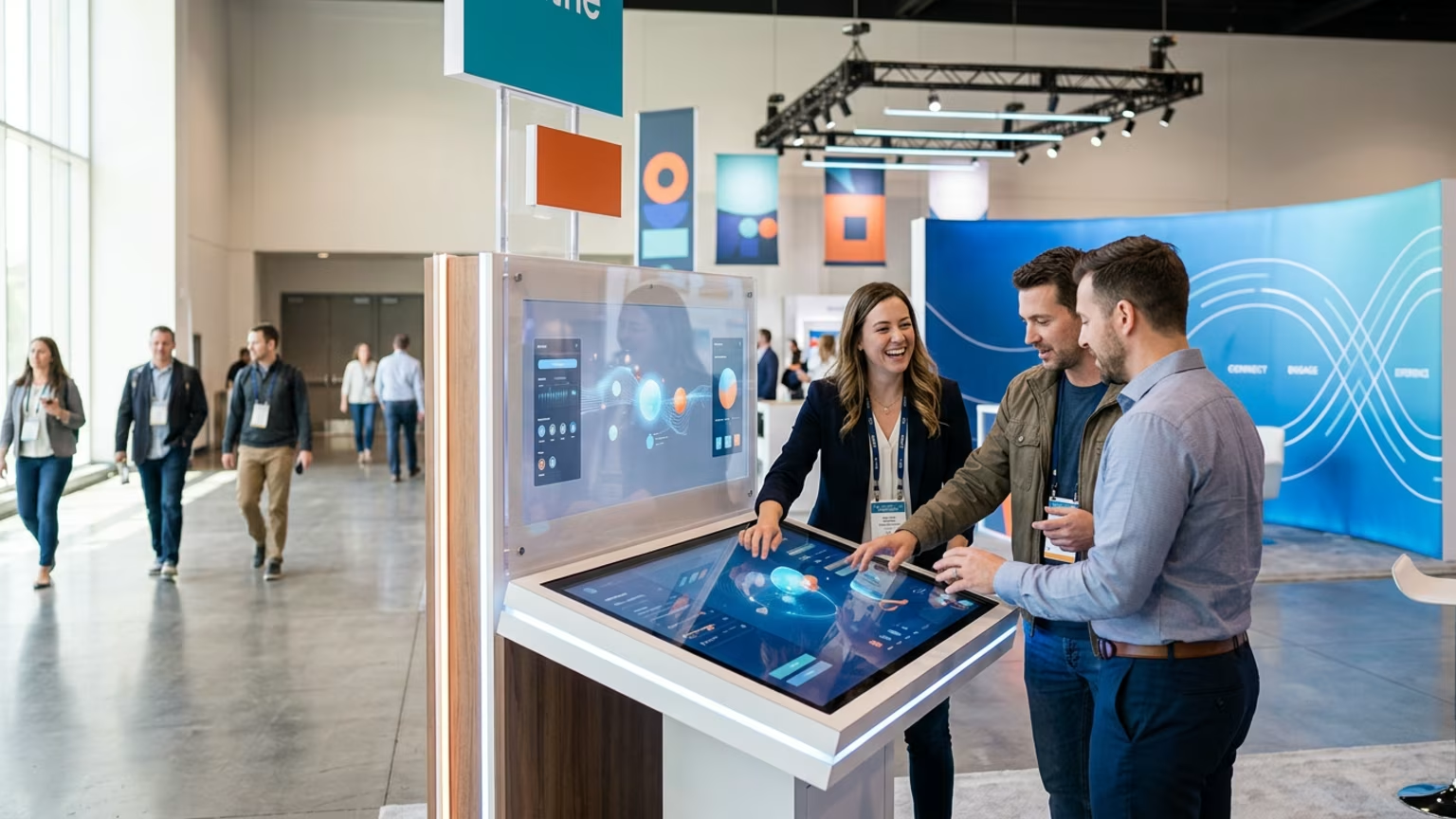
Treating event technology as a creative novelty is a fast way to waste your marketing budget. When deployed correctly, interactive tools transform crowded trade shows into measurable data engines that rival your best digital campaigns.
You stand on the trade show floor watching hundreds of people grab free samples and wander away. Your booth looks successful to an outside observer. But deep down, you know this activity produces fog instead of evidence. Your finance team wants hard numbers, but all you have are estimates and empty sample boxes.
This is the classic trap of live brand experiences. Planners often confuse crowded aisles with actual business growth. The reality is that modern experiential marketing must prove its worth on a balance sheet. Brands are under intense pressure to demonstrate that their field execution drives real retail sell through.
A massive shift in marketing behavior is forcing operators to rethink their approach. With digital traffic declining, industry analysts report that forty eight percent of B2B marketers are shifting budgets back to physical events. They shift these resources to capture live interactions that deliver quantifiable pipeline data. You need a system that captures leads without breaking the magic of the consumer moment.
Relying on outdated methods will not satisfy a modern executive team. Fishbowls full of business cards and basic QR codes are no longer sufficient for high value sponsorships. To justify your next trade show execution in 2026, you must deploy modern systems. The answer lies in using interactive infrastructure to prove exactly who stopped by and what they bought.
Adding bright screens to a booth does not automatically create a strong brand connection. The goal is to build a data infrastructure that captures attention without causing friction. Experiential experts warn that poor technical integration creates distraction rather than connection. When interaction is intuitive, audiences engage deeply with the product itself.
Interactive technology should operate quietly in the background to capture behavioral data. Spatial computing and computer vision can track exactly how long people linger in specific zones. This means you stop guessing which product display worked and start measuring exact interaction lengths. The data collection feels invisible to the consumer but provides immense value to the operator.
We have been connecting brands with people through live experiences, retail programs, and national activations since 1995. Over three decades, we have built a track record of creating meaningful brand moments across the country. Our team knows that successful experiential marketing in 2026 relies on this seamless blend of human connection and quiet data collection. We see firsthand how heavy handed technology ruins the flow of a good conversation.
The strategic objective is to turn audiences into active participants. Generative artificial intelligence can produce unique content for each visitor in real time. This replaces static assets with highly personalized interactions that feel completely organic. The technology validates the creative concept and feeds your sales pipeline simultaneously.
Turning a busy activation into a lead generation asset requires strict operational discipline. You need a structured plan to deploy technology that captures data without annoying the consumer. The best campaigns map out every technical touchpoint long before the doors open. Here is the playbook for integrating interactive tech into your next major activation.
Marketing operators must view their footprint as an interconnected digital system. You are not just building a physical structure for a three day show. You are constructing a temporary data collection facility that feels like a premium consumer experience. This mindset shift requires you to plan your technical architecture at the very beginning of the design phase.
Proving your Return on Investment requires shifting focus from vanity numbers to hard sales figures. You must isolate the lead and lag metrics that executives actually respect. Tracking the right data turns qualitative interactions into undeniable business value. You cannot rely on estimated attendance figures to justify your spending.
Leading indicators tell you if your event is functioning correctly on the floor. Dwell time per zone is a primary metric to monitor during the activation. You should track the ratio of passive attendees to active participants. You must watch the volume of user generated content created directly from your booth. These early numbers predict whether your campaign will convert into actual retail demand.
Lagging indicators provide the final proof of a successful campaign. Cost per qualified lead is the most important metric to benchmark against your digital channels. You must track post event purchase attribution to see if live participants actually buy the product. Measuring sales lift in regional retail locations proves that your brand ambassadors drove real consumer demand.
The cost per qualified lead is the ultimate great equalizer in marketing discussions. When you calculate the exact price of acquiring a verified buyer at a live show, you can compare it directly to your online ad spend. Physical events routinely win this comparison when the attribution model is built correctly. The quality of an in person interaction creates a far stronger purchase intent than a passing glance at a screen.
Presenting this data completely changes the tone of a financial review. Instead of defending the cost of a beautiful booth, you highlight the efficiency of your lead capture. You show the executive team that physical activations are simply another measurable conversion channel. This evidence based approach guarantees your budget for the next quarter.
Consider a premium beverage brand looking to stand out at a crowded industry expo. They know that a basic sampling table will not generate the retailer confidence they need. They build a branded lounge where interactive lighting responds to consumer movement. Guests vote on new flavors using a seamless digital interface baked into the bar itself.
This approach does more than look good on social media. The computer vision tracks exactly how long buyers spend at the new product station. The voting system captures verified contact information at the exact moment of peak excitement. The brand later maps these contacts to regional sales data to calculate a precise cost per qualified lead.
Industry research confirms that consumers participating in these live brand experiences are significantly more likely to purchase the brand. The technology validates the creative effort by providing a direct line to revenue. When the brand presents its quarterly report, the expo is listed as a top performing asset. The event stops being an expense and becomes an engine.
This system provides continuous value long after the trade show floor closes. The regional sales team uses the captured data to target follow up campaigns based on the exact flavors voters selected. Retail partners see the localized demand data and quickly agree to expand shelf space for the new product. The marketing director secures a larger budget for the next quarter based purely on this undeniable momentum.
A well structured activation requires precise planning and technical expertise. You can stop guessing about your trade show performance and start proving it. Book a strategy call with our team to map out your next measurable event. We will help you turn your next live campaign into a data backed success.
A memorable interaction is only powerful if it leaves a lasting mark. True connection happens when technology quietly serves the human experience. The most successful activations are those that feel effortless to the consumer. In a crowded room, the brand that listens best is the one that wins.

30 Years Experiential & Retail Activation Partner for CPG & Beverage Brands | Multi-Market Demos, Roadshows & Costco/Club Programs That Actually Sell