Robbie Thain
Founder, CEO

Okta's latest hiring move signals a major shift in event marketing. Learn how experiential leaders turn trade shows and activations into strict revenue engines.

Tech giants are actively restructuring their field marketing teams to prioritize strict sales alignment and pipeline generation over pure brand awareness. This shift provides a powerful blueprint for experiential leaders who need to transform live activations into measurable revenue engines.
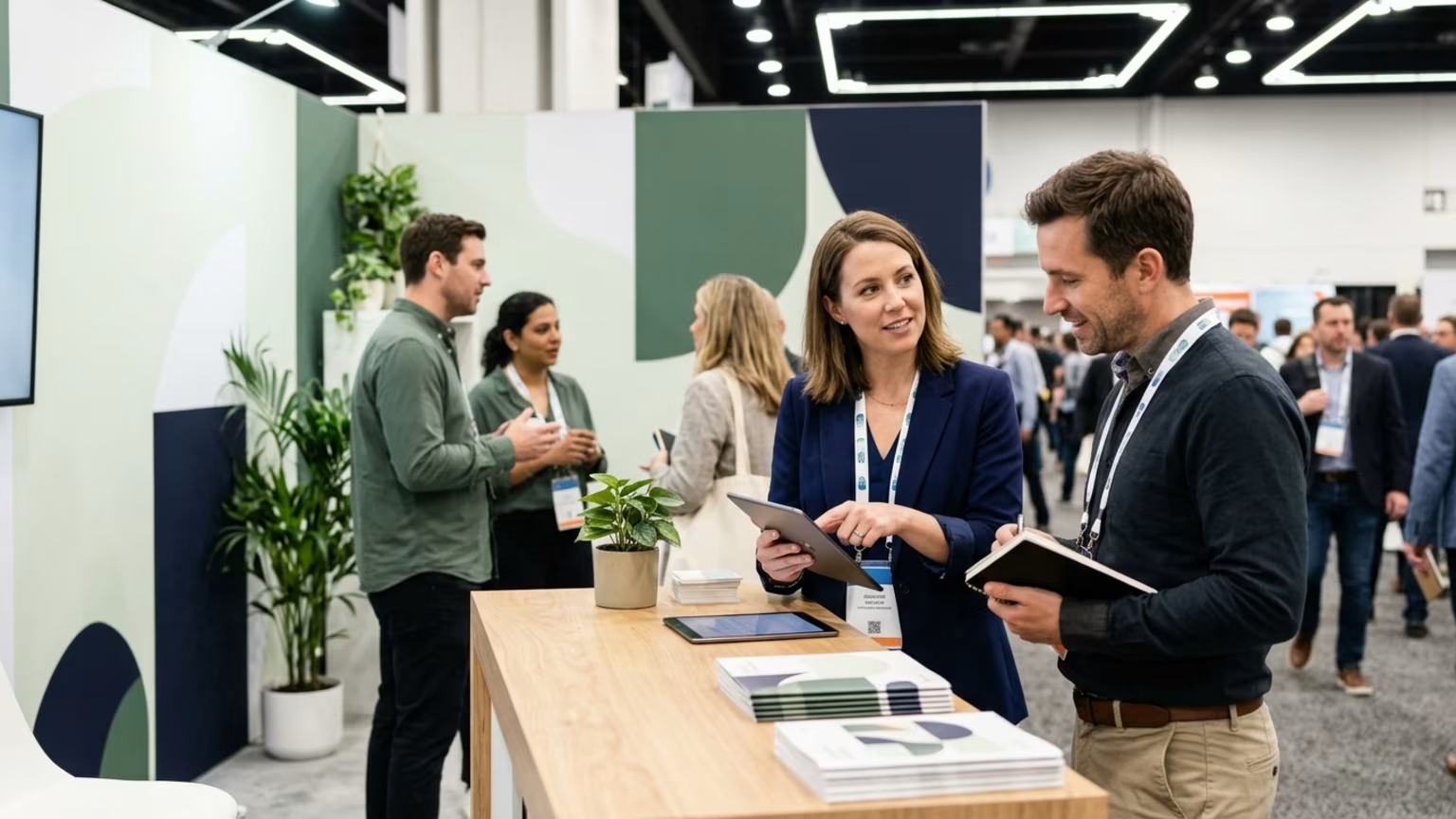
The expo hall carpets are stained from three days of heavy foot traffic. Your brand ambassadors are exhausted from scanning badges of attendees who just wanted a free tote bag. Back at the corporate office, the sales team is staring at a spreadsheet of three hundred unqualified names. No one knows which conversations actually matter.
Leadership is already questioning the budget for next year. Marketing blames sales for ignoring the leads. Sales blames marketing for delivering low-quality contacts. The entire investment feels like an expensive shot in the dark.
The era of treating field marketing as an isolated creative exercise is closing rapidly. We are seeing companies rebuild their live event strategies as fully integrated revenue engines. A clear indicator of this trend is Okta expanding roles that explicitly tie field events to measurable pipeline impact. According to recent job postings, tech leaders expect event managers to master cross-functional planning and post-event performance tracking rather than just creative execution.
This represents a fundamental change in how experiential budgets are justified. This demand for operational rigor is not limited to software companies. Brands across consumer packaged goods, beverage, and retail are realizing that events must prove Return on Investment (ROI) to survive budget reviews. Experiential leaders face intense pressure from executives to demonstrate clear business value.
Industry analysts report that marketing budgets face heavy scrutiny regarding high-ticket items like trade shows and sponsorships. Executives no longer accept a stack of business cards as proof of success. We have executed over 1000 campaigns across all 50 states, bringing brands to life in every major U.S. market. From retail demos in Seattle to roadshows in Miami and events in Honolulu, our teams activate brands wherever our clients' audiences are located.
This national footprint has shown us that success requires strict alignment between marketing operations and front-line execution. Teams that treat field events as standalone projects consistently struggle to prove their worth to the wider organization. The core strategy relies on treating event leaders as revenue operators. This means defining the target accounts or retail buyers months before the booth is even designed.
Marketing and sales must co-create qualification rules and follow-up processes early in the planning phase. When field operations plug into a standardized system, the fog of live events is replaced by clear pipeline evidence. Modern event platforms increasingly mimic marketing automation tools by offering real-time data integrations. Event leaders must use these tools to build a transparent revenue machine.
Transitioning from brand theater to a pipeline engine requires a deliberate operational shift. You must align your on-the-ground execution with strict business outcomes. This playbook outlines how to structure your next activation for maximum financial impact.
Align objectives early with key stakeholders
Bring key account teams into the planning process ninety days before major events. Define the specific buyers you want to engage and the exact meetings you need to secure. You must set joint success definitions that both marketing and sales agree upon. Early alignment prevents the classic disconnect that happens after the show floor closes.
Standardize event playbooks across regions
Build repeatable frameworks for every single event type you run. Whether you execute a retail demo or a national trade show, you must codify your staffing model and data capture requirements. Building repeatable frameworks for field marketing guarantees that no team starts from scratch. This consistency is the only way to compare performance data accurately over time.
Establish strict service level agreements
Create a clear timeline for post-event communication between your departments. Assign specific team members to contact qualified prospects within forty-eight hours of the event closing. Define the exact cadence for subsequent check-ins over the following thirty days. These strict rules prevent hard-earned leads from disappearing into a black hole.
Train your field staff for conversion
Your field staff must understand what data to collect and how to steer conversations toward buying intent. A beautiful booth is completely useless if the team cannot identify qualified prospects. Your ambassadors need to know exactly which questions separate a real buyer from a casual observer. Creating a center of excellence for field marketing helps standardize this rigorous training across your entire organization.
Integrate your data capture tools
Connect your lead capture software directly to your central database or point-of-sale system. Industry research consistently shows that integrating event data with sales automation can significantly boost opportunity close rates. You must capture clean information and route it to the right stakeholders immediately. Manual data entry is the enemy of fast sales execution.
Design experiences focused on direct action
Do not build spaces that just look pretty from a distance. Build clear conversion paths directly into the physical experience. For tech brands, this means offering short consultations tied to specific pain points. For consumer brands, this means distributing trackable coupons or SMS opt-ins with clear promotional offers.
You cannot defend your budget with foot traffic estimates and positive verbal feedback. You need credible evidence that links physical interactions to financial outcomes. The shift toward data-driven roles in the tech sector highlights the demand for integrated performance dashboards. By measuring the right data points, you transform your experiential department into a growth driver.
Lead Metrics for immediate feedback:
Lag Metrics for final reporting:
We recently applied this strict operational model to a national snack brand launching in a major warehouse club. Instead of merely tracking how many samples were distributed, we integrated the activation data with regional store performance. Our teams trained the brand ambassadors to ask qualifying questions about household purchasing habits. We tracked test stores against control locations to isolate the true impact of the live experience.
By treating the retail roadshow like a structured pipeline program, the brand tracked immediate sales spikes and sustained regional velocity. The data proved that specific store formats yielded a twenty percent better return than others. This allowed marketing leadership to reallocate budget confidently for the next quarter. The company stopped guessing about their field impact and started scaling what actually worked.
Even with this strict operational focus, you must still protect space for strategic brand building. You should explicitly label certain activations as brand-first initiatives. These events might prioritize long-term brand lift studies or cultural relevance over immediate sales velocity. By defining these goals clearly upfront, you prevent short-term metric obsession from killing your long-term market presence.
A similar approach works for B2B brands attending massive industry expos. A software client recently moved away from giant, untargeted booth parties toward invite-only consultations on the show floor. They tracked exactly which target accounts attended and monitored the resulting pipeline progression. By the end of the quarter, the marketing team could point directly to specific deals that originated at the expo.
When you are ready to upgrade your event operations, it is time to book a strategy call. The era of hoping for the best on the trade show floor is over. Equip your team with operator-grade discipline, measure what matters, and turn every physical interaction into measurable growth. Makai is ready to deploy.

30 Years Experiential & Retail Activation Partner for CPG & Beverage Brands | Multi-Market Demos, Roadshows & Costco/Club Programs That Actually Sell