Robbie Thain
Founder, CEO

New survey data shows understaffed booths and passive displays ruin trade show ROI. Learn how scripted engagement and micro-demos turn events into pipeline.
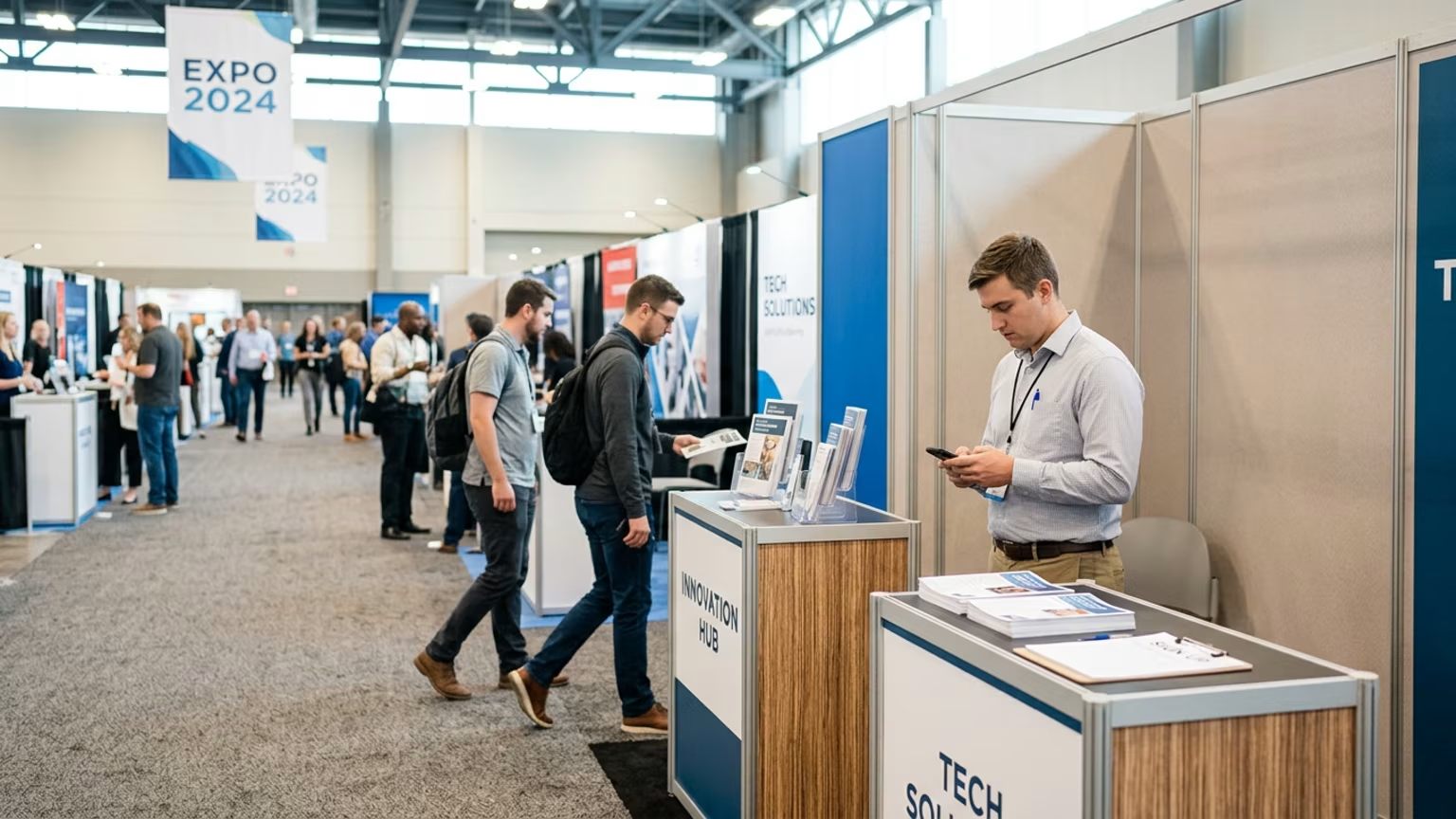
Fresh survey data reveals that many brands sabotage their own events with minimal staffing and passive displays. Replacing this reactive approach with scripted engagement and interactive micro-demos turns expensive booth space into a measurable revenue system.
A highly targeted buyer walks past your custom-built booth at a major industry expo. Inside the perimeter, two brand representatives stare at their phones. A third staff member talks quietly with a vendor in the corner. The buyer pauses for three seconds, sees no clear entry point, and walks away forever.
Trade shows consume a massive portion of B2B and B2C marketing budgets. Total U.S. exhibition spending reaches into the tens of billions of dollars annually. Yet many brands cannot attribute clear revenue to these investments. According to event strategy experts, this disconnect stems directly from poor lead management and weak in-booth engagement.
Many exhibitors staff their footprints based entirely on the minimum included badges for their booth size. Two people might cover a large square footage. This thin coverage falls apart the moment someone takes a break. Unattended demo stations and long lines cause high-value prospects to abandon the interaction entirely.
This passive behavior destroys pipeline potential. Leading analysts confirm that most exhibitors still rely on passive displays. They treat lead capture as a sheer volume game rather than a rigorous qualification system. Badges alone deliver basic contact lists rather than actual sales opportunities.
A 2026 guide on trade show lead capture highlights exactly why this happens. Marketers walk away from the show with a massive list of names. Unfortunately, the sales team will never meaningfully work these contacts. The leads lack the necessary context to justify an outbound phone call.
Poor staffing decisions create a ripple effect across the entire marketing funnel. When representatives fail to engage properly, the system captures no contextual data regarding prospect pain points. Without a structured process for logging buyer budgets and timelines, sales teams receive empty contact lists. These lists inevitably rot in the CRM system untouched.
High-performing event marketers are shifting away from passive strategies. They know that waiting for random walk-ups yields terrible Return on Investment. Instead, they deploy a proactive model that treats the booth as an execution venue. This requires a dedicated focus on pre-show intelligence and highly structured on-site conversations.
The foundation of this strategy involves building target lists weeks before the event. Teams score companies against their ideal customer profile and run personalized outreach. The goal is to secure confirmed meetings before the show doors ever open. Industry benchmarks show that booked meetings convert at substantially higher rates than cold walk-up interactions.
This transition requires abandoning vanity metrics in favor of pipeline data. We see many brands struggle to adapt their staffing models. They must shift budgets to support targeted interactions. Companies that invest in fewer but higher-impact trade show booths often see superior conversion rates.
A modern activation pairs right-sized staffing with deliberate experience design. Staff members receive clear assignments based on traffic patterns and task loads. Some ambassadors handle immediate qualification. Others run scheduled micro-demos to distribute traffic evenly throughout the day.
Advanced teams are now integrating lead capture applications directly into their marketing automation platforms. They embed customized qualification fields into every single capture form. This allows field staff to tag product interest instantly during a live conversation. Artificial intelligence tools then summarize these interactions to support rapid outbound sales motions.
Not every event footprint requires maximum density at all times. For certain consumer brands, the primary objective remains sheer sampling volume. In those specific scenarios, the optimal model favors high-throughput distribution combined with light data capture. The goal is always right-sized staffing rather than mindless headcount inflation.
Modern experiential strategy has shifted away from massive spectacles. Brands now prioritize participatory experiences that collect data and signal buying intent. Exhibitors increasingly view booth design and staff flow as one integrated system. Every physical touchpoint serves as a mechanism to advance the commercial conversation.
This level of integration requires aligning experiential teams with retail strategy. Brands use these physical moments to gather insights that support national rollouts. Proving retail ROI often hinges on this precise field data collection. We see successful programs use shopper data and Google integration to validate their on-site findings.
Transforming a passive footprint into a conversion engine requires strict operational discipline. You must design every element to capture intent and qualify prospects quickly. The following steps outline how to deploy this methodology effectively on the floor.
These tactical upgrades require a fundamental shift in how you plan your physical space. Layout and sightlines must support these engagement stations effortlessly. Thoughtful trade show booth design for product trials removes friction from the qualification process. Every square foot should serve a measurable commercial purpose.
We provide clear reporting on reach, trials, leads and sales to guide next steps in campaign optimization. Our measurement approach tracks awareness, engagement and conversion, turning brand moments into actionable data that demonstrates business impact. Modern marketers must judge events on generated pipeline rather than meaningless impressions. To build a compelling business case, you must track leading indicators alongside lagging performance data.
The industry is rapidly shifting away from superficial traffic metrics. Sophisticated exhibitors now ask for twelve-month conversion curves instead of daily badge scan totals. Every event-sourced lead must receive a specific campaign tag within the CRM architecture. Marketing leaders ruthlessly cut underperforming shows that fail to generate actual commercial opportunities.
This rigorous data collection builds immense credibility with financial officers. You can frame new staffing investments as a direct method to capture lost revenue. Proving that higher engagement yields better pipeline makes securing future budgets significantly easier. The gap between a passive footprint and an optimized system becomes an undeniable business case.
Many teams fall into the trap of measuring superficial activity. Gathering data is only useful if it predicts actual commercial outcomes. We often see gamification data predict event leads effectively when mapped to specific buying intent. True success requires connecting floor activity to your long-term sales pipeline.
Consumer packaged goods brands face unique challenges on crowded exposition floors. They often default to massive sampling operations with very light qualification. This generates huge crowds but yields zero actionable retailer data. A premium beverage brand recently recognized this exact failure pattern at a major national show.
The brand transitioned from a passive sampling model to a highly structured interaction flow. They staffed the space with specialized ambassadors to manage throughput efficiently. Attendees were required to scan their badges to receive a personalized tasting flight. The staff used a two-question script to identify the prospect's primary retail distribution channels.
This simple friction point eliminated unqualified attendees quickly. It allowed the brand representatives to spend more time with verified retail buyers. The captured data empowered the sales team to build highly targeted follow-up campaigns. The brand successfully proved regional sell-through lift using the targeted information gathered on site.
Many brands fear that strict qualification will alienate potential customers. The reality proves the exact opposite when executed correctly. Buyers appreciate when a brand representative respects their time. A structured intercept feels far more professional than a desperate pitch.
The beverage company trained their ambassadors to deliver these intercepts flawlessly. They conducted mandatory role-play sessions during the load-in day. The staff practiced transitioning from casual greetings to qualification questions without hesitation. This preparation turned a chaotic sampling environment into a highly organized data factory.
Transforming your trade show presence into a predictable revenue stream takes immense operational discipline. If your team struggles to measure the impact of physical activations, you need a new approach. Book a strategy call with our experiential team to audit your current event operations. The trade show floor punishes the passive and rewards the prepared.

30 Years Experiential & Retail Activation Partner for CPG & Beverage Brands | Multi-Market Demos, Roadshows & Costco/Club Programs That Actually Sell