Robbie Thain
Founder, CEO

Healthcare brands must adopt CPG experiential marketing to survive. Learn how wellness activations, retail sampling, and education drive measurable event ROI.

Stop treating consumer health education like a clinical lecture. The most effective healthcare marketing today borrows heavily from the snack aisle. Recent industry commentary confirms that medical brands must adopt consumer packaged goods strategies to survive.
Healthcare marketers are realizing that clinical messaging falls flat without immersive lifestyle positioning. Adopting retail sampling formats turns sterile health education into high converting consumer participation.
Walk into any major health expo today. You will likely see aisles of sterile booths handing out dense pamphlets. Sales reps stand rigid behind tables waiting for awkward eye contact. Attendees walk past these corporate setups rapidly.
The environment feels chaotic and loud. Consumers are overwhelmed by complex medical jargon. They actively avoid brands that look like a stark doctor waiting room. Nobody wants to feel like a patient on their weekend off.
Contrast this clinical coldness with the crowded sampling stations nearby. A premium snack brand will have a line wrapping around the corner. Their booth focuses entirely on taste and immediate gratification. Healthcare brands watch this happen and wonder why their superior science gets ignored.
The problem is never the product. The problem is the physical presentation. Medical companies forget that their buyers are just regular people. Regular people crave experiences that make them feel good.
When a health brand acts like a strict teacher, the crowd leaves. The modern expo floor is a battleground for attention. You cannot win that battle with a boring presentation. You need a setup that sparks joy and curiosity immediately.
The solution requires a total repositioning of the brand experience. Healthcare products must borrow the tactical playbook of wellness and food brands. This means prioritizing trial and physical interaction over static education. The strategy relies on building trust through immediate and tangible value.
According to recent commentary from Cannes Lions, healthcare marketers are actively shifting toward wellness activations. Industry analysts report this approach aligns better with modern consumer expectations. People want to feel understood before they read a dense clinical study. The goal is to make the complex science feel highly accessible.
Consumer packaged goods brands excel at this exact simplification. They turn nutritional data into a lifestyle choice. Medical marketers must learn to translate their data into a feeling. This shift requires a deep understanding of human behavior in live settings.
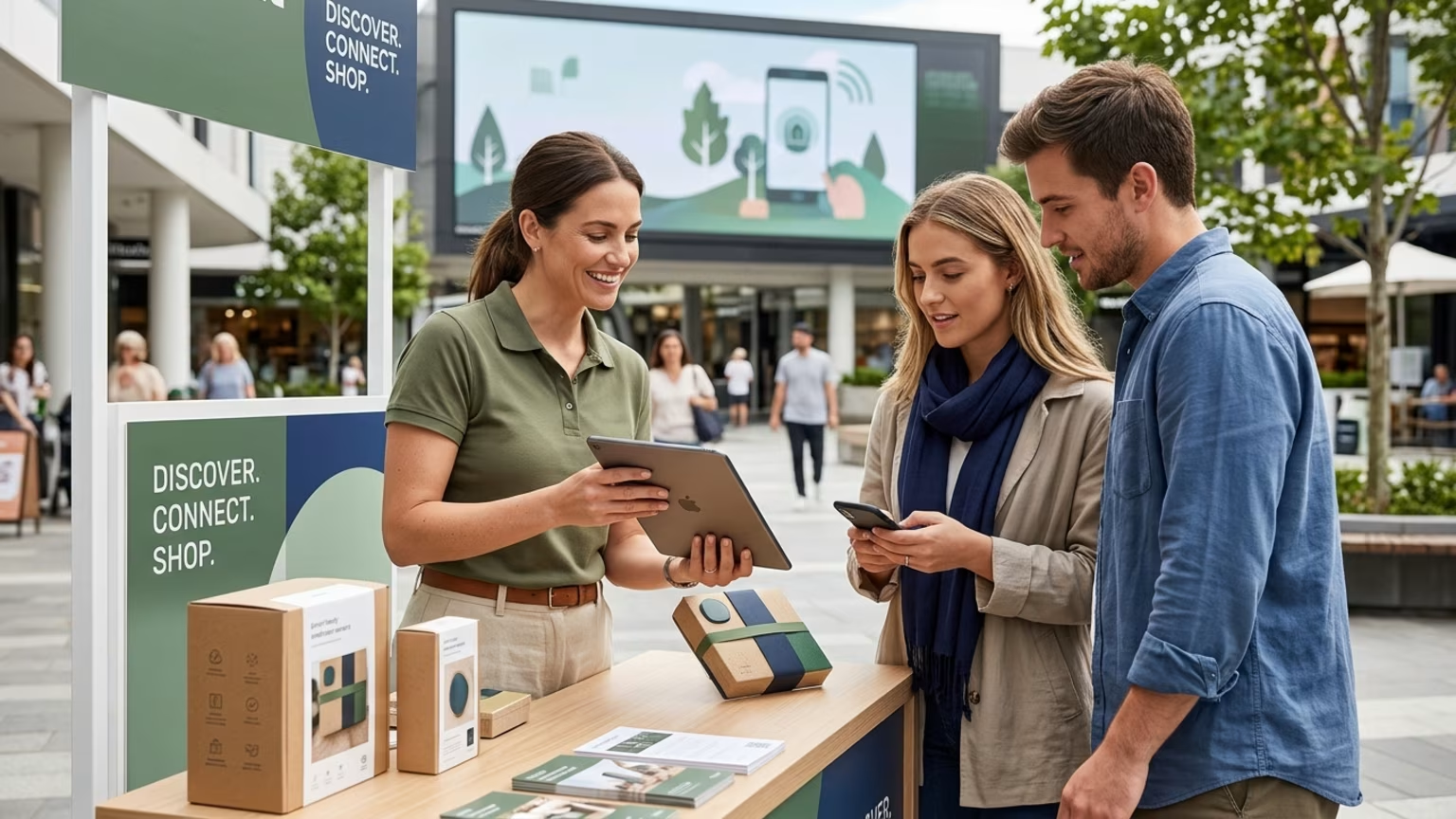
Connecting the clinical data to the consumer requires a smart operational layer. We blend physical and digital experiences by integrating QR codes and mobile technology into a cohesive layer across retail, event, and tour experiences. Phygital is not a standalone service but an upgrade we apply to many types of experiential work to drive connected results. Event teams that measure experiential marketing accurately see immediate benefits from this operational upgrade.
The old model of healthcare marketing relied heavily on fear or strict compliance. Brands would highlight a problem and present their product as the only clinical fix. Today, consumers reject this negative framing entirely. They want to proactively manage their health as part of a balanced lifestyle.
This is why the consumer packaged goods methodology works so well. A snack brand does not shame you for being hungry. They offer a delicious solution right in front of you. Healthcare brands must adopt this exact same positive reinforcement loop.
Executing a lifestyle driven activation requires strict operational discipline. You cannot just put a juice bar in a medical booth. The interaction must guide the attendee from curiosity to commitment. Here is how to run this play on a busy show floor.
Teams that master repeatable field marketing structures scale these steps nationwide. Consistency beats intensity when rolling out experiential campaigns. You want every single show to deliver the exact same brand feeling.
Reporting on live events often lacks rigorous financial modeling. A successful activation demands precise tracking of both leading and lagging indicators. Leading metrics tell you if your booth design is actually stopping traffic. Lagging metrics prove your Return on Investment to the executive team.
Moving away from basic badge scans is mandatory for modern event teams. Teams adopting advanced lead workflows capture better data entirely. The days of counting total attendees as a success metric are over. You need granular visibility into individual engagement levels.
Leading indicators should focus on physical engagement and floor flow. Track the raw number of booth stops and the average dwell time. High traffic with low dwell time indicates a severe messaging mismatch. You need people to stay and talk.
Another critical leading metric is the sample distribution rate. Count how many physical items or interactions occur per hour. Compare this distribution rate against the total foot traffic nearby. This gives you a clear capture ratio for your space.
Lagging indicators must tie directly to pipeline creation. Measure the total number of qualified CRM captures from the event. Track the specific conversion rate of attendees who completed the physical trial. This proves the financial value of the physical interaction.
Consider the launch of a new digestive health supplement at a national fitness expo. The brand initially planned to distribute informational packets outlining clinical trial results. Our team intercepted this plan and replaced it with a specialized tasting bar. The physical footprint mirrored a premium coffee shop setup.
Attendees tasted a mixed wellness shot alongside a tablet based symptom checker. The brand ambassadors facilitated discussions around daily routines rather than chemical ingredients. The staff acted more like friendly baristas than clinical sales representatives. This subtle shift in tone completely disarmed the skeptical audience.
This approachable setup generated three times the expected lead volume. The brand transformed a dry medical product into an accessible lifestyle choice. They proved that clinical efficacy and consumer appeal can coexist beautifully. The activation felt like a high end food sampling tour.
Post event reporting showed massive improvements in lead quality. The sales team closed deals faster since the initial trust was already established. It completely changed how the company approaches live field marketing. They now treat every trade show as a consumer engagement opportunity.
The line between a medical necessity and a daily wellness habit is incredibly thin. Consumers look for products that fit seamlessly into their existing lives. The physical spaces we build either invite them in or push them away. Real change happens when a brand stops talking at people and simply lets them participate.

30 Years Experiential & Retail Activation Partner for CPG & Beverage Brands | Multi-Market Demos, Roadshows & Costco/Club Programs That Actually Sell