Robbie Thain
Founder, CEO

Walmart acquired Vibe.co to connect streaming ads with in-store commerce. Discover how brands can integrate television reach with physical retail execution.
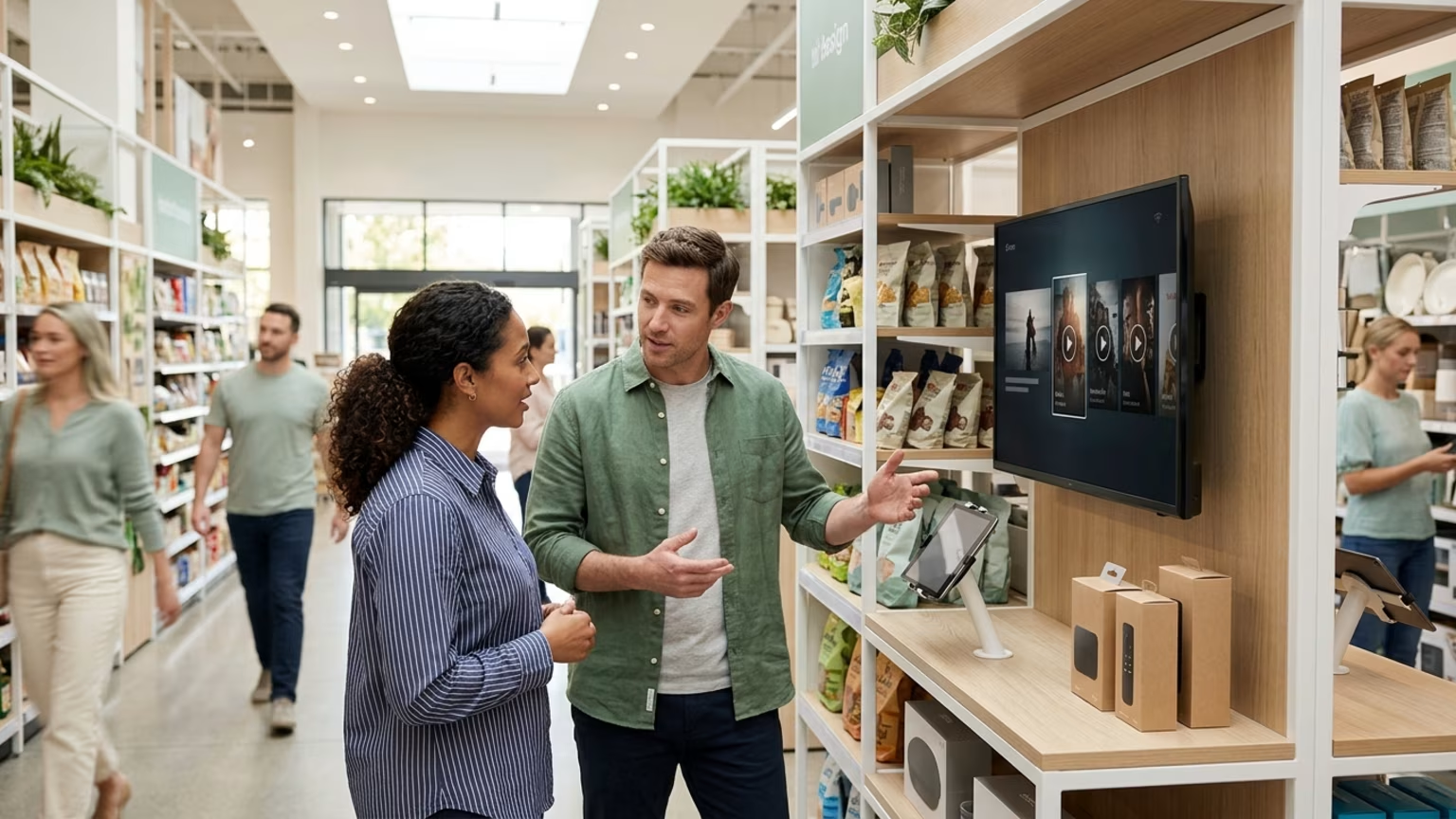
Digital marketers often assume retail media operates strictly on a screen. The truth is that a digital impression only matters when it leads directly to a physical handshake. What does Walmart's purchase of a streaming platform mean for brands running physical retail campaigns? The answer lies in how media connects directly to the shopping cart.
On August 4, 2026, Walmart announced it had completed its acquisition of Vibe.co. Founded in 2021, Vibe.co operates a self-service connected television advertising platform. This platform allows buyers to plan, launch, and measure streaming campaigns across premium publishers. Walmart says Vibe.co brings more than 10,000 advertisers into its growing media network.
Adweek reports that these clients are primarily small and midsize brands. Walmart is integrating this technology directly into Walmart Connect. The strategic intent is to combine self-service software with massive first-party shopper insights. This combination helps marketers connect digital awareness directly to in-store commerce environments.
The broader industry is racing to capture these television and streaming budgets. Brands want to move beyond simple digital impressions and measure actual product movement. A pure digital strategy is no longer enough to win the modern retail battle. Physical execution must rise to meet the promise of these advanced targeting systems.
Planning a media campaign without preparing the retail floor is a guaranteed failure. You cannot buy widespread television awareness if your product is missing from the physical shelf. Walmart is actively building a massive ecosystem to close this gap. According to TechCrunch, Walmart acquired Vizio for $2.3 billion in 2024.
This massive hardware purchase secured direct placement within smart television systems. MediaPost reported that Walmart Connect introduced Connect Select in April 2026. This curated marketplace included Vizio inventory at launch to expand cross-channel access. It also included inventory from publishers like Paramount and Warner Bros Discovery.
Brands must align their digital media buys with their physical store inventory schedules. This coordination ensures linking experiential sampling to retail media data becomes a measurable reality rather than just a theory. A streaming ad might look beautiful on a smart television. However, the true test of planning is whether the product is actually available when a shopper arrives.
This requires tight coordination between media buyers and field operations teams. Brands must manage their supply chain before turning on any national digital promotions. If a self-service campaign drives a thousand shoppers to an empty aisle, the marketing budget is entirely wasted. Proper infrastructure ensures the physical stock is ready before the digital switch is flipped.
Field teams must verify that promotional displays match the specific messaging running on Vibe.co. Without this verification, the entire campaign risks creating consumer frustration instead of loyalty. Marketing leaders must bridge the gap between their digital agencies and their retail execution partners.
Media platforms can generate foot traffic but they cannot close a sale on the floor. When customers walk into a store after seeing a streaming ad, they expect a seamless transition. This requires highly trained brand ambassadors who understand the specific product promises made on television. We have executed over 1000 campaigns across all 50 states.
Our teams activate campaigns wherever our clients need a physical presence. From retail demos in Seattle to major roadshows in Miami, we put human interaction first. In our experience, human connection is the variable that determines whether a campaign succeeds or fails. Our aloha approach ensures every shopper feels welcomed instead of pressured.
A positive conversation at a sampling booth validates the initial digital impression. If the ambassador is unprepared for the digital promotion, the entire customer journey breaks down. Brands should brief their field talent on all active connected television messaging. This ensures that the physical experience matches the energy of the online advertisement.
When a shopper asks about a specific feature highlighted in a Vibe.co ad, the ambassador must know the answer immediately. This level of synchronization builds deep trust between the consumer and the brand. Technology gets people to the door, but the human element gets the product into their hands. makai builds these field teams to serve as the ultimate conversion engine for your media investments.
Field teams must maintain a direct feedback loop with the corporate marketing department. If shoppers are consistently confused by a specific streaming ad, the brand ambassadors must report that disconnect. This real-time intelligence allows media buyers to pause or adjust the campaigns before they waste money. The physical floor serves as the ultimate reality check for any digital creative strategy.
Closing the loop between a television view and a cash register transaction is the ultimate goal. The competitive pressure to prove Return on Investment is massive across the industry. MediaPost reported that Amazon's advertising revenue reached $19.8 billion in the second quarter of 2026. This figure was up 26 percent year over year, proving the scale of retail media demand.
Walmart Connect is working to offer similar closed-loop reporting capabilities. MediaPost also reported that Walmart Connect launched a proof of concept connecting video exposure to sales. This project measured how selected YouTube campaigns influenced actual Walmart purchases. Brands need to capture leads at physical events and route that data into their CRM systems seamlessly.
Brands can leverage specific digital markers to trace consumer movement across the sales funnel. Marketers often seek an incrementality measurement tool to verify whether ad exposure truly caused the purchase. This strategy prevents brands from taking credit for organic sales that would have happened anyway. Proper measurement requires isolating the digital viewing data and comparing it against physical floor traffic.
When a consumer tries a product at a retail demo, scanning a unique code ties that interaction back to the media exposure. The data from platforms like Vibe.co must intersect with point-of-sale metrics. Marketers should establish their attribution models before they spend a single dollar on streaming ads. This discipline shows how first-party shopper data optimizes in-store engagement and validates the budget.
Without a clear data routing plan, offline sales will never be properly credited to digital awareness efforts. Field marketers must ensure their on-site tracking tools align with the retailer's reporting systems. This means using specific promotion codes that mirror the messaging from the streaming campaign. It is the only way to prove that the physical handshake finalized the digital lead.
Field marketing requires absolute operational discipline because technology inevitably breaks. A store might lose internet connectivity during a major retail media push. The digital tracking codes might fail to register in the central CRM database. When the digital ecosystem goes dark, the physical activation must carry the entire load.
Our field managers operate with a strict protocol for these worst-case scenarios. If the digital coupon scanners go down, our ambassadors shift immediately to manual tracking and analog relationship building. A smiling face and a great product sample do not require a Wi-Fi connection to generate a sale. We train our teams to focus on the human interaction first and the technology second.
Brands utilizing Vibe.co must prepare their field teams for sudden surges or total blackouts. If a streaming campaign goes viral, the sampling booth might run out of inventory in an hour. The field general must always have backup stock and a clear communication line to regional managers. The physical event cannot stop just because the digital dashboard stops updating.
Resilience on the floor separates professional activations from amateur setups. When the screens freeze, the brand ambassadors must keep the energy alive. They rely on their training, their product knowledge, and their ability to read the room. This tactical readiness protects the brand reputation regardless of the digital weather.
The financial scale of retail media infrastructure is staggering. Major retailers are investing heavily to capture brand advertising budgets across multiple formats. Adweek reported that The Wall Street Journal put the Vibe.co transaction value at approximately $1.4 billion. This is a massive investment aimed at bringing smaller brands into the streaming space.
This purchase follows other significant hardware investments in the same sector. TechCrunch noted that Walmart acquired Vizio for $2.3 billion in 2024. These multibillion-dollar deals illustrate the high stakes of modern retail media networks. Brands must realize that participating in these premium ecosystems will require dedicated budgets and rigorous financial planning.
Even small brands using flexible platforms must allocate resources carefully. The cost of entry might be lower with a self-service tool, but the media spend must still be justified. Companies should balance their digital ad spending with their physical retail execution budgets. Overspending on screens while underfunding the physical store presence is a common and costly mistake.
A balanced approach ensures that every dollar spent on streaming is supported by a dollar spent on fulfillment. Retail media networks are designed to capture revenue, but brands must ensure they capture margin. Every financial decision must map back to tangible sales growth at the store level. The true cost of the ecosystem is measured by the return it generates on the physical floor. Companies that ignore their physical footprint will watch their streaming investments drain away.
The next logical phase of campaign planning involves auditing your current offline measurement capabilities. Marketers should evaluate whether their in-store sampling data can successfully merge with their streaming television metrics. They should test their supply chain against the potential demand spikes generated by connected television. The most sophisticated tools in the world still require a solid foundation of field execution to matter. Progress in retail media will always depend on the reality of the physical shelf.

30 Years Experiential & Retail Activation Partner for CPG & Beverage Brands | Multi-Market Demos, Roadshows & Costco/Club Programs That Actually Sell