Robbie Thain
Founder, CEO

A new OAAA and Harris Poll study reveals that 51% of adults are motivated to attend live events for free samples. Learn how to convert trials into retail sales.
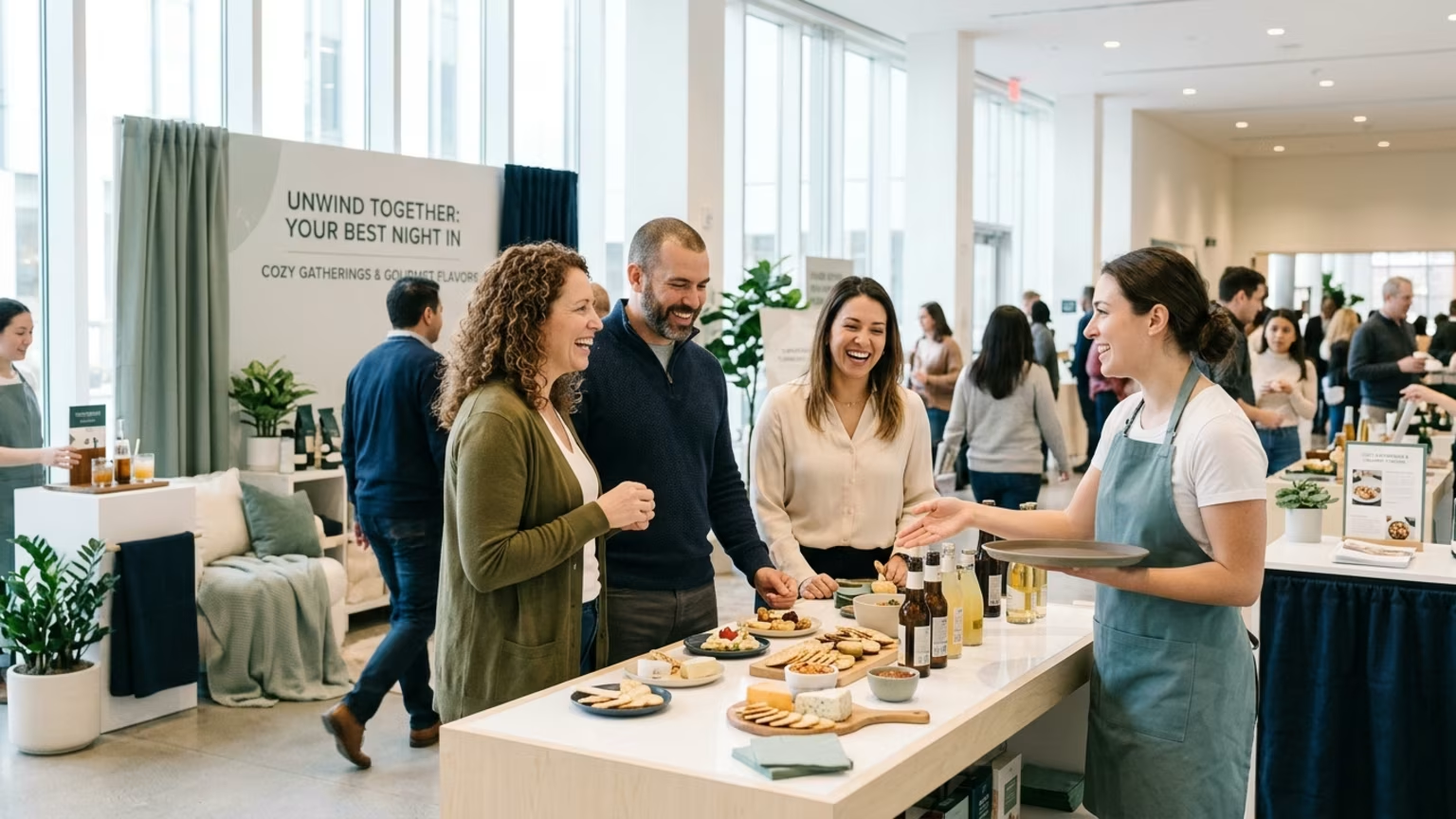
On September 16, 2026, a new study from the Out of Home Advertising Association of America and The Harris Poll revealed that 89% of surveyed U.S. adults ages 18 to 64 said they would attend a live marketing event or promotional experience. The findings challenge the assumption that consumers avoid physical marketing touchpoints. Instead, the data shows a strong willingness to engage when the offer is tangible and relevant. This report clarifies the true motivators behind physical activation attendance.
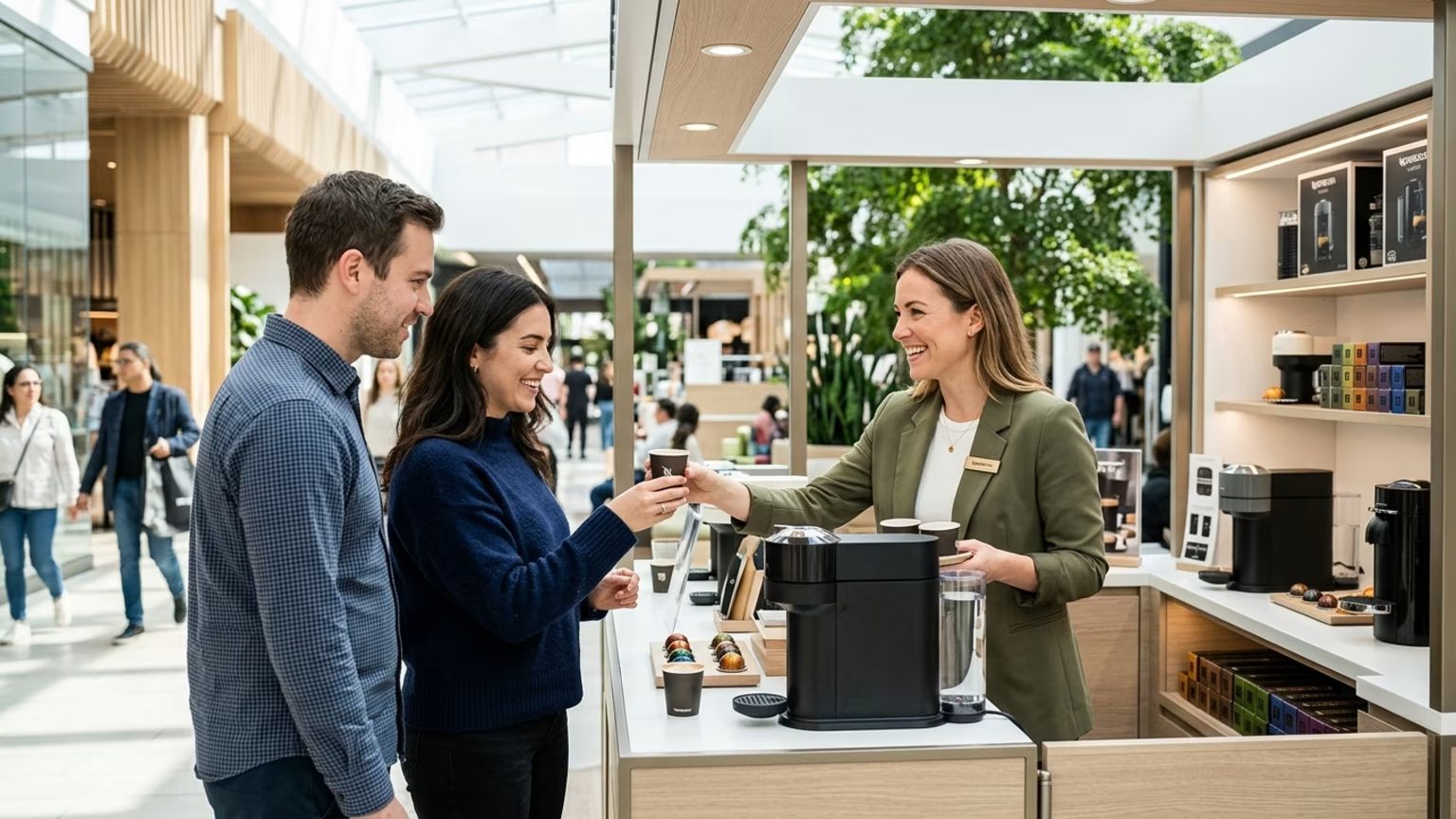
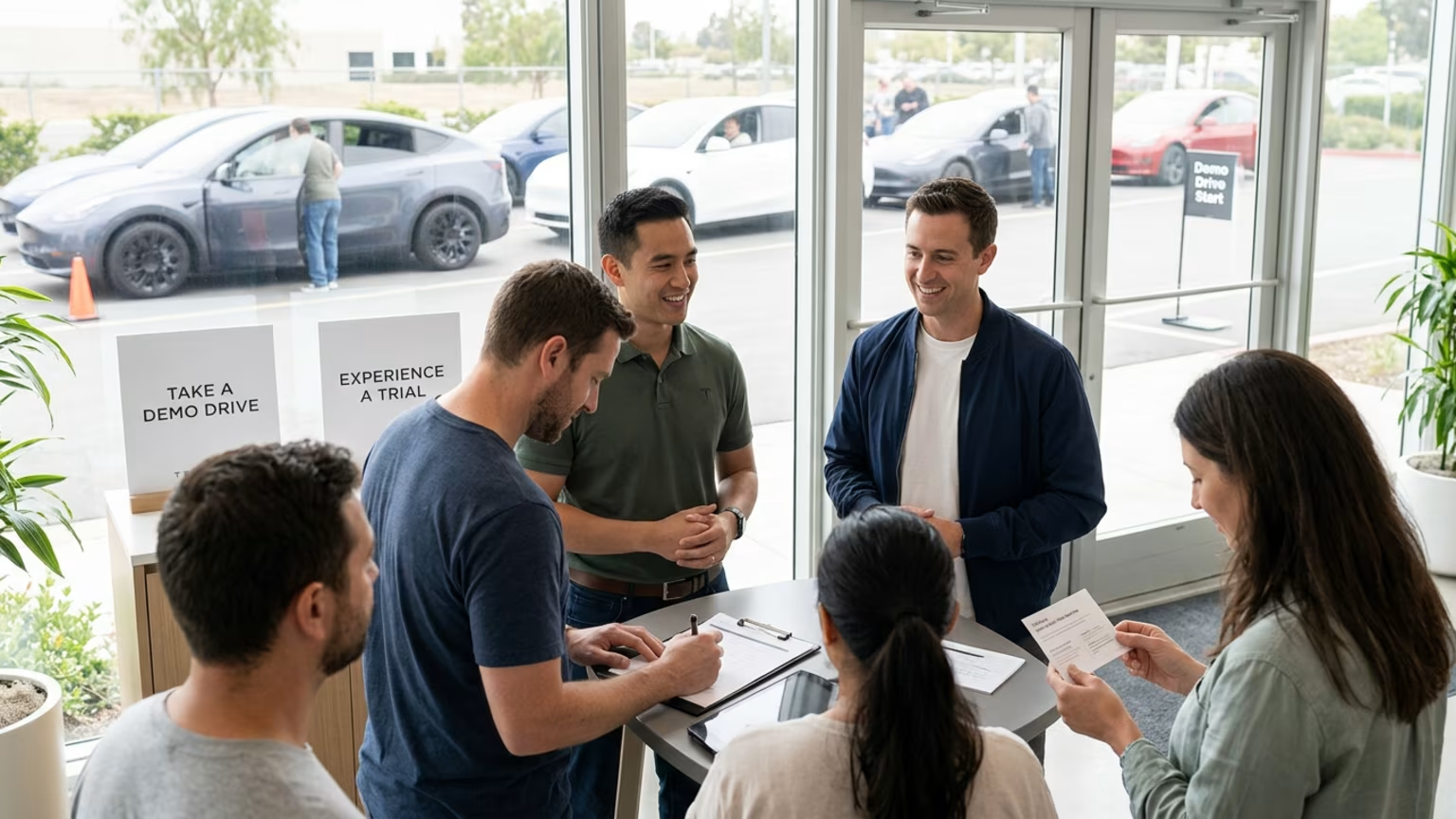
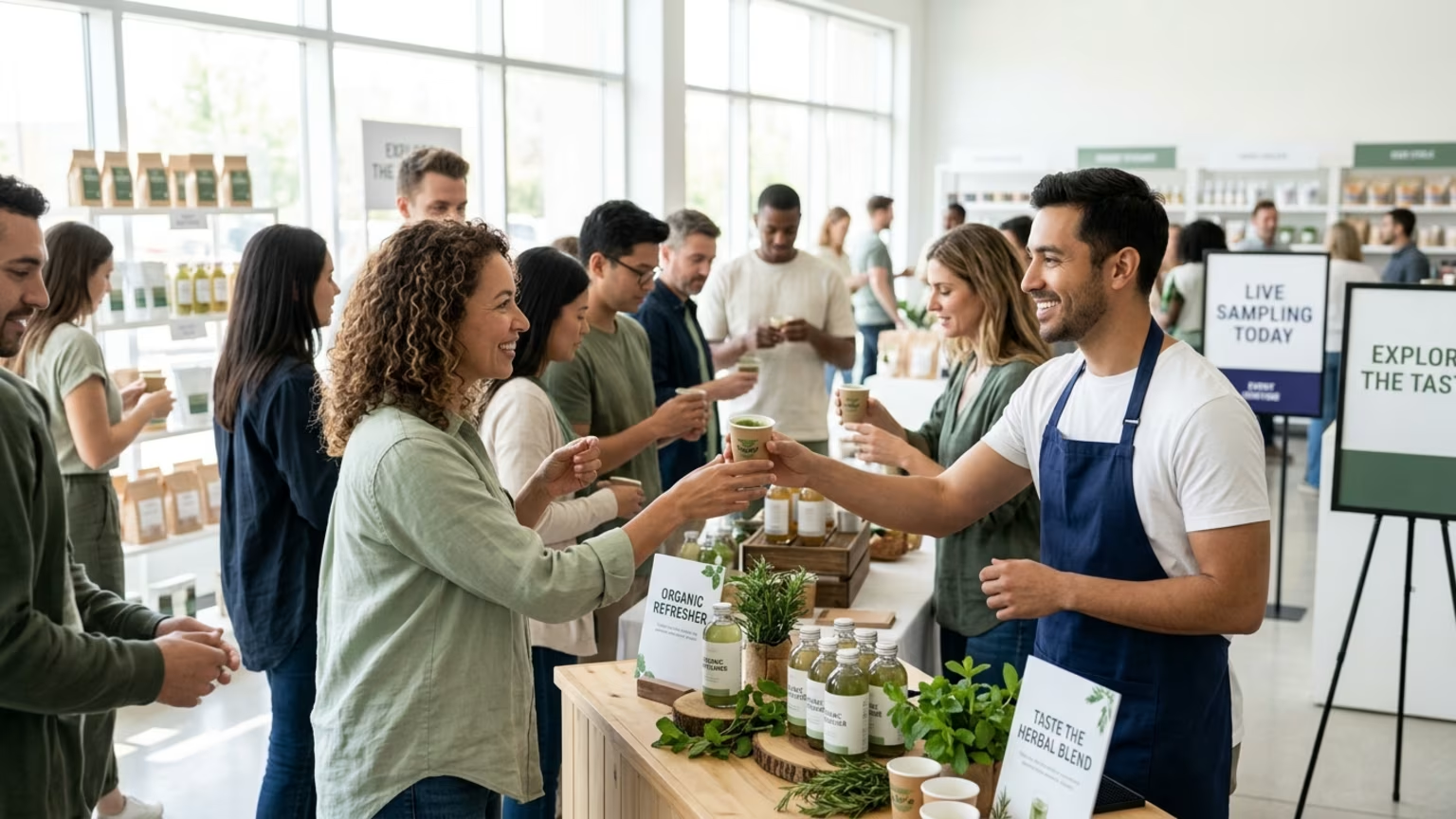
The core finding shifts the focus from flashy gimmicks to simple value. The study found that 51% of respondents identified free samples or product trials as a motivation to participate in live activations. Free merchandise was cited by 45% of respondents as a secondary driver. The research also measured reported behavior among respondents who had actually attended an activation.
Among those attendees, 40% reported an on-site purchase. Another 30% later searched for the product in stores, and 27% purchased it afterward. These figures prove that sampling functions as a meaningful reason for consumers to show up in the first place. The value of an activation extends far beyond the physical boundaries of the event itself.
At Makai, we view these numbers through an operational lens. We specialize in creating retail demos, product sampling programs, and roadshows that bring brands face to face with their audiences. Each program is designed to drive trial, build consumer relationships, and accelerate retail velocity across multiple locations. Getting a consumer to take a free sample is only the beginning of the transaction.
A physical trial must always connect to a measurable commercial outcome to justify the expenditure. Far too often, brand teams measure success purely by the number of units distributed. This isolated metric fails to capture the true Return on Investment of the activation. If a brand stops at distributing inventory, they miss a critical opportunity.
The data shows that physical experiences can trigger a cascade of secondary behaviors. For example, additional OAAA research found that out-of-home campaigns produced a median 14% lift in digital outcomes such as website visits and app downloads. Conversion rates for digital actions also increased 5.3 times as exposure rose from one to 10 impressions. For brands connecting live events to retail sell-through, capturing this trailing intent is critical.
This research dictates a clear shift in how field teams select locations and measure success. Retail advertising appeared to become more influential as consumers moved closer to a purchase. In the study, 50% of respondents said retailer advertising affected their decisions in the days before shopping. That influence grew to 59% immediately outside a store and peaked at 64% inside one.
This pattern forces field marketing managers to prioritize tight geographic alignment with retail partners. Deploying a sampling activation miles away from a point of purchase creates unnecessary friction for the consumer. When the physical distance between the trial and the transaction increases, conversion rates inevitably drop. Marketers must secure event permits and booth locations that directly intersect with active shopping routes.
Operating closer to the point of purchase requires flawless logistics and inventory management. The study reported that 73% of respondents would visit a nearby store that day if an advertisement indicated same-day pickup. Furthermore, 87% said they would redeem a time-limited offer promoted through physical media. Making these actionable claims requires a supply chain that can back them up on the ground.
Field marketers must synchronize their sample distribution with real-time inventory levels at nearby retail locations. If a consumer tastes a product and decides to buy it immediately, the product must actually be on the shelf. This requires constant communication between event staff, logistics coordinators, and retail store managers. A stockout during a promoted same-day offer will instantly damage consumer trust.
The operational requirements now extend well beyond the physical footprint of the booth. The same research found that 86% of respondents would take some form of action after seeing an interesting retail out-of-home advertisement. The most common reported actions were visiting a retailer’s website or app at 45%, searching for the retailer online at 42%, and visiting a physical store at 33%. Every sampling station must function as a data capture point to track these specific outcomes.
Strong operational planning drives successful live brand events by bridging these physical and digital systems. This requires trained brand ambassadors who can guide consumers from a physical interaction to a digital endpoint. QR codes, dedicated landing pages, and interactive digital displays must be integrated seamlessly into the physical booth. Consumers expect a seamless transition from a physical sample to a digital purchase path.
This reality demands a unified approach to field marketing and digital analytics. More than three-quarters of respondents, or 77%, recalled seeing retail out-of-home advertising recently. This recall rate rose to 81% among Gen Z adults in the study. Brands turning live event growth into retail sales rely on these localized insights to refine their broader messaging strategies.
Executing a successful product trial at scale demands rigorous consistency rather than short bursts of intensity. Distributing a few hundred samples at a single localized event is relatively straightforward. However, maintaining that same level of quality control across a national roadshow presents severe logistical challenges. Temperature control, strict food safety protocols, and uniform brand messaging must be maintained in every single market.
By 2009, our work covered event and sponsorship activation alongside mobile tours. We also managed sampling, event production, and logistics at a national scale. Makai was included in the 2009 PROMO 100 ranking published by PROMO and Chief Marketer. This historical perspective proves that the foundational elements of successful field marketing rarely change.
Brands that achieve high conversion rates focus heavily on the training and reliability of their field staff. A poorly trained ambassador can distribute thousands of samples without ever triggering a meaningful product search or downstream purchase. Conversely, a highly trained representative will educate the consumer and naturally introduce the path to purchase. This human element remains the most critical variable in any physical marketing campaign.
Consistent execution requires a localized approach to every market. The nuances of a retail environment in one region may differ wildly from another. Our teams understand that a successful sampling station must adapt to these local variables while maintaining strict brand standards. This adaptability is what prevents an activation from becoming a generic corporate presentation.
Consumers respond to real-world interactions differently than they respond to digital media. The study reported that 69% of respondents considered out-of-home advertising more human than online or mobile ads. Additionally, 64% viewed it as more culturally relevant. People want to hold, taste, and experience a product before committing to a purchase.
We design mobile activations and roadshows that accelerate consumer trial, build trust, and boost retail velocity during 90-day product launch windows. Our structured approach transforms initial product trial into sustained consumer confidence and retail performance. By treating the physical interaction as a highly relevant local event, we maximize consumer engagement. The physical presence of a brand ambassador validates the quality of the product in real time.
The leadership perspective on these findings emphasizes the broader role of physical media. OAAA CEO Anna Bager said out-of-home media can create discovery, bring people into an activation or store, and keep brands top of mind. This observation aligns with the multi-stage conversion behavior reported by survey respondents. An activation is not an isolated event but a catalyst for ongoing consumer interaction.
When a consumer accepts a free sample, they are entering the initial phase of a longer relationship. The physical interaction serves as the anchor point for future brand recognition. Even if the consumer does not purchase the product on-site, the memory of the experience persists. This lasting impression is what drives the 30% of attendees who later search for the product in stores.
To sustain this top-of-mind awareness, brands must map out the post-event communication strategy before the activation begins. Retargeting campaigns, follow-up emails, and strategic retail promotions should be ready to deploy immediately. The physical event provides the initial momentum, but disciplined operational follow-through secures the final sale.
Seeing a long line of people waiting for a free product sample is often viewed as a logistical headache. However, this study proves that this physical gathering is actually a highly qualified audience expressing direct commercial intent. The challenge is no longer convincing people to show up for a trial.
Does your field marketing team have the operational discipline to turn physical product trials into measured pipeline rather than just an empty inventory pallet?
Trade show coordinators and brand managers planning high-volume product trials face immense pressure to execute these heavy foot-traffic moments without operational friction. When navigating complex event logistics, permits, and staffing threatens your program, Makai takes command of the execution. Through our Experiential Marketing capability, we create hands on brand moments that connect emotionally and turn customers into ambassadors.

30 Years Experiential & Retail Activation Partner for CPG & Beverage Brands | Multi-Market Demos, Roadshows & Costco/Club Programs That Actually Sell