Robbie Thain
Founder, CEO

A new retail-media discussion puts household acquisition on the sampling brief. Makai examines the staffing, creative and measurement implications.

On October 26, 2026, Rethink Industries published the Media in Retail podcast episode “Retail Media’s Content Gap, From Creators to Sampling.” The 30-minute discussion featured Recess Head of Growth Strategy Leah Logan and host Jeremy Goldman. It proposed connecting creator content and shopper-relevant creative with real-world sampling inside retail-media strategies.
The event was a practitioner discussion, not a retailer policy change or a new operating requirement. Its practical proposal was to plan physical sampling alongside media and creative rather than treating each as a separate activity.
According to Rethink Industries’ episode summary, Recess places samples in everyday environments including fitness studios, zoos and schools. The summary describes partnerships with Dollar General, Walmart and CVS that package those experiences as retail-media products. It says the programs pair sampling with on-site ads across hundreds of markets.
The proposed measurement shift matters more than the footprint. In the episode’s framing, new-household acquisition better fits sampling’s new-buyer objective than short-term return on ad spend, or ROAS. The question becomes whether a program brings new buyers into the brand rather than simply attaching sales to recent exposure.
The creative argument follows the same logic. The episode presents creator campaigns as a source of both audience reach and reusable assets. It also argues that creative should address the shopper’s immediate decision instead of simply repurposing a television ad.
The source is an episode summary rather than a transcript or independent investigation. It discloses neither campaign-level results nor a detailed acquisition methodology, and the other cited reporting does not independently corroborate the described partnerships. The proposal therefore does not establish that combining sampling with media outperforms either tactic alone or that new-household counts prove incrementality, repeat purchase or profitability.
EMARKETER’s October 2026 reporting supplies a related measurement distinction: connecting ad exposure with a transaction does not establish that advertising changed behavior. For a CPG marketing leader, that makes the acquisition definition part of the investment decision rather than a reporting detail to settle afterward.
Our view at Makai is straightforward: welcome people warmly and give the interaction a clear commercial purpose. A sample should create room for a real conversation. The measurement plan should explain which business question that conversation is intended to help answer.
We specialize in retail demonstrations, product sampling programs and roadshows that bring brands face to face with their audiences. Those programs are designed to drive trial and build consumer relationships while accelerating retail velocity across multiple locations. That physical experience remains the center of the work even when a media plan surrounds it.
For beverage and CPG brands, this discussion creates a useful distinction between an interaction objective and an acquisition objective. Trying a product is an interaction. Becoming a new buying household is a separate outcome that needs its own definition and evidence.
Our four-week, multi-market Costco sampling program for Pulmuone’s PlantSpired line delivered more than 65,000 samples and recorded an 18 percent sold-to-sale rate. The operational lesson is that a structured program can connect trial with purchase across locations. That is a different measurement question from identifying households that had not previously bought the product.
We believe the strongest briefs preserve those distinctions. Sample distribution describes activity. A purchase measure describes a commercial response. A new-household measure addresses the acquisition objective discussed in the episode.
This is where aloha meets discipline: make the encounter approachable without making the business objective vague. Our perspective on pairing welcoming product conversations with operational discipline starts with that balance. The person accepting a sample deserves a useful experience, while the marketing team deserves a clear account of what the program was built to accomplish.
The downstream change is a broader coordination job. If a brand adopts the episode’s proposal, its field brief must connect the physical experience with creative and measurement decisions. In our view, treating sampling as another media line item would miss the operational work that makes the encounter possible.
Buyer-side research shows why execution deserves attention. In a Grocery TV-commissioned survey conducted with IAB, 100 U.S. retail-media buyers and decision-makers with active in-store investments reported barriers to further investment. Activation complexity and measurement limitations were each cited by 27%, while 23% cited lack of creative resources. These findings describe that defined buyer group rather than all U.S. marketers.
The practical response is to assign ownership before launch. The research supports clarifying responsibility for activation and measurement alongside KPI alignment. The following planning implications are Makai’s operational interpretation of those concerns, not a tested procedure from the survey.
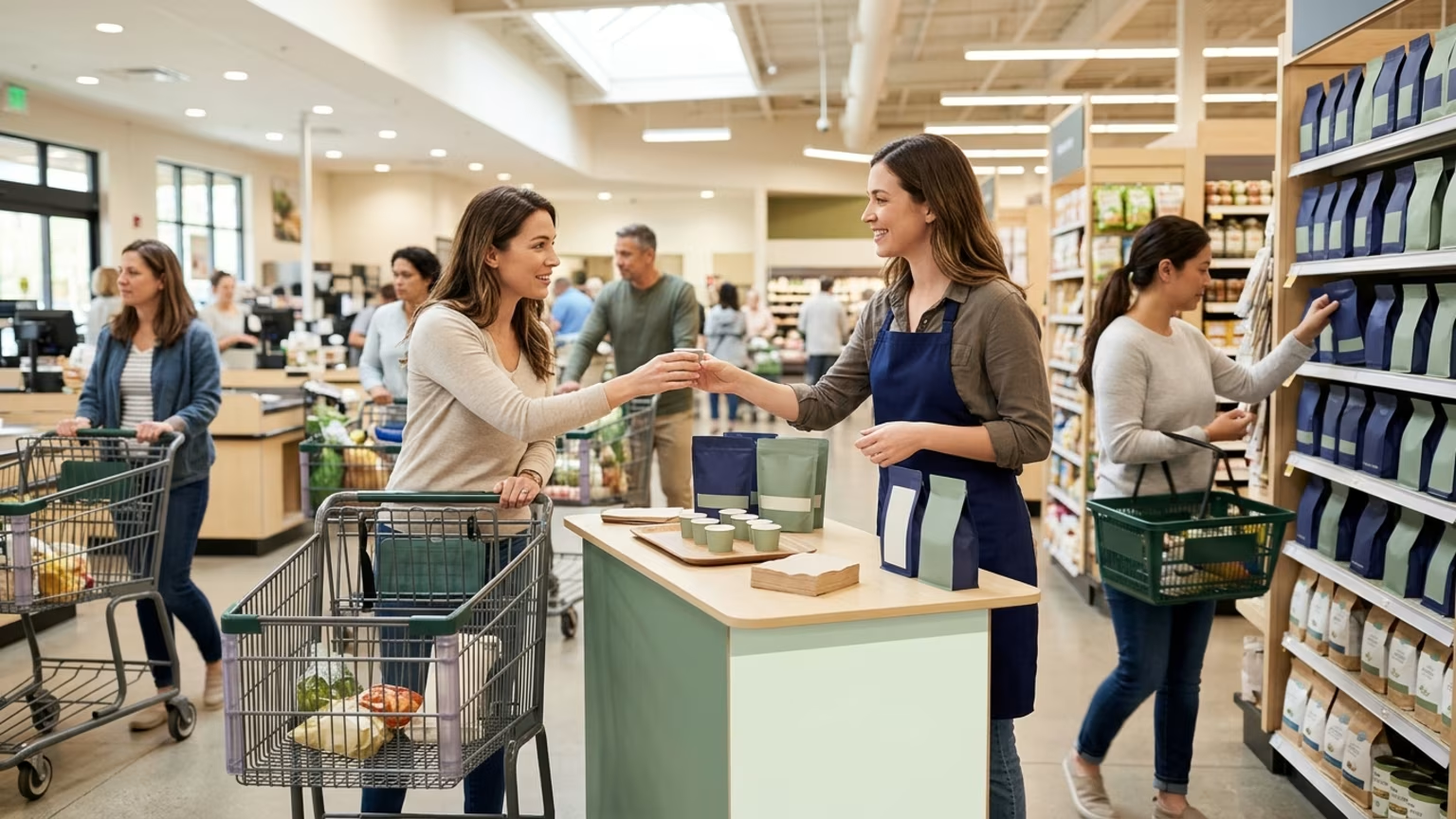
Makai’s retail demonstrations use trained brand ambassadors to drive in-store sales through real conversations and product trials. Applied to this proposal, the staffing question is how those conversations serve the shopper’s immediate decision while staying connected to the campaign objective.
The episode’s recommendation on contextual creative offers a useful starting point. A live conversation and a paid placement should address a compatible shopper need. That does not require an ambassador to recite an advertisement; it requires a clear purpose for the encounter.
For us, the staffing brief should distinguish the product-trial objective from the acquisition question assigned to the measurement partner. Ambassadors can support the live experience without being treated as the source of a household purchase-history definition. Each owner needs a job that matches the evidence they can provide.
The episode describes sampling beyond the store as well as partnerships connected to retail media. That makes the physical environment a planning decision, not just a place to distribute product.
Makai’s position is that the setting should serve the intended interaction. Our discussion of matching physical locations with shopper intent addresses that choice. The relevant question is whether the environment supports a useful product encounter for the audience the brand wants to reach.
Creative then needs to fit the decision and the placement. The research supports confirming that assets suit each retailer’s formats rather than assuming one asset belongs everywhere. In field terms, the live experience needs a compatible message, not a separate campaign idea competing for attention.
A coordinated campaign still needs product and event gear in the right place. Makai stores sampling product and equipment, then ships and tracks those materials while coordinating delivery nationwide. That capability supports the physical side of a plan that also includes media activity.
Our recommendation is to treat activation ownership as part of the shared campaign brief. Product movement and field staffing belong in the same planning conversation as the creative and measurement owners. This is a practical response to the activation complexity identified in the IAB and Grocery TV survey.
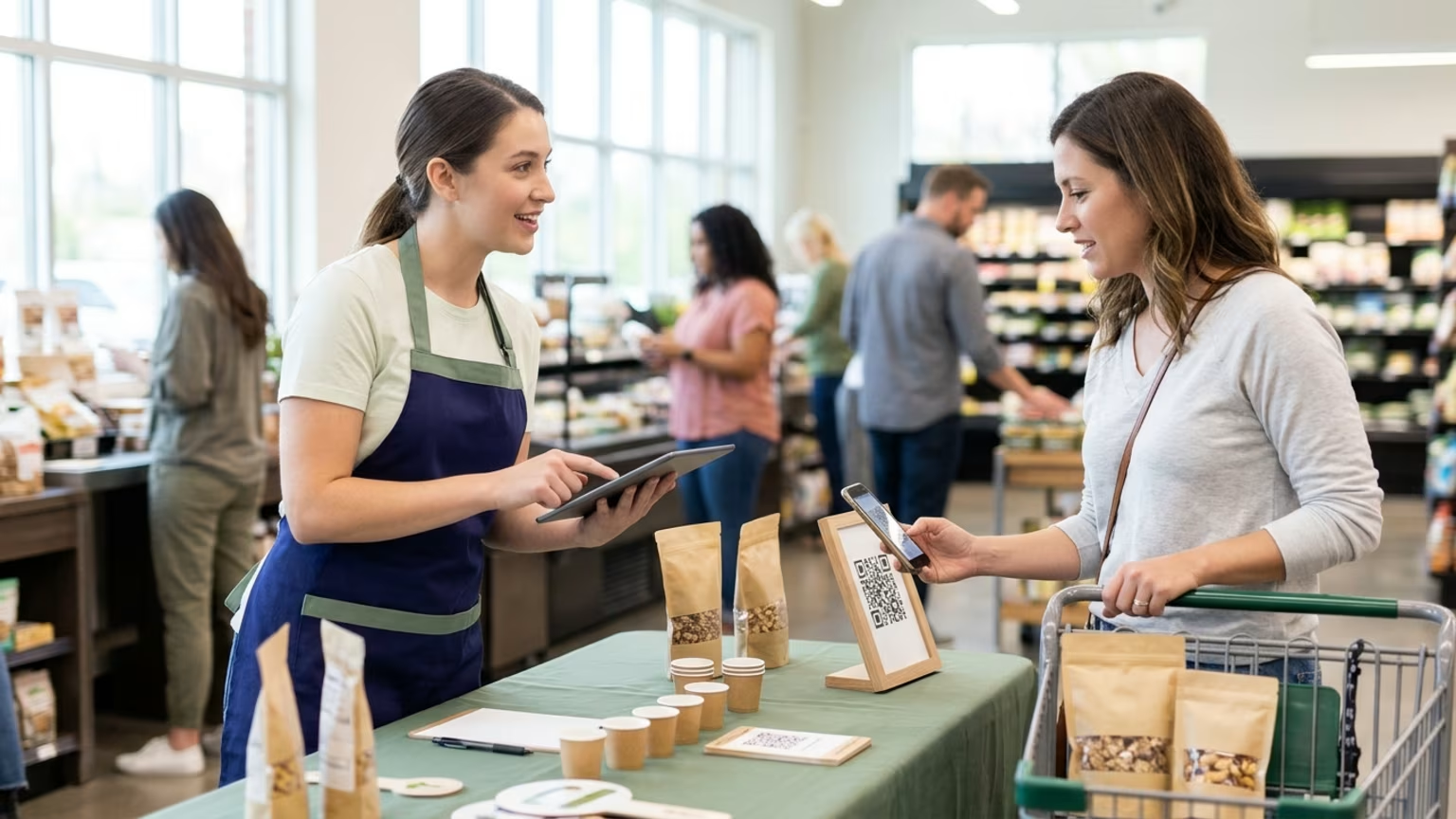
We also integrate QR codes and mobile technology with real-world activations across retail, event and tour experiences. Those tools can connect parts of the consumer experience. Their role should be defined within the program rather than treated as the acquisition measurement itself.
EMARKETER’s attribution distinction points toward specific questions for the retailer or media partner. The research supports asking how the partner defines a new household and what purchase history informs that definition. It also supports asking which measurement window applies and whether a comparison group or incrementality test is available.
Those questions belong before the activation because they define what the program is intended to assess. The field team needs a clear activation objective. The measurement owner needs an agreed acquisition question and a method capable of addressing it.
Our perspective on separating sampling activity from commercial impact follows the same principle. Return on Investment needs a business outcome and a measurement approach suited to that outcome. A crowded activation and a persuasive dashboard should not substitute for that agreement.
The useful next move is a sharper brief, not a larger claim. For a proposed sampling-and-media program, the planning conversation should identify the intended buyer outcome and the physical experience designed to support it. Ownership of creative and activation should sit alongside ownership of measurement.
That keeps the episode’s acquisition proposal connected to real execution. It also preserves the human value of sampling: someone gets to try the product and have a relevant conversation before deciding what comes next.
CMOs and VPs, will your next sampling brief give the field team and the measurement partner the same clear definition of the new buyers the program is meant to reach?
A product trial that leads to an in-store sale gives sampling a commercial outcome beyond the interaction itself. Makai’s retail demonstrations put trained brand ambassadors in conversation with shoppers, using product trials to drive in-store sales for CPG marketers and food and beverage brand managers.

30 Years Experiential & Retail Activation Partner for CPG & Beverage Brands | Multi-Market Demos, Roadshows & Costco/Club Programs That Actually Sell