Robbie Thain
Founder, CEO

Learn how CPG brands link in-store product sampling and retail demos to retail media networks and first-party data to prove true incrementality and ROI.
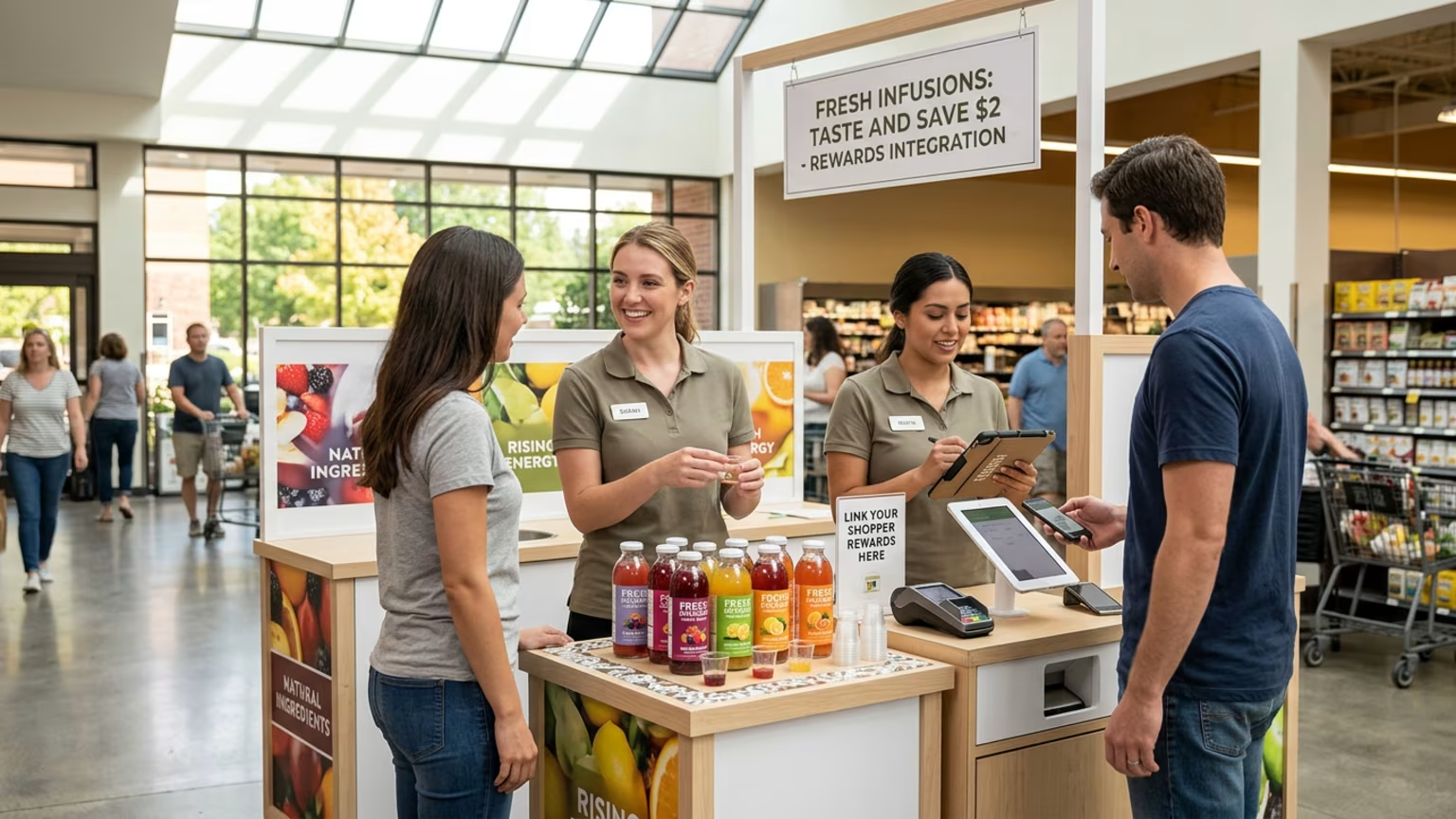
Physical product sampling is no longer a platform for mere brand theater. The smartest marketing operators treat live demos as a highly measurable retail media channel. This strategic alignment helps consumer packaged goods brands connect physical trial with first party retailer data to prove true Return on Investment.
Most brands send ambassadors into retail stores with a folding table and high hopes. They hand out hundreds of cheese cubes or energy drinks to passing shoppers. The field team snaps a few photos, counts the empty wrappers, and reports a massive success to headquarters. The finance team then asks how many of those samplers actually bought the product at the register.
The resulting silence is usually deafening for marketing directors. Commerce campaigns are too often measured in isolation from real world physical activity [3]. Analytics leaders point out that this creates a forty eight hour gap between data collection and actionable insight [3]. By the time a brand receives any actual sales intelligence, the shopper has completely left the store environment.
This lack of data integration turns potentially powerful live experiences into unaccountable budget drains. The brand is left guessing if the sampling event cannibalized existing sales or drove new household penetration. A rigid focus on isolated metrics pushes brands to over target heavy buyers just to make the spreadsheet look good [4]. The core problem remains a fragmented execution model that fails to track hard business outcomes.
Many organizations still struggle with disjointed experiential vendors and wildly inconsistent field staffing. These operational failures make complex attribution models completely suspect and highly unreliable. A flawless measurement strategy means nothing if the execution team fails to deliver the physical product. Brands must connect their field operations directly to their digital measurement systems to survive.
The solution requires treating physical experiences as rigorous data touchpoints within the broader commerce ecosystem. Major retailers now explicitly position their physical store integrations as experiential and completely non intrusive [1]. They expect consumer brands to build hubs that feature curated sampling and interactive physical product demos [1]. Advertisers invest in these networks to buy access to closed loop measurement and rich loyalty card data [1].
We specialize in creating retail demos, product sampling programs, and roadshows that bring brands face to face with their audiences. Each program is designed to drive trial, build consumer relationships, and accelerate retail velocity across multiple locations. We achieve this by aligning every field event with the exact same data framework used for digital media buys. Every sampling window receives an exact campaign identifier that matches the broader taxonomy of the retailer [2].
This structure allows brands to track point of sale activity before, during, and after the physical activation. Retailers keep their valuable first party data locked in highly secure clean rooms to protect consumer privacy [1]. Brands can run precise queries against this data to compare exposed shoppers with unexposed control groups. Marketers who unify retail media with live engagement gain the exact evidence they need to justify their spending.
Retail media networks continue to expand from digital placements directly into the physical store environment. In aisle digital screens and sponsored endcaps now capture real time impressions based on store traffic and dwell time [4]. This technology creates a standardized media currency for in store actions. Physical product sampling naturally integrates into this exact same measurement infrastructure.
This rigorous integration changes the entire conversation with retail buyers and corporate finance departments. Proving that a digital ad or a physical demo caused a purchase at the cash register is now an industry expectation [1]. Marketers secure joint business planning support when they demonstrate true category expansion through measurable product trial. The days of treating live events as an unmeasured creative expense are permanently over for serious operators.
Turning chaotic physical activations into a precise data engine requires strict operational discipline. You must fix the basics of field execution before applying advanced attribution models. A brilliant measurement plan will fail completely if the promotional staff sets up in the wrong store aisle. Establishing clear workflows guarantees your data remains clean, usable, and highly accurate.
If you want to transition your field events from guesswork to a proven pipeline generator, book a strategy call with our team. We know how to integrate flawless physical execution with rigorous retailer data requirements.
Proving the value of live marketing requires a balanced mix of immediate field indicators and long term financial results. Lead metrics help your field marketing managers adjust their tactics during the live event itself. Lag metrics provide the final financial justification for your entire campaign budget. Teams need clean experiential reporting to track both categories accurately.
For lead metrics, you must track total samples distributed, active dwell time, and direct shopper engagement rates. You should measure how many shoppers stopped to interact versus the total store traffic during your exact activation window. Capturing opt in emails or loyalty app scans provides another critical real time indicator of consumer interest. These early signals show if your creative hook is actually working on the busy retail floor.
Many brands fall into the trap of measuring engagements without tying them to specific store level data. A thousand smiles and positive conversations mean nothing if the local store experiences zero inventory movement. You must align your field reporting platform directly with the retailer sales dashboard. This connection lets you identify anomalies and isolate the true drivers of variation by region or product line [2].
Lag metrics require deep integration with retailer point of sale systems and clean room environments. Track the exact lift in incremental units sold over the subsequent eight weeks [2]. Analyze the percentage of purchasers who had not bought your product in the past twelve months. These numbers prove category expansion and justify your budget.
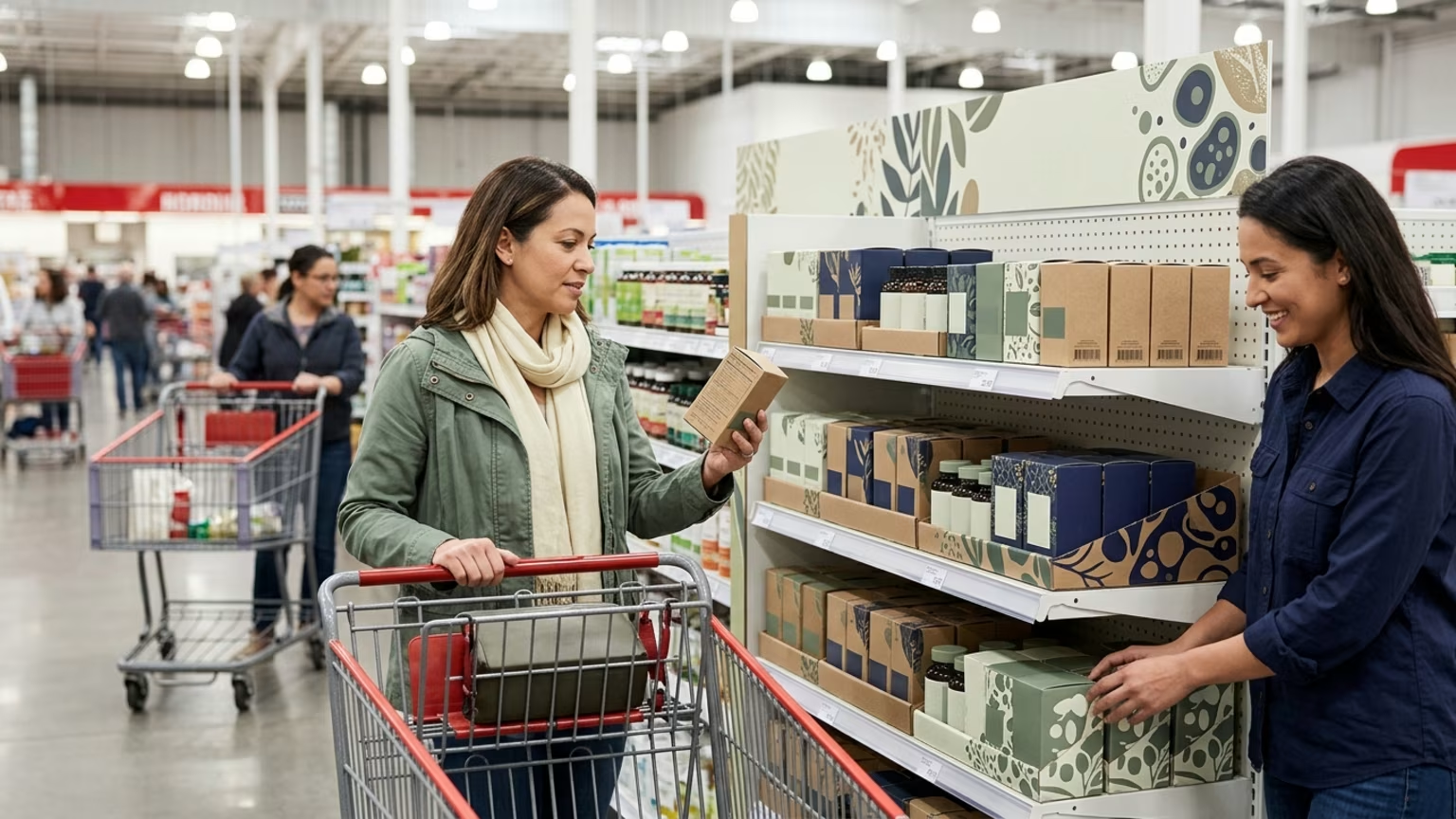
Consider the operational demands of rolling out a new beverage flavor across a national warehouse club network. These massive retailers measure traffic and product movement with absolute mathematical precision. A brand cannot simply show up with branded tents and expect the buyer to renew their shelf space. When executing high volume roadshow programs, retailers demand hard figures showing direct incremental lift.
By tagging the event dates and matching them against warehouse point of sale data, the brand sees exactly what happened. They can identify the baseline sales run rate and measure the exact spike during the live sampling days. They then track the trailing sales velocity over the next four weeks to measure repeat purchase behavior. The resulting dataset proves that the physical trial directly caused a sustained lift in overall product velocity.
This level of measurement changes the fundamental relationship between the brand and the retail buyer. The brand transforms from a mere supplier into a strategic growth partner capable of driving measurable category volume. The live demo becomes a proven mechanism for customer acquisition rather than a simple merchandising tactic.
True marketing power emerges when a brand stops guessing and starts measuring the physical world. The space between a shopper trying a product and placing it in their cart holds all the answers.

30 Years Experiential & Retail Activation Partner for CPG & Beverage Brands | Multi-Market Demos, Roadshows & Costco/Club Programs That Actually Sell