Robbie Thain
Founder, CEO

The Body Shop launched a deli-inspired pop-up to support its reformulated Body Butter range. Here is how physical trial drives measurable retail velocity.
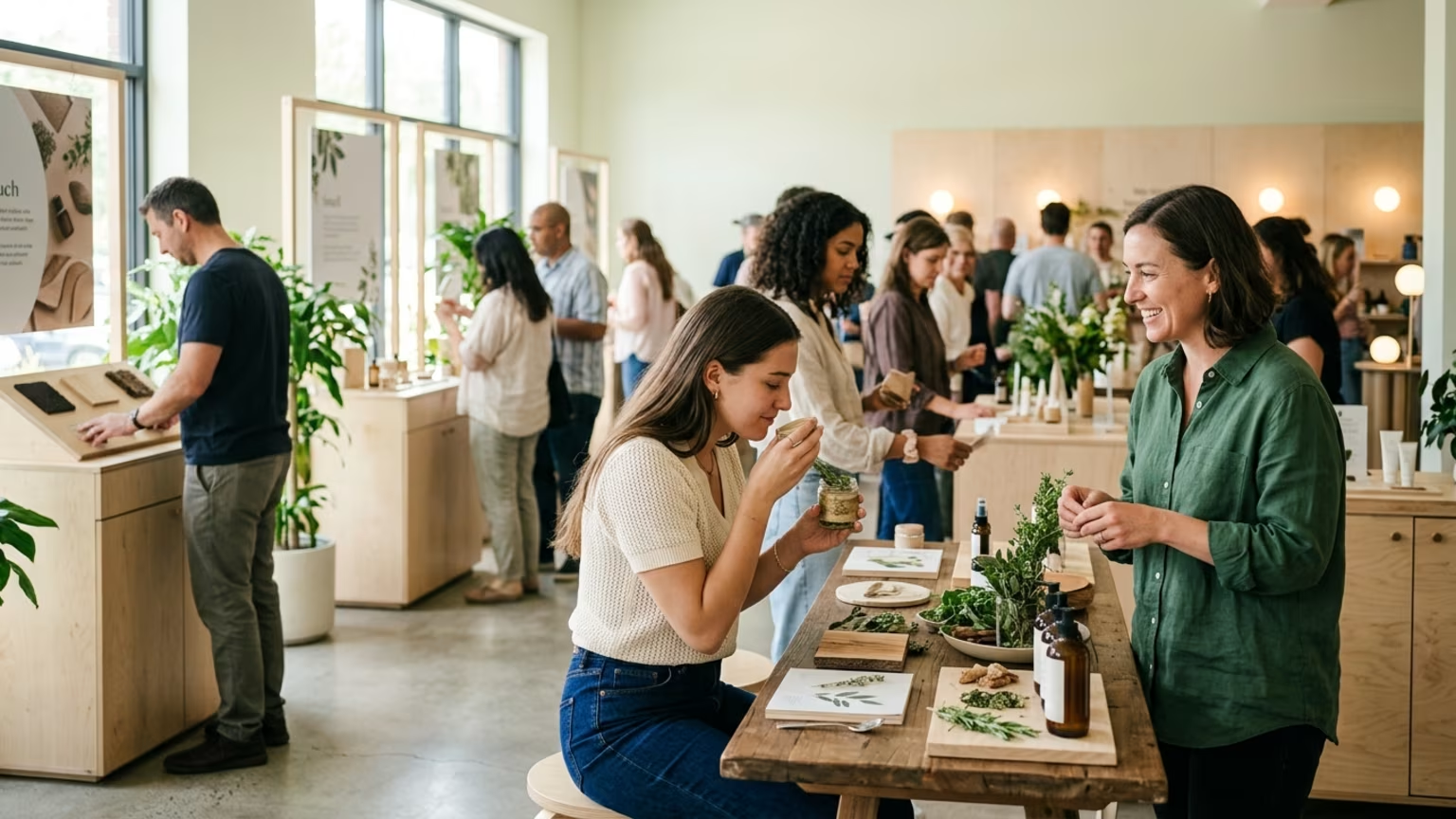
On September 17, 2026, The Body Shop opened a deli-inspired Body Butter pop-up at its Westfield Stratford store in London. The activation runs through October 13, 2026. Known as the "Butter Shop," this retail environment supports the September relaunch of the brand's reformulated Body Butter range. The campaign is also part of The Body Shop’s 50th-anniversary program.
The Body Shop moved its core product out of standard retail aisles. The brand built an interactive sampling bar modeled on a traditional deli counter. The relaunched Body Butter collection contains 11 products covering different textures, formulations, and levels of skin dryness. To merchandise this complex assortment, the activation uses fridge-style units and butter dishes.
Staff wearing deli-inspired uniforms guide shoppers through the textures and fragrances. They use retro scales to weigh products before wrapping them in packaging inspired by traditional deli purchases. The campaign features promotional offers at different points to encourage repeat visits. According to TheIndustry.beauty, this launch aligns with a broader 2026 distribution expansion that includes a first third-party retail partnership with Lookfantastic.
When a brand reformulates a legacy product, consumers need physical proof of those changes. Body Butter was first launched by The Body Shop in 1992, making the category more than three decades old. The Body Shop describes the relaunch as featuring richer textures, updated fragrances, and Community Fair Trade ingredients. Furthermore, PBL Magazine reports that the updated formulas carry claims of faster-absorbing textures and up to 72 hours of hydration.
Shoppers cannot verify hydration or absorption claims through digital advertising alone. Physical trial makes product changes tangible. We specialize in creating retail demos, product sampling programs, and roadshows that bring brands face to face with their audiences. When a product category relies on sensory evaluation, the physical activation must become a highly structured trial environment.
The deli aesthetic is visually memorable, but its real value is functional. The counter gives shoppers a clear destination to compare products under the guidance of trained staff. Brands that focus on anti-gimmick beauty pop-ups use physical environments to solve actual shopper friction. This strategy turns a passive store visit into an active product education session.
Reformulations carry the same operational weight as entirely new product launches. You have to break established consumer habits and replace them with new brand associations. We design mobile activations and roadshows that accelerate consumer trial, build trust, and boost retail velocity during 90-day product launch windows. Our structured approach transforms initial product trial into sustained consumer confidence and retail performance.
Shifting from passive product displays to interactive sampling bars triggers immediate operational changes. Staffing models must shift from crowd control to active product education. With 11 different Body Butter variations available, field staff must correctly diagnose individual skin needs and recommend specific products. This requires intensive training on the entire portfolio before the activation even begins.
Managing multiple product variations in a single footprint can easily overwhelm consumer attention. We built a 40 by 20 foot trade show environment for Glanbia at Natural Products Expo West 2025. The activation brought think!, Isopure, Optimum Nutrition, and Amazing Grass into one coordinated space. We handled the initial concept, onsite operations, staffing, and physical breakdown. Our team recorded more than 14,000 product samples distributed across the individual activation stations.
That experience proved that complex assortments demand distinct, physically separated sampling zones to prevent shopper confusion. The deli counter design forces a specific traffic pattern within the store. Instead of shoppers wandering through aisles independently, the physical counter creates a bottleneck that operators must manage carefully. Bottlenecks can generate long wait times, which deter impulse buyers from participating.
Field marketing managers must calculate the average time each staff member spends weighing products and wrapping the purchase. To maintain throughput, brands must separate the educational spaces from the actual transaction zones. The fridge-style display units serve as visual holding areas where consumers can browse the inventory. Managing this flow effectively prevents chaotic store experiences and ensures that high-intent shoppers receive immediate service.
Mastering the anatomy of a high-conversion pop-up forces marketers to measure exactly who sampled and who purchased. In our experience, measurement frameworks must evolve beyond raw foot traffic. To capture accurate Return on Investment, marketing teams must segment their audience data into clear operational stages. A practical measurement model separates the people who simply entered the space from those who actively sampled a product.
The tracking must then isolate the shoppers who received a targeted product recommendation from the staff. Finally, the system must record how many of those educated shoppers actually completed a purchase at the register. Relying solely on raw attendance obscures the actual commercial value of the event. We consistently see that tracking post-event purchase rates among activated shoppers is a particularly meaningful measure.
Brands must track this specific cohort against a comparable group of non-activated consumers to prove true incremental lift. A brand must define its baseline sales, average transaction value, and expected trial volume long before opening day. We managed a four-week, multi-market Costco sampling program for Pulmuone's PlantSpired line. The program delivered more than 65,000 samples and recorded an 18 percent sold-to-sale rate.
That project gave us a concrete example of how structured retail sampling connects trial with purchase. Success comes from controlling the physical space so every interaction leads to a commercial outcome. Because this specific activation is taking place in the United Kingdom, U.S. marketers face slightly different translation challenges. You should not assume that the exact store format or promotional mechanics will transfer directly to American retail environments.
The physical footprint must be adapted to fit local fire codes, mall regulations, and different consumer queuing habits. The transferable lesson remains the operational structure of sensory trial, human guidance, and strict commercial measurement.
A single-store activation creates unique attribution challenges for marketers. Sales changes at Westfield Stratford could stem from overall mall traffic, seasonal shifts, or the broader 50th-anniversary marketing push. This anniversary program includes the Grow Wild campaign and support from personalities like Jameela Jamil and Paloma Faith. Comparing the activated store with prior performance isolates the campaign's true impact.
The most scalable element of this activation is not the deli aesthetic itself. The transferable lesson for CPG marketers is the underlying structure of guided sampling and distinctive merchandising. When brands deploy mobile pop-ups, they must design the physical footprint around the exact behavior they want. Shoppers must be given a reason to step out of the aisle, interact with an ambassador, and reconsider their usual purchase habits.
Thinking beyond the booth means evaluating how this guided interaction impacts adjacent retail categories. If a shopper spends five minutes at a sampling counter, that time must translate into higher average order values. Brands cannot afford to run retail campaigns that function purely as decorative theater. Every square foot of an activated space must justify its operational cost through verified retail velocity.
The Body Shop’s activation uses retro scales and deli paper to make a thirty-year-old product category feel entirely new again. Physical trial gives shoppers a tangible reason to care about a reformulation. But visually memorable environments only matter if they drive verified retail velocity. As you plan your next major product update, are your physical activations designed just to look busy, or are they structured to convert every sample into a trackable sale?
Securing measurable sales pipeline from sensory sampling programs requires strict control over the physical activation footprint. When low quality leads from crowded trade shows challenge your reporting, Makai builds the interactive spaces needed to capture trackable buyer intent. Through our Engagement Marketing capability, we turn audiences into participants with live and digital experiences that invite people to try, share, and act. Request a proposal

30 Years Experiential & Retail Activation Partner for CPG & Beverage Brands | Multi-Market Demos, Roadshows & Costco/Club Programs That Actually Sell