Robbie Thain
Founder, CEO

Learn why Iteris is shifting to interactive, demo-driven trade show booths at ITS America 2026 and how experiential marketing drives measurable ROI.
A marketing director stands at the edge of a massive expo hall. Thousands of attendees walk past generic backdrops and ignored brochure racks. The tension is palpable when a six-figure booth investment yields nothing but polite nods.
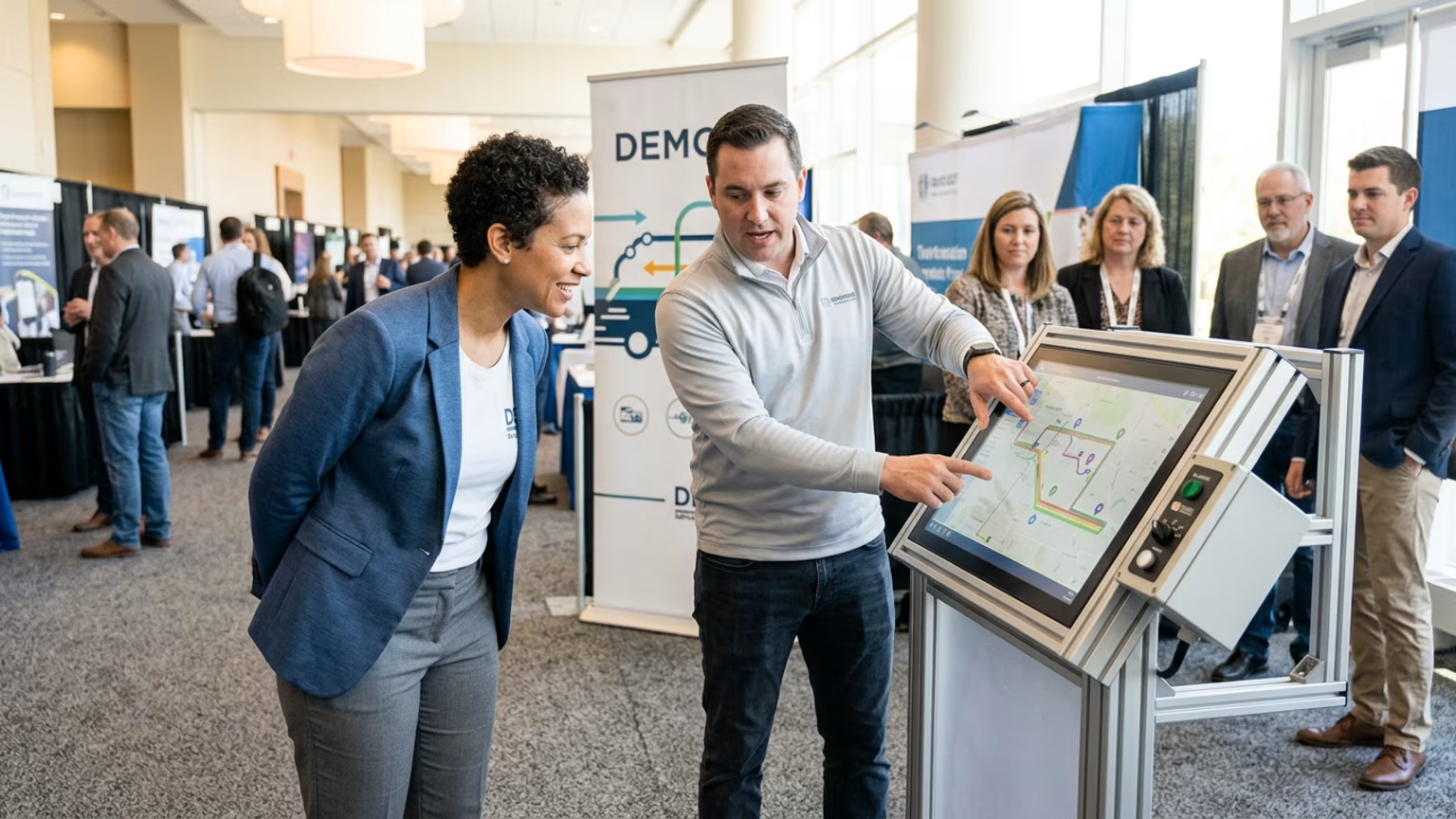
Iteris is moving away from static trade show displays in favor of a highly interactive booth featuring live product demonstrations at ITS America 2026. This shift provides a clear blueprint for marketing leaders who want to accelerate sales conversations through hands on brand experiences.
The modern trade show floor is an unforgiving environment for passive brands. Marketing teams spend months preparing massive graphic panels and rehearsing standard corporate pitches. Yet, attendees are increasingly blind to these traditional visual cues. They walk the aisles with exact problems to solve and limited time to find answers.
When a company relies solely on static imagery, they force the buyer to do the heavy lifting. The visitor has to imagine how the product works based on a generic bulleted list. This creates friction in the sales process and leads to low quality interactions. A busy booth does not automatically equate to a profitable activation.
Many brands mistake curiosity for qualified interest. They scan hundreds of badges from people who simply wanted a free pen. The marketing team then hands these cold contacts over to sales. The result is a frustrated sales force and a poor reflection on the event marketing budget.
Iteris announced a completely different approach for the ITS America Conference and Expo 2026 in Detroit. The company is anchoring its presence with a dynamic space designed around live demonstrations. According to the brand, this setup will let transportation agencies test solutions in real time. It is a calculated move to accelerate sales conversations on the show floor.
This strategy acknowledges a fundamental shift in business to business event marketing. Buyers increasingly demand proof and product validation over passive corporate messaging. If a product is complex or requires deep trust, the booth must function as a mini working environment. Iteris is facilitating this by offering short expert led talks of about ten minutes each.
These micro presentations create a reliable rhythm of engagement. Attendees have short attention spans and prefer modular content over long winded speeches. A brief demonstration respects the time of the visitor and still delivers a powerful message. It allows different types of visitors to get exactly what they need quickly.
Data from exhibition industry analysts shows that live events consistently outperform purely digital touchpoints for high consideration purchases. When multiple stakeholders are involved, digital sales decks fail to convey the workflow integration required. Iteris sells technologies used by major infrastructure stakeholders who need to see data visualization firsthand. Products in this category benefit immensely from real time performance scenarios.
That interactive approach translates perfectly to other complex offerings. The audience needs to understand how the tools work and exactly what problems they solve. When visitors interact with live software, their understanding of the operational impact deepens immediately. You bypass the skepticism that usually accompanies traditional corporate presentations.
Brands that invest in tactics for high tech expos see better engagement when they replace lectures with interaction. A physical demonstration cuts through the noise of endless digital advertising. Our team applies this same logic to high volume consumer showcases and technical automotive events. Live engagement creates memory and social proof that a website simply cannot replicate.
Live demonstrations require immense operational discipline to execute correctly. Technical failures or weak staffing can turn an ambitious plan into a public failure. Your experience must support the sales conversation rather than distract from it. Here is a step by step guide to implementing an interactive strategy.
You can adapt these exact principles to fit various physical formats and budgets. This method acts as a bridge from an expo booth to a retail shelf by keeping the brand story intact. A well executed plan prevents messaging drift and keeps your team focused on revenue.
Return on Investment is frequently the most stressful topic for experiential marketing leaders. Many teams still rely on vanity metrics like total booth visitors or gross badge scans. These numbers look great in a presentation but do not impress the finance department. You need exact lead and lag indicators to prove your activation drove actual revenue.
Tracking the right elements makes your experiential strategy operationally measurable. Lead indicators tell you if the event is working when you are still on the floor. Lag indicators prove the financial impact months after the doors have closed.
Lead Metrics:
Lag Metrics:
By capturing accurate data directly during the engagement, you build a bulletproof reporting structure. We strongly recommend implementing these measurement standards when you want to maximize return on investment at spring trade shows. Transparent reporting elevates the marketing department from a cost center to a revenue driver.
The conversion logic of an interactive strategy applies across complex infrastructure software and consumer goods alike. The fundamental goal is always to move the buyer from a state of unawareness to intent. When a physical product connects with an audience emotionally, casual visitors evolve into serious buyers. The experience removes the friction of doubt.
Trade shows are becoming demonstration theaters across every major industry. Attendees expect short educational content rather than long keynote speeches. This behavior shift is evident in business to business technology and consumer packaged goods alike. A tactile experience cuts through the digital noise and creates lasting brand trust.
For consumer and automotive brands, the activation might need to drive immediate trial or retail pull. The timeframe is different, but the need for hands on proof remains identical. You want to create memory and social proof in a saturated market. Live engagement offers a level of validation that traditional advertising cannot match.
A Brand Manager in the CPG space shared: 'Makai transformed our test-drive activation into an emotional brand journey. They connected technology, lifestyle, and experience seamlessly, and turned casual visitors into loyal fans.' We successfully integrated multiple experience layers to convert casual participants into committed brand advocates.
The most successful campaigns combine a strong physical premise with seamless technical execution. You do not need a massive spectacle to achieve this high level of engagement. Simplicity often works best when the path from attention to understanding is entirely clear. Sometimes the strongest demonstration is simply a guided consultation paired with a targeted product sample.
Brands that understand this dynamic can easily outmaneuver competitors who rely on massive graphic walls. They create memorable moments that attendees talk about long after the event concludes. This organic word of mouth is the ultimate multiplier for any experiential marketing budget.
The next time you review an upcoming event contract, cross out the line item for generic brochure printing. Instead, map out one single five minute hands on demonstration that proves your product works in real time. If you want to build a live activation that turns fleeting interactions into qualified pipeline, book a strategy call with our team today.

30 Years Experiential & Retail Activation Partner for CPG & Beverage Brands | Multi-Market Demos, Roadshows & Costco/Club Programs That Actually Sell