Robbie Thain
Founder, CEO

Splash expanded its event analytics suite for real-time conversion tracking. Learn how to map live field marketing touchpoints directly to your CRM pipeline.
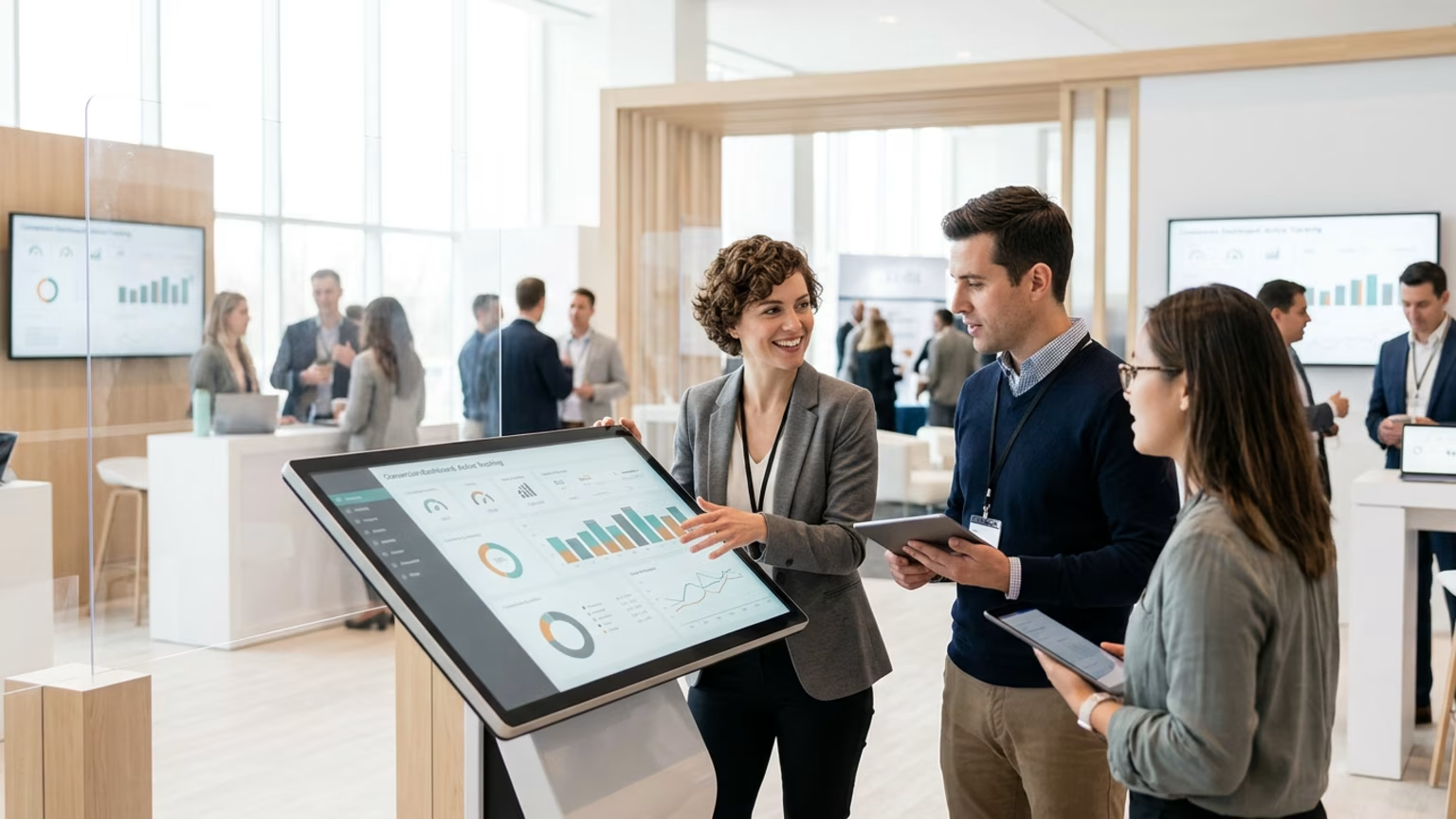
Most field marketing data is a comfortable lie told through vanity metrics. Splash recently introduced an expanded analytics suite to replace that fiction with cold facts, mapping every attendee touchpoint directly to downstream revenue.
Field marketing operations are inherently chaotic environments. Thousands of people walk past your activation space in a matter of mere hours. Attendees bypass registration tables to grab a quick sample without stopping. Staff forget to log specific product interactions during massive high traffic periods.
The result is a massive leak between the physical room and your core CRM system. Industry experts at EventTech Live point out that this missing relationship layer loses rich context. It fails to record who met whom in the moment. It completely misses which specific conversations drove the actual purchase later that week.
Less than thirty percent of companies systematically capture post-event pipeline impact. The vast majority of experiential teams operate entirely on partial data and anecdotal success stories. They report total foot traffic to their finance teams and hope for the best.
This lack of measurement creates intense pressure for marketing operators. Chief Marketing Officers face strict mandates from their finance departments to prove the value of every dollar spent. Brands can no longer justify expensive trade show booths without showing clear business outcomes. The old days of counting empty sample cups are officially over.
Events still matter deeply to modern business growth. Studies show that a majority of marketers view physical experiences as their most effective tactic. Experiential channels build unparalleled trust among younger consumer demographics. Yet that trust means nothing to a finance team if it lacks an attached dollar value.
The strategy shifts from counting heads to tracking the complete attendee path. You must treat live event programs with the exact rigor of performance media channels. Splash closes this gap by feeding check-ins and session data directly into post-event Return on Investment (ROI) dashboards.
You integrate this updated data model with your existing marketing automation software. This creates a unified attribution layer that captures every critical trial and sales conversation. Marketers with a unified view of the customer path often outperform their peers significantly on revenue growth. Connecting physical activations to digital records solves the attribution nightmare.
You design your entire event strategy backwards from the primary conversion you want to achieve. A consumer packaged goods brand might focus entirely on retail sell-through and immediate product trials. A technology company might prioritize qualified meetings booked and pure pipeline generated. You define these goals long before the first piece of booth hardware ships.
The integration process requires you to map event objects directly to standard CRM fields. A simple badge scan should immediately trigger an automated follow-up sequence from your sales team. This immediate connection guarantees that no high-intent prospect falls through the cracks. Your sales representatives gain immediate visibility into the exact products a prospect tested on the floor.
Every single physical touchpoint becomes a deliberate measurement opportunity. You assign clear tracking mechanisms to registrations, session attendance, and direct product interactions. This approach transforms a purely physical booth into a highly trackable conversion engine. To get this right for your next launch, book a strategy call with our team.
Brands that invest in building unified event reporting dashboards for ROI see an immediate change in executive conversations. Event data becomes first-class data alongside digital campaigns and e-commerce metrics. You no longer have to guess what caused a sudden spike in regional retail sales.
You need a precise operational plan to implement this analytics framework in live environments. Random data collection will only populate your new dashboards with useless noise. Proper execution requires relentless discipline from every single person on your team.
These steps demand strict discipline from your entire field marketing team. You must train your brand ambassadors to view data collection as a primary responsibility. A well-executed system allows you to manage multi-city campaigns like a live digital ad spend.
You track live check-in conversion rates during the actual event. If numbers drop abruptly, you adjust your physical signage or staffing allocation in real time. This immediate feedback loop prevents wasted budget and missed consumer opportunities. The days of waiting for a post-show spreadsheet are gone forever.
Proper resource allocation becomes vastly easier when you have live performance metrics at your fingertips. You can instantly identify which specific brand ambassadors are driving the highest volume of qualified interactions. This allows you to place your most effective communicators in the most demanding traffic zones. Real-time data turns staffing decisions into a highly calculated science.
Vanity metrics win no arguments with finance teams today. You need hard numbers that speak directly to pipeline creation and tangible revenue impact. Splash equips marketing operators with the exact figures needed to defend their budgets.
Lead metrics must include real-time session attendance and live conversion rates from registration to check-in. You track the percentage of booth visitors who book a follow-up meeting on site. You monitor exactly how many people opt into your loyalty program after a live product trial. These early signals tell you if your physical messaging is actually working.
Lag metrics need to focus on pipeline creation, cost per opportunity, and incremental retail sales. You track the median cost per lead and compare it to your baseline digital acquisition costs. Industry analysis shows that B2B field events often carry a cost per lead of six hundred dollars or more.
We provide clear reporting on reach, trials, leads, and sales to guide next steps in campaign optimization. Our measurement approach tracks awareness, engagement, and conversion, turning brand moments into actionable data that demonstrates business impact. Brands that rely on AI for universal lead capture at events build an undeniable case for future investment.
You must evaluate the cost per qualified trial in consumer activation programs. Retail demo programs frequently report that twenty to forty percent of samplers convert to purchase within a very short window. You capture these figures to prove that live product trials drive immediate commercial success.
A national beverage brand launched a multi-city sampling push using this exact advanced tracking model. They stopped looking at total physical samples distributed as their primary success marker. They started mapping QR code scans from the activation space directly to immediate post-event purchases.
The team saw a significantly higher lead-to-opportunity conversion rate for these event-sourced contacts. Retailers noticed a five to twenty percent lift in product sales in the weeks following the activation. The brand could finally prove that their physical field presence drove measurable retail cart additions.
This data proved to skeptical retail buyers that bridging trade shows to high-conversion roadshows actually moved inventory off the shelves. The brand secured better store placement and continued funding for their next quarter initiatives. They successfully turned an anecdotal brand success story into a highly repeatable mathematical formula.
Tracking software provided the clear connection between the sampling tent and the retail checkout register. The marketing team used this exact data to justify a massive budget increase for the following year. They transformed their field marketing division from a basic cost center into a proven revenue generator.
Measurement is no longer just a backward glance at what happened on the show floor. It is the pulse of what happens next in the physical market. The true value of an experience lives in the memory of the consumer and the clarity of the evidence left behind.

30 Years Experiential & Retail Activation Partner for CPG & Beverage Brands | Multi-Market Demos, Roadshows & Costco/Club Programs That Actually Sell