Robbie Thain
Founder, CEO

Discover how CPG marketers are retooling their retail demo strategies. Learn why brands are prioritizing high-intent demos, bundle offers, and roadshows for ROI.
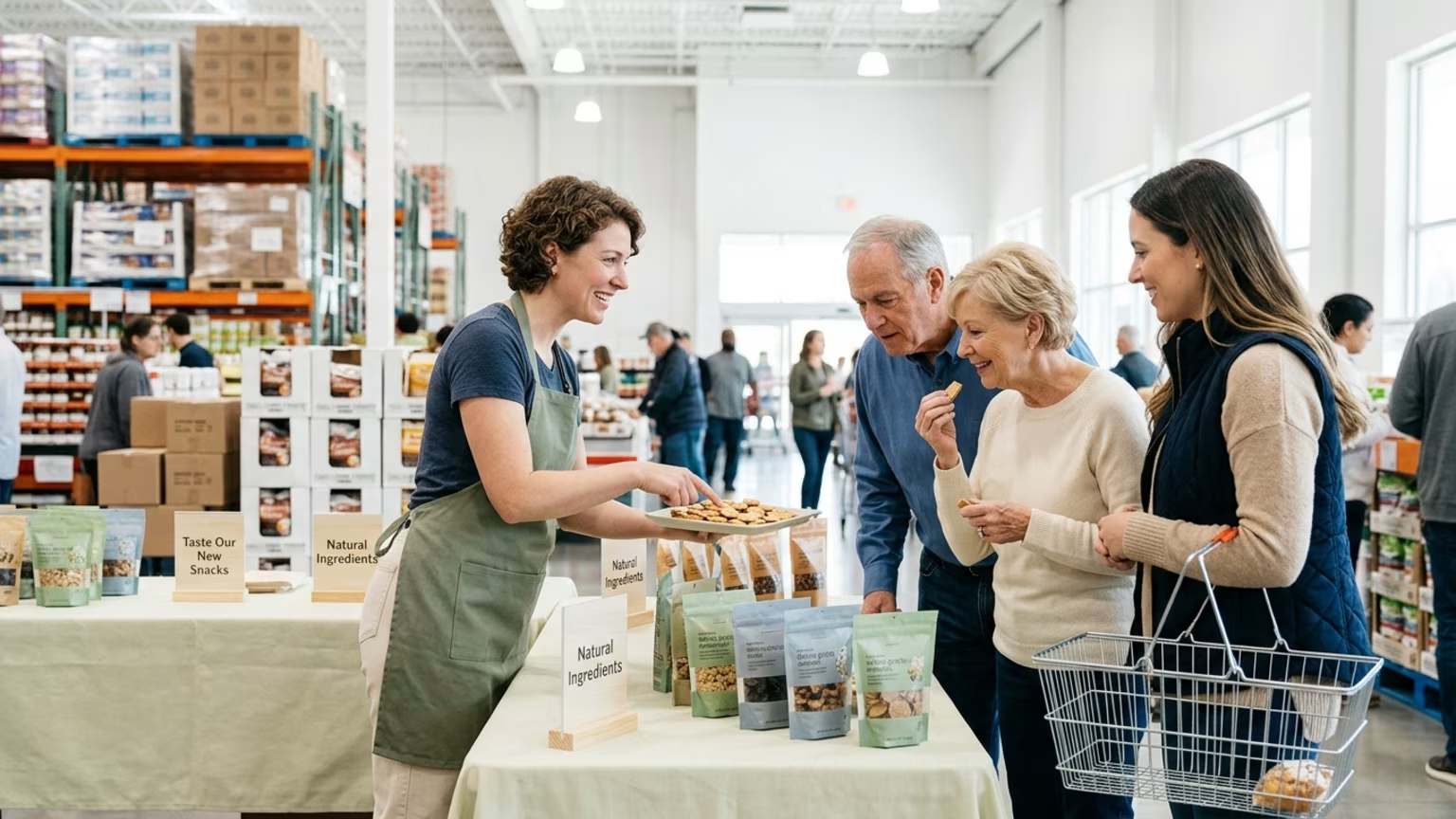
Retail demo programs get judged on cups poured instead of incremental pipeline. Field teams hand out thousands of free samples on a Saturday afternoon, but regional scanner data shows zero sales lift by Monday morning. That operational mismatch is finally forcing a hard change across the industry. On July 22, 2026, Marketing Brew reported that consumer packaged goods marketers are officially retooling their experiential programs inside grocery and club channels.
The industry focus has shifted away from broad awareness stunts toward high-intent retail demonstrations. According to Marketing Brew, brands are prioritizing conversion-focused bundle offers and repeatable activation toolkits. This shift requires marketing leaders to tighten their key performance indicators around trial-to-purchase conversion. They are also focusing heavily on retailer-specific velocity metrics to prove their value to store buyers. These standardized toolkits allow brands to scale their programs consistently across different retail banners and geographic regions.
The financial commitment to this new strategy is substantial. Research from Guac Digital indicates that consumer packaged goods companies now lead the market by allocating approximately 34 percent of their total marketing budgets to experiential initiatives. Brands recognize that in-store demonstrations and structured taste tests drive purchase decisions far more effectively than traditional awareness advertising. Marketers can no longer rely on passive impressions to move product off the shelf.
For consumer brands aiming to win shelf space, fluffy engagement metrics no longer justify the massive field investment. According to Jetfuel Agency, a single-store sampling day can cost between $500 and $1,500. This estimate factors in the sample product, field staff, and complex retailer coordination. That high price tag demands strict operational discipline and a measurable Return on Investment (ROI).
The biggest obstacle to a first purchase for consumable goods is taste uncertainty. A properly executed physical demonstration removes that barrier entirely in just a few seconds. But operators cannot measure their success based solely on the day of the event. A single day of sales rarely covers the upfront logistical costs of deployment.
Jetfuel Agency notes that shopper marketing success should be measured using a 90-day break-even customer acquisition cost framework. Brands must move away from single-purchase return on ad spend models. The financial math works over this 90-day window for products with a strong repeat purchase rate. A benchmark of 25 to 35 percent repeat purchase rate is necessary for these consumable programs to yield positive long-term results.
If a product falls below that 25 percent repeat purchase threshold, the math will simply break. Operators should fix the core product before they scale their experiential marketing spend across multiple states. Throwing more money at in-store demonstrations cannot mask a product that consumers only buy once. True pipeline growth requires a product that naturally drives retention after the initial trial experience.
When brands adopt a rigorous approach to attribution and event analytics, they can connect live experiences directly to retail sell-through. This visibility gives chief marketing officers the confidence to approve larger field budgets. It also gives trade marketing managers the data they need to negotiate better shelf placement during their quarterly retailer reviews.
This strategic shift drastically changes how field teams plan and execute their localized retail footprints. Brands entering large warehouse retailers must treat their physical presence as a rigorous regional test. They cannot treat these activations as isolated or standalone promotional events. Industry experts at Fractional Brand Managers identify the roadshow as the most effective tool for brands to hit the velocity thresholds required for Costco expansion.
Hitting these precise data points dictates whether a product secures regional-to-national expansion within the club channel. A roadshow requires aggressive volume generation over a short period. The execution must be flawless to ensure the brand meets the strict unit movement requirements set by retail buyers. Staff must be highly trained to converse with shoppers and close the sale immediately on the floor.
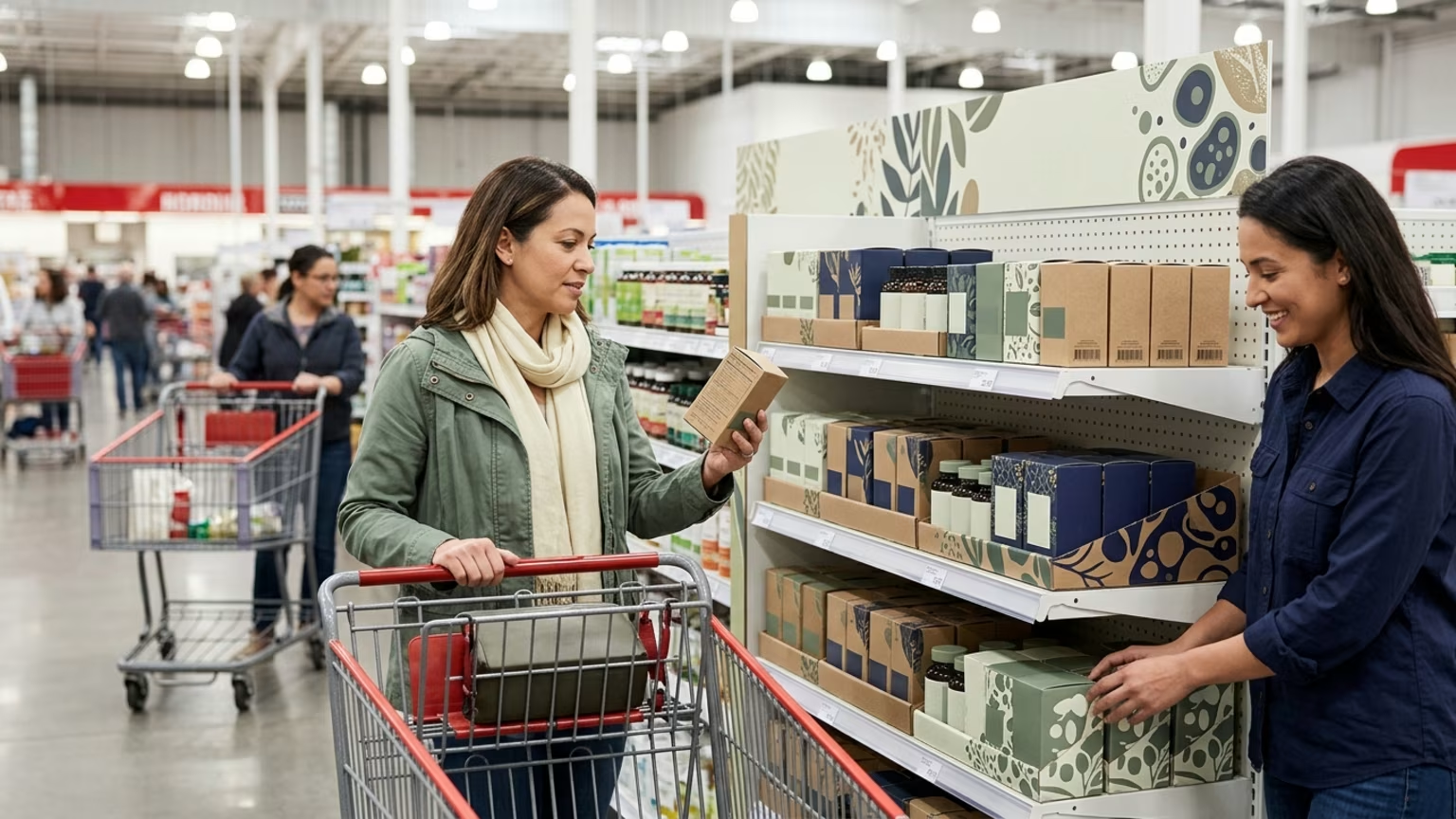
To support these volume goals, marketing leaders must negotiate smarter physical placements within the store environment. Data from Jetfuel Agency indicates that an endcap placement at a major retailer can increase unit sales two to ten times compared to standard shelf positioning. Securing these high-traffic endcaps requires strategic coordination with store managers and distributor networks. Running bundled experiential offers near these endcaps amplifies the conversion rate even further.
Managing these complex programs across dozens of stores requires strict standardization to prevent execution failures. Marketing Brew highlights that repeatable activation toolkits are the critical solution for managing fragmented field programs. These toolkits ensure consistent staffing, messaging, and physical presentation across every single retail banner. A brand cannot afford to have a premium display in one city and a sloppy presentation in another.
We run experiential and engagement programs coast to coast with local crews, smart logistics, and permit expertise that let us launch fast and maintain quality consistency in every region, from major metros to smaller markets. Our nationwide infrastructure allows us to activate brands wherever their audiences are located. This operational control guarantees that every product trial aligns perfectly with the brand guidelines. By relying on a dedicated retail demonstration partner, brands can focus on their macro strategy instead of chasing down missing event gear.
Every detail must be documented and trained before a brand ambassador ever sets foot in the store. The training materials, talking points, and booth layouts must be identical whether the activation happens in a local grocery store or a massive club retailer. This precision ensures that the trial-to-purchase conversion data remains reliable and statistically significant across different markets.
Brands are also rethinking their physical footprint within standard grocery aisles. Field managers must track exactly how long a shopper spends at a demonstration cart before making a decision. This level of operational scrutiny separates high-performing campaigns from expensive failures. Agencies that cannot provide this detailed foot traffic analysis will quickly lose their vendor status with major consumer brands.
Logistics remain the quiet backbone of any successful retail campaign. Delivering the physical booth assets, fresh product, and promotional materials on time requires meticulous supply chain tracking. A delayed shipment can ruin a scheduled demonstration and damage the relationship with the retail buyer. Proper experiential operational planning prevents these costly errors from occurring.
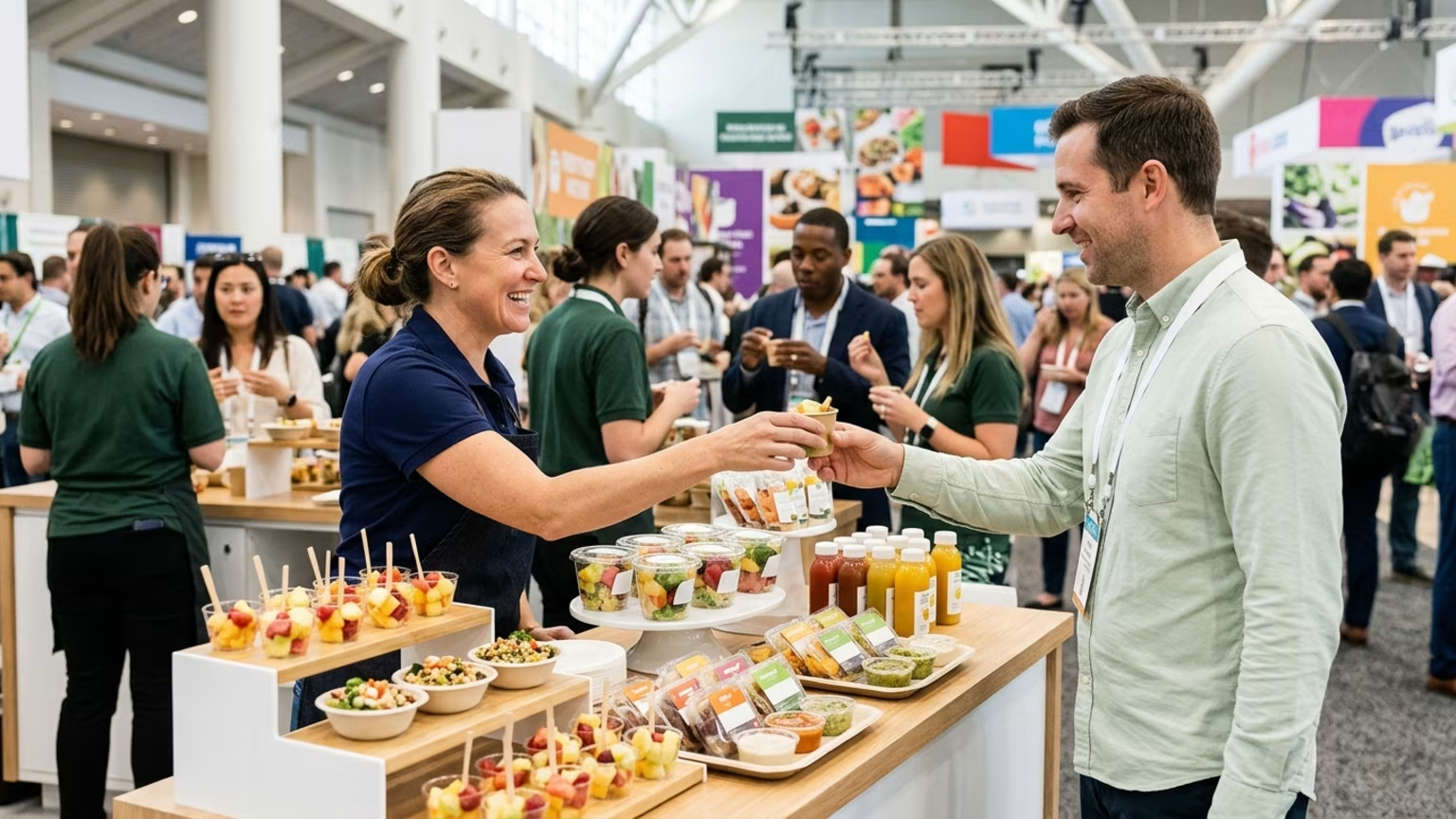
Field teams must also adapt to the specific flow of foot traffic within different retail environments. A grocery store requires a different engagement approach than a massive trade show or expo hall. Store aisles are narrow, and shoppers are typically focused on completing their weekly errands quickly. Brand ambassadors must intercept shoppers politely, deliver a concise pitch, and transition smoothly into the product trial.
The focus on high-intent demos forces agencies to hire and train a different caliber of field staff. These teams are no longer just handing out flyers or holding signs at a busy intersection. They are functioning as an extension of the sales team right at the point of purchase. Their ability to educate the consumer directly impacts the velocity data that determines the brand's future in that retail chain.
The era of unmeasured brand theater inside grocery stores is officially over. Consumer packaged goods marketers are tightening their operations, demanding measurable pipeline results, and scaling only what works. The transition toward high-intent demonstrations proves that physical marketing remains a dominant force for revenue generation when executed correctly.
Brands must align their field operations with strict conversion data to win retail confidence and secure better shelf space. This requires specialized expertise, rigorous training, and a flawless logistical foundation. Are your current field activations designed to hit precise velocity thresholds, or are you just handing out free samples and hoping for the best?

30 Years Experiential & Retail Activation Partner for CPG & Beverage Brands | Multi-Market Demos, Roadshows & Costco/Club Programs That Actually Sell