Robbie Thain
Founder, CEO

Mobilo Card outlines eight trade show giveaway tactics that prioritize qualified leads over booth traffic. Learn how to turn event merchandise into measurable ROI.
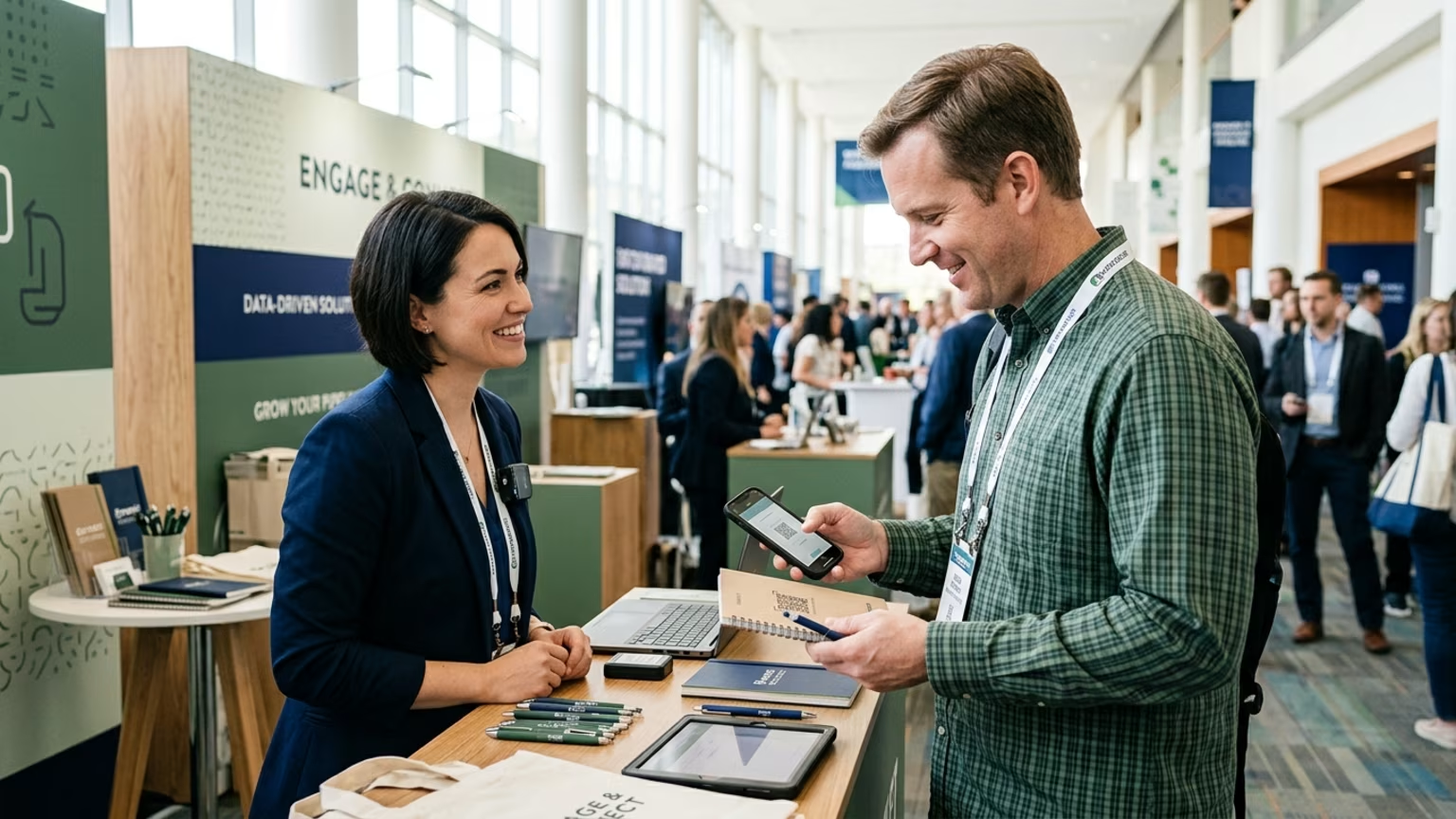
On August 24, 2026, Mobilo Card published an article outlining eight tactics that connect trade show merchandise to qualification and customer relationship management capture. The piece shifts the focus of promotional items away from generating pure booth traffic and toward building documented commercial pipeline. Instead of distributing free merchandise to anyone who walks the aisles, Mobilo Card advocates for an earned distribution model. In this framework, giveaways function as strategic data collection points rather than passive gifts.
The publication addresses a chronic issue for field marketing teams under pressure to justify event spend. For decades, brands have measured booth success by the sheer volume of items handed out to crowds. This outdated methodology produces terrible data quality and obscures actual return on investment. To combat this, Mobilo Card recommends evaluating every giveaway against three specific criteria before it reaches the floor.
Every promotional item must create a reason to engage, include a capture action, and remain useful after the show concludes. The core of the strategy is making premium merchandise conditional on a distinct capture action. This action might involve a badge scan, a business card exchange, or a digital application check in. Mobilo Card suggests replacing generic free giveaways with segmented tiers of items based on visitor intent.
Standard items serve as initial conversation starters for colder contacts. Meanwhile, premium items are strictly reserved for verified prospects demonstrating higher buying temperature. For quantity planning, Mobilo Card suggests forecasting standard items against total projected attendance. However, they recommend ordering premium items at approximately 15% to 25% of the expected crowd.
These premium items are only replenished if qualified conversations exceed the initial forecast. This disciplined inventory management prevents staff from handing out expensive gifts to unqualified visitors. It fundamentally changes the financial model of the event footprint. The framework also dictates using built in digital touchpoints to capture attendee data seamlessly.
Mobilo Card recommends integrating quick response codes or near field communication chips into the physical items. These touchpoints route attendees to specific landing pages, demo signups, exclusive offers, or gated assets. The article also suggests shipping premium items after the show to trigger immediate follow up conversations. This tactic provides the sales team with a concrete reason to reconnect with high priority targets.
Furthermore, the system relies on strict measurement where staff must log the specific item a prospect received. This allows marketing teams to measure contact to opportunity conversion by giveaway type in their central database. Mobilo Card highlights significant execution gaps in the industry to justify this rigorous tracking. The article states that above 90% of event contacts are often cited as failing to enter a system of record.
The vendor also claims that around 60% of booth contacts may not receive follow up communication. They point to immense physical waste in the events industry as well. The article claims the promotional products market could reach roughly $101 billion by 2026. Within that massive market, Mobilo Card claims that 66% of promotional products eventually reach landfills.
Our team knows that passing out expensive merchandise to unvetted attendees is a fast track to burned budgets. Trade show programs get judged on pipeline creation rather than how fast a team can empty a box. For consumer packaged goods and beverage brands, this earned giveaway model brings badly needed operational discipline. It forces marketing teams to stop treating physical items as mere decorations and start treating them as strategic assets.
We specialize in creating retail demos, product sampling programs, and roadshows that bring brands face to face with their audiences. Each program is designed to drive trial, build consumer relationships, and accelerate retail velocity across multiple locations. When you tie a $12 to $25 insulated tumbler or a $1 to $3 seed paper notecard to a clear qualification step, you transform a sunk cost into a measurable tool. The physical item begins to support the overall brand experience instead of distracting from it.
This structured approach aligns with guidance from leading industry experts. Nancy Drapeau of the Center for Exhibition Industry Research says that exhibitions have maintained their position as the largest marketing investment for most exhibitors. To justify that significant spend, Drapeau recommends that marketing and sales establish a shared definition of a qualified lead before the event. If the definition of success is unclear, giving away costly items will only generate meaningless metrics.
You can read more about planning these initiatives in our guide on how to build a trade show booth experience that converts. Implementing this gated distribution model fundamentally rewrites how field teams operate onsite. Staff can no longer act as passive distributors who simply hand out items and scan badges. They must execute structured qualification conversations before releasing high value items like $15 to $40 wireless chargers.
This pivot requires rigorous training on specific intake fields and observable buying signals. Teams must know exactly what constitutes a valid request for a demo or a verified retail inquiry. Field representatives should be trained on two or three specific qualification questions that can be asked naturally. These questions should uncover the current solution a prospect uses, their immediate business needs, or their specific timeline for buying.
If the conversation reveals a genuine commercial opportunity, the staff member releases the higher value merchandise and logs the interaction. If the attendee shows no buying intent, the staff member politely concludes the exchange without distributing premium inventory. Booth flow also changes dramatically under this disciplined framework. Brands must design their physical footprints with distinct zones for casual interactions and deeper qualified conversations.
If attendees must scan a code on a customized lip balm costing under $2 to access an offer, the booth layout must support that extended dwell time. Our booth traffic blueprints demonstrate how managing physical space directly impacts the quality of lead capture. Data hygiene becomes a non negotiable operational standard across the entire event lifecycle. If staff members fail to tag leads correctly in the system, the measurement architecture collapses entirely.
Structured intake fields and qualification dropdowns are mandatory because inconsistent staff notes can ruin later analysis. A capture system is truly only as reliable as the human behavior surrounding it. Consistent execution is an absolute prerequisite for comparing different events, audiences, or giveaway types. The shift toward gated giveaways reflects a broader sector trend toward integrated event programs.
Digital channels increasingly complement the physical event across the pre show and post show timeline. Emily Olson of EXHIBITOR magazine warns that exhibitors often use digital channels merely to announce their event presence. She argues that digital communication should provide something useful rather than simply adding promotional volume. Technology deployment requires careful planning to ensure it actually improves the attendee experience.
Mobilo Card notes that near field communication technology can require more planning, cost, and staff training than conventional promotional merchandise. Older devices may prevent seamless engagement, meaning field representatives must be ready to troubleshoot instantly. A digital touchpoint has no measurement value if it leads to an unhelpful destination. Industry guidance recommends connecting first party live event interactions to marketing automation systems so teams can evaluate conversion rates.
According to CMO Magazine, experiential guidance recommends pairing event metrics with downstream actions, brand lift research, and holdout comparisons where appropriate. By tagging records with the exact giveaway received, brands can analyze which merchandise correlates with actual downstream opportunities. This analytical depth is crucial for brands navigating B2B trade show budget shifts. When budgets tighten, executives demand proof that the items handed out on the floor actually influenced commercial outcomes.
Measuring the full funnel allows marketing leaders to track everything from target accounts reached to closed revenue. It transforms the physical booth from a cost center into a documented revenue driver.
When you evaluate the merchandise leaving your footprint, do you see a recurring expense or the precise beginning of a measurable commercial relationship?
Navigating complex event logistics, permits, and staffing often leaves marketing teams overwhelmed by uncoordinated execution and disconnected metrics. When Makai directs your field operations, we eliminate these blind spots by deploying our Experiential Marketing capability to create hands on brand moments that connect emotionally and turn customers into ambassadors. By structuring live interactions to capture precise data, we help brands transform crowded floor spaces into documented commercial pipeline. Request a proposal

30 Years Experiential & Retail Activation Partner for CPG & Beverage Brands | Multi-Market Demos, Roadshows & Costco/Club Programs That Actually Sell