Robbie Thain
Founder, CEO

Nina Makeup split its Beauty Fair 2026 footprint into a B2B stand and consumer pop-up. See how this dual-stand strategy maximizes measurable pipeline.
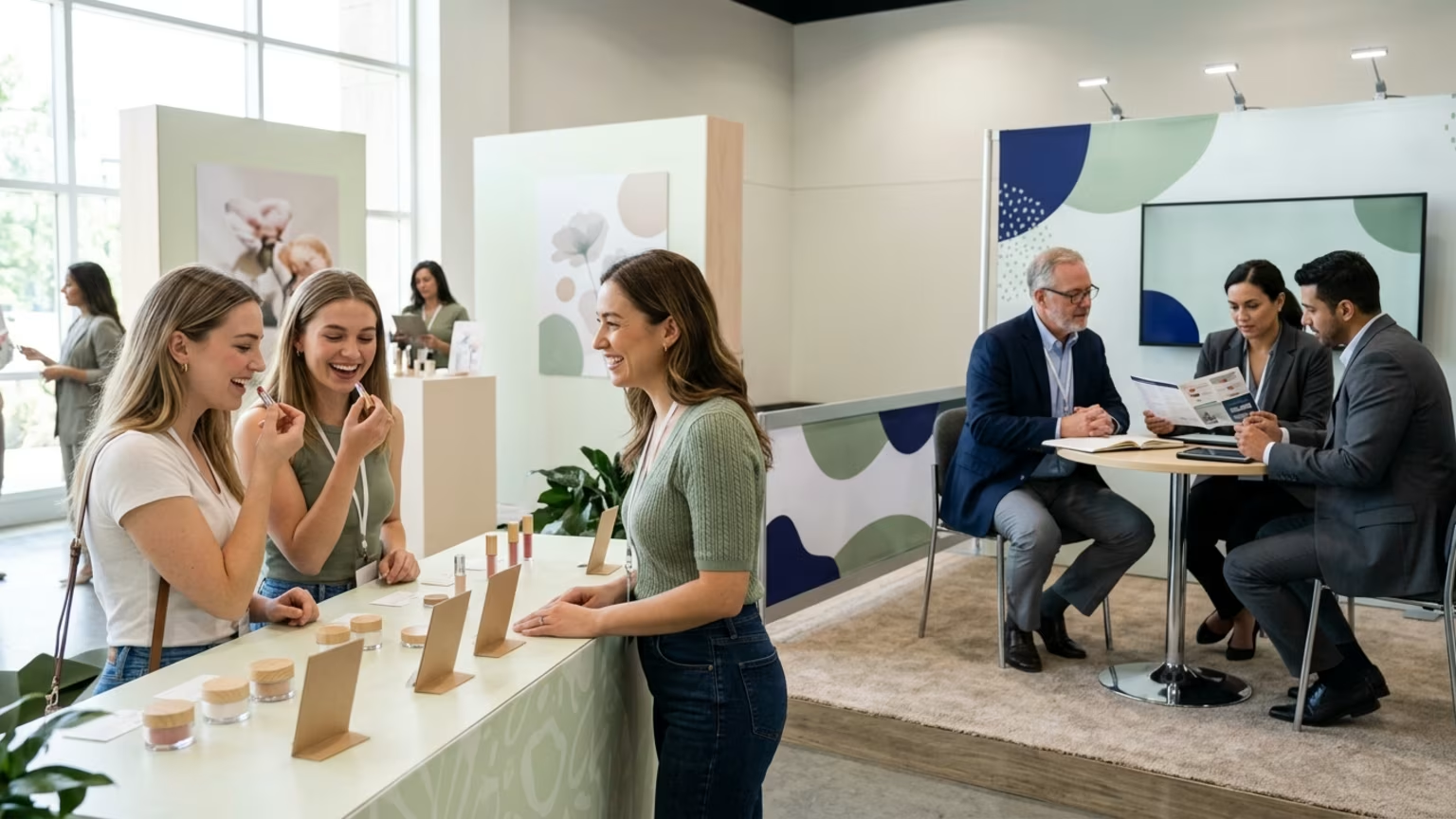
On September 5, 2026, Brazilian cosmetics brand Nina Makeup opened its 10-year anniversary activation at Beauty Fair 2026 in São Paulo. Instead of treating the milestone as a single celebratory branding moment, the company divided its 169-square-meter event footprint into two completely separate physical spaces. One stand is dedicated entirely to commercial negotiations, while the other functions strictly as a consumer retail pop-up. This layout choice directly challenges the traditional model of serving all audiences from a unified exhibition booth. It forces marketing leaders to rethink how they map physical space to distinct commercial outcomes.
The spatial separation dictates entirely different operational realities on the show floor. Nina Makeup is splitting 169 square meters between a 129-square-meter business stand and a 40-square-meter retail pop-up. The business stand includes meeting rooms, a coffee area, and a Skin Lab focused on Nina's Basic and Hyaluronic lines. Inside the Skin Lab, invited guests and influencers participate in a quiz intended to recommend products based on desired finish or fit. This gives the brand an opportunity to turn passive product observation into a guided, high-touch consultation. The environment is explicitly built to support focused negotiations and product education without the distraction of general consumer crowding.
Across the exhibition hall on Rua F/12, the dedicated retail pop-up handles direct consumer contact, product experimentation, and immediate sales. At this smaller footprint, the brand says the retail pop-up will feature discounts of up to 80 percent and buy-and-get promotions. By physically separating these spaces, the brand detaches its long-term relationship-building efforts from its high-volume sampling mechanics. This prevents the administrative burden of processing hundreds of discounted consumer sales from stalling a six-figure wholesale negotiation.
The brand is also utilizing this event to present a reformulated version of a product called Blindafix. Nina describes the reformulated Blindafix as using its Tecnologia Filme Shield to create an invisible, flexible film intended to improve makeup resistance and durability. Rather than pitching this product launch to distributors and end-users simultaneously in a crowded aisle, the dual-stand model allows the sales team to adapt their presentation. This specific routing ensures that buyers get a technical margin discussion while consumers get an immediate product trial.
We design mobile activations and roadshows that accelerate consumer trial, build trust, and boost retail velocity during 90-day product launch windows. Our structured approach transforms initial product trial into sustained consumer confidence and retail performance. From our perspective as experiential operators, Nina Makeup's split footprint correctly identifies a massive flaw in modern event execution. Consumer packaged goods brands routinely force high-intent retail buyers and casual consumer samplers into the exact same physical line.
When a single booth tries to serve distributors negotiating wholesale orders and consumers looking for free samples, the floor flow inevitably collapses. Buyers seeking quiet meeting space get overwhelmed by crowds chasing giveaways, resulting in a frustrating experience for both groups. By splitting the footprint into dedicated zones, brands can align their physical architecture with their specific conversion paths. This requires rigorous discipline, but it prevents high-value commercial conversations from being derailed by consumer chaos. It ensures that the people writing massive purchase orders are not standing behind teenagers waiting for a free lipstick sample.
Many brands struggle to prove the value of their physical activations because they blend completely different audiences into one metric. The 2025-2026 Global B2B Events Intelligence Report says that 21 percent of B2B marketers can measure event Return on Investment with confidence. We see this lack of confidence constantly when brands blend wholesale meeting accounts and consumer transactions into one useless visitor count. Separating the spaces means a brand can measure closed-won pipeline in one booth and consumer transaction volume in another.
This level of structural measurement is especially important given the rapid digital acceleration in the current market. Beauty Fair's business publication reports that Brazilian beauty e-commerce reached R$8.26 billion in the first half of 2026, 28.7 percent above the same period in 2025. Live physical events must deliver highly trackable performance metrics to justify their massive logistical expense against these growing digital channels. Brands that refine their trade show strategies to track discrete audiences will always outperform those relying on blended vanity metrics.
Operating two concurrent stands changes everything about live execution. Field marketing managers must now recruit and train two completely different staffing profiles to execute the program efficiently. The business stand requires staff equipped to handle wholesale pricing, supply chain inquiries, and private account meetings with major retailers. The retail pop-up demands high-volume product demonstrators who can manage heavy foot traffic, process point-of-sale transactions, and execute promotions rapidly.
Inventory management also fractures into two distinct logistical streams. The consumer booth requires massive stock levels for immediate fulfillment, sampling, and high-speed distribution to eager attendees. The B2B booth needs controlled access to premium display units, presentation materials, and private demonstration kits designed for buyers. Moving stock between two locations in a busy exhibition hall requires strict scheduling and dedicated runner teams. Establishing centralized logistics control is no longer optional when a brand attempts to manage split operations across a massive, congested venue.
Furthermore, this fragmented approach requires a much tighter measurement architecture to prove its value to the executive team. CMO Magazine's trade show guidance recommends tracking total event cost, lead quality, pipeline, and closed-won revenue. Brands can also tie physical consumer sampling to downstream tracking mechanisms to measure real commercial lift after the event ends. Experiential measurement guidance recommends linking an activation to a trackable downstream action such as a promo code, loyalty purchase, or point-of-sale connected redemption.
Nina Makeup is already running parallel tracking systems outside of the physical show floor. The company operates an affiliate program that lists commissions above 12 percent in standard conditions and up to 20 percent during selected campaigns, with sales tracked through Pilea Labs. Integrating these types of digital tracking mechanisms into the live trade show environment is the next operational hurdle for consumer brands. Field marketing teams must learn to connect the energy of trade show sampling directly to their post-event performance dashboards.
Nina Makeup is not the only company deploying this fragmented footprint strategy at the massive São Paulo event. BR Brand Imports is reported to be using two Beauty Fair spaces to reach buyers, retailers, distributors, and specialized professionals. Coverage of the 2026 event describes international business rounds and opportunities for small businesses to meet buyers and expand commercial networks. This multi-stand strategy requires intense coordination across the venue, but it protects sensitive commercial negotiations from the surrounding noise of the show floor. It proves that major exhibitors are starting to view large trade shows as a collection of targeted micro-events rather than one monolithic branding exercise.
When marketing leaders look at their crowded exhibition spaces, they must decide if their physical footprint reflects their actual business goals. If a single booth forces critical distribution partners to compete with casual samplers for attention, the floor plan itself becomes a barrier to revenue. The true test of a live event is not how many people walk past the logo, but how effectively the physical space moves different audiences toward their respective finish lines. If your next national trade show requires engaging both strategic buyers and retail consumers, does your current floor plan force them into the same conversation, or does it give them the exact environment they need to convert?
Dividing a trade show footprint to serve distinct audiences forces marketers to implement separate conversion funnels for each space. When Makai takes command of these operations, we resolve the problem of inefficient post event follow up and CRM routing. Through our Engagement Marketing capability, we turn audiences into participants with live and digital experiences that invite people to try, share, and act.

30 Years Experiential & Retail Activation Partner for CPG & Beverage Brands | Multi-Market Demos, Roadshows & Costco/Club Programs That Actually Sell


