Robbie Thain
Founder, CEO

Learn how SET's Coastline launch used public access, preorders, and community engagement to drive $3.5 million in online sales and acquire new retail customers.
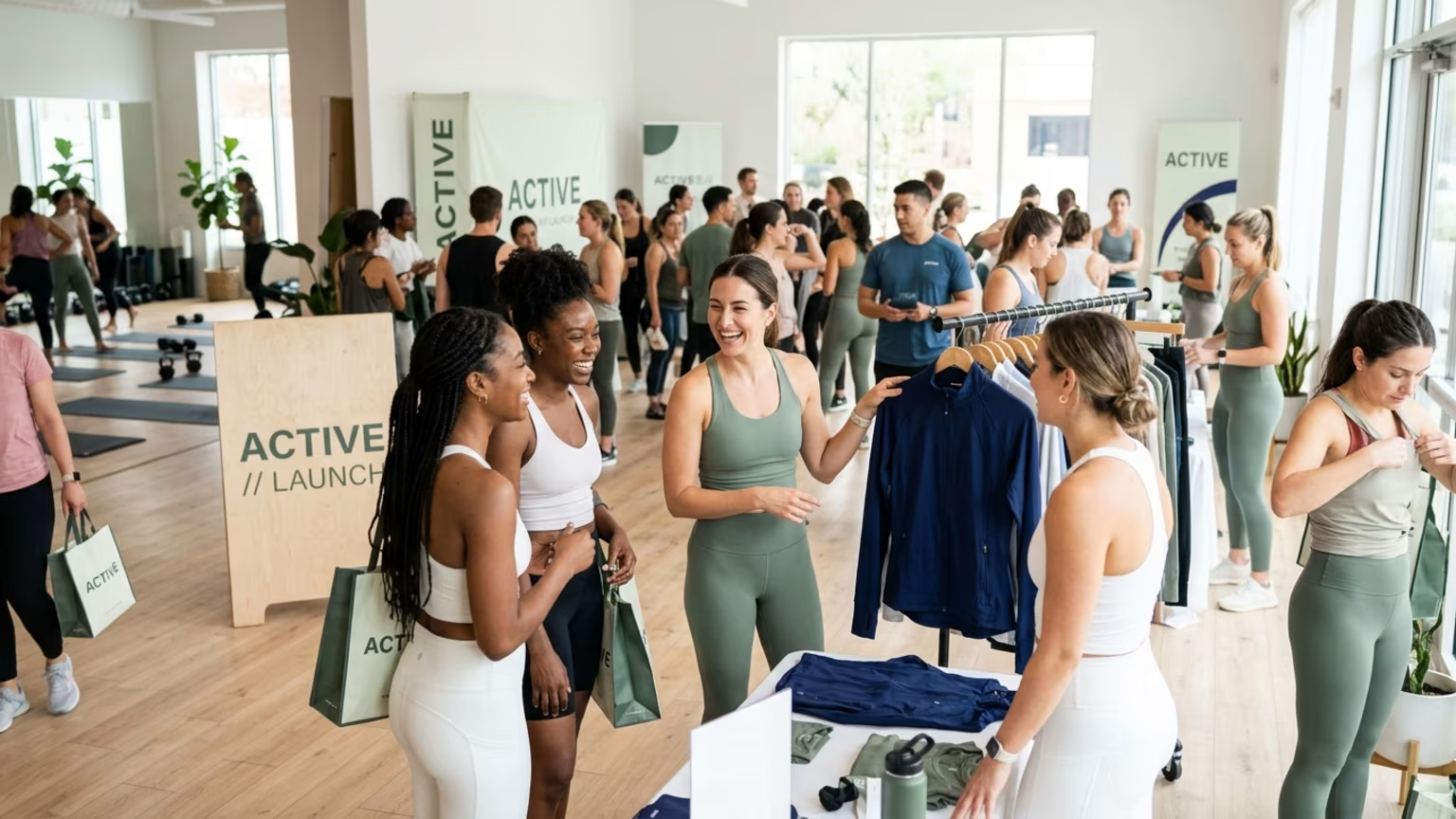
On August 14, Los Angeles-based activewear brand SET launched its Coastline collection through an in-person activation at the Clam Bar in Amagansett, New York. The brand bypassed a conventional influencer-only guest list to welcome customers, vacationers, and public passersby. Hundreds of people attended the physical event. Some loyal consumers even drove or flew to the activation specifically to participate.
This public-facing approach represents a shift in how modern retail brands sequence their product releases. The execution allowed everyday shoppers to experience the brand universe firsthand before the broader digital market had access. By removing traditional access barriers, the brand transformed a standard retail drop into a high-demand consumer destination.
The operational format of the Coastline launch created a staged release sequence rather than a single digital drop. The activation combined complimentary food, games, limited-edition merchandise, and early access to the new collection. The main Coastline products were not available to take home immediately from the venue. Instead, attendees could preorder pieces before the official launch, while event-exclusive merchandise was sold directly onsite.
The following day, Coastline launched officially online and at the brand's New York City flagship. The collection generated $3.5 million in online sales within 24 hours, according to SET. The company described this performance as the highest-grossing limited-edition drop in its eight-year history. A five-hour line formed outside the flagship store during the official retail release.
The public activation also produced clear customer-acquisition results. SET reported that 41% of customers who preordered at the activation were new to the brand. First-time customers represented 51% of shoppers at the New York flagship. Overall, SET said the drop attracted 13% more new customers than its previous collection launch.
This launch model built on a similar operational framework tested earlier in the year. In June, the brand invested approximately $500,000 in a 500-person Austin Cowboy Carnival. SET reported that its Austin store finished June at 146% of its sales plan. The location saw an average order value of $150 to $200 during that period. Approximately 60% of shoppers were new customers, and the brand acquired more than 2,800 new retail customers.
This sequential launch strategy matters deeply for consumer packaged goods and beverage brands that rely on physical marketing to drive pipeline. Consumer marketers face intense pressure to prove that live events generate Return on Investment rather than just temporary visibility. The SET execution demonstrates how community-based events can convert into measurable product demand. By pairing early access with a trackable preorder mechanism, the brand engineered a clear commercial next step for attendees.
The public-facing model also challenges the assumption that only massive influencer audiences can move inventory. By giving early access to the local community, the brand activated highly motivated buyers who were eager to secure new merchandise. This tactic is especially powerful for health, wellness, and beverage brands launching regional packaging. Securing a physical preorder reduces the risk of consumers defaulting to cheaper substitutes at the store shelf later.
Live experiences actively expose consumers to new products and influence future buying behavior. According to iHeartMedia, 82% of live-music attendees encounter new brands at events. Furthermore, 81% feel more positive about brands after attending a live event. The same research notes that one in two consumers take action after live-event exposure. This means consumers might look up product details or seek out a retail location.
For food and beverage brands, effective beverage sampling strategy requires designing an experience around a measurable action. Marketers must build pathways for sampling, store visits, digital preorders, or coupon redemptions. Providing food and games creates value before the transaction, making the commercial action easier to complete. Relying solely on passive product displays leaves field marketing teams vulnerable to wasted budget.
In our experience, connecting sensory elements to precise logistics dictates the ultimate sales outcome. A Director of Brand Strategy in the CPG snack division shared: "The Makai team turned our product launch into a sensory event that shoppers still talk about. From creative storytelling to flawless in-store execution, they made snack time unforgettable. We couldn't have asked for a stronger partner."
Our team created an in-store experience that left a lasting impression on consumers and became a memorable brand moment. This approach ensures that live interactions drive documented retail growth.
Shifting from private influencer gatherings to public-facing activations forces field teams to rethink crowd control and venue staffing. Public events demand rigorous inventory management and flexible point-of-sale systems to capture customer data securely. When evaluating how to choose between retail demos, roadshows, and tours, brand leaders must prioritize formats that secure preorders rather than just distributing free goods. Staggered access schedules also require marketers to adapt their physical footprint to manage fluctuating crowd density safely.
This approach fundamentally changes how marketers measure the success of an activation. SET expanded its insider program to approximately 15 participants for the Coastline launch, giving them different products and previews. The brand used affiliate tracking where available and monitored engagement where it was not. Measuring this type of hybrid campaign requires robust digital infrastructure at the event venue. Field staff must be trained to facilitate digital actions rather than simply managing entry lines.
Experiential measurement guidance recommends tracking participation and downstream actions carefully. Marketers must account for staffing, production, travel and technology to calculate gross profit accurately. Tracking QR-code redemptions, email opt-ins, and retail sell-through ensures that the field execution translates into verified pipeline. The event cost structure must factor in fulfillment expenses, returns, and total media investment to prove true commercial viability. Establishing a baseline conversion rate helps field marketing teams compare physical activations against standard digital media buys.
Deploying consumer events across multiple markets forces marketers to balance high-impact design with rigid logistical execution constraints. Proper event marketing growth strategy demands that brands connect exposure, participation, and lead capture directly to retail velocity. When field marketing managers carry the administrative burden of building compliant schedules, they need standardized reporting to track these exact metrics. Operating without clear measurement architecture leaves marketing teams blind to actual event performance. A structured rollout allows brands to match attendees and purchasers to customer records efficiently.
SET founder and CEO Lindsey Carter framed physical experiences as increasingly important as consumers encounter more AI-generated content online. She noted that brands should preserve the tangible aspect of customer relationships and meet consumers physically. Her priority was for the existing community to become its influencer, noting that loyal customers often drive conversion effectively. This customer-first approach shifts the focus away from traditional professional creators toward everyday brand advocates.
The brand's Austin activation demonstrates how community engagement drives measurable digital amplification. SET reported that its Austin activation produced more than 300 organic posts, 1 million impressions, and over 40,000 Instagram and TikTok engagements. The brand also noted that new online customers doubled from May to June in both Austin and Texas. These figures illustrate how physical activations generate downstream digital visibility when executed with precision. Connecting tangible events to social reach amplifies the baseline retail performance.
If your field marketing team relies on passive product displays to generate retail demand, you are leaving pipeline on the table. An uncoordinated launch event produces social media noise, but it fails to capture the shopper data required for sustained retail growth. Are your upcoming field activations structured to capture measurable preorders, or are you just paying for unverified crowd traffic?
Opening a product launch to public crowds without clear digital tracking often results in scattered attention and poor booth flow. Makai eliminates this execution risk by deploying our Expo / Trade Shows capability. We plan and manage trade show spaces that attract attention, start conversations, and convert visitors into customers. Request a proposal

30 Years Experiential & Retail Activation Partner for CPG & Beverage Brands | Multi-Market Demos, Roadshows & Costco/Club Programs That Actually Sell