Robbie Thain
Founder, CEO

Five years after RushTok, brands are treating sorority recruitment as a formal experiential funnel. Discover how top CPG brands measure long-term event ROI.
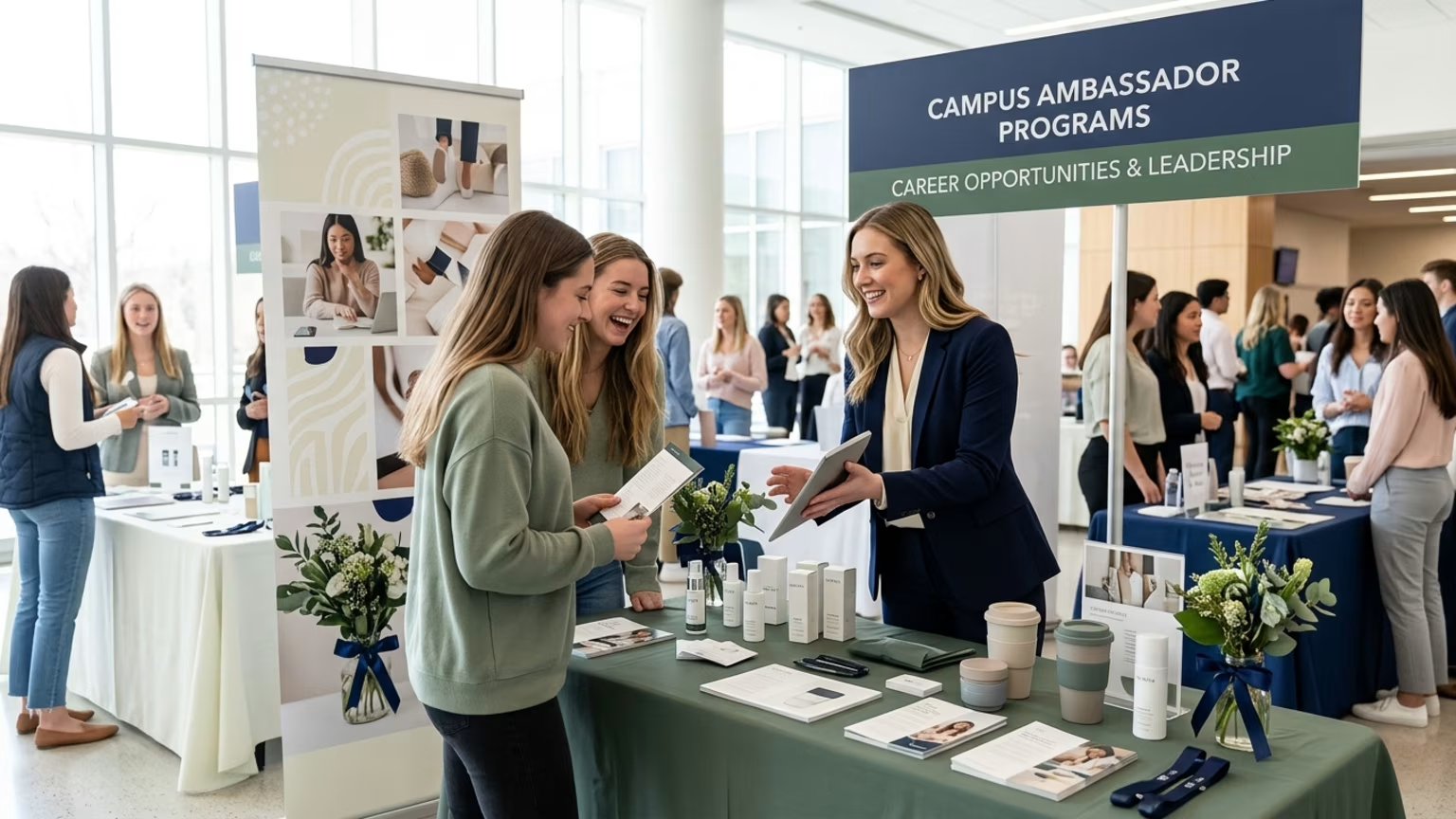
On September 4, 2026, Yahoo Finance reported that brand presence around sorority recruitment has continued to increase five years after the initial RushTok trend emerged in 2021. Major consumer packaged goods and apparel companies are no longer treating the period as a passive social media trend. Instead, they are deploying heavy logistical operations and structured product sampling on campuses across the country. Brands are now treating this collegiate recruitment window as a formal acquisition funnel.
The scale of physical investment has matured significantly over the past five years. Poppi announced plans to distribute more than 1 million cans and 20,000 pieces of custom merchandise during the recruitment season. According to Yahoo Finance, Poppi stated this combined effort could represent 30% to 40% of its back-to-school marketing budget. This represents a massive shift from organic product seeding to highly structured field marketing operations.
Nike also formally sponsored rush events for at least six sororities during August. These activations took place at schools including the University of South Carolina, the University of Texas, and Arizona State University. At least some of these Nike partnerships appeared to be facilitated by Campus Launch, a company that describes itself as a Gen Z campus-marketing agency. Nike college business director Emily Johnson told Front Office Sports that the company was formally engaging with sororities for the first time.
For experiential marketing leaders, this evolution proves that high-visibility cultural moments require rigorous field execution to generate a Return on Investment. We have been connecting brands with people through live experiences, retail programs, and national activations since 1995. Over three decades, we have built a track record of creating meaningful brand moments across the country. In our experience, simply mailing boxes of product and hoping for organic content is no longer a viable strategy for premium brands.
The real value comes when brands provide something highly useful during a high-pressure moment. A structured activation must capture consented leads or participants onsite. Marketers must then connect those activation records to later CRM or purchase behavior to prove actual sales lift. Without this operational discipline, brands are simply funding expensive photo opportunities rather than building sustainable retail pipelines.
Treating a high-pressure collegiate event as an acquisition funnel requires absolute control over field operations. Deploying activations across multiple college towns forces marketing directors to manage local schedules, complex product logistics, and variable physical environments. To maintain quality control, experiential teams need centralized playbooks and trained field staff who understand local compliance. Brands must also prioritize inventory controls and strict consent procedures to capture reliable data.
Poppi's structural approach reveals the internal changes required to execute these campaigns. Poppi's college marketing team was created three years before the article's publication after the company received increasing inbound requests from sorority chapters for products. This dedicated infrastructure allows the brand to handle national logistics and track product distribution accurately. Attempting to manage this level of physical distribution without a dedicated field team often results in misplaced inventory and broken schedules.
The operational demands also shift how brands measure these campaigns. Post-event reporting must distinguish between immediate participation, qualified leads, and downstream conversion. Experiential marketing guidance recommends defining the desired behavior before finalizing any creative concept. This approach allows marketers to build repeatable experiential programs rather than starting from scratch every semester.
Consider the execution strategy from Lucky Charms and decor company Presley Paige. General Mills business unit director Megan Brooks said Lucky Charms had an existing organic connection to Kappa Delta's shamrock-related themes. They created a branded decor and bracelet-making activation with the University of Arkansas chapter. The installation functioned as a physical engagement point while providing visual elements that attendees naturally wanted to share.
Without formal creator partnerships, the brand relied on the activation design itself to motivate participants. This approach requires precise spatial planning and high-quality materials to ensure the physical footprint translates well on camera. When executing street-level or campus marketing campaigns, cutting corners on the physical build will severely limit the organic reach of the installation. A premium finish signals to consumers that the brand values their interaction and respects the social context of the event.
The activation window itself has grown broader than just the formal recruitment week. Chapters begin producing content during Work Week, while Bid Day creates another high-attention moment for branded experiences. Poppi planned experiences specifically around Work Week and Bid Day, utilizing appearances by reality television personalities. The goal was to create a useful and memorable experience from the participant perspective.
The audience for these activations is highly varied and requires careful segmentation. A chapter partnership may reach current members and potential new members. It can also capture attention from alumni, families, and online viewers. This is why connecting campus activations to retail sales demands careful data management and a clear definition of the target buyer.
Connecting onsite activity to later conversion is the only way to justify these budgets. The strongest Return on Investment case connects activity measures to a baseline or control group. Marketers can then track behavior after the event rather than treating attendance as proof of return. Without identity resolution and cohort tracking, brands may know content was seen without knowing if it drove a purchase.
The examples from this recruitment season span several categories relevant to physical marketers. Poppi represents the beverage sector, while Lucky Charms covers food and consumer packaged goods. Kitsch covers beauty and accessories, and Nike represents the athletic apparel category. This broad range suggests that the experiential opportunity is not limited to one specific product vertical.
Reporting also identified Alo Yoga and Set Active as activewear competitors participating in this broader marketing moment. The sheer volume of competing brands means companies cannot rely on simple logo placement. Brands must add genuine value to the experience rather than interrupt it with conspicuous branding. Providing hydration, convenience, or services that solve a real participant need is the best way to earn loyalty.
Nike described sorority members and other highly engaged college students as campus athletes. Front Office Sports reported that Nike's campaign generated videos that were often viewed millions of times. However, high visibility alone does not necessarily prove that consumers tried or purchased the sponsoring brand. Nike did not disclose the commercial terms of these sponsorships or whether compensation went beyond gifted products.
When brands plan pop-up experiences during recruitment, they must protect their operational quality. Campus activations involve multiple chapters, local schedules, and variable physical environments. A scalable program therefore needs trained field teams, real-time reporting, and post-event reconciliation. These operational safeguards ensure that millions of views actually translate into measurable consumer loyalty over time.
The industry consensus reflects a clear shift toward structured relationship building. Christy Kelly of MMC argued that brands now play an episodic, real commercial role in the rush experience. Poppi executive Sophia Sesto noted that some current sorority partners had been among the brand's most engaged partners the prior year. These insights confirm that top brands view these women aged 18 to 22 as powerful cultural forces who require sustained engagement.
Are your campus marketing activations built to capture repeatable customer data, or are they simply funding temporary social media visibility?
Treating viral collegiate recruitment moments as isolated stunts rather than trackable relationship funnels leaves field marketing teams blind to actual retail performance. Makai resolves the risk of low quality leads from crowded trade shows by deploying our Mobile Sampling Tours capability. We deliver your brand directly to audiences through on the go experiences that drive trial and awareness. Request a proposal

30 Years Experiential & Retail Activation Partner for CPG & Beverage Brands | Multi-Market Demos, Roadshows & Costco/Club Programs That Actually Sell