Robbie Thain
Founder, CEO

ICSC@FLORIDA 2026 introduced guided tours and a Retailer Central zone, signaling a major trade show shift toward measurable pipeline over massive foot traffic.
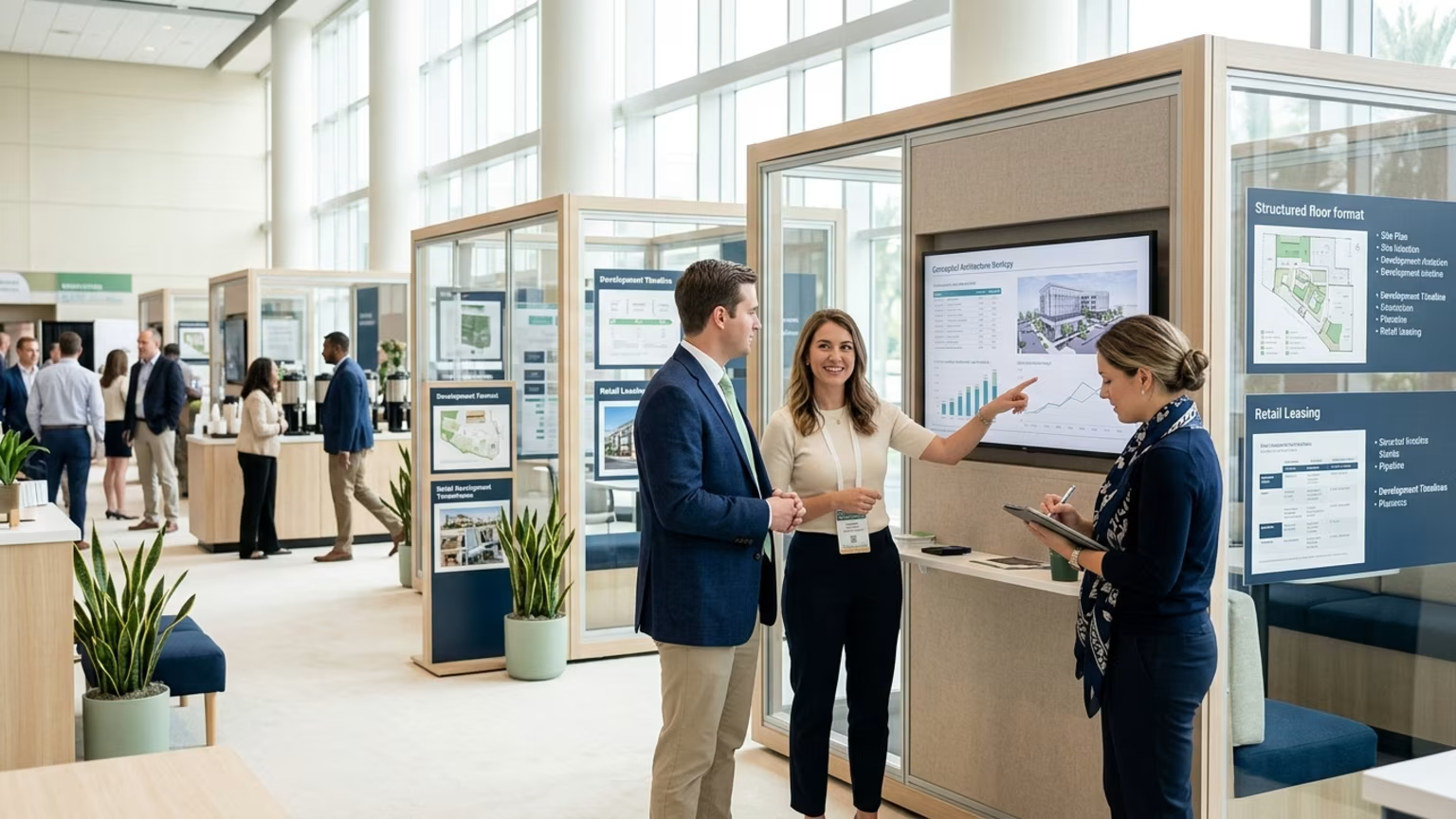
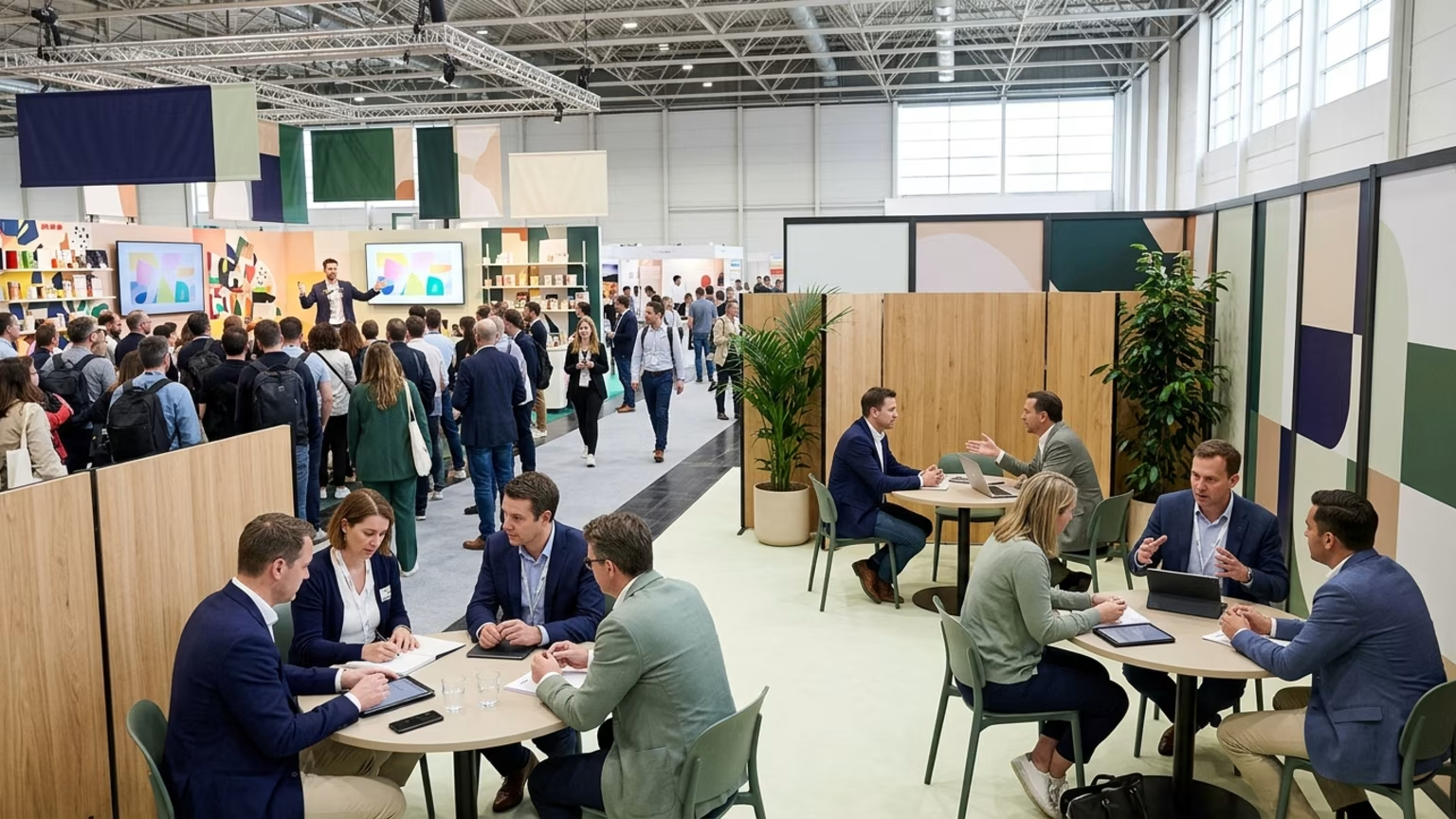
The most effective trade show booths are not built for maximum foot traffic, because a massive crowd often hides a weak commercial pipeline. Real Return on Investment requires diagnostic control over who stops to talk. On August 30 through September 1 of 2026, the ICSC@FLORIDA event at the Orange County Convention Center introduced a format that forced this kind of control. Organizers deployed guided exhibit floor walking tours for first time attendees alongside a dedicated Retailer Central selling zone.
The ICSC program began with a First-Timer, New Member & Student Meetup and Exhibit Floor Walking Tour. This guided orientation ran from 4:00 to 4:30 p.m. on Sunday August 30. A networking reception followed the walking tour from 4:30 to 6:30 p.m. that evening. The event also listed a Meet the Municipalities & ICSC Next Generation Reception from 3:15 to 4:30 p.m. on Monday August 31.
The main deal making period operated under strict hours to concentrate commercial activity. These core Dealmaking & Retailer Central sessions ran from 9:00 a.m. to 5:00 p.m. on August 31. They resumed from 9:00 a.m. to 2:00 p.m. on September 1. ICSC described Retailer Central as an area where retailer members could formally showcase their brands to the public.
This setup removed the complexity of custom exhibit architecture. The complimentary Retailer Central package included just one 4-foot draped table, a company identification sign, and two stools. The event also offered ICSC+SPECIALTY programming focused on marketing and specialty leasing professionals. This curated content created new opportunities across retail real estate communities without relying on massive consumer spectacle.
For brand operators aiming to secure retail partnerships, a four foot table provides very little space for visual distraction. That limitation is an operational advantage. It forces field marketing directors to focus strictly on commercial conversations and qualified product sampling. Without elaborate booth architecture, teams must rely entirely on their ability to command attention through direct engagement.
The International Association of Exhibitions and Events reported in August 2026 that face to face exhibitions continued to represent the largest share of exhibitors' marketing budgets. They maintained this dominant share across budget sizes despite the expansion of digital marketing channels. IAEE noted that leadership teams continue to evaluate exhibitions through outcomes such as leads, pipeline, opportunities, and closed deals.
Our team specializes in creating retail demos and product sampling programs that bring brands face to face with their audiences. We view the structured ICSC format as a filter that separates serious operators from those chasing vanity metrics. When you strip away the staging, you are left only with the quality of your commercial pitch. Brands that integrate lead capture seamlessly thrive in these highly constrained physical environments.
A guided exhibit floor tour fundamentally changes the initial prospect encounter for marketing teams. Staff cannot simply wait for a steady organic flow of aisle traffic to materialize. They must prepare a concise explanation that works immediately when a large tour group stops. The tour schedule dictates that attention arrives in short bursts rather than a continuous stream.
Operating within a Retailer Central package removes complex permitting and large scale asset logistics. However, it significantly increases the pressure on brand ambassadors to qualify visitors rapidly. They must quickly determine if a visitor represents a targeted retailer, a leasing professional, or a municipality. Staff must then secure a clear next step before the visitor moves on to the next table.
Research from Freeman supports this shift toward substantive engagement. Freeman reported that 84% of attendees are open to sponsored educational content when the sponsorship is disclosed. Furthermore, 66% of attendees would attend a sponsored session regardless of sponsorship if the topic interests them. This data proves that visitors seek genuine value over superficial brand visibility.
Even with a constrained footprint, event staffing should cover at least three distinct operational jobs. The first job is discovery, which requires staff to attract attention and communicate the brand proposition quickly. The second job is qualification, where staff determine if the visitor represents a relevant commercial stakeholder. The final job is conversion, which involves securing a specific next step or product review.
The guided tour format makes it especially critical to execute these three jobs efficiently. Staff must prepare a concise explanation that works immediately when visitors arrive in a large group. The fixed tour schedule dictates that the brand should be ready for rapid surges of attention. Teams that fail to prepare for these short surges will lose the commercial opportunity entirely.
A minimalistic setup requires field teams to treat their space as a highly efficient conversion tool. A Retailer Central table should have one primary commercial objective. A brand might focus on securing retail buyer introductions or finding regional expansion partners. The physical footprint must support that singular objective with a clear product demonstration and an obvious call to action.
Brands with complex consumer products face specific logistical constraints under this model. A 4-foot table provides limited room for inventory, demonstration equipment, or extensive literature. Marketing managers must confirm their access to power, storage, and sampling infrastructure before treating the package as an activation platform. A turnkey table can easily become passive signage if the staff fails to initiate active discussions.
The most successful exhibitors refuse to treat the show as a walk up prospecting exercise. IAEE said exhibitors that receive the most value from events tend to have clear objectives and a strategic approach. They recommend that marketing and sales agree on what constitutes a qualified lead before the event. This shared standard ensures that both departments recognize a valuable interaction when it happens.
A simple badge scan does not represent a business outcome. Field teams must build a structured follow up operating system to process the contacts they gather. Each capture form should dictate a specific data collection protocol. Staff must capture the visitor role, their specific retail footprint, the current business need, and the agreed next step.
A rigorous qualification process dictates that leads ready for commercial discussions go directly to a sales owner. Meanwhile, earlier stage contacts can enter a relevant nurture path for future outreach. This disciplined data collection turns fleeting conversations into measurable commercial progress.
Freeman's research proves that attendees value access to subject matter experts and hands on demonstrations more than gamified activities. Prize wheels or point systems fall flat when buyers want actionable product knowledge. Global brands master U.S. trade show execution by equipping their staff to serve as trusted advisors on the floor.
For beverage and wellness brands, this expertise requires strict physical execution. It could mean a tightly controlled product demonstration or a detailed packaging discussion. For automotive and technology brands, it means a short interactive demo tied directly to location or audience value. Visitors want proof of commercial viability rather than passive entertainment.
A high badge scan count holds little value if it fails to generate retailer conversations that produce a next meeting. IAEE specifically identifies pipeline, opportunities, and closed deals as important leadership-level outcomes for exhibitions. They recommend applying the same success metrics before, during, and after the show. This consistency helps teams identify what actually drove performance on the floor.
In our experience, aligning field events with concrete business goals requires intense measurement discipline. The most defensible event scorecard separates basic activity metrics from actual business outcomes. Teams must track the target accounts engaged, the product demonstrations completed, and the total pipeline influenced. B2B exhibitors shift booth design toward demo-centric experiences because these interactions directly dictate the final revenue numbers.
IAEE's 2026 experience design programming similarly stresses measurable outcomes for trade show investments. Their curriculum focuses on metrics such as dwell time, buyer decisions, and total exhibitor value. They also stress the critical importance of mapping the attendee journey from initial registration through post show follow up.
If your field teams were restricted to a single 4-foot table and two stools, would they still know how to build a commercial pipeline?
The physical container always dictates the strategy. The most enduring brands recognize that restraint is often the clearest path to clarity.
Assuming that a crowded convention aisle will naturally yield qualified retail partnerships leaves field marketing teams vulnerable to wasted budget. Makai resolves the risk of scattered attention and poor booth flow by deploying our Expo / Trade Shows capability. We plan and manage trade show spaces that attract attention, start conversations, and convert visitors into customers. This disciplined operational approach ensures every physical interaction supports measurable commercial goals. Request a proposal

30 Years Experiential & Retail Activation Partner for CPG & Beverage Brands | Multi-Market Demos, Roadshows & Costco/Club Programs That Actually Sell