Robbie Thain
Founder, CEO

Discover how brands like TIRTIR use concert-adjacency pop-ups to capture massive tour traffic. Learn the logistical steps required to turn fans into buyers.
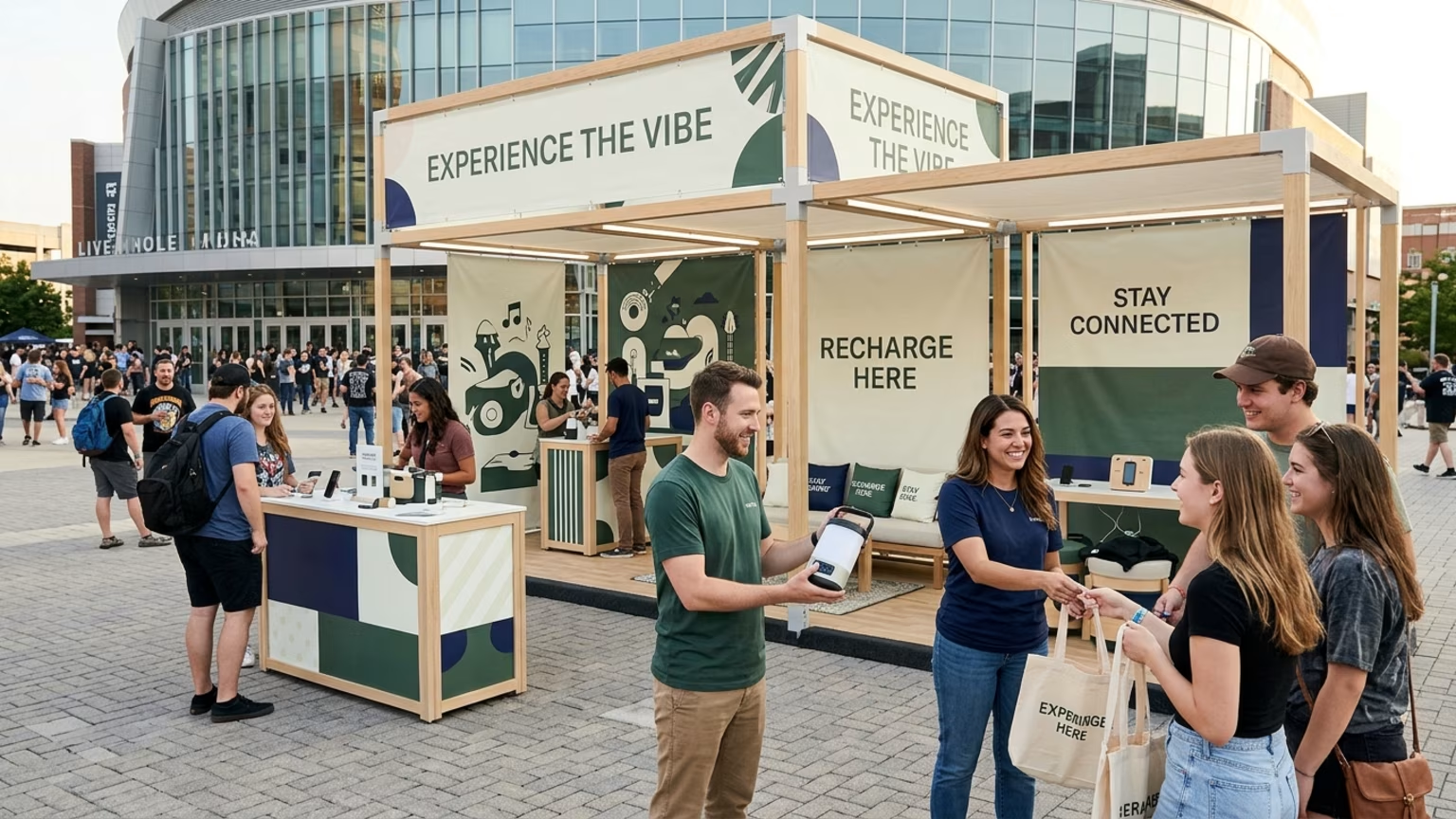
Operating a branded footprint near a massive concert requires rigorous operational discipline. Venue rules, sudden crowd surges, and tight municipal permitting windows create significant risk for unprepared teams. Makai operators know that a successful pop-up starts weeks before the first fan arrives on site. Extracting real commercial pipeline from massive physical audiences demands absolute control over the activation environment.
Field teams must secure local activation permits long before the production crew builds the main stage. Inventory staging is equally critical for limited-edition product drops. When fans rush a location for first access to an upcoming cushion foundation, unexpected stockouts destroy the customer experience. Efficient supply chain routing keeps product flowing smoothly to the front line, while weather contingencies protect the physical assets.
Digital infrastructure needs identical preparation and rigorous testing. If an activation relies on QR codes or Weverse Shop pre-purchases, field marketers must test the CRM routing protocols. Teams must ensure that every scan connects cleanly to backend measurement systems for accurate Return on Investment tracking. You cannot fix a broken data pipeline or a malfunctioning digital checkout system during a live stadium show.
Coordinating with local cultural hubs adds another massive layer of complexity. The BTS THE CITY ARIRANG program extended across the entire New York metropolitan area, requiring precise schedule synchronization. Aligning brand operations with existing fan schedules ensures peak staffing during the busiest pre-show windows. Field leaders must constantly adjust their deployments to match the primary tour calendar and maximize overall audience capture.
Event Marketer outlines a clear operational playbook for concert-adjacency programs. Brands must shift their focus from massive stand-alone structures to highly targeted consumer interventions. Success requires executing specific tactical steps on the ground to capture qualified traffic.
Start with the primary tour calendar to identify where target consumers naturally gather. Operators must design the physical experience around audience schedules and established movement patterns. Integrating into established fan hubs guarantees relevant traffic without massive standalone acquisition costs. This strategic positioning intercepts consumers when they are most receptive to engagement, turning passive transit areas into active brand activation spaces.
Build the activation around a genuinely useful event-day service. TIRTIR offered its limited-edition Perfect Setting Duo, which smartly paired the Reflect Glow Prep Primer and Mask Fit Makeup Fixer with a branded pouch. This specific utility matches the physical realities of long concert days and encourages immediate product trial. Brands in other categories must translate this utility principle into their own relevant service offering, such as charging stations or hydration bars.
Keep the activation footprint completely modular and highly adaptable. A compact bar, retail kiosk, or branded service trailer is much easier to replicate across multiple tour stops. Taco Bell supported its Olivia Rodrigo collaboration with simple sampling stations, limited-edition merchandise, and a photo booth. Aperol similarly extended Hilary Duff concert stops into Spritz Day Clubs at local bars for fans aged 21 and older.
Make the commercial next step completely explicit for the consumer. TIRTIR connected physical product trial with a frictionless digital checkout process to drive immediate action. Consumers could easily pre-purchase via Weverse Shop, collect their orders on site, and use QR codes for immediate transactions. These controlled digital mechanisms clearly prove the financial value of measuring experiential marketing ROI.
Many brands treat live music events purely as top-of-funnel awareness channels, which fundamentally limits their financial return. They distribute thousands of samples without collecting a single piece of contact data or purchase intent. This failure to capture qualified behavior leaves teams entirely unable to prove post-event sales attribution. Field teams must establish concrete targets for product trial, consented contact capture, and digital coupon redemption.
A common logistical error is completely ignoring actual crowd dynamics. Tour-linked pop-ups experience incredibly narrow operating windows and massive demand spikes right before major shows. Understaffed sampling stations inevitably lead to broken QR paths, lost leads, and frustrated potential buyers. Field managers must pre-plan exact staffing ratios, inventory replenishment cycles, and specific queue management protocols.
Another frequent mistake is relying heavily on exclusivity without a broader retail distribution strategy. TIRTIR utilized event-exclusive items, scratch-offs, hand fans, and first access to an upcoming cushion foundation to drive massive urgency. However, manufactured urgency only builds sustainable brand momentum if operators provide a clear path to broader retail availability after the event concludes.
Finally, weak CRM integration consistently kills long-term conversion rates. Relying on manual clipboards or disconnected digital tablets results in massive data loss. Marketing leaders must integrate digital data capture directly into their core reporting systems. This strict clean data measurement discipline allows teams to accurately separate event-driven purchases from baseline retail sales, proving true incrementality.
Live event partnerships deliver substantial commercial outcomes when executed with absolute operational precision. Proprietary iHeartMedia research highlights the strong conversion potential of well-planned music sponsorships. Previous Jingle Ball partners reported a highly measurable 38 percent increase in e-commerce sales for a beauty brand.
The same data set revealed a 40 percent increase in in-store foot traffic for a featured wireless carrier. CPG brands executing comprehensive festival campaigns saw a 58 percent increase in purchase intent. Furthermore, these targeted physical interventions delivered an impressive 87 percent increase in brand recall among participating fans. The research also notes that 81 percent of attendees feel more positive about brands after attending a live event, and one in two take action after exposure.
Specific activation metrics offer further validation of this highly focused approach. Spotify maximized a highly targeted footprint by hosting dedicated listening events in over 40 distinct planetariums. This included a beautifully executed activation for exactly 400 fans at the Liberty Science Center in Jersey City. These concrete attendance metrics prove that controlled capacity often yields significantly stronger brand engagement than passive stadium signage or generic digital advertising.
Executing a flawless concert pop-up is only the first phase of the consumer engagement cycle. The true test of operational success happens in the days following the main event. Marketing leaders must closely monitor the transition from event-day QR scans to sustained e-commerce activity.
The most critical metric to watch next is incremental retail lift. Brands must rigorously isolate the actual purchases caused directly by the activation from regular channel sales. Tracking redemption rates on event-specific offers provides a clear view of how well the physical trial motivated future buying behavior.
We create experiential marketing programs built to connect emotion with action. Our process blends creativity, strategy, and data to ensure every brand interaction drives measurable results. By tracking these post-event metrics, we craft experiences that engage all five senses. This disciplined approach helps people not just see brands, but actually feel them, turning fleeting moments into meaningful business outcomes.
Anchoring nimble pop-ups to massive concert dates forces brand teams to navigate intense operational constraints. Makai eliminates the risk of low quality leads from crowded trade shows by deploying our Retail Demonstrations capability. Trained brand ambassadors drive in store sales through real conversations and product trials, ensuring every live physical touchpoint generates a highly measurable commercial pipeline.

30 Years Experiential & Retail Activation Partner for CPG & Beverage Brands | Multi-Market Demos, Roadshows & Costco/Club Programs That Actually Sell