Robbie Thain
Founder, CEO

Fanatics Fest 2026 proves that massive trade event success relies on operational crowd flow and integrated staffing rather than mere square footage.
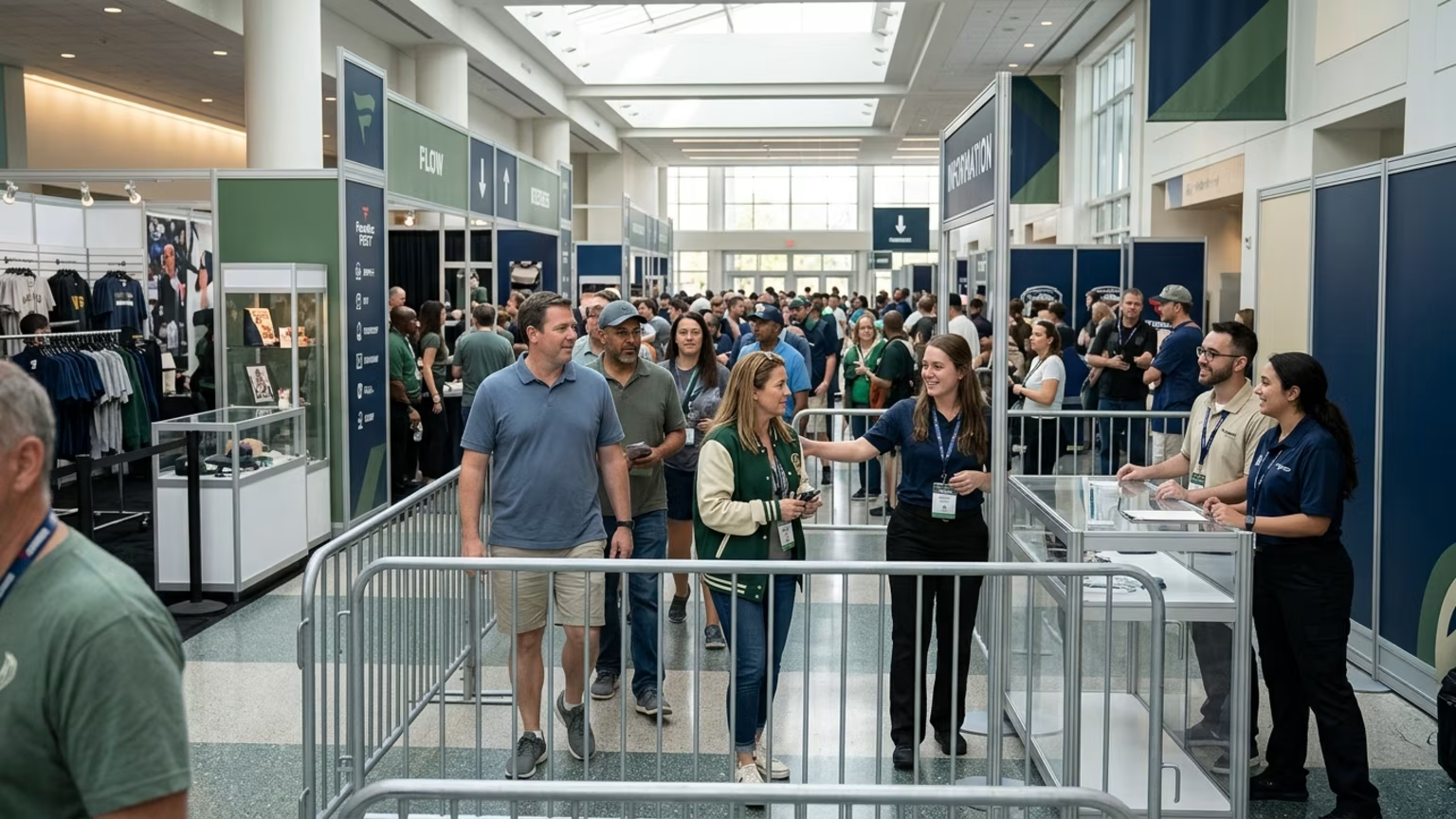
The EventStaff case study reports that Fanatics Fest 2026 occupied more than 1 million square feet and attracted approximately 200,000 visitors over four days. Your massive interactive booth is bleeding you dry if you treat attendance volume as an automatic proxy for commercial success. Brands spend millions on striking architecture but consistently ignore the operational reality of managing human flow across massive physical spaces. A beautiful activation means nothing if visitors cannot easily verify their access, navigate the queues, and complete a measurable interaction.
Marketing teams often believe that securing a massive footprint guarantees a seamless visitor experience. The EventStaff case study highlights how Fanatics Fest 2026 expanded rapidly in recent years. Attendance rose from approximately 70,000 in 2024 to more than 125,000 in 2025 and 200,000 in 2026, according to the EventStaff case study. The 2026 edition also added a fourth day and increased its Javits Center footprint by 25 percent from the previous edition.
However, simply adding more days and more space does not automatically resolve human traffic issues. Brands must recognize that larger footprints actually amplify the need for strict navigational control. EventStaff's case study describes Fanatics Fest 2026 as a four day sports and entertainment convention held July 16 to 19 at New York City's Javits Center. Without strategic traffic management, those vast halls quickly turn into confusing mazes for attendees.
The program included more than 400 athletes and celebrities alongside approximately 250 dealers or hobby shops. It also featured more than 100 participating brands and sponsors, more than 50 live shows and podcasts, and about a dozen stages. Chief Marketing Officers experience extreme anxiety when they spend six figures on these environments only to generate zero qualified pipeline. Relying entirely on metal barricades to manage this chaos is a fundamental miscalculation.
A compact zone featuring timed engagements often requires significantly more staff than a sprawling open browsing area. Queues, access transitions, and scheduling overlaps put enormous pressure on your field teams. Every minute a visitor spends lost in a massive venue represents lost revenue potential. Poor crowd flow forces attendees to spend their limited time navigating rather than engaging with sponsors.
The core operational concept here is experience density. This term refers to the volume of different time sensitive reasons visitors have for moving through the same venue. Managing these high pressure intersections requires integrated logistics and staffing for brand activations to keep operations smooth. Trade show and experiential builds at Fanatics Fest included interactive zones that required coordinated staging, safety planning, queue management and audiovisual integration, according to Event Technology.
When an activation has separate requirements for watching, competing, or purchasing, staff must guide visitors effectively. Visitors quickly become frustrated when they waste time standing in the wrong line. EventStaff identified multiple attendee groups with varying needs. General fans, collectors, VIPs, and athletes all shared the same physical space.
The Makai worldview pairs warm, human authenticity with brutal operational discipline. A large convention must function as a network of connected experiences rather than one undifferentiated crowd. This means directly linking admission, credential verification, wayfinding, and sponsor operations under a unified plan. EventStaff's case study recommends linking admission, entitlement verification, navigation, activation delivery and recovery when plans change.
Brand ambassadors are not just promotional models. EventStaff positions brand ambassadors and booth staff as part of the operational layer that explains participation, manages demand and supports consistent sponsor interactions. A Brand Manager in the CPG space shared: "Makai transformed our test-drive activation into an emotional brand journey. They connected technology, lifestyle, and experience seamlessly, and turned casual visitors into loyal fans."
We successfully integrated multiple experience layers to convert casual participants into committed brand advocates. When our team deploys staff, we empower them to redirect visitors, set wait time expectations, and resolve issues before a queue congests. Security and crowd control staff protect boundaries and manage risk. Conversely, brand ambassadors and booth staff explain the experience and reduce confusion.
Every event experiences unexpected friction. The recovery stage is a critical component of any operational plan. Teams must prepare approved communication paths for full queues, technical problems, or suddenly delayed talent. Visitors are far more forgiving when staff can clearly explain the delay and suggest immediate alternatives.
Giving your teams the right trade show crowd and queue management protocols prevents minor delays from becoming brand damaging disasters. Security personnel manage risk, but your booth staff must manage the visitor experience. These teams must share briefing materials, escalation rules, and supervisor access. A visitor should never be repeatedly transferred between different departments for simple questions.
It is easy to celebrate massive crowds. The case study reports that Fanatics and its partners expected to spend between $80 million and $90 million on the 2026 event. They presented that figure as an expectation rather than a confirmed final expenditure. However, a packed hall only proves that physical demand exists.
Attendance alone is an incomplete measure of experiential success. A crowded hall does not show whether visitors sampled a product, completed an activation, joined a database, or purchased merchandise. Experiential success must center on measurable commercial actions. Brands must shift their focus from passive tracking to precise engagement metrics.
For consumer packaged goods companies, this means tracking samples distributed to target buyers and retail meetings booked. Every brand ambassador should know the exact definition of a successful interaction before the doors open. If you cannot track a visitor from initial engagement to a qualified lead, your footprint is merely an expensive billboard. Understanding how global brands master US trade show execution involves building your staffing model directly around the customer journey.
Before determining staffing headcounts, you must map the actual participant path. You need to know how a visitor enters, what they must verify, and how they navigate to the experience. Fanatics Games offered more than $2 million in prizes and involved 50 fans competing alongside 50 athletes, celebrities and creators. Managing that level of interaction requires dedicated personnel who know exactly who is eligible to participate.
Large spaces do not automatically simplify this navigation process. A massive footprint distributes visitors while also increasing overall travel distance. This makes missed appointments, inaccessible routes, and vague directions far more consequential. High priority staffing locations include entrance queues, timed activation check ins, restricted area boundaries, and high demand sponsor zones.
Furthermore, a comprehensive plan must treat venue accessibility as a critical part of experience quality. Accessible routes should connect arrival points, entrances, and every major event activity. Marketing teams should include accessibility checks in the same walk through used for signage, queues, and sponsor presentation. Clear physical routing prevents bottlenecks and ensures all attendees can comfortably reach their desired activation zones.
The operating model must match the complexity of the specific activation zone. A dealer marketplace, family activity, autograph station, and premium lounge should not receive the exact same briefing. Zone specific training must cover the audience, participation rules, likely bottlenecks, and the explicit definition of a successful interaction. This targeted approach ensures that every staff member understands how to drive specific commercial outcomes.
Demanding rigorous execution over beautiful aesthetics is the only way to generate a real Return on Investment from live engagements. While striking booth architecture catches the eye, the underlying flow of human traffic ultimately dictates commercial success. The sheer scale of that 1 million square foot floor at the Javits Center is impressive on paper. Yet, as the EventStaff case study demonstrates, your massive space only delivers value when guided by disciplined, connected operational staffing.
Managing massive crowds across a sprawling exhibition floor requires rigorous operational control to turn raw attendance into measurable commercial action. Makai resolves the headache of navigating complex event logistics, permits, and staffing to ensure your footprint drives qualified pipeline, deploying our Costco Roadshows capability to manage end to end roadshows that bring brands to shoppers through live demos, real conversations, and measurable sales impact. Request a proposal

30 Years Experiential & Retail Activation Partner for CPG & Beverage Brands | Multi-Market Demos, Roadshows & Costco/Club Programs That Actually Sell